
Redang & Perhentian Islands · Malaysia · Reef · Cave & cavern
Batu Chaping
Stacked boulders and swim-throughs on Besar's east face
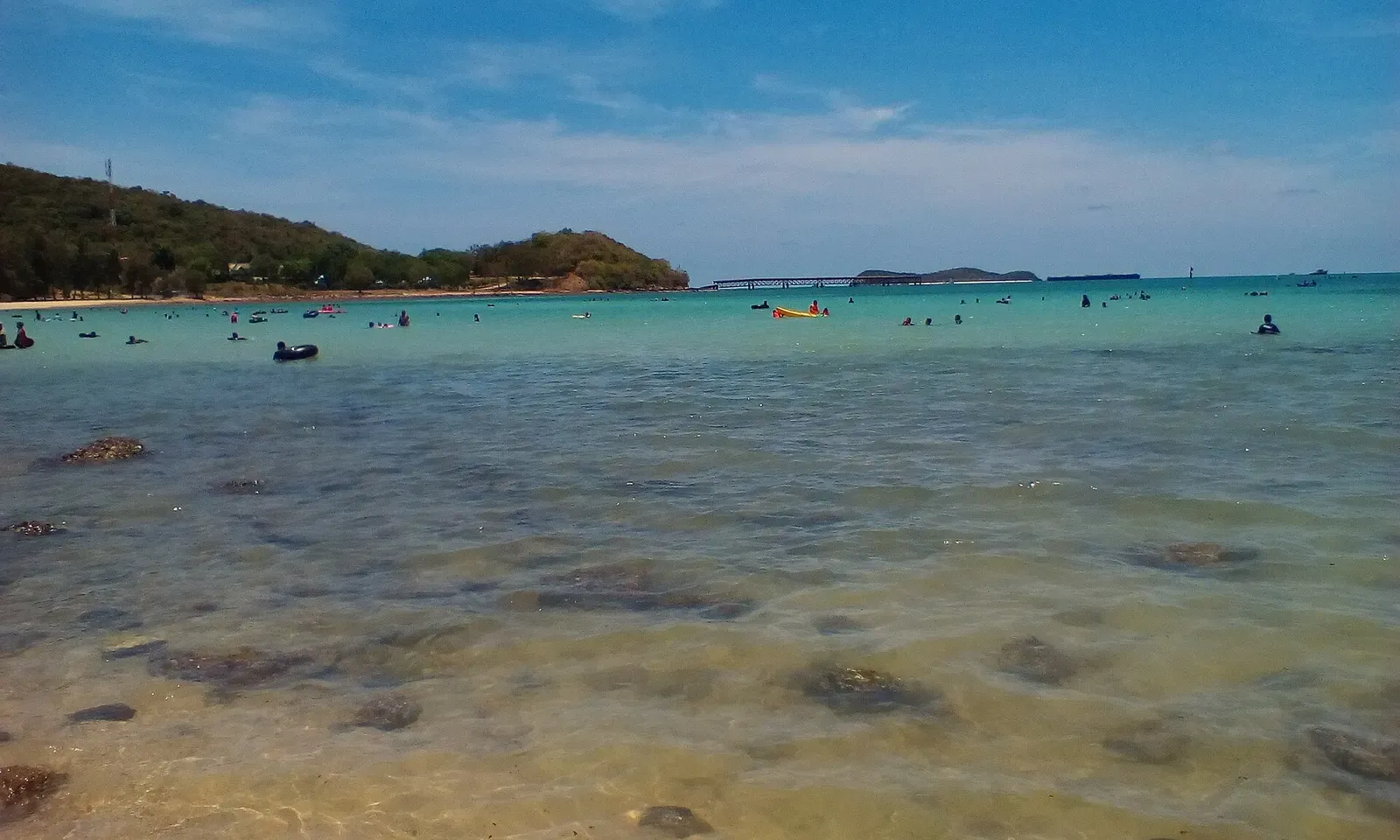
Area photo: Ditch Townsend · CC BY-SA 4.0
Batu Chaping sits on the uninhabited east face of Perhentian Besar, and its character is rock rather than coral: large boulders stacked into swim-throughs, with overhangs between them. The site runs down to 18 to 20 m before the bottom turns to sand, and daisy corals grow on the overhang. It is a topography dive rather than a coral-garden one.
Also known as Batu Caping.
Where it is and how deep
5.8931° N, 102.7730° EPublished position for this site.
The dive
The east face of Perhentian Besar is uninhabited, and the dive is on the boulder field below it. Big blocks lean against each other, and the route works through the swim-throughs and under the overhangs they form rather than following a reef line. Daisy corals grow on the overhang, which is the closest thing the site has to a signature feature and the one place worth slowing down for.
Depths on the boulders run to 18 to 20 m, and below that the ground turns to sand. That sand edge makes an easy turn-around: follow the rock down to where it ends, then work back up through the structure for the shallow half of the dive and the safety stop. No figures for current or visibility are published for the site, so ask the centre what to expect on the day rather than assuming the calm inshore conditions.
Marine life and season
The sources we used don't single out particular species here.
| Jan | Feb | Mar | Apr | May | Jun | Jul | Aug | Sep | Oct | Nov | Dec |
|---|---|---|---|---|---|---|---|---|---|---|---|
| Off-season | Off-season | Good | Prime | Prime | Prime | Prime | Good | Good | Fair | Off-season | Off-season |
Season follows Redang & Perhentian Islands: The marine park is officially closed November 1-February 28 for the northeast monsoon; conditions are calmest and clearest April-September.
Know before you go
- The route runs through gaps between boulders, so keep buoyancy tight, take swim-throughs one diver at a time and avoid contact with the daisy corals on the overhang.
Questions divers ask
What is there to see at Batu Chaping?+
The site is built of large boulders that form swim-throughs and overhangs, with daisy corals growing on the overhang. It bottoms out on sand below 18 to 20 m.
Sources
- Batu Chaping - Scubago — Scubago (SSI)
More dive sites in Redang & Perhentian Islands
Reef
A shallow shark nursery reached straight from the beach
Reef
Staghorn and table coral to 18 m, with reliably clear water
Pinnacle
Submerged pinnacle from 14 m down a wall to 32 m of sand
Wreck
A 32 m patrol vessel scuttled as a reef, top at 16 m
Reef
Coral slope two minutes off Long Beach, ending on rock
Wreck
Three police boats sunk in 2012 between 14 and 19 m
Wreck
Six impounded fishing boats sunk together at 23 m
Wreck
A 90 m sugar carrier the coral has not finished claiming
Similar dives elsewhere

Volcanic boulders stacked into tunnels, with a cave at 21 m

Stonefish, lionfish and octopus tucked into the rock

Easy 3-15 m reef with hawksbill turtles seen year-round
Brain, maze and table coral from 3 m, easy enough to snorkel