What a kelp forest is
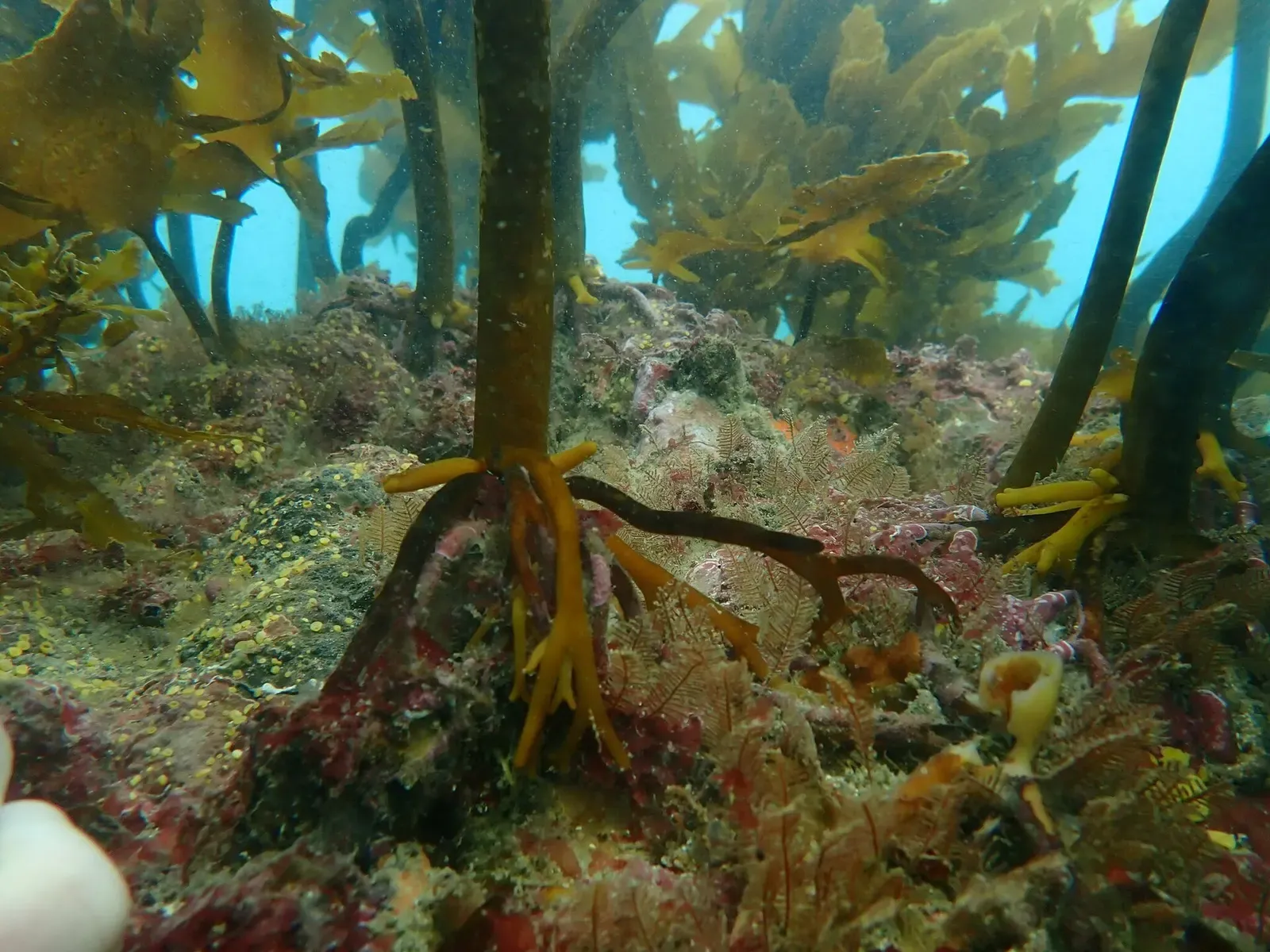
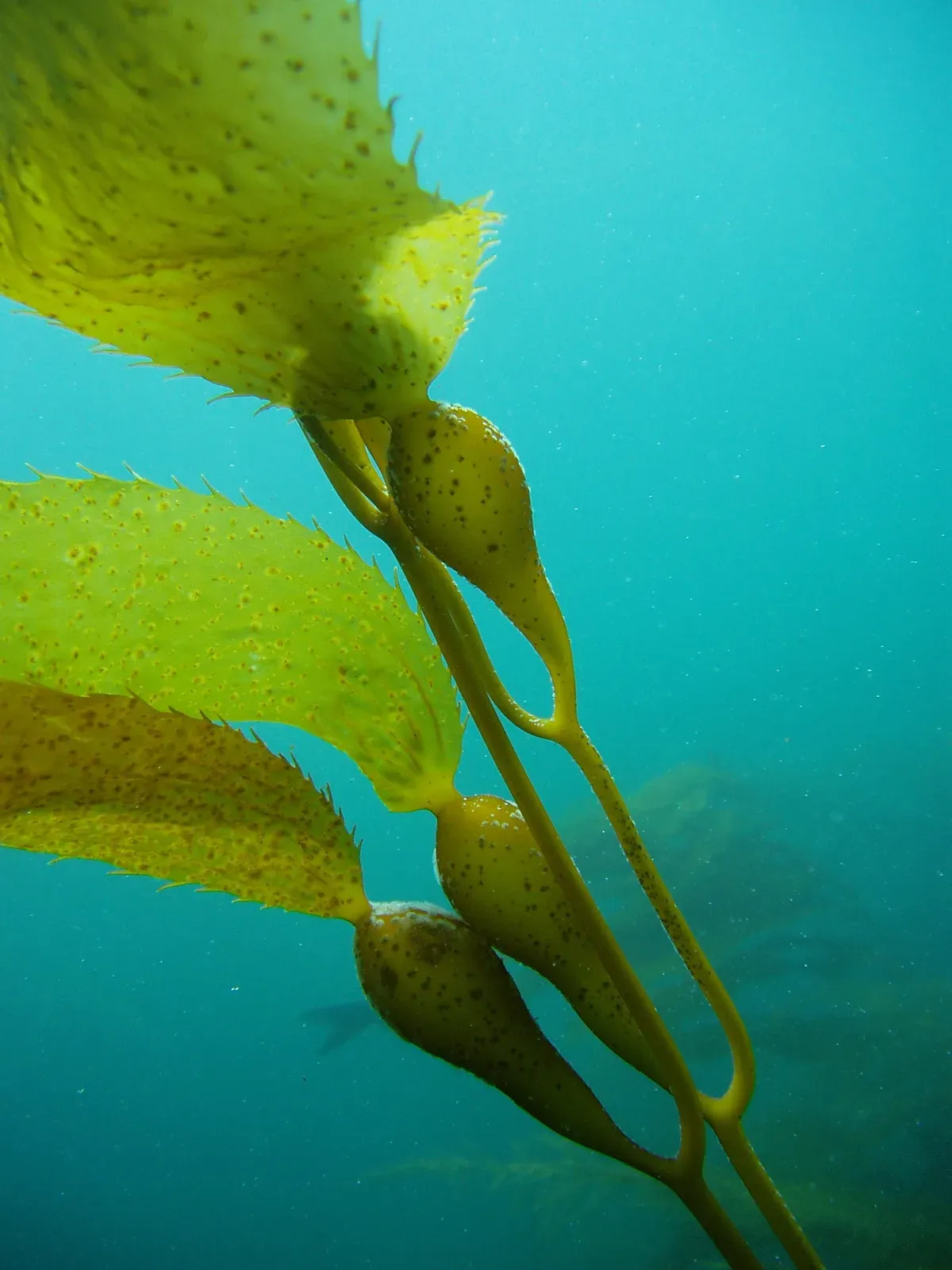
Kelp is not a plant but a large brown alga, and a kelp forest is built like a tree with none of a tree’s plumbing. A root-like holdfast grips the rock without drawing any nutrients from it; a stipe rises from it like a trunk; the fronds along the stipe do all the feeding and photosynthesis; and in many species a small gas-filled bladder at the base of each frond is what holds the whole thing upright in the water. In ideal conditions giant kelp can grow 30 to 60 cm (1 to 2 ft) a day, which is how a forest can reach the surface within months.
The genus changes with the coast. Giant kelp, Macrocystis, is the canopy kelp of the eastern Pacific, north and south of the equator, with patches in Australia, New Zealand and South Africa. Ecklonia is the kelp of Australia, New Zealand and South Africa; Laminaria lines both sides of the Atlantic and the coasts of Japan and China; and bull kelp, Nereocystis, is a North Pacific canopy kelp that lives for a single year. The richest kelp coast of all, with more than twenty species, runs from north of San Francisco to the Aleutians.
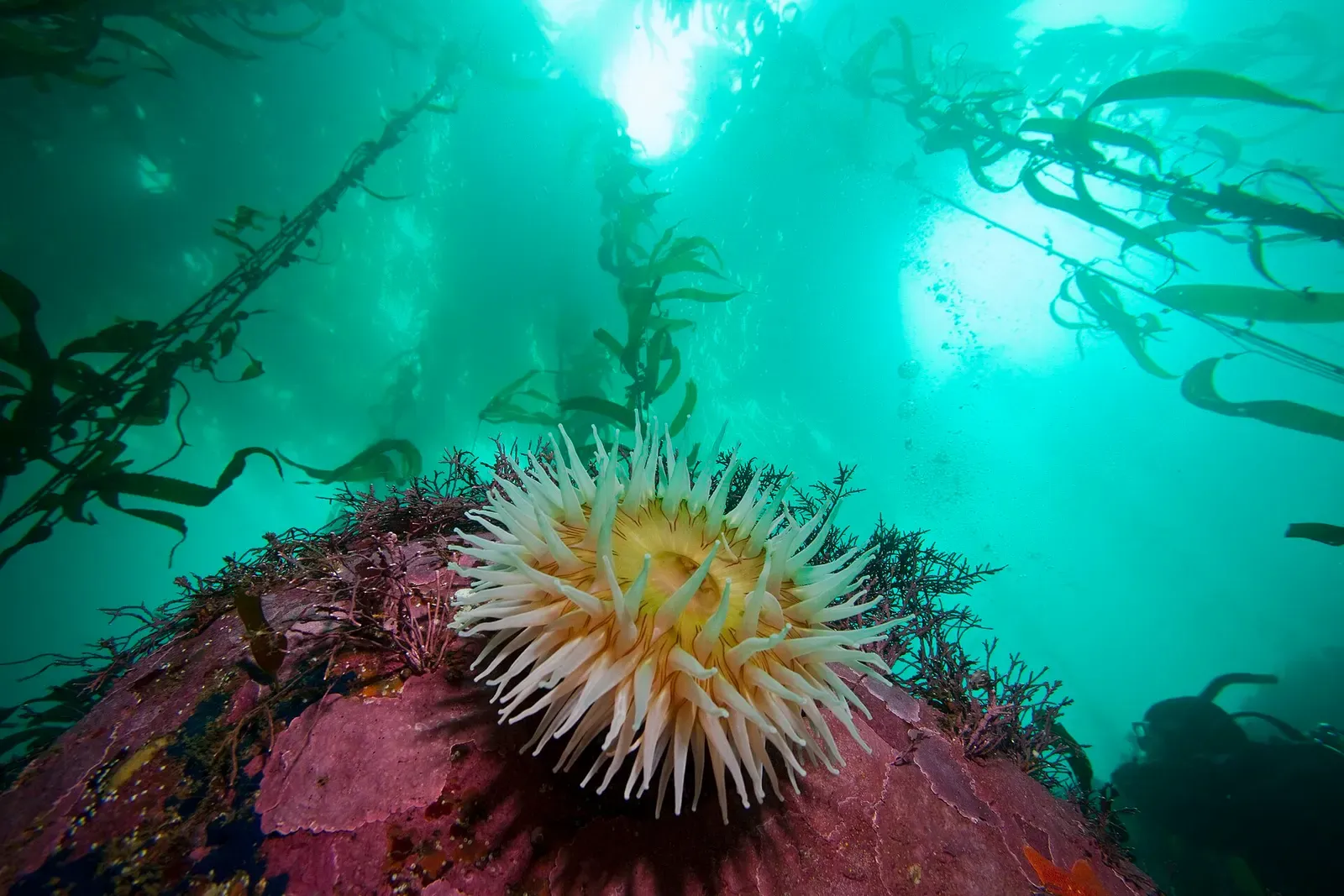
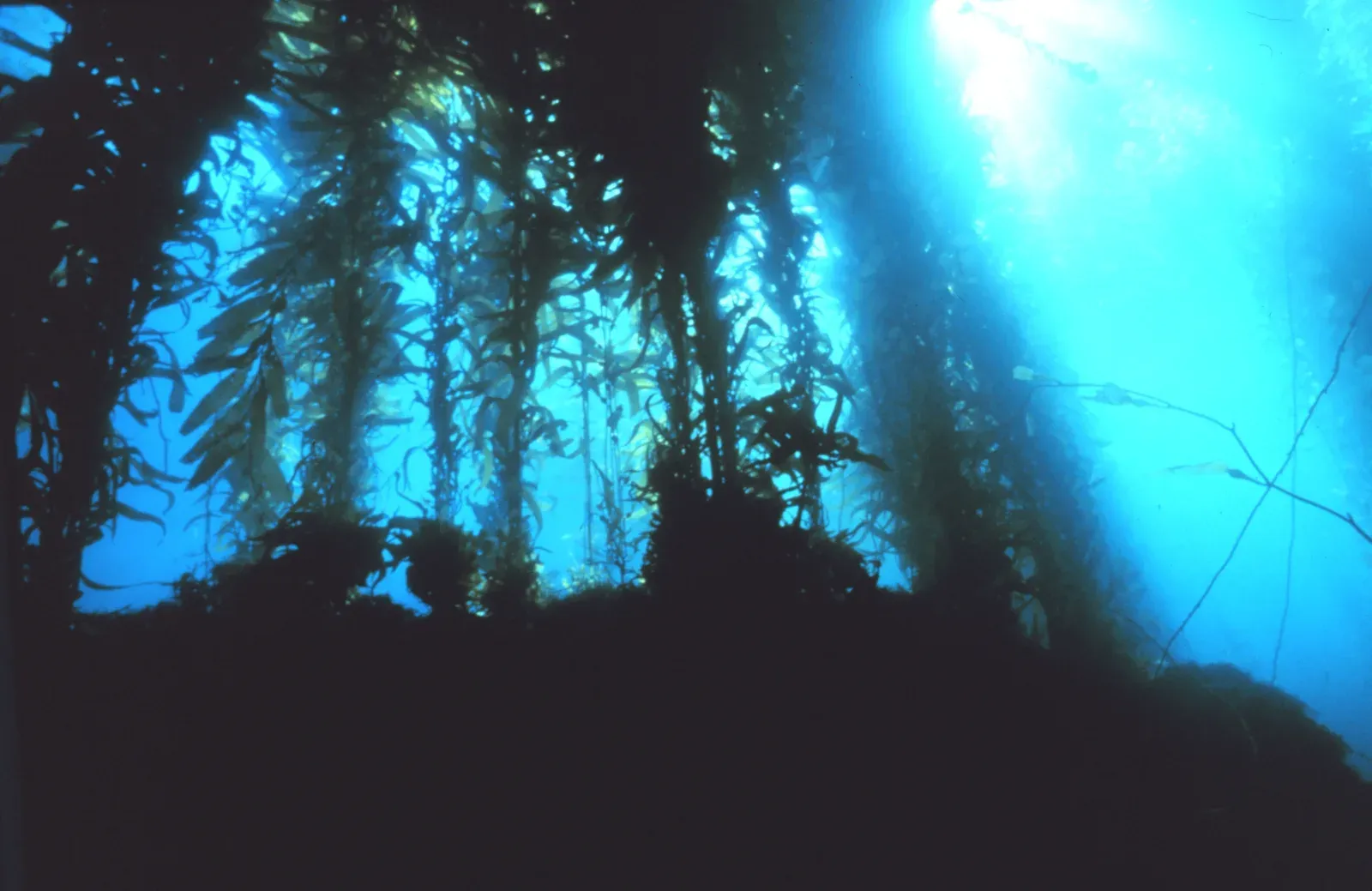
For a diver the structure is the point. A giant kelp forest has a sunny canopy at the surface, a half-lit middle storey of stipes and a dim floor, and rockfish, shrimp, snails, brittle stars and nudibranchs live through all of it, with urchins on the rock beneath. Seals, sea lions, sea otters and big fish work the edges. Nothing about it looks like a reef, and a first kelp dive feels more like walking into woodland than swimming over a garden. That is also why it needs its own technique, which is the last section of this guide.
The forests need three things: rock to hold on to, nutrients, and light. That puts them in cold water, usually where upwelling brings nutrients up from depth, and it puts most of the diving in a drysuit or a thick wetsuit. Our wetsuit guide matches the suit to the temperatures quoted below, and the cold-water guide makes the wider case for diving cold at all.
California’s giant kelp
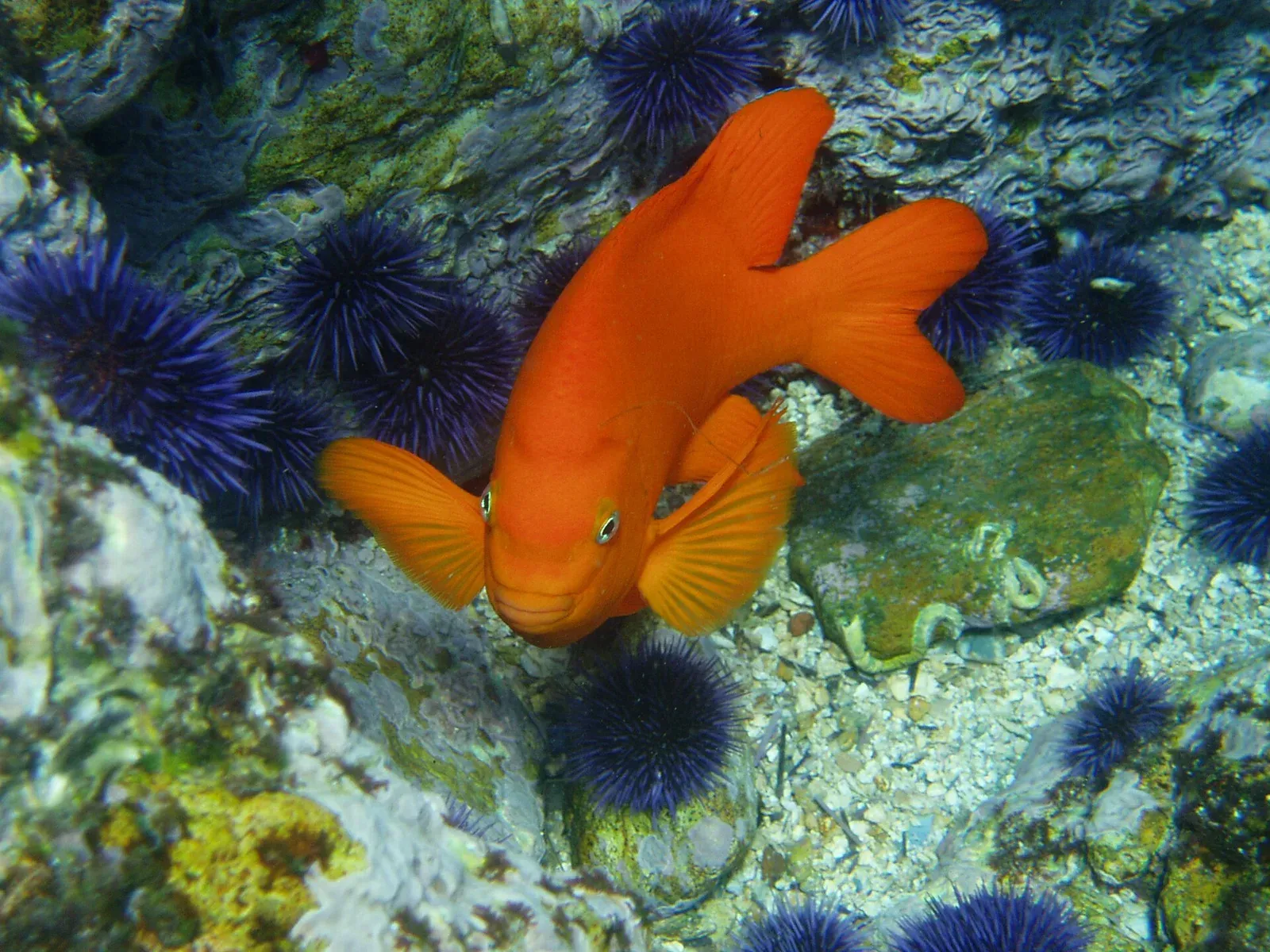
California is where most divers first meet kelp, and the easiest entry anywhere is Casino Point Dive Park on Catalina Island. Concrete steps at Avalon lead straight into the water, the canopy closes overhead within a short swim, and the site never goes past 18 m (60 ft). The water off the point has been the Casino Point State Marine Conservation Area since 2012, with no take of living resources, and the fish show it: garibaldi over the rock, kelp bass among the stipes, morays and lobsters in the cracks, bat rays and the occasional giant black sea bass passing through. Up the island, Doctors Cove is a 6 to 17 m kelp cove, usually reached by boat, with elk kelp among the ordinary stands, large bat rays and leopard sharks moving in through the summer.
On the mainland, La Jolla Cove is a shore dive to 14 m inside an ecological reserve, where California sea lions work the same kelp as the divers and the site record lists sevengill sharks in April. The same coast holds the advanced version: La Jolla Canyon is a swim across sand and kelp to a rim at 18 to 24 m, beyond which the bottom falls away by 150 m (500 ft) into a submarine canyon, and the kelp beds on its outer slope are where the life concentrates.
Further north the water is colder and the kelp taller. Whalers Cove in Point Lobos State Natural Reserve is one of only two coves in the reserve where diving is allowed at all, and every dive is booked in advance with proof of certification. What the paperwork buys is kelp standing as much as 21 m (70 ft) off the reef, with lingcod, rockfish, harbour seals and sea otters, and a canopy whose cover the site notes call highly variable from month to month. Just north, Monastery Beach puts the same kelp at 9 to 12 m behind a punishing shore entry: a steep gravel beach, heavy shorebreak and currents strong enough to make swimming extremely dangerous.
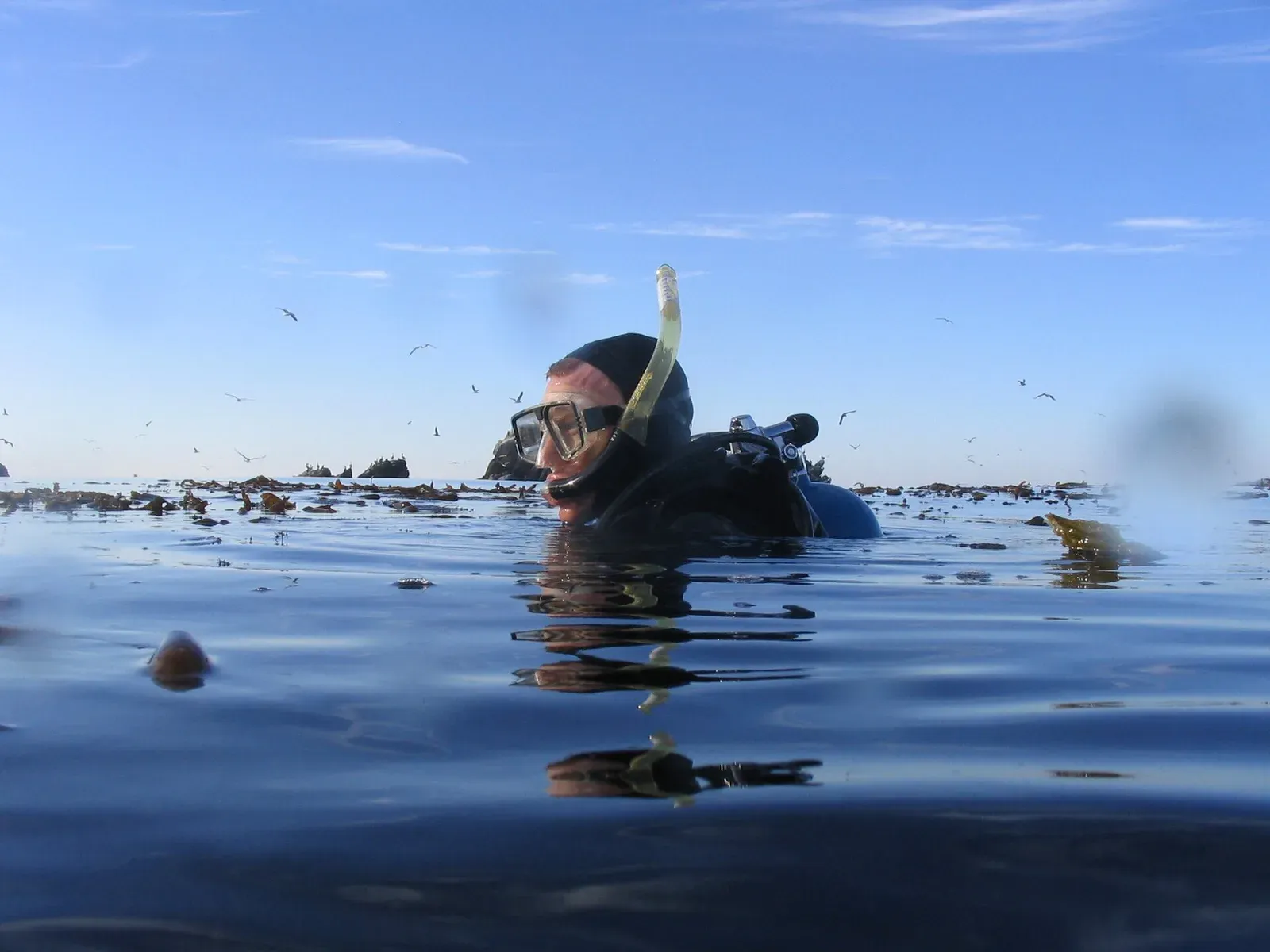
Offshore, the Channel Islands protect dense giant kelp forests around Anacapa, Santa Cruz, Santa Rosa and San Miguel, and the diving is from a boat. Arch Rock marks the eastern boundary of the Anacapa Island State Marine Reserve, a no-take stretch of rocky reef between 15 and 37 m with sheephead, garibaldi, kelp bass and horn sharks. Southern California is also the place to see why the fish matter. Its forests persist without sea otters to eat the urchins; lobsters and big fish such as the California sheephead do the job instead.
| Site | Depth | Current | Level | Best months |
|---|---|---|---|---|
| Casino Point Dive Park Catalina Island · United States | to 18 m | Mild | Beginner | Jul–Oct |
| Doctors Cove Catalina Island · United States | 6–17 m | Mild | Beginner | Jul–Oct |
| La Jolla Cove La Jolla Cove & Canyon · United States | to 14 m | Mild | Beginner | Jul–Oct |
| La Jolla Canyon La Jolla Cove & Canyon · United States | 18–24 m | Mild | Advanced | Jul–Oct |
| Point Lobos — Whalers Cove Monterey Bay · United States | 9–21 m | Mild | Intermediate | Sep–Oct |
| Monastery Beach Monterey Bay · United States | 9–12 m | Strong | Advanced | Sep–Oct |
| Anacapa Island — Arch Rock Channel Islands · United States | 15–37 m | Moderate | Advanced | Sep–Nov |
The Cape’s sea forest
The kelp coast of the Cape Peninsula became famous through the film My Octopus Teacher, and it works differently from California: two coasts share one city and trade good conditions between them. The Atlantic side is mainly a summer dive, and the western shore of False Bay, where the kelp sites below sit, mainly a winter one, sheltered from the winter westerlies while the South-Easter is quiet. On any given morning the wind decides where you dive. Cape fur seals are the constant. The water runs from 8 to 20 °C (46 to 68 °F).
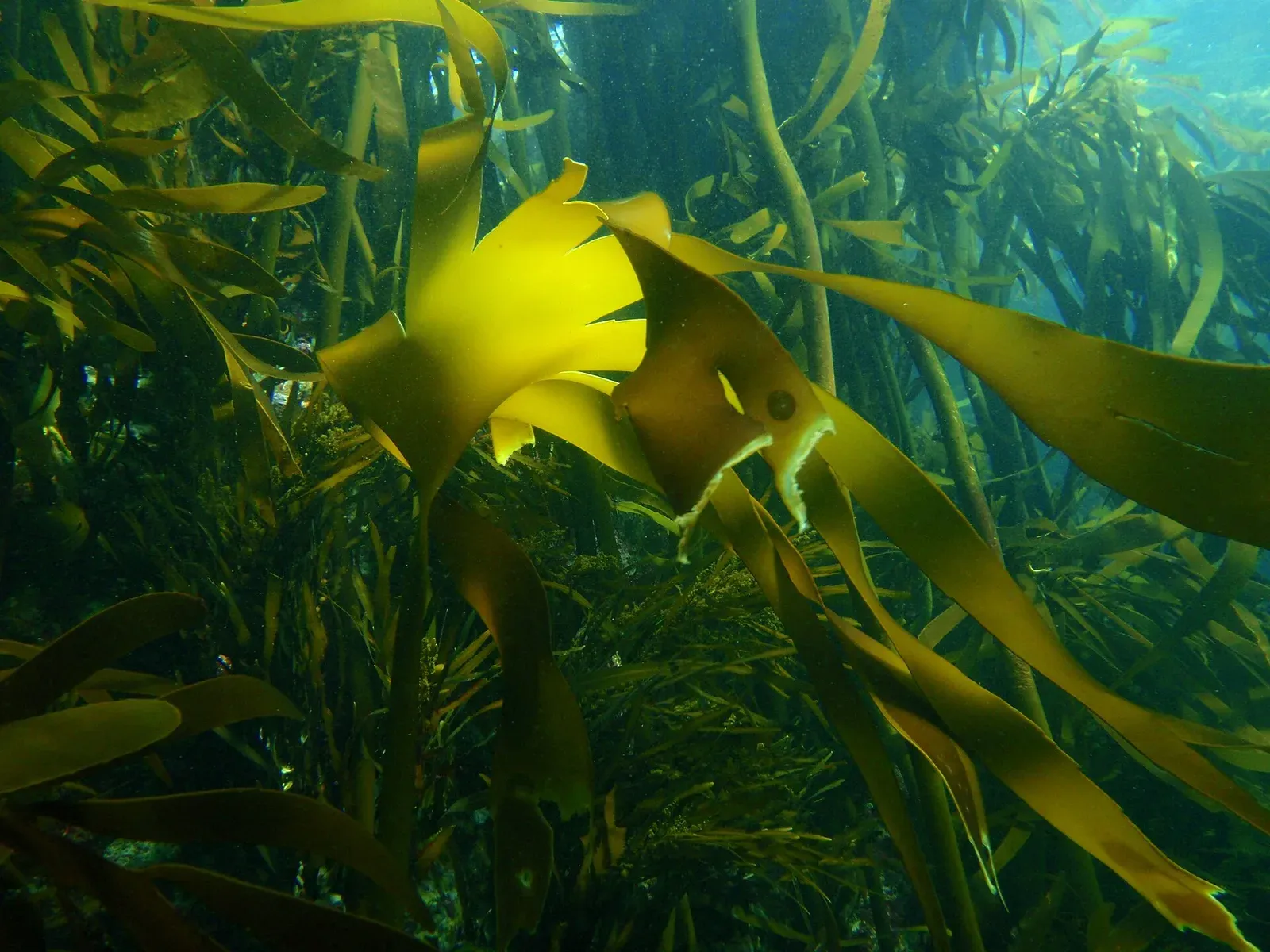
Castle Rocks is the benchmark False Bay shore dive, usually a winter one: granite ridges and gullies under kelp, an average bottom around 10 m and a maximum near 18, and a reputation for the variety and size of its fish. It lies in a restricted zone of the Table Mountain National Park Marine Protected Area, and a permit is needed to dive it. Miller's Point is shallower, 6 to 8 m along the shoreline reefs, and dense kelp surrounds the point wherever there is rock; its sheltered cove is one of the largest known gathering sites for broadnose sevengill sharks, though the site record is plain that a sighting is never guaranteed. By boat, Partridge Point is a boulder reef mostly shallower than 17 m, with sand to 26 m beyond it, second only to Castle Rocks for fish at a Cape Peninsula site, in a no-take restricted area where seals often come to look at divers. Its notes also carry the most honest line about Cape kelp diving: in water this cold, hypothermia rather than gas sets the end of the dive.
| Site | Depth | Current | Level | Best months |
|---|---|---|---|---|
| Castle Rocks Cape Peninsula Kelp Forests · South Africa | to 18 m | Moderate | Intermediate | Nov–Jun |
| Miller's Point Cape Peninsula Kelp Forests · South Africa | to 8 m | Moderate | Intermediate | Nov–Jun |
| Partridge Point Cape Peninsula Kelp Forests · South Africa | to 26 m | Moderate | Intermediate | Nov–Jun |
Australia and New Zealand
New Zealand’s first marine reserve is also the country’s most-studied stretch of coast, and it is a shore dive. At Goat Island, in the Cape Rodney-Okakari Point Marine Reserve north of Auckland, you walk off a sand beach into kelp and boulder reef. Shag Rock sits just offshore in 3 to 5 m with sandy lanes through standing kelp behind it; ABC Bay runs along the base of a kelp wall in 5 to 6 m, found by the white letter B painted on the cliff; and Yellow Sponge Garden is a swim out through tall kelp to sponge-covered sand ledges at 8 to 9 m. All three are rated beginner. Why the kelp is there at all is the story of the next section.
In the far south, Ulva Island sits inside the Ulva Island–Te Wharawhara Marine Reserve, 1,075 hectares of no-take water in Paterson Inlet since 2004. Giant kelp stands over the rock, at least 56 species of fish have been recorded, and fur seals, sea lions and yellow-eyed penguins pass through, all above 20 m and ten minutes by water taxi from Golden Bay.
Australia’s kelp belongs to the Great Southern Reef, the temperate reef system that runs 8,000 km (5,000 mi) around the southern coast. On the New South Wales south coast, Jervis Bay offers Murrays Beach, a self-guided shore dive in Booderee National Park over reef, dense kelp and seagrass in 5 to 12 m with wobbegongs and Port Jackson sharks in the crevices, and Echo Point, a boat dive to 13 m through rock gutters and kelp gardens. Inside Port Phillip Heads, Popes Eye is the ring of bluestone boulders left from an unfinished 1880s fort, its outer face carrying giant and leathery kelp, in a marine national park where fishing is prohibited.
Tasmania is the hard case. On the Tasman Peninsula, Eaglehawk Neck has weedy seadragons resident in its kelp year-round, and offshore Hippolyte Rocks is among the state’s most demanding dives: bull kelp down to about 15 m, then sponge reef below 30 and fur seals over it, reachable only on a flat day with a westerly wind and graded advanced. It is also the coast where the giant kelp has gone, and where divers are now trying to plant it back.
| Site | Depth | Current | Level | Best months |
|---|---|---|---|---|
| Shag Rock Goat Island · New Zealand | 3–5 m | Mild | Beginner | Dec–Mar |
| ABC Bay Goat Island · New Zealand | 2–6 m | Mild | Beginner | Dec–Mar |
| Yellow Sponge Garden Goat Island · New Zealand | 8–9 m | Mild | Beginner | Dec–Mar |
| Ulva Island Stewart Island · New Zealand | to 20 m | Mild | Intermediate | Dec–Mar |
| Murrays Beach Jervis Bay · Australia | 5–12 m | Mild | Beginner | Apr–Jul |
| Echo Point Jervis Bay · Australia | to 13 m | Mild | Beginner | Apr–Jul |
| Popes Eye Port Phillip · Australia | 2–12 m | Mild | Intermediate | May–Jul |
| Hippolyte Rocks Eaglehawk Neck · Australia | to 40 m | Mild | Advanced | Dec–Mar |
The North Atlantic and North Pacific
Atlantic kelp is mostly Laminaria, a low-growing kelp without the floating canopy of the Pacific giants, and in Britain the draw is usually what lives in it. At Gannets Rock off Lundy Island, a sheltered bay of reef and kelp runs to about 12 m and grey seals come down to mouth fins and hang in front of masks; the island is a Marine Conservation Zone with a no-take zone, and the boats run from Ilfracombe between April and October. The Knivestone in the Farnes drops divers on a kelp plateau at 3 to 5 m among seals before the route runs down to wreckage at 20 m, an exposed, slack-water dive for experienced divers. Chesil Cove is the shore option, a shingle entry onto boulders and kelp beds down to 15 m with cuttlefish, octopus and pipefish in the rock, and only divable in calm or easterly weather.
Further north, the kelp is a backdrop to other diving. At St Abbs, a voluntary marine reserve since 1984, nudibranchs work the kelp stipes through the season; the Sound of Mull has curled octopus on its shallow reefs between the wrecks; Sweden’s Bohuslän has shoals of pollack and saithe over the kelp in summer; the Faroes grow dense kelp on tide-fed rock; and in Spain the Illas Cíes carry kelp beds on their exposed western faces inside the Atlantic Islands National Park.
On the Pacific side, British Columbia’s Browning Pass has bull kelp forests along the shallows above walls of plumose anemones, and Puget Sound is the cold, dark inland sea of giant Pacific octopus and wolf eels. In Korea, Jukdo off Ulleungdo starts on kelp beds and gentle slopes from 9 m, with squid schools over them in early summer, before the walls drop to 50 m.
| Site | Depth | Current | Level | Best months |
|---|---|---|---|---|
| Gannets Rock Lundy Island · United Kingdom | to 12 m | Mild | Beginner | Jun–Sep |
| Knivestone Farne Islands · United Kingdom | 3–20 m | Strong | Advanced | Jun–Sep |
| Chesil Cove Weymouth & Portland · United Kingdom | to 15 m | Mild | Beginner | Jun–Sep |
| Jukdo Ulleungdo · South Korea | 9–30 m | Moderate | Intermediate | Jul–Oct |
Why forests vanish, and where they came back
Here is the finding that should change how you plan a kelp trip: a kelp forest is not a fixture of a coast. Under the canopy, sea urchins graze on drift kelp that falls to the floor. When something removes the animals that eat the urchins, or starves the urchins of drift, they climb onto the living kelp and mow it down to bare rock, an urchin barren. Ecologists treat forest and barren as two alternative stable states: once a coast has flipped, it tends to stay flipped.
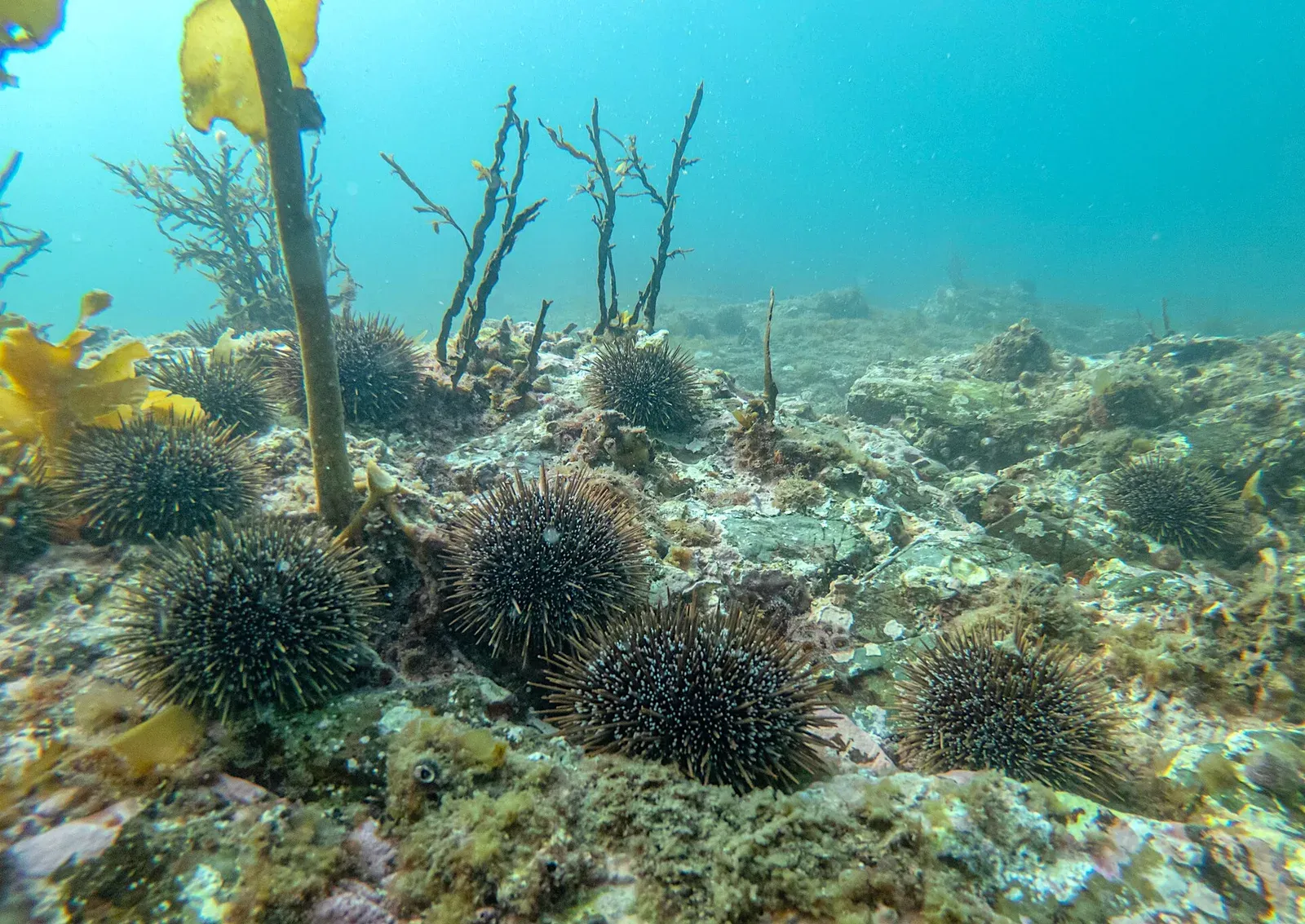
Northern California is one of the fastest collapses on record. Sea star wasting disease hit the coast from 2013 and wiped out the sunflower star, an important urchin predator; the ocean warmed sharply from 2014 to 2017, and purple urchins increased sixty-fold in 2015. Rogers-Bennett and Catton, who had surveyed the coast for twenty years, found bull kelp canopy reduced by more than 90 % along more than 350 km of coastline, a collapse that happened within a single year. The knock-on losses closed the recreational red abalone fishery in 2018, then the largest in the world. The coast in that paper runs from San Francisco to the Oregon border, north of every California site above, so the loss says nothing about those forests. What it does say is that a forest that had been reliable for decades can go in one season.
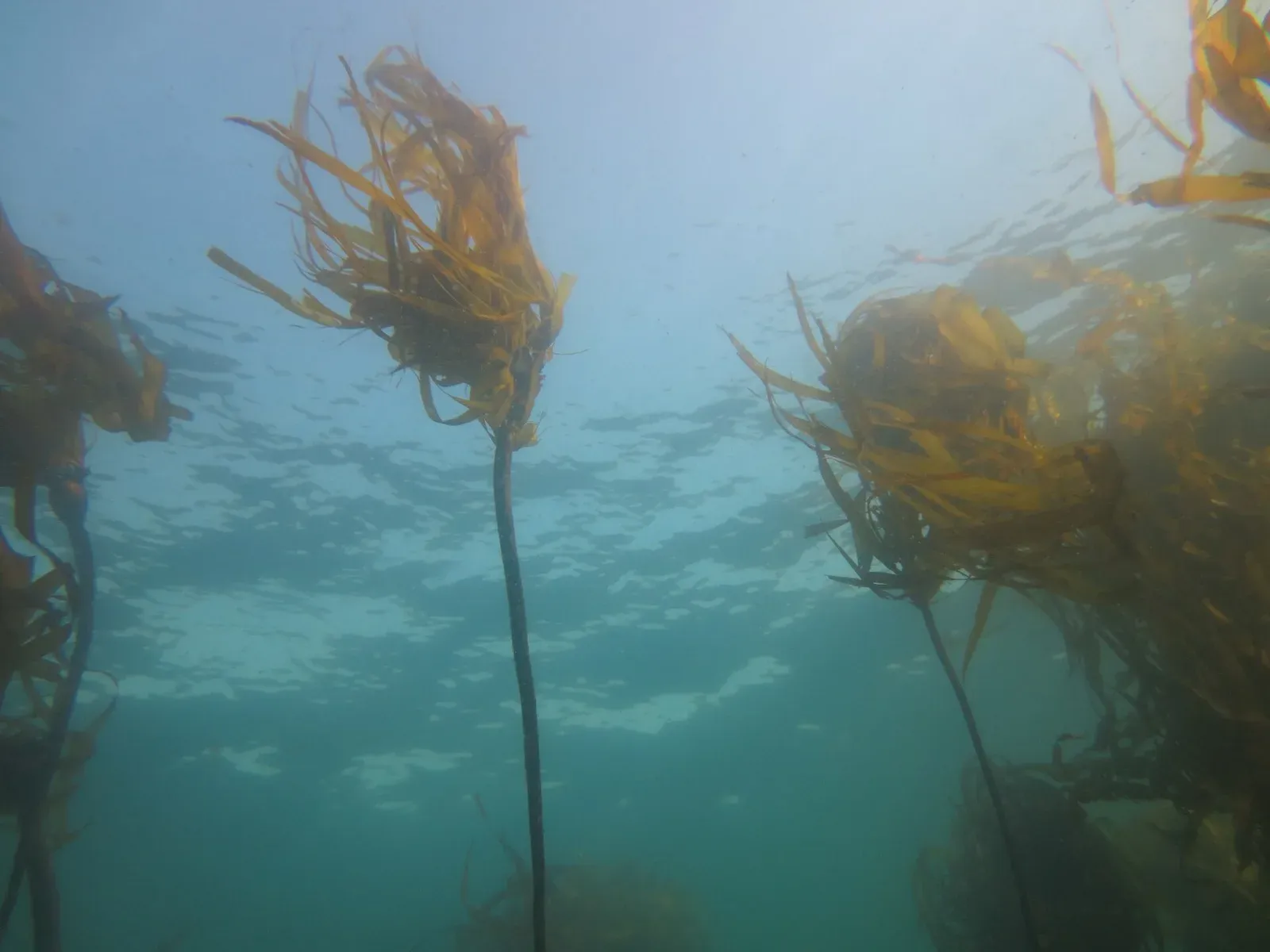
Tasmania’s decline started earlier and ran longer. Giant kelp once dominated the island’s east coast, and it has been falling since the 1940s; in 2026 researchers put the loss across Tasmania at about 95 %, and probably higher now. Warming water and overgrazing by an invading urchin did it: the long-spined sea urchin spread south with the warm water, and overfishing of rock lobster, one of the few animals that can eat it, has been blamed for part of that spread. Decades of decline can still end fast at a single site; an Eaglehawk Neck instructor saw a big forest there gone in less than a year. On the Tasman Peninsula, restoration divers now wrap lab-grown kelp spores around existing seaweed at selected sites, which is why the Eaglehawk Neck kelp is worth seeing while it is there.
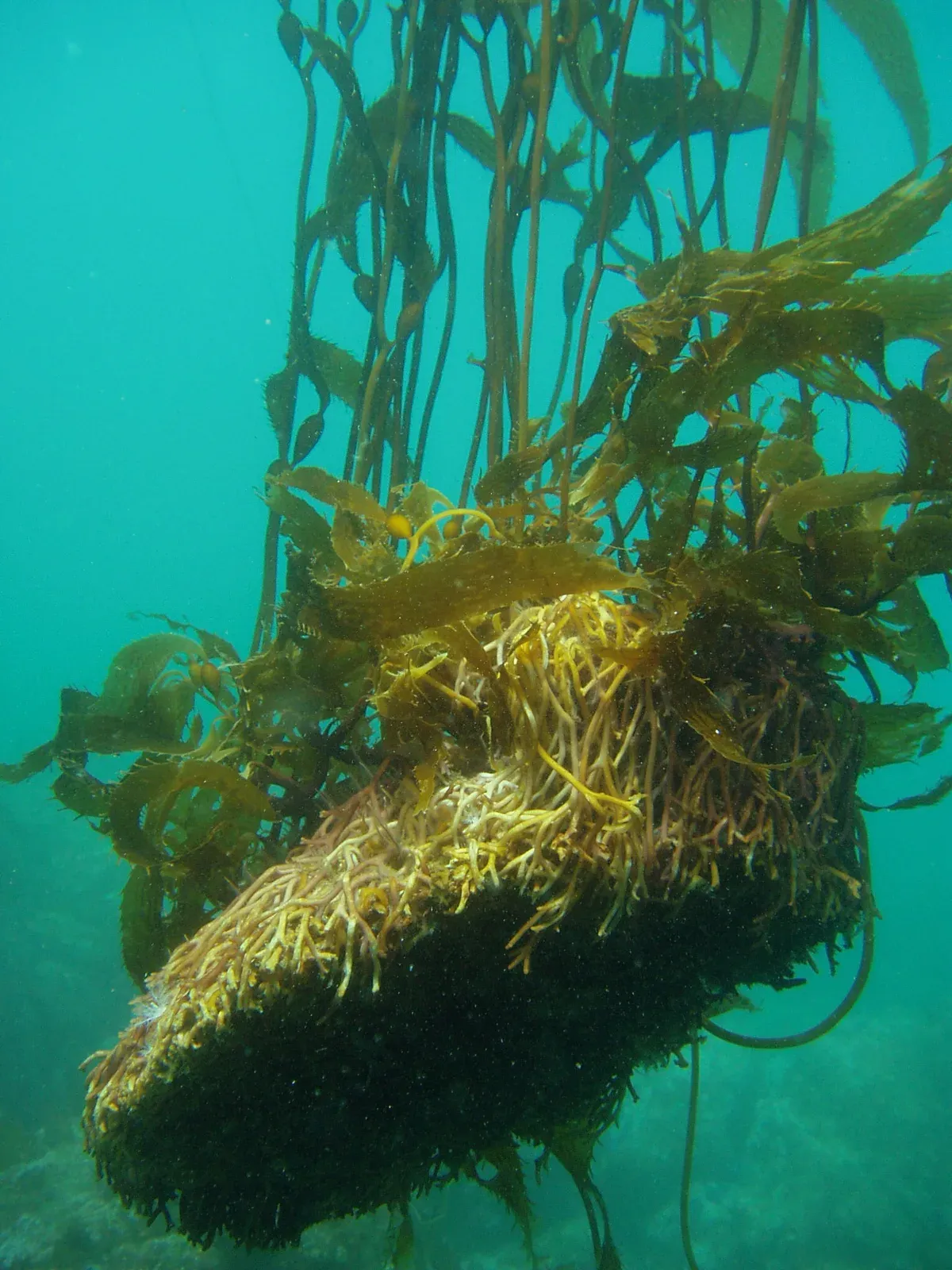
Goat Island is the case that ran the other way. Before the reserve was created in 1975, fishing for rock lobster (crayfish) and snapper had left the kina, New Zealand’s sea urchin, free to graze, and the reef bare; researchers from the University of Auckland describe the reefs looking white in aerial photographs. Protected from fishing, snapper and crayfish slowly grew back and started eating kina, and it took almost thirty years for the kelp forests to return. Outside the boundary, kina barrens are still widespread. The same researchers add the caution that matters: crayfish numbers inside the reserve have dropped again over the past ten years, so even the textbook recovery is not finished.
That is the pattern behind many of the sites above. Casino Point, La Jolla Cove, Whalers Cove, Arch Rock, Castle Rocks, Partridge Point, Goat Island, Ulva Island, Popes Eye and Lundy all sit inside reserves or no-take zones. That does not prove the reserves are why each forest stands; warming water can kill kelp inside a reserve as easily as outside one, and Tasmania shows that protection cannot fix an ocean that has become too warm. What the evidence does show is that a forest with a full set of urchin-eaters is harder to tip over, and where one has tipped, removing fishing pressure is one proven way to bring it back.
How to dive kelp
Kelp is not dangerous, but it does catch the careless, and most of the technique is about not giving it anything to hold.
Go in feet first. Through a canopy, the UC Santa Barbara diving programme recommends a feet-first, feet-together entry rather than a head-first or back-roll entry, and going in without an inflated BCD so you can start the descent at once instead of wallowing in the fronds.
Streamline everything. Slates, reels, bags and gauges belong clipped close to the body. Carry a cutting tool, and wear it where it does not stick out to snag; the same programme suggests the inside of the calf.
Swim beneath the canopy, not in it. The lanes between the stipes near the bottom are the easiest place to swim and to navigate. Stay neutrally buoyant and horizontal with your head slightly raised, which keeps the tank valve and first stage out of the fronds. Expect a darker dive than the water’s clarity suggests when the canopy is thick.
If you snag, stop. Thrashing and spinning to find the snag wraps more kelp around you. Stay still, signal your buddy, who can see the tank valve you cannot, and let them free it. Sometimes lifting off a single stipe is enough; a real tangle may need cutting.
Navigate by compass. Stipes all look alike, and the canopy hides the sun. Take a heading to the exit before you descend and swim reciprocal compass legs out and back rather than trusting landmarks; Whalers Cove’s own site notes say the kelp cover changes enough from month to month to make last trip’s landmarks unreliable.
Surface in a gap. Look up and ascend through an opening with a hand raised, letting your bubbles clear the fronds. If you come up under a thick canopy, the fallback is the kelp crawl: lie flat on the canopy, push it down with your hands and pull yourself across it, a kind of dog paddle. It works but it is slow and exhausting, so the better plan is to keep enough gas to swim back under the canopy to open water or the exit.
Mind the season. Storms tear out surface canopies, and in perennial forests the canopy dies back when nutrients drop and storms increase. Our Catalina notes rate July to October as its best months, with the warmest, clearest water as the kelp thins, while Point Lobos and the Channel Islands rate September to November best, after the summer plankton settles, and Monterey rates September and October best. The matrix below shows each area’s diving ratings by month. They describe diving conditions for the whole area, not when the kelp is thickest or when any animal is present, and no site carries a calendar of its own.
| Site | Jan | Feb | Mar | Apr | May | Jun | Jul | Aug | Sep | Oct | Nov | Dec |
|---|---|---|---|---|---|---|---|---|---|---|---|---|
| Casino Point Dive ParkCatalina Island | Fair | Fair | Fair | Good | Good | Good | Prime | Prime | Prime | Prime | Good | Fair |
| La Jolla CoveLa Jolla Cove & Canyon | Good | Good | Fair | Fair | Good | Good | Prime | Prime | Prime | Prime | Good | Good |
| Point Lobos — Whalers CoveMonterey Bay | Fair | Fair | Fair | Fair | Good | Good | Good | Good | Prime | Prime | Good | Fair |
| Anacapa Island — Arch RockChannel Islands | Fair | Fair | Fair | Fair | Good | Good | Good | Good | Prime | Prime | Prime | Fair |
| Castle RocksCape Peninsula Kelp Forests | Good | Good | Good | Good | Good | Good | Fair | Fair | Fair | Fair | Good | Good |
| Shag RockGoat Island | Prime | Prime | Prime | Good | Good | Fair | Fair | Fair | Good | Good | Good | Prime |
| Murrays BeachJervis Bay | Good | Good | Good | Prime | Prime | Prime | Prime | Good | Good | Good | Good | Good |
| Hippolyte RocksEaglehawk Neck | Prime | Prime | Prime | Good | Good | Fair | Fair | Fair | Good | Good | Good | Prime |
| Gannets RockLundy Island | Off-season | Off-season | Off-season | Fair | Good | Prime | Prime | Prime | Prime | Fair | Off-season | Off-season |
| Chesil CoveWeymouth & Portland | Fair | Fair | Fair | Good | Good | Prime | Prime | Prime | Prime | Good | Fair | Fair |
The animals decide many kelp trips as much as the kelp does. For the seals and sea lions that turn up at Lundy, La Jolla, the Cape and the Farnes, our seals and sea lions guide covers where they come closest; for more entries like Casino Point and Murrays Beach, see the best shore dives.