
Surin Islands · Thailand · Reef · Coral garden
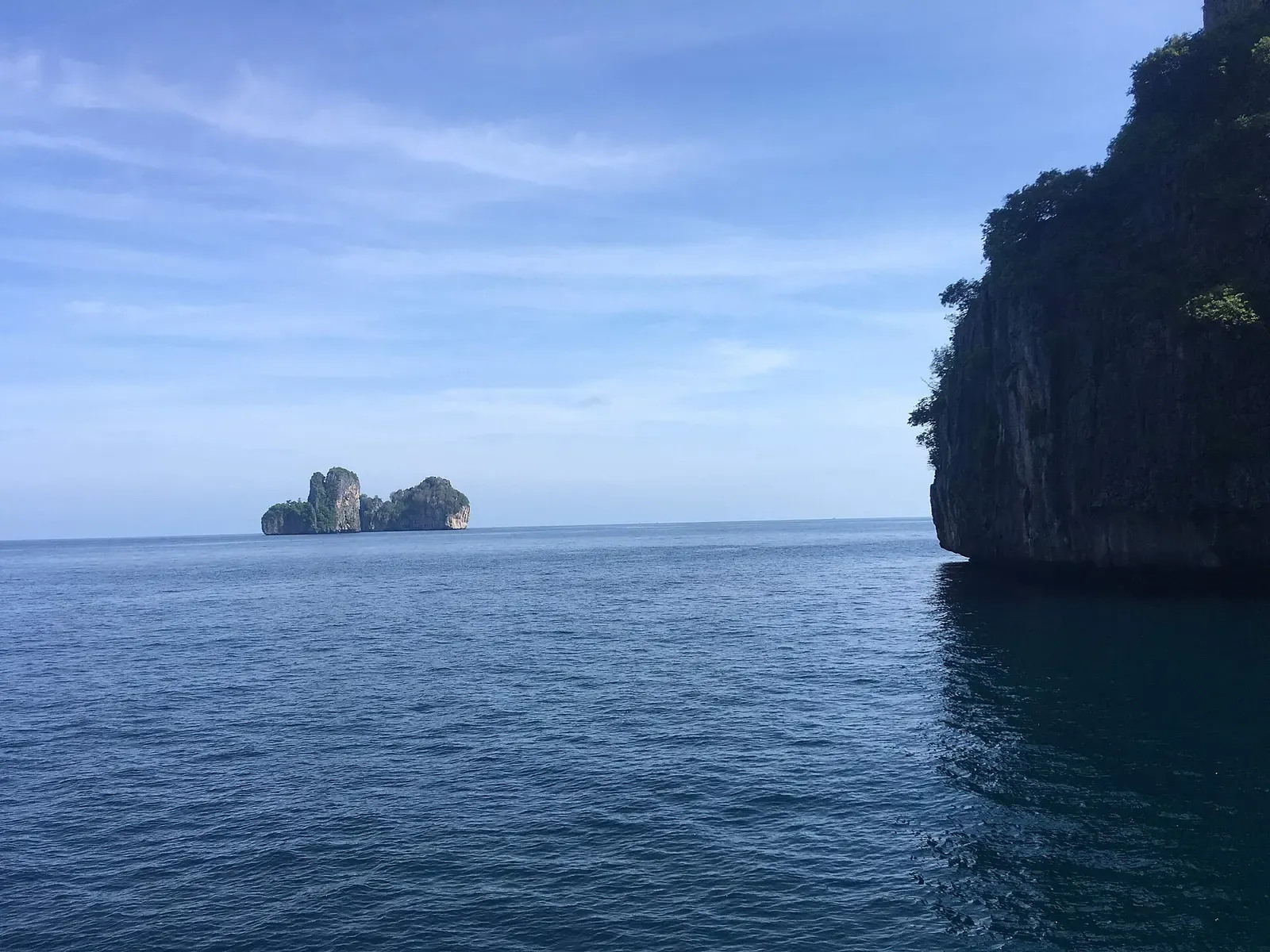
Stork Island/Koh Chi
Blacktip reef sharks over a granite slope on the western side
Area photo: The Cosmonaut · CC BY-SA 2.5
Koh Chi is the smallest and furthest north of the Surin islands, and the dive works a gentle slope of granite boulders off the western side down to 22 m, with hard corals carpeting the sea floor and large gorgonian fans standing off the rock. Blacktip reef sharks are a reliable sighting here, seen more often than in the Similans, and currents can be strong enough that the site is kept for experienced divers.
Also known as Ko Chi.
Where it is and how deep
9.4724° N, 97.9050° EPublished position for this site.
The dive
The dive works the western side of the islet, a gentle slope of granite boulders running down to 22 m. Hard corals carpet the sea floor and large gorgonian fans stand off the rock where the water moves, so the profile is a staged descent along the boulders rather than a single level — the deeper ground first, then back up over the shallow coral as the gas budget allows.
Blacktip reef sharks are the dependable sighting: Dive The World rates this as a reliable site for them, and they are seen more frequently here than in the Similan Islands, where the species is absent. The north end of the islet is a jumble of granite boulders and caverns, and those refuges hold soldierfish, angelfish and reef sharks. Out in the water column, pelagic fish pass along the slope — trevally, barracuda and tuna — and several turtle species are seen on the reef.
Close in, the same ground reads as a macro dive. Nudibranchs, shrimps and crabs work the coral and the rubble margins, and that is where a lot of the bottom time goes once the sharks and the fans have been covered. Watch the current through the whole dive: Scubago describes it as strong and unpredictable rather than steady, so the safe finish is to stay with the guide and come up together rather than working the shallows alone.
Marine life and season
- Reef sharks
- Barracuda
- Trevally & jacks
- Tuna
- Sea turtles
- Nudibranchs
- Macro critters
| Jan | Feb | Mar | Apr | May | Jun | Jul | Aug | Sep | Oct | Nov | Dec |
|---|---|---|---|---|---|---|---|---|---|---|---|
| Prime | Prime | Prime | Prime | Off-season | Off-season | Off-season | Off-season | Off-season | Off-season | Good | Prime |
Season follows Surin Islands: The national park closes mid-May to mid-October for the south-west monsoon; Feb–Apr is the peak of the open season.
Know before you go
- Currents can be strong and unpredictable rather than steady, so agree the drop and pick-up plan with the boat and carry a surface marker buoy.
Questions divers ask
How deep is Koh Chi?+
Dive The World gives the western slope as diveable down to 22 m, while Wikipedia's Surin dive-site table gives an average depth of 15 m for the Ko Chi slope. Most of the coral interest sits shallower than the maximum, on granite boulders stepping away from the island.
Are there sharks at Stork Island?+
Blacktip reef sharks are reliably seen here, more frequently than in the Similan Islands, where they are absent. Reef sharks also shelter in the boulders and caverns at the north end, and trevally, barracuda and tuna pass along the slope.
Sources
- Stork Island/Koh Chi — Scubago
- Surin Islands diving sites — Dive The World
- Surin Islands — Wikipedia
More dive sites in Surin Islands
Shallow coral-block reef the dive tables list as a night dive
Reef
Scattered boulders on sand, with overhangs holding the fish life
Pinnacle
A current-swept pinnacle from 30 m to within 5 m of the surface
Reef
Calm ten-metre sand and coral bay used for training and night dives
Reef
Coral plateau that breaks the surface, and a ridge out at 30 m
A 40 m drop-off on the west side, with 20 to 30 m of visibility
Reef
Shallow hard-coral shelf that works for snorkellers and divers alike
Similar dives elsewhere

Stingrays in numbers at Sting Ray Alley, the deepest site here
Swim-throughs behind walls of glassfish, and no current

Longest reef in the Similans, over 300 coral species


Two shallow coral sites: nudibranchs at 12 m, macro to 18 m