
Turks & Caicos · Turks & Caicos Islands · Wall · Reef
Eagle Ray Pass
A sand gully out to a coral wall dropping to 30 m
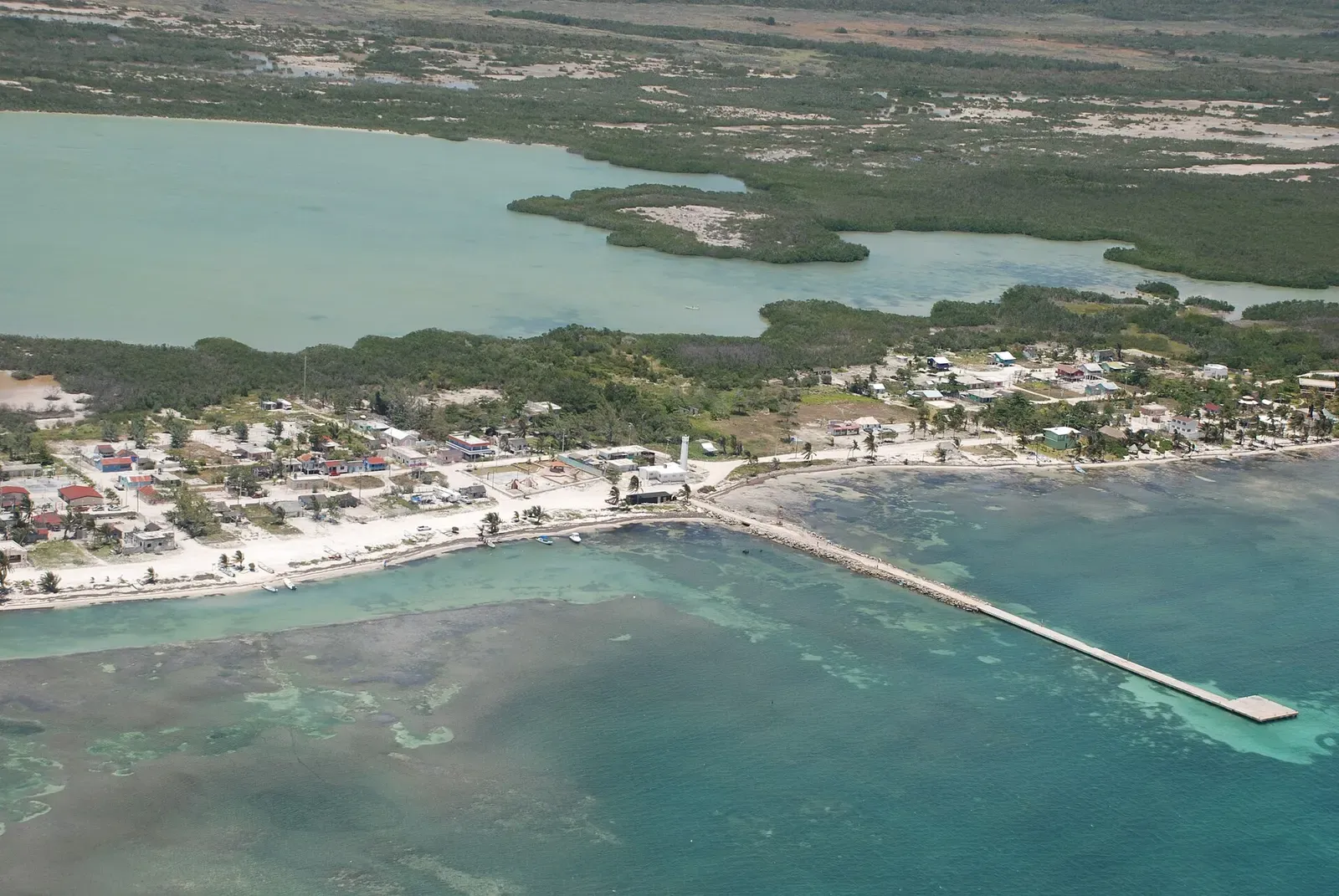
Area photo: SNORKELINGDIVES.COM · CC BY 2.0
A sand gully running out from beneath the mooring leads to the top of a sloping wall off Pine Cay, and the face below it carries a wide selection of corals down to a sand bottom at 30 m. Like the rest of the Pine Cay sites it is a submerged seamount rising to within 15 m of the surface, and it holds consistently good visibility.
Where it is and how deep
21.8734° N, 72.0908° WApproximate position — the dashed circle shows where the site lies; your operator's briefing has the mooring.
The dive
From the mooring, follow the sand gully that leads off from underneath it. It runs out to the top of a sloping wall, so the descent is staged rather than a straight drop down a face — gully first, then the lip, then the wall itself. Visibility off Pine Cay is consistently good, which helps on this route, because you can see the gully running ahead of you and do not have to guess at the line.
The wall carries a wide selection of corals down the face to a sand bottom at 30 m, the deepest ground on the site and the natural turn-around. Work the face on the way out, then use the slope to stage the return: back up to the lip, along the top of the wall, and home along the gully to the mooring. At 30 m the bottom time is short, so the deep section comes first and everything after it is ascent.
Marine life and season
The sources we used don't single out particular species here.
| Jan | Feb | Mar | Apr | May | Jun | Jul | Aug | Sep | Oct | Nov | Dec |
|---|---|---|---|---|---|---|---|---|---|---|---|
| Prime | Prime | Prime | Prime | Good | Good | Good | Good | Fair | Fair | Good | Good |
Season follows Turks & Caicos: January–April brings calm seas and the humpback whale migration through the Turks Island Passage; September–October is peak hurricane season.
Sources
- Dive Sites — Dive Provo — Dive Provo
More dive sites in Turks & Caicos
Wall
A crevice cutting down the wall from 15 m to 30 m
A vertical crack you exit into blue water at 29 m
Wall
Black coral under an overhang at 21 to 27 m
Wall
Near-continuous schools of grunts and snappers on the wall top
Wall
Wall top at 15 m with a lobster-covered sand flat at 21 m
Wall
A south-facing wall that drops past 1,829 m (6,000 ft)
Wall
A sheltered bowl in the wall with two huge elephant ear sponges
Wall
A sand chute from 15 m to a coral ledge at 30 m
Similar dives elsewhere
Tall, narrow canyons where groupers appear to nest
Sand-beach entry onto a reef that slopes past 30 m

Swim-throughs between massive coral-covered boulders

Vertical on one edge, a long slope on the other