Ambergris Caye (San Pedro) · Belize · Sand slope
Shark Ray Alley
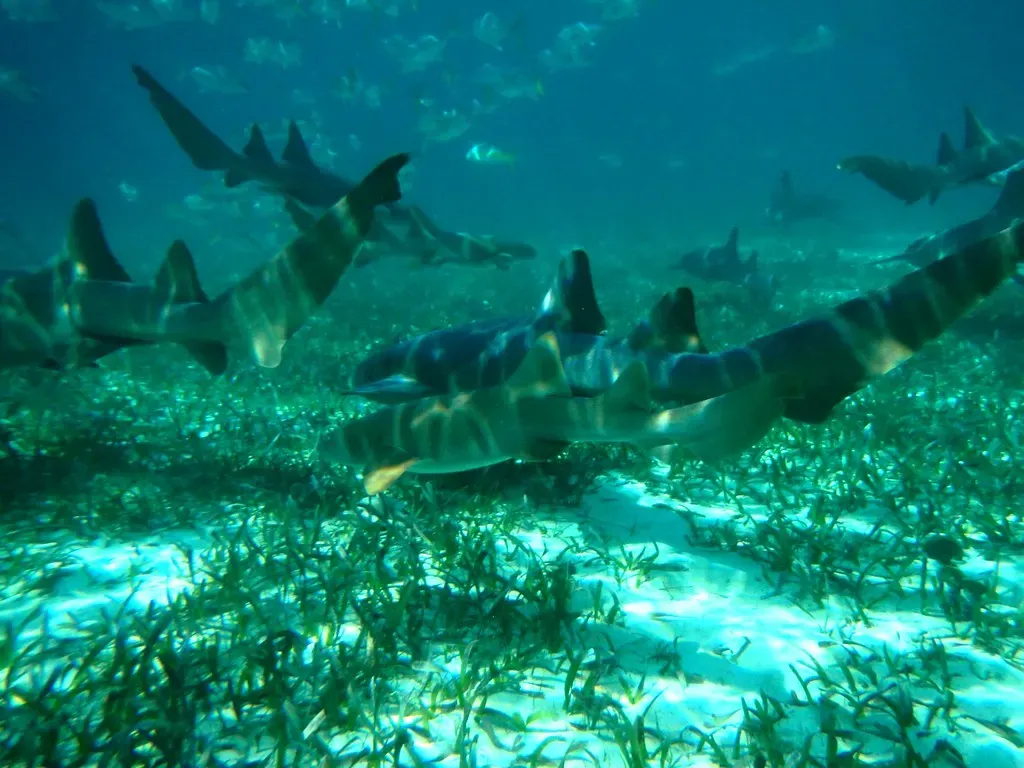
Nurse sharks and southern stingrays at arm's length in 3 m
Photo: SNORKELINGDIVES.COM · CC BY 2.0
Shark Ray Alley is a sandy-bottomed site in 2.4–3 m of water just south of San Pedro, inside the Hol Chan Marine Reserve complex's fee-charged Zone D. Southern stingrays with wingspans up to 1.5 m approach swimmers directly and nurse sharks up to 2 m long circle just out of arm's reach — an encounter open to snorkellers as much as divers.
Also known as Shark and Ray Alley, Hol Chan Zone D.
Where it is and how deep
17.8418° N, 87.9862° WApproximate position — the dashed circle shows where the site lies; your operator's briefing has the mooring.
The dive
The boats run just south of San Pedro into the Hol Chan reserve complex, and the encounter starts the moment you drop in: rays with wingspans up to 5 ft (1.5 m) approach you directly, while nurse sharks up to 7 ft (2 m) long circle just out of arm's reach. The water is 2.4–3 m deep with no current, so this is barely a dive at all — much of the traffic is on mask and snorkel.
With the whole site a few metres from the surface, tanks are optional; divers who do gear up settle on the sand while the animals move around them, and buoyancy control is the only skill really being tested. This is Zone D of the reserve — added in 1999 as a fee-charged area — so expect the park fee on top of the boat trip, and plan it as a shallow interval between deeper reef dives.
Background
Shark Ray Alley became part of the Hol Chan Marine Reserve in 1999, when it was added as a charged snorkelling area — Zone D of the reserve complex south of Ambergris Caye. It is managed differently from the reserve's core: commercial and sport fishing are still permitted in some parts of the zone for licence holders, while snorkel and dive visitors pay a fee.
Marine life and season
- Reef sharks
- Stingrays
| Jan | Feb | Mar | Apr | May | Jun | Jul | Aug | Sep | Oct | Nov | Dec |
|---|---|---|---|---|---|---|---|---|---|---|---|
| Prime | Prime | Prime | Prime | Good | Good | Good | Fair | Fair | Fair | Good | Prime |
Season follows Ambergris Caye (San Pedro): Dry season December–May with the least rain in February–March; wet-season storms, peaking September–October, can suspend diving for two or three days. Thimble jellyfish spawn in May.
Photos from Shark Ray Alley
Bernard DUPONT from FRANCE · CC BY-SA 2.0
Bernard DUPONT from FRANCE · CC BY-SA 2.0
erichabisch · CC BY 4.0
Questions divers ask
Do you need to be a certified diver for Shark Ray Alley?+
No — the water is only 2.4–3 m deep with no current, the site is listed for all experience levels, and much of the traffic is snorkellers rather than divers.
Sources
- Shark and Ray Alley — wannadive.net
- Hol Chan Marine Reserve — Wikipedia
- Belize Ambergris Caye diving sites — dive-the-world.com
Photo credits
- Several nurse sharks swimming close together over a seagrass bottom by SNORKELINGDIVES.COM, CC BY 2.0, via Openverse
- A single nurse shark cruising low over a seagrass meadow by Bernard DUPONT from FRANCE, CC BY-SA 2.0, via Wikimedia Commons
- A southern stingray resting on the sandy, grassy seabed by Bernard DUPONT from FRANCE, CC BY-SA 2.0, via Wikimedia Commons
- A dog snapper swimming close over seagrass near the camera by erichabisch, CC BY 4.0, via Wikimedia Commons
More dive sites in Ambergris Caye (San Pedro)
Wreck
A small unnamed wreck at 15–22 m, home to morays and coneys
Reef
Narrow sand-floored cuts dropping fast between coral spurs
Reef
Spur-and-groove formations in the 18–24 m band
Reef
A no-current reef that works for snorkellers and divers alike
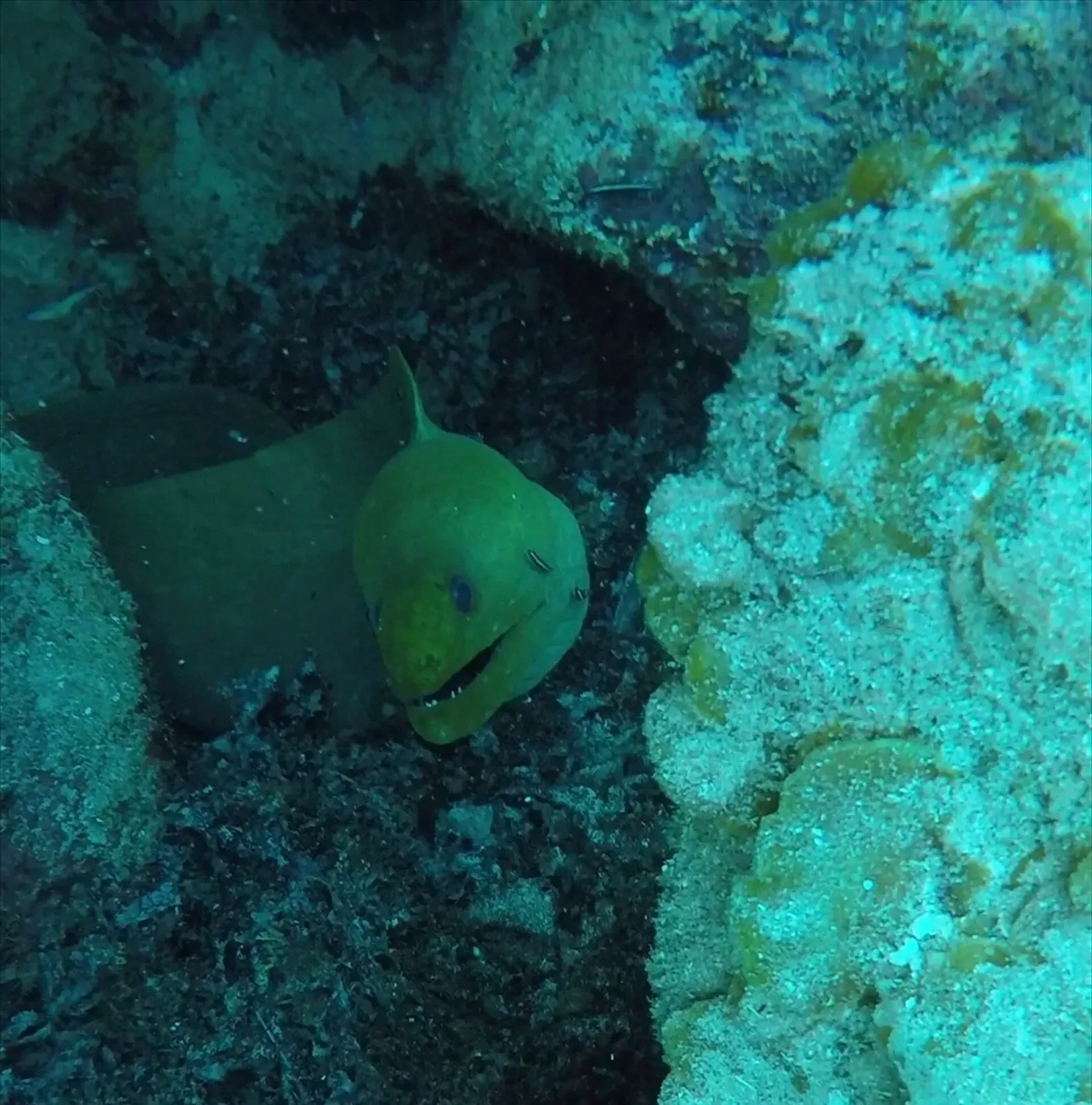
About 100 shallow patch reefs of boulder coral in 2.5–5 m
Reef
Finger canyons off San Pedro working from 18 m down to 40 m
Reef
Canyons, caverns and tunnels under ten minutes from the pier
Spur furrows plowing from a 15 m reef down to 35 m
Similar dives elsewhere

Great hammerheads on open sand at roughly 6 m

A white sand plain on the rarely dived east coast

A field of sea pens standing up out of the sand like white feathers

_(36552532791).jpg)
_(36644323776).jpg)

Sand, sponges and coral, with a wall dropping to 40 m