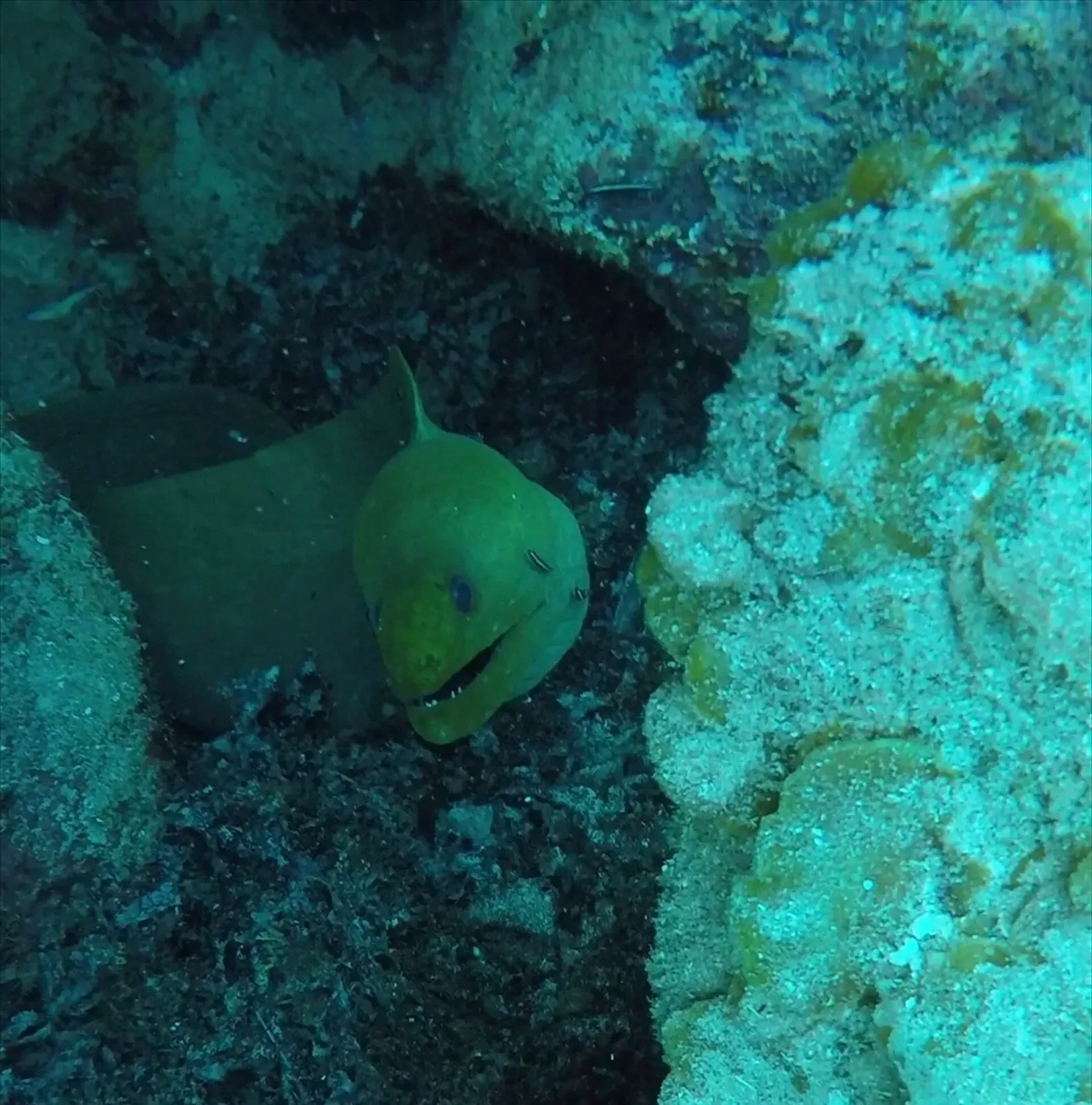
Ambergris Caye (San Pedro) · Belize · Reef · Coral garden
Mexico Rocks
About 100 shallow patch reefs of boulder coral in 2.5–5 m
Photo: Mlewis28 · CC BY-SA 4.0
Mexico Rocks is a shallow patch-reef complex off the northern tip of Ambergris Caye, now a marine reserve managed within the Hol Chan system. Around 100 Holocene patch reefs of mostly boulder corals sit in 2.5–5 m of water, which makes it as much a snorkel site as a dive, with stingrays on the sand and the occasional nurse shark wedged head-first into the coral.
Where it is and how deep
17.9892° N, 87.9058° WApproximate position — the dashed circle shows where the site lies; your operator's briefing has the mooring.
The dive
The boat run is about 15–20 minutes from San Pedro, heading north to the patch-reef grounds off the caye's northern tip. There is no wall, no cut and no depth to manage: the roughly 100 patch reefs have accumulated in 2.5–5 m of water, so this is a long, shallow wander from coral head to coral head, and many visitors do it on snorkel rather than tanks.
The reefs themselves are the point — predominantly boulder corals standing on the sand — and the gaps between them are where the animals turn up: stingrays on the bottom, and occasionally a sleeping nurse shark with its head wedged into the coral. With no current recorded and hours of no-decompression time available at this depth, you end the dive on air and interest rather than on your computer.
Marine life and season
- Stingrays
- Reef sharks
| Jan | Feb | Mar | Apr | May | Jun | Jul | Aug | Sep | Oct | Nov | Dec |
|---|---|---|---|---|---|---|---|---|---|---|---|
| Prime | Prime | Prime | Prime | Good | Good | Good | Fair | Fair | Fair | Good | Prime |
Season follows Ambergris Caye (San Pedro): Dry season December–May with the least rain in February–March; wet-season storms, peaking September–October, can suspend diving for two or three days. Thimble jellyfish spawn in May.
Questions divers ask
Can you snorkel Mexico Rocks?+
Yes — the patch reefs sit in 2.5–5 m of water, and the very shallow boulder-coral heads make it a snorkel site as much as a dive site.
Sources
- Mexico Rocks — Scubago
- Mexico Rocks — Wikipedia
- Mexico Rocks — wannadive.net
- Belize Ambergris Caye diving sites — dive-the-world.com
Photo credits
- Green moray eel peering out from a coral crevice in turquoise water by Mlewis28, CC BY-SA 4.0, via Wikimedia Commons
More dive sites in Ambergris Caye (San Pedro)
Wreck
A small unnamed wreck at 15–22 m, home to morays and coneys
Reef
Narrow sand-floored cuts dropping fast between coral spurs
Reef
Spur-and-groove formations in the 18–24 m band
Reef
A no-current reef that works for snorkellers and divers alike
Reef
Finger canyons off San Pedro working from 18 m down to 40 m
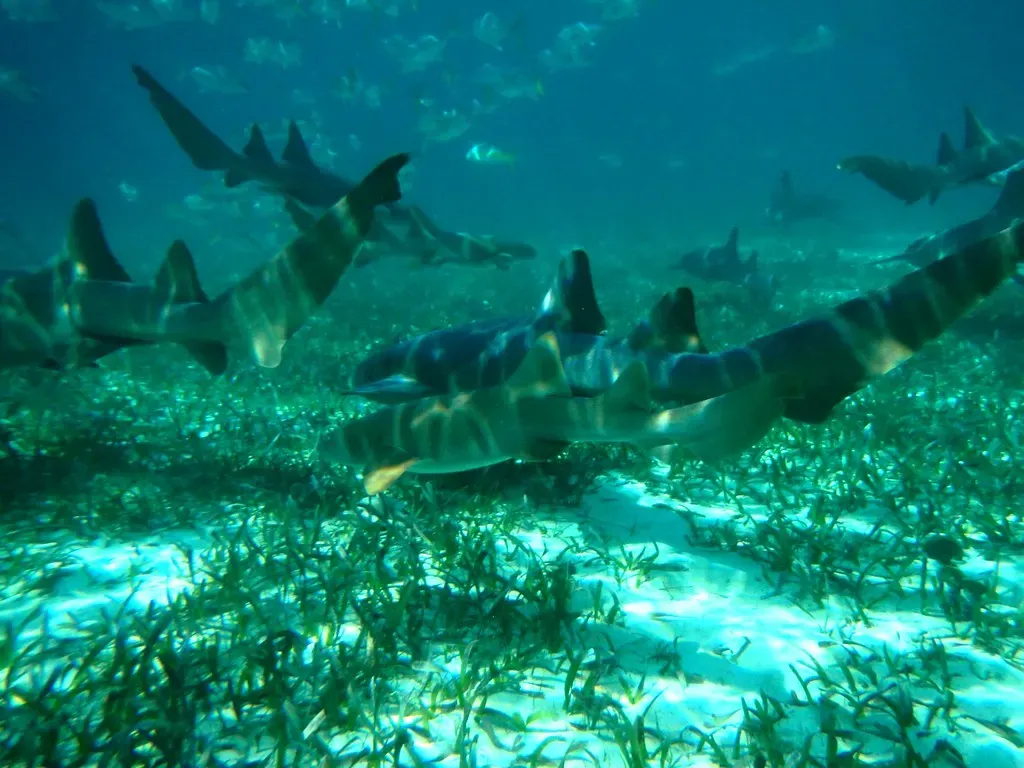
Nurse sharks and southern stingrays at arm's length in 3 m
Reef
Canyons, caverns and tunnels under ten minutes from the pier
Spur furrows plowing from a 15 m reef down to 35 m
Similar dives elsewhere

Sea fans and sponge-covered coral heads in 8 m of water
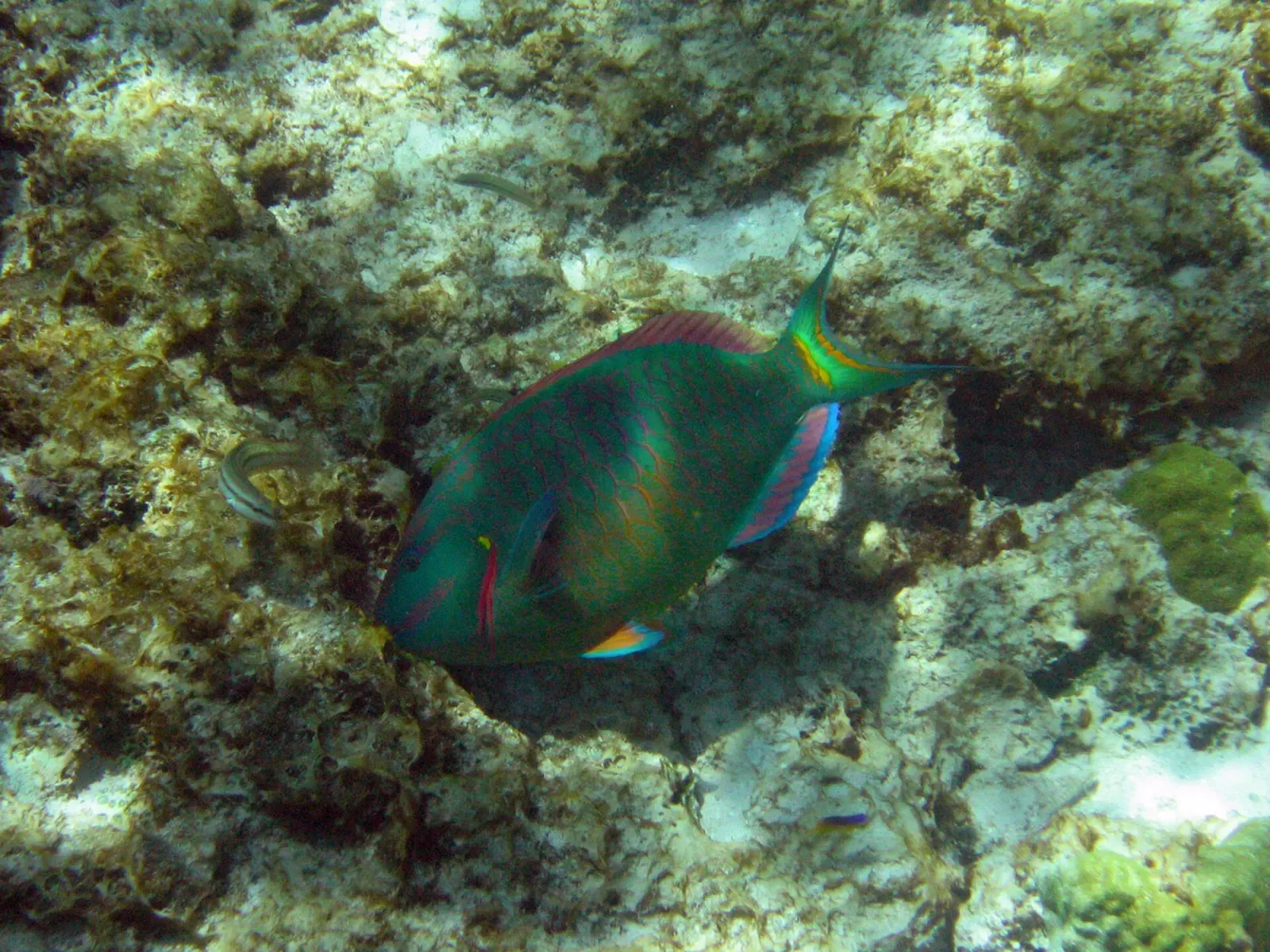
One of only three marked underwater trails in the United States
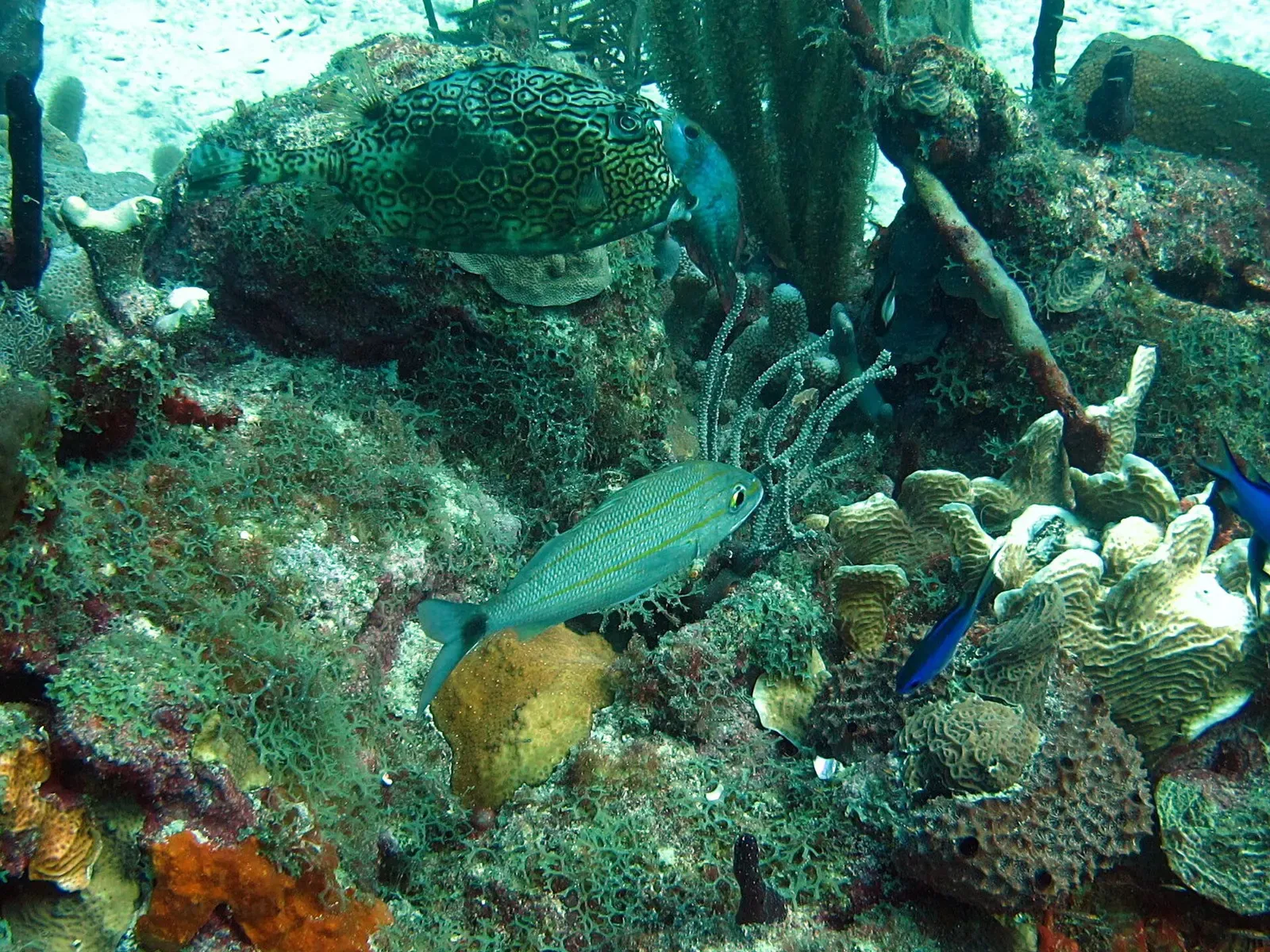

A FUNDEMAR coral nursery and sunken statues at 12 m
Reef
El Acuario
María la Gorda · Cuba
Shoaling reef fish in 3 to 5 m of water