Mediterranean · Italy
Baia & the Phlegraean Fields
Roman villas, mosaics and a sunken harbour inside a protected park
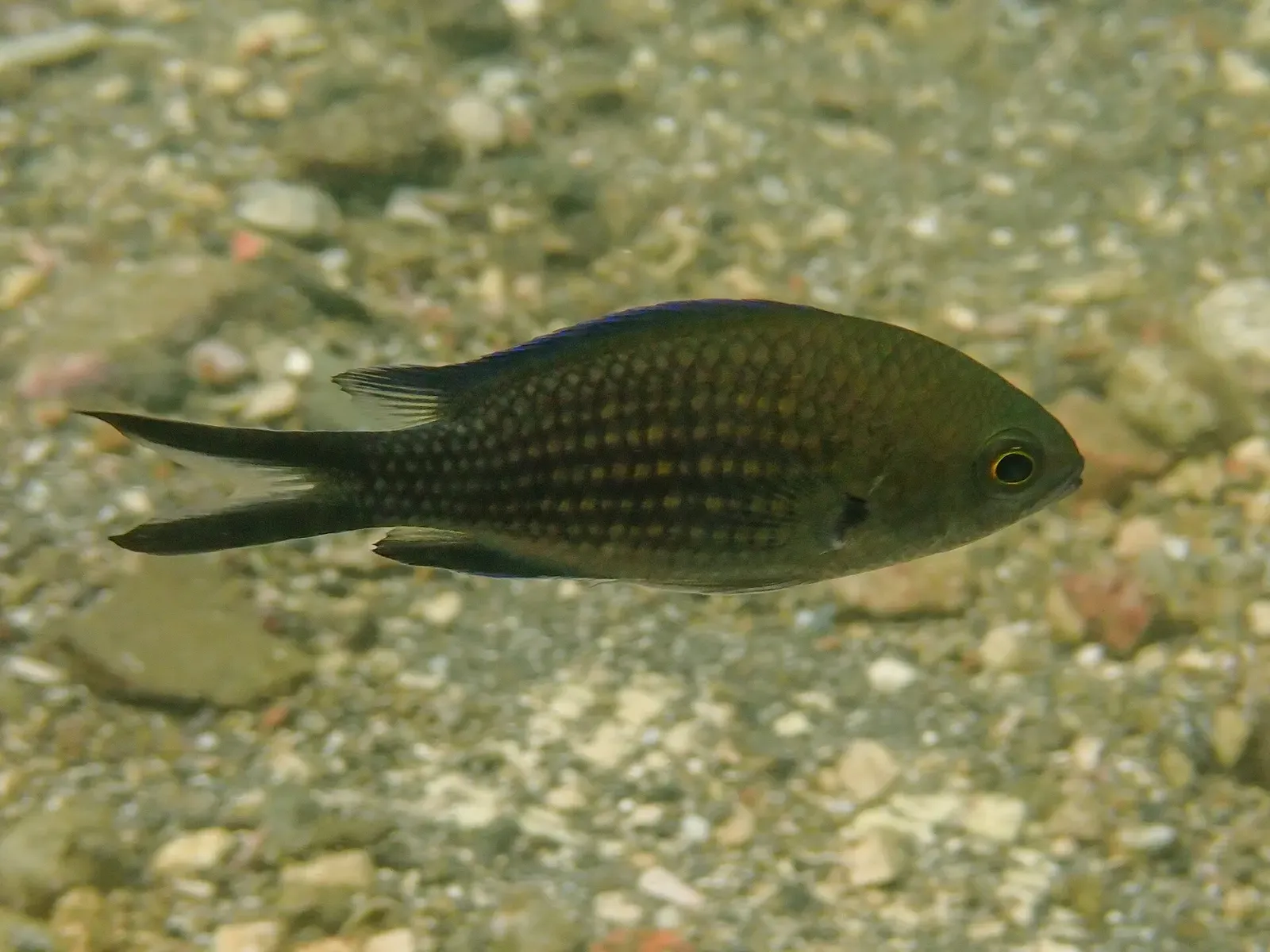
Photo: Dan Schofield · CC BY 4.0
On the Gulf of Pozzuoli, the Submerged Park of Baia has protected the ruins of a sunken ancient city since 2002. Divers swim over the harbour works of Portus Julius, the Nymphaeum of Emperor Claudius and the Villa dei Pisoni, with mosaics lying in shallow water, while inside the park Secca delle Fumose vents volcanic gas bubbles from the seabed and Secca di Miseno carries red gorgonians off the lighthouse.
About diving in Baia & the Phlegraean Fields
Diving here is a short boat ride, with the Lucrino centres a few minutes' navigation from the main archaeological sites. The Submerged Park of Baia, set up by interministerial decree in 2002 and equivalent to a marine protected area, is divided into an integral reserve (zone A), a general zone (B) and a partial zone (C); the Nymphaeum of Emperor Claudius and the villas lie in zone A and Portus Julius in zone B. Beyond the park, the boats also visit the shoals offshore between the Posillipo headland and Capo Miseno.
The sunken city lies in shallow water. Just outside the Nymphaeum, past the thermal baths, a paved Roman road, the Via Herculanea, leads into what was once the Lacus Baianus, and in the south of the park the villa with the prothyrum entrance keeps a room of black and white mosaics laid in a hexagonal pattern. Portus Julius, the arsenal of the Miseno fleet, was linked by a navigable canal to the lakes of Lucrino and Averno. Secca delle Fumose, in zone C, is a line of pylons thought to have protected the harbour, with sulphur deposits almost everywhere on the seabed.
The park suits divers who come for history rather than reef life, and it takes newcomers and experienced divers alike, with every ruin on the guided routes rated low difficulty. Each dive inside the park carries a €5 entrance ticket on top of the dive price. Divers who want more marine life than the archaeology offers will find groupers and large gorgonians at Procida.
Best time to dive Baia & the Phlegraean Fields
| Jan | Feb | Mar | Apr | May | Jun | Jul | Aug | Sep | Oct | Nov | Dec |
|---|---|---|---|---|---|---|---|---|---|---|---|
| Fair | Fair | Fair | Fair | Good | Good | Prime | Prime | Good | Good | Fair | Fair |
From November to April a Lucrino centre opens on Saturdays and Sundays and by appointment, and February brings the coldest sea of the year. Dives still go ahead in November. Daily diving starts on 1 May and runs to 30 October, and July and August bring the warmest water of the year, when the sea feels quite warm.
Dive types & marine life
The Roman ruins are the draw, not the animals. An octopus can turn up among the mosaics and ruins, the pillars of Secca delle Fumose are colonised and rich in flora and fauna, and large fish are possible over the deeper Secca di Miseno.
- Reef
- Octopus & cuttlefish
Best dive sites in Baia & the Phlegraean Fields
- 1
Portus Julius
Agrippa's harbour of 37 BC, with port structures and mosaics at 3 to 5 m
- 2
Nymphaeum of Emperor Claudius
Rectangular building with a reconstructed series of statues of the emperor's dynasty
- 3
Villa dei Pisoni
First-century BC villa of the Pisoni, the family behind a plot against Nero
- 4
Secca delle Fumose
Active fumaroles among colonised pillars, to 16 m with an average dive near 12 m
- 5
Secca di Miseno
Shoal off the Miseno lighthouse topping out at 22 m, with red gorgonians, paramuricea and sponges
Site guides
Artificial reef
A marble-clad imperial hall with an apse and a central pool
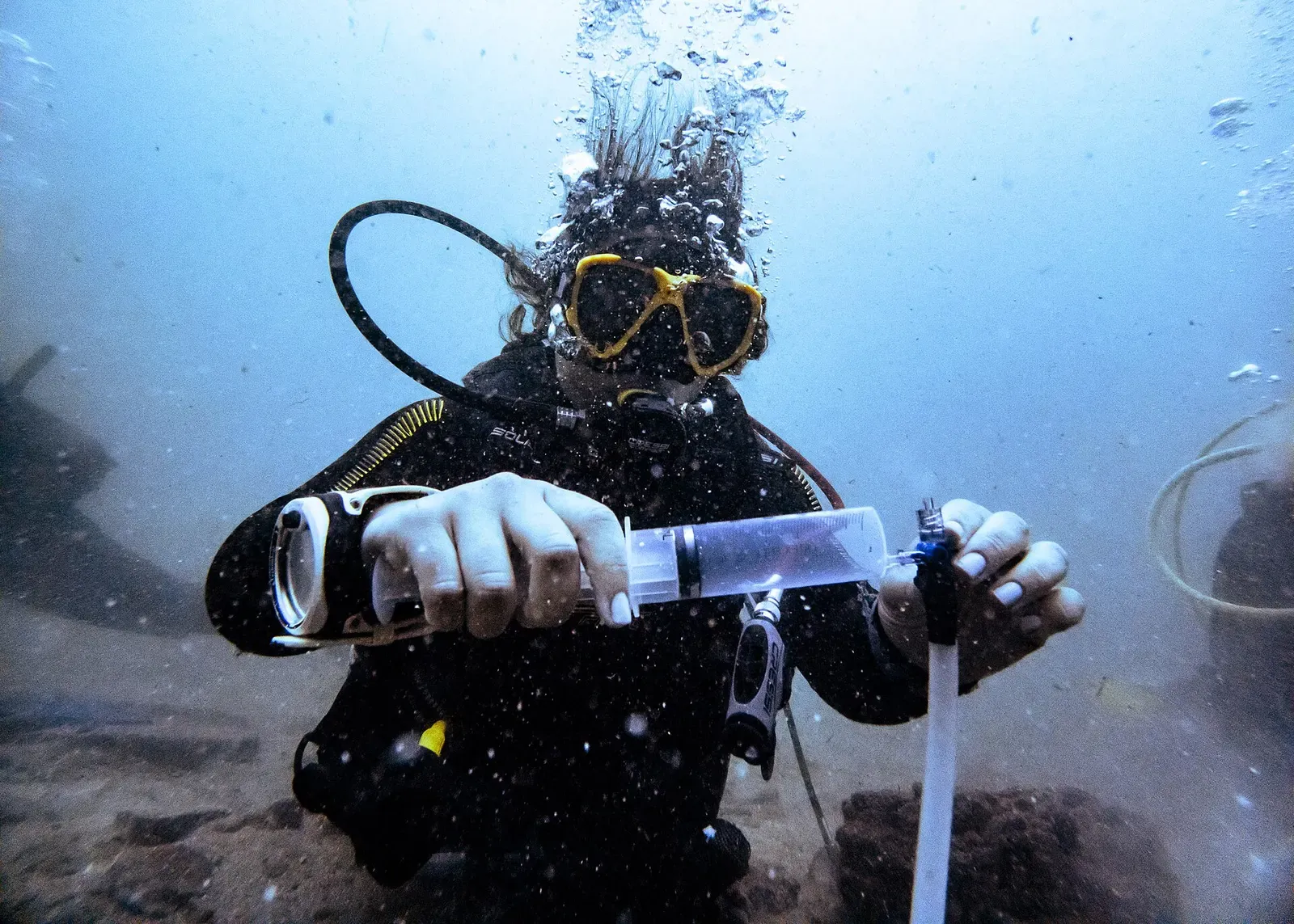

Fumaroles streaming hot volcanic gas bubbles out of the seabed
How to get to Baia & the Phlegraean Fields
Naples International Airport is the gateway. From Naples, the metro to Montesanto connects with the Cumana line towards Pozzuoli; the Lucrino stop is a five-minute walk from a dive centre, and another centre works from beside the Baia pier.
Questions divers ask
Can beginners dive the Baia underwater park?+
Yes. The ruins of Portus Julius, the Nymphaeum and the villas go no deeper than 5 m, and a try-dive programme takes people who have never dived through the park.
What are the bubbles at Secca delle Fumose?+
They are fumaroles: columns of gas bubbles of volcanic origin released from the seabed, a sign of the volcanic ground beneath the Phlegraean Fields.
How cold is the water at dive depth?+
A few degrees colder than at the surface. Over the year the water at dive depth ranges from 13 to 22 °C (55 to 72 °F).
Sources
- Centro Sub Campi Flegrei — Centro Sub Campi Flegrei
- The sea — Centro Sub Campi Flegrei
- How to reach us — Centro Sub Campi Flegrei
- Submerged bay park — Centro Sub Campi Flegrei
- Sea World Baia Diving — Sea World Baia Diving
- Centro Sub Pozzuoli — Centro Sub Pozzuoli
- Pozzuoli average sea temperature — SeaTemperature.org
- Naples International Airport — Wikipedia
- Secca di Miseno — Centro Sub Campi Flegrei
- Secca delle Fumose — Centro Sub Campi Flegrei
- Portus Julius — Centro Sub Campi Flegrei
- Sunken Nymphaeum of Claudius — Centro Sub Campi Flegrei
Photo credits
- One dark olive-brown fish with rows of pale spots and a forked tail swims over a gravelly seabed by Dan Schofield, CC BY 4.0, via Wikimedia Commons
Embed
Run a dive centre, club or blog? Embed this map of 12 dive sites near Baia & the Phlegraean Fields on your own page.
Similar destinations
Mediterranean
Ischia & Procida
Italy
Gorgonian and red-coral walls inside Campania's largest marine reserve
Mediterranean
Capri
Italy
A dive at the Faraglioni stacks, down a steep wall to sand at 32 m
Mediterranean
Gorgonian walls on islets that top submarine mountains in a marine reserve
Mediterranean
Amphorae of a Roman wreck on a volcanic shoal off Lipari