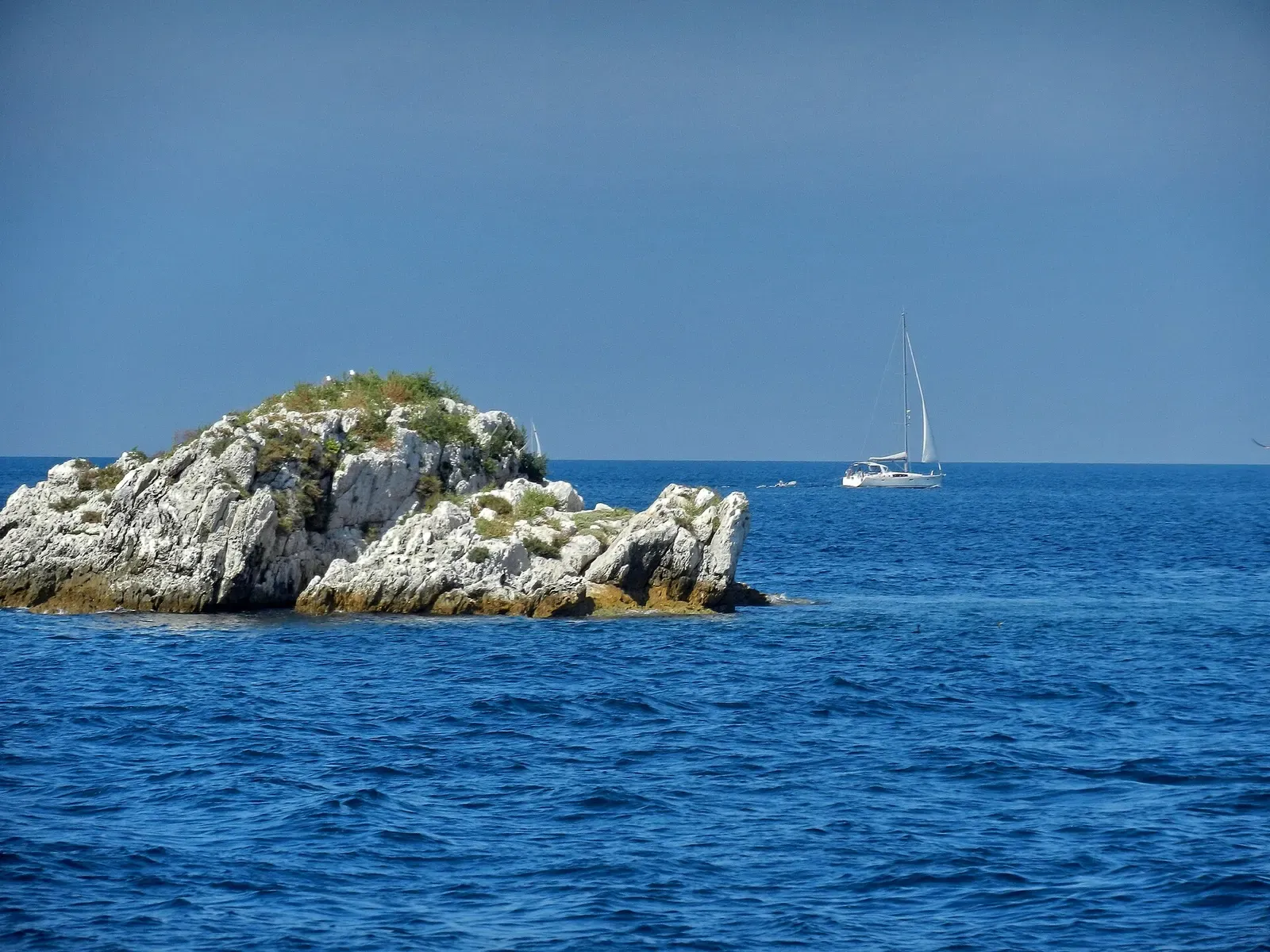
Istria · Croatia · Wreck
SS Baron Gautsch
A 1914 minefield casualty, protected as a Croatian Cultural Monument
Area photo: Tanya Dedyukhina · CC BY 3.0
The best-known wreck dive in the northern Adriatic: an Austro-Hungarian passenger steamer that ran at full speed into a freshly laid minefield off the Brijuni islands in August 1914 and took 127 people with her. She lies on sandy and stony ground between 28 and 40 metres, nine nautical miles off Rovinj, and has been a registered Croatian Cultural Monument since 1995.
Also known as Baron Gautsch.
Where it is and how deep
44.9375° N, 13.5733° EPublished position for this site.
The dive
Dives start at the stern and work forward across the upper deck towards the bow. The deck structure is the shallow part of the wreck at around 28 metres and the sand she sits on is at 40, so the profile is settled before you leave the boat: stay high over the decks for a longer no-stop dive, or drop to the seabed and accept a short bottom time at the deep end.
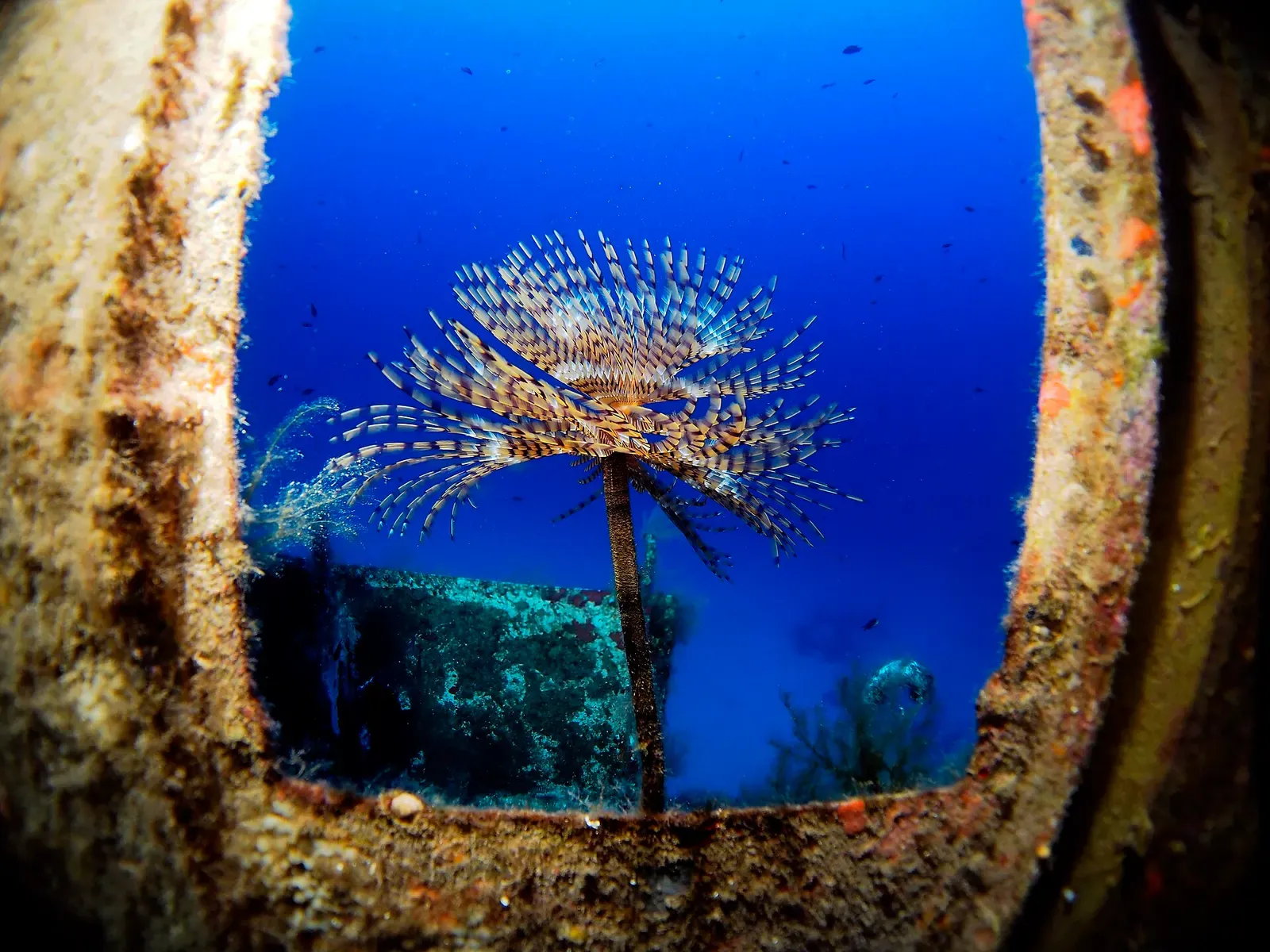
After the outside tour the route goes in through the upper deck, where the steel skeleton of the ship is left open. Swarms of snout bream hang over the structure, with scorpionfish, sea bream and crabs among the plating and coral growth on the steel. She measures 84.5 metres by 11.64, so one dive covers a section of her rather than the whole hull.
The wreck
- Vessel
- SS Baron Gautsch
- Type
- Austro-Hungarian passenger steamer
- Length
- 84.5 m (277 ft)
- Sunk
- 1914
- Cause
- Struck a naval minefield at full speed seven nautical miles from the Brijuni islands
- Lies
- On sandy and stony ground in 28 to 40 m, nine nautical miles off Rovinj
Baron Gautsch was a 2,069 GRT steamer built at the Gourlay Brothers shipyard in Dundee. On 13 August 1914 she left the harbour at Veli Lošinj, and at 2:45 that afternoon, seven nautical miles from the Brijuni islands, she entered at full speed a minefield the navy had just laid. 127 people were killed, most of them women, children and crew; the ships that came to help pulled 159 out of the water. In October 1995 the Board for the Protection of Cultural Heritage entered the wreck in the Register of Croatian Cultural Monuments.
Marine life and season
- Reef fish swarms
- Macro critters
| Jan | Feb | Mar | Apr | May | Jun | Jul | Aug | Sep | Oct | Nov | Dec |
|---|---|---|---|---|---|---|---|---|---|---|---|
| Off-season | Off-season | Fair | Fair | Good | Prime | Prime | Prime | Prime | Good | Fair | Off-season |
Season follows Istria: The main season runs 1 May to 31 October; the sea passes 20°C from mid-June to September, and a few sites are diveable only outside the high season.
Know before you go
- The wreck starts at 28 m and the sand is at 40, so no-stop time at the deep end is measured in minutes. Agree a maximum depth and a turn pressure before you descend.
- The tour goes inside through the upper deck. Treat it as an overhead: keep the way out in sight, stay off the structure and do not stir the silt lying on the decks.
Questions divers ask
How deep is the Baron Gautsch?+
The wreck lies on sandy and stony ground between 28 and 40 metres; the resident Pula operator quotes 28 m minimum and 39 m maximum. The decks are the shallow end and the seabed the deep one, so how deep your dive goes depends on how far down the hull you drop.
What certification do I need for the Baron Gautsch?+
Operators ask for a deep-diver certification and a minimum of 40 logged dives. That reflects the 28 to 40 metre depth range rather than any penetration requirement.
How did the Baron Gautsch sink?+
She struck a mine on 13 August 1914, seven nautical miles from the Brijuni islands, running at full speed into a minefield that had just been laid. 127 people were killed and 159 were rescued from the water.
Sources
- SS Baron Gautsch — Wikipedia
- Wreck Baron Gautsch — Diving Pula
- Baron Gautsch (wreck) — Scubago
More dive sites in Istria
Wall
A 200 m wall under sponges, bryozoans and soft corals
Wreck
Scout cruiser mined two weeks after the war ended, at 49 m
Cave & cavern
Limestone tunnels, the first passed one diver at a time
Cave & cavern
Shallow caves at 3 to 8 m inside Kamenjak Nature Park
Wreck
Mined in 1943, bow torn away, lying at 48 m
Wreck
A 40 m cargo wreck on the sand off the San Giovanni light
Reef
A terraced plateau reef that few boats visit
Reef
Freshwater springs in the shallows at the Lim Channel mouth
Similar dives elsewhere
Carrara marble still lying in the holds at 42 m
A sunken fish farm hanging at an angle from 12 m to 35 m
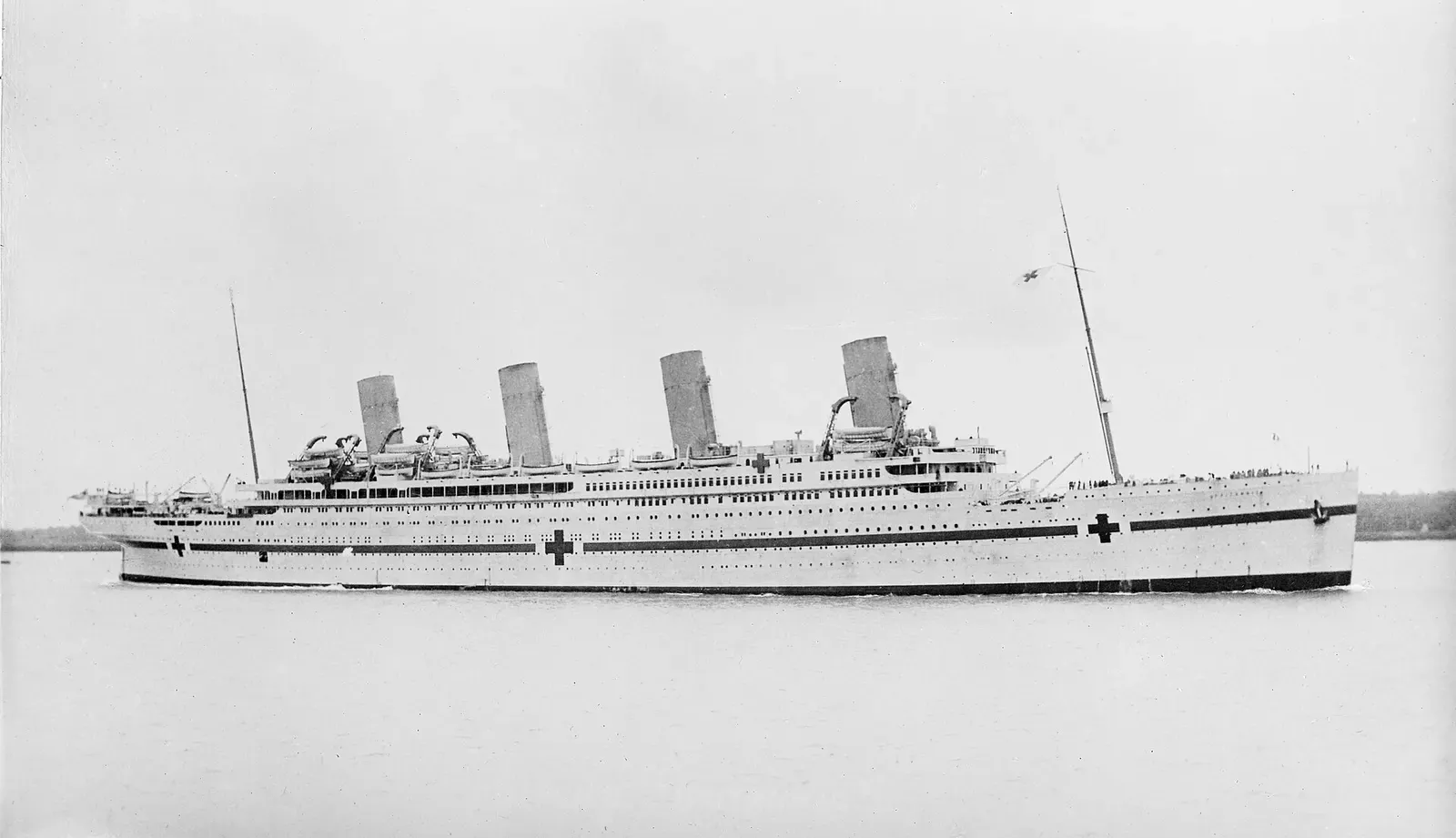
A scattered cargo wreck on a reef running from 2 m to 35 m

A ferry at 42 m, reached by a giant stride from the rocks