Jeju · South Korea · Reef
Munseom
Soft coral on columnar trachyte inside Natural Monument No. 421
Munseom is a trachyte islet off Seogwipo, listed with neighbouring Beomseom as Natural Monument No. 421 in July 2000. Three diving points are published around it, one of them a sunken ship near 30 m, and the survey behind that listing recorded 17 anthozoan species in the reserve. Soft coral is what the water off the islet is known for; the current is what the shops plan around.
Also known as Mun Island, Mosquito Island.
Where it is and how deep
33.2277° N, 126.5681° EApproximate position — the dashed circle shows where the site lies; your operator's briefing has the mooring.
The dive
Munseom sits a little over 1 km south of Seogwipo's port and is reached by boat from the harbour front. Three named diving points are published around the islet, and which one you dive depends on the day. The rock is trachyte rather than the basalt that makes up most of Jeju: vertical columnar jointing runs through the whole islet, and wave erosion has cut cliffs and caves into it.
Soft coral is the draw. The submarine that runs out of Seogwipo harbour works a 2.8 km course to 40 m near the islet and sells the trip on the soft corals and colourful fish along it, and the survey behind the natural monument listing counted 17 anthozoan species across Munseom and Beomseom. One of the published points is a sunken ship near 30 m, the deepest figure recorded for the islet, and it is dived as a point of its own. Currents off Jeju can be very dangerous, which is why shops here dive behind a guide who reads the water.
Background
Munseom and Beomseom were designated Natural Monument No. 421 on 18 July 2000. Both islets are trachyte rather than the basalt that forms most of Jeju, and the listing covers more than the water: Munseom carries 118 plant species, including the Machilus thunbergii that shelters the black wood pigeon, and the islets mark the southern breeding limit of that bird. The survey behind the designation recorded 13 sponge species, five echinoderms, 17 anthozoans and 23 crustaceans, along with 111 species of green, brown and red algae on the shoreline. Both islets sit inside the Jeju Biosphere Reserve designated by UNESCO in 2002.
Marine life and season
- Pristine corals
| Jan | Feb | Mar | Apr | May | Jun | Jul | Aug | Sep | Oct | Nov | Dec |
|---|---|---|---|---|---|---|---|---|---|---|---|
| Fair | Fair | Fair | Good | Good | Prime | Prime | Prime | Prime | Prime | Good | Fair |
Season follows Jeju: Jun–Oct is warmest with the best visibility; winter drops to 14°C and typhoons can close the islets in late summer.
Know before you go
- Currents off Jeju can be very dangerous. Dive Munseom behind a local guide who knows how the water runs around the islet, and agree the turn point before you go in.
Photos from Munseom
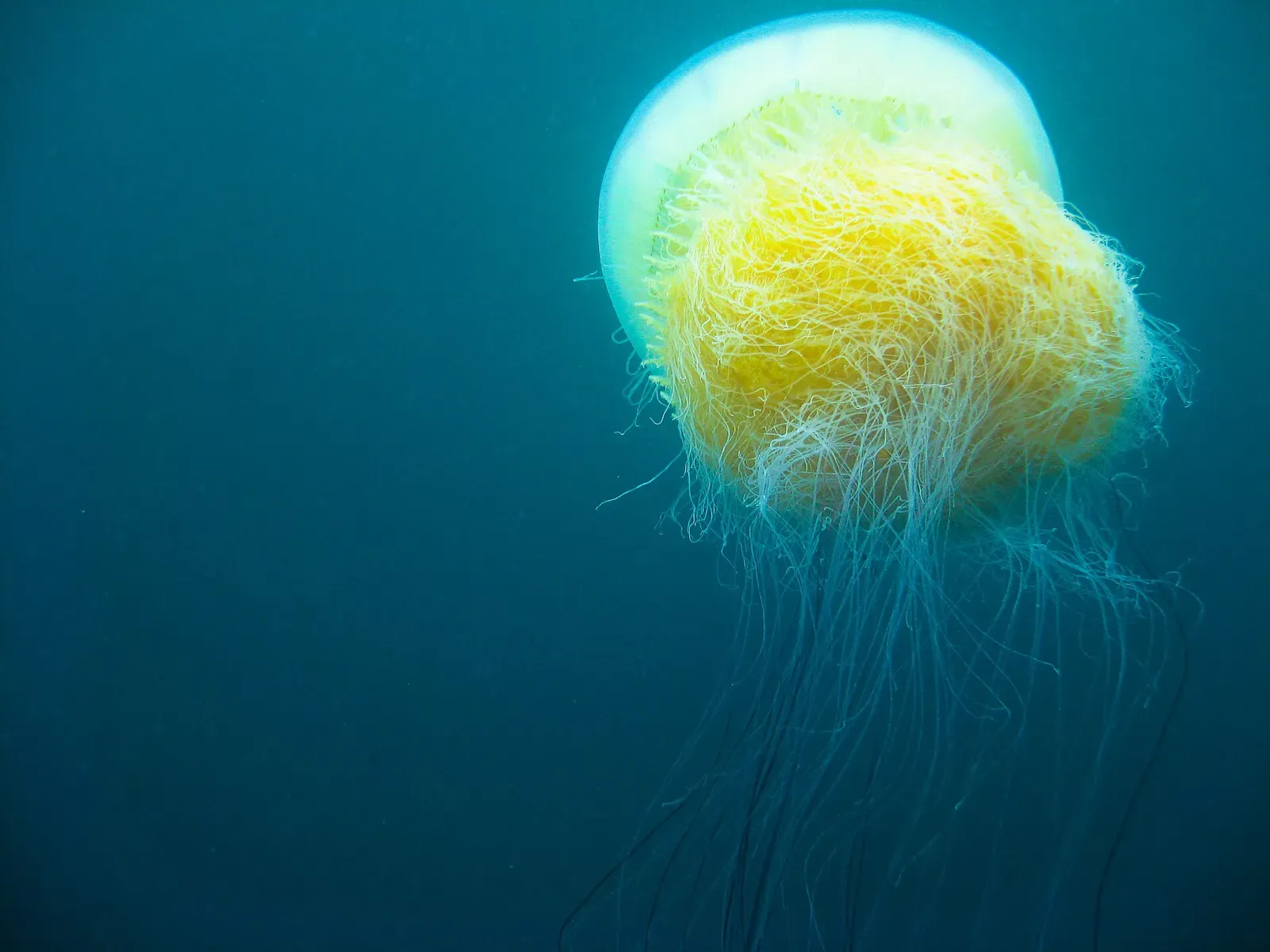
Janne Hellsten (nurpax) from Helsinki, Finland · CC BY 2.0
[Photographic credit: Jin-Ho Park] Park J, De Grave S, Park T. 2020. On the genus Mesopontonia Bruce, 1967 (Crustacea: D · CC BY 4.0
[Photographic Credits: (A) Jin-Ho Park, (B) Jong Moon Choi] Park J, De Grave S, Park T. 2020. On the genus Mesopontonia · CC BY 4.0
Dive videos
2020.04.30 서귀포 문섬 한개창(scuba diving in Munseom, Seogwipo, Jeju Island) · 한라산 블랙 팬서(Hallasan Black Panther) on YouTube
제주 문섬 난파선(Munseom Island Shipwreck, Jeju, Korea) dive point · Now or Never (Wani) on YouTube
Questions divers ask
How deep is the diving at Munseom?+
The deepest published figure for the islet is a diving point with a sunken ship near 30 m. No source publishes a typical recreational profile for the other two points around Munseom, so agree the depth with the shop running the boat.
Do you need a permit to dive Munseom?+
Munseom and Beomseom are a restricted-access natural reserve, and going ashore requires permission from the Cultural Heritage Administration. Diving the published points in the water around the islet is run as a boat trip out of Seogwipo, so arrange it through a local shop.
Sources
- 문섬·범섬 천연보호구역 — Wikipedia (Korean)
- Seogwipo — Wikivoyage
- Diving in South Korea — Divezone
Photo credits
- Giant Nomura's jellyfish drifting in blue water off Munseom, tentacles trailing below the bell by Janne Hellsten from Helsinki, Finland, CC BY 2.0, via Wikimedia Commons
- Close view of a yellow-fringed Nomura's jellyfish bell underwater at Munseom by Janne Hellsten (nurpax) from Helsinki, Finland, CC BY 2.0, via Wikimedia Commons
- Translucent shrimp with orange-striped body and long white legs against dark water by [Photographic credit: Jin-Ho Park] Park J, De Grave S, Park T. 2020. On the genus Mesopontonia Bruce, 1967 (Crustacea: D, CC BY 4.0, via Wikimedia Commons
- Translucent shrimp perched on the yellow polyps of a soft coral branch by [Photographic Credits: (A) Jin-Ho Park, (B) Jong Moon Choi] Park J, De Grave S, Park T. 2020. On the genus Mesopontonia , CC BY 4.0, via Wikimedia Commons
Similar dives elsewhere


_Figure_12.png)
_Figure_7_(cropped).png)
A 5 m coral shelf dropping to three coral heads on sand at 20 to 25 m.
Reef
Abeshita
Miyakejima · Japan
Lava arch on the south coast, entered from the beach
Reef
Aka-Iwa
Sado Island · Japan
Resident kobudai wrasse, one of them known as Kojiro, that swim up to divers on entry
Reef
Akinohama
Izu Ōshima · Japan
Endemic Japanese pygmy seahorses off a lava-jetty shore entry