
Kimbe Bay · Papua New Guinea · Reef · Pelagic & blue water · Wall
Joelle's Reef
Schooling barracuda and trevally when a current is running
Area photo: Kimbe at en.wikipedia · CC BY-SA 3.0
Joelle's Reef tops out at about 16 m and slopes gently to 25-30 m before it reaches a vertical drop-off, except on the southern side, where the reef runs down to around 40 m. Schools of barracuda, big-eye trevally, red pinjalo, dogtooth tuna and surgeonfish work the reef, and the fish action is best when there is at least a small current running.
Also known as Joelle's.
Where it is and how deep
No published position for this site — the map shows Kimbe Bay and its other sites; operators know the mooring.
The dive
The top of the reef sits in approximately 16 m of water, so the dive opens with a descent through blue onto the summit rather than a shallow entry. From there the surface of the reef slopes gently down to 25-30 m before it reaches a vertical drop-off. The southern side is the exception, running down to around 40 m, which is deeper than a recreational profile needs to go.
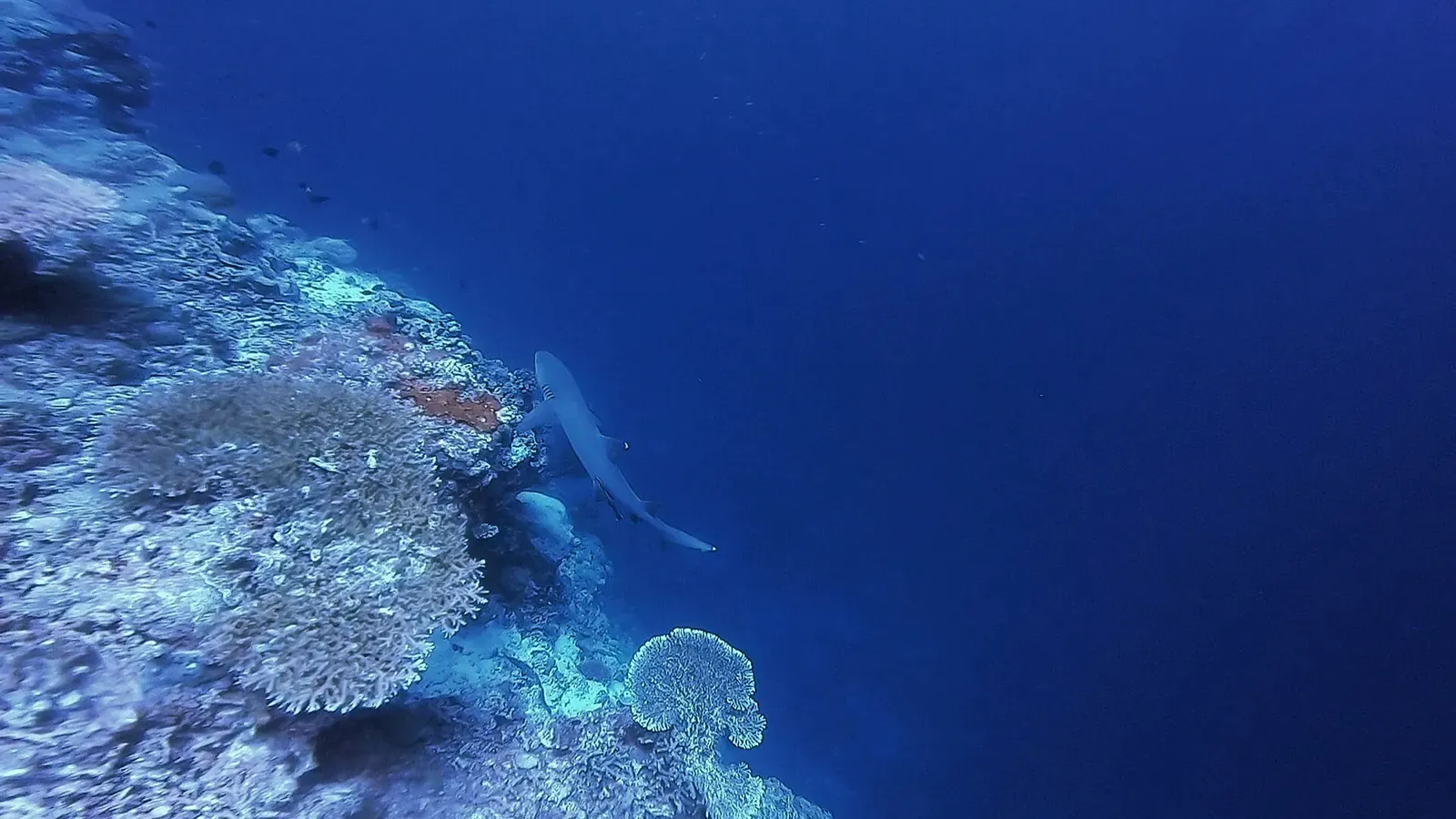
Fish action is what the site is for, and it depends on water movement: with at least a small current running you can generally expect schools of barracuda, big-eye trevally, red pinjalo, dogtooth tuna and surgeonfish along the reef. You may also catch a glimpse of grey reef sharks or whitetips in the same water, and hawksbill turtles pass through on occasion.
Around the mooring the diving turns quieter, with three kinds of anemonefish, pink, Clark's and spine-cheek, holding in the anemones there. That makes the mooring a sensible place to finish, since the reef offers no shallow shoulder to hang on and the ascent is better made on the line than out over the drop-off.
Marine life and season
- Barracuda
- Trevally & jacks
- Tuna
- Reef sharks
- Sea turtles
- Reef fish swarms
| Jan | Feb | Mar | Apr | May | Jun | Jul | Aug | Sep | Oct | Nov | Dec |
|---|---|---|---|---|---|---|---|---|---|---|---|
| Good | Good | Good | Good | Prime | Prime | Prime | Prime | Prime | Prime | Good | Good |
Season follows Kimbe Bay: Diveable year-round; May–October dry season typically gives clearer water and calmer seas.
Know before you go
- The fish schools show best when a current is running, and the reef has no shallow top to shelter on, so stay within reach of the mooring line or carry an SMB for a mid-water ascent.
- The southern side of the reef falls to around 40 m, well below the rest of the site; check depth when following fish along that edge.
Dive videos
2014 12 29 Joelle's Reef, Papua New Guinea 2 · dvdiverjp i on YouTube
Friendly Green Turtle - Papua New Guinea · 62waterdragon on YouTube
Questions divers ask
How deep is Joelle's Reef?+
The top of the reef sits at approximately 16 m and the surface slopes down to 25-30 m before a vertical drop-off. The southern side of the reef reaches around 40 m, deeper than most recreational dives here need to go.
When is the fish action best at Joelle's Reef?+
When there is at least a small current running. That is when divers generally see the schools of barracuda, big-eye trevally, red pinjalo, dogtooth tuna and surgeonfish the site is known for.
Sources
- Kimbe Bay | Walindi Plantation Resort — Walindi Plantation Resort
More dive sites in Kimbe Bay
Seamount
An isolated seamount that pulls in barracuda and trevally schools
Reef
Dense stands of red whip gorgonians tangled with crinoids
Reef
Dark red sea fans two to three metres across
Similar dives elsewhere
The island's most reliable edge for grey reef and whitetip sharks

The protected shallows where Balicasag's turtles are thickest

Seagrass, dense reef and wall on one protected slope
An islet shaped like a nudibranch, ridge-linked to Tank Rock