
Lady Elliot Island · Australia · Pinnacle · Reef
Lighthouse Bommie
The island's main manta cleaning station, in 14 m of water
Area photo: Christo.j.brown · CC BY-SA 4.0
A set of coral heads about 100 metres off Lady Elliot's heritage-listed lighthouse, standing on sand in 14 to 16 metres. It is the island's main manta cleaning station and is worked by rays year-round, so whole dives get spent circling one bommie. Glassfish, garden eels and resting green turtles fill in around them.
Also known as Lighthouse Bommies.
Where it is and how deep
No published position for this site — the map shows Lady Elliot Island and its other sites; operators know the mooring.
Site maps published elsewhere
The dive
You go down the site's own descent line rather than swim to the mark. The bommies sit roughly 100 metres out from the lighthouse in 14 to 16 metres, a group of coral heads on sand rather than one pinnacle, and the dive is spent low and still around them. That is the point of the site: the rays come back to the same coral to be cleaned by wrasse, so there is no reason to swim anywhere.
The mantas are here all year, and the resort describes animals around four metres from wingtip to wingtip gliding over divers' heads and returning to their favourite bommie for another pass. Around them the sand does its own work — garden eels standing out of it, cowtail rays and shovel-nosed sharks tucked under it. Trevally cut in and out of the glassfish covering the coral, and green turtles rest in beds of soft coral.
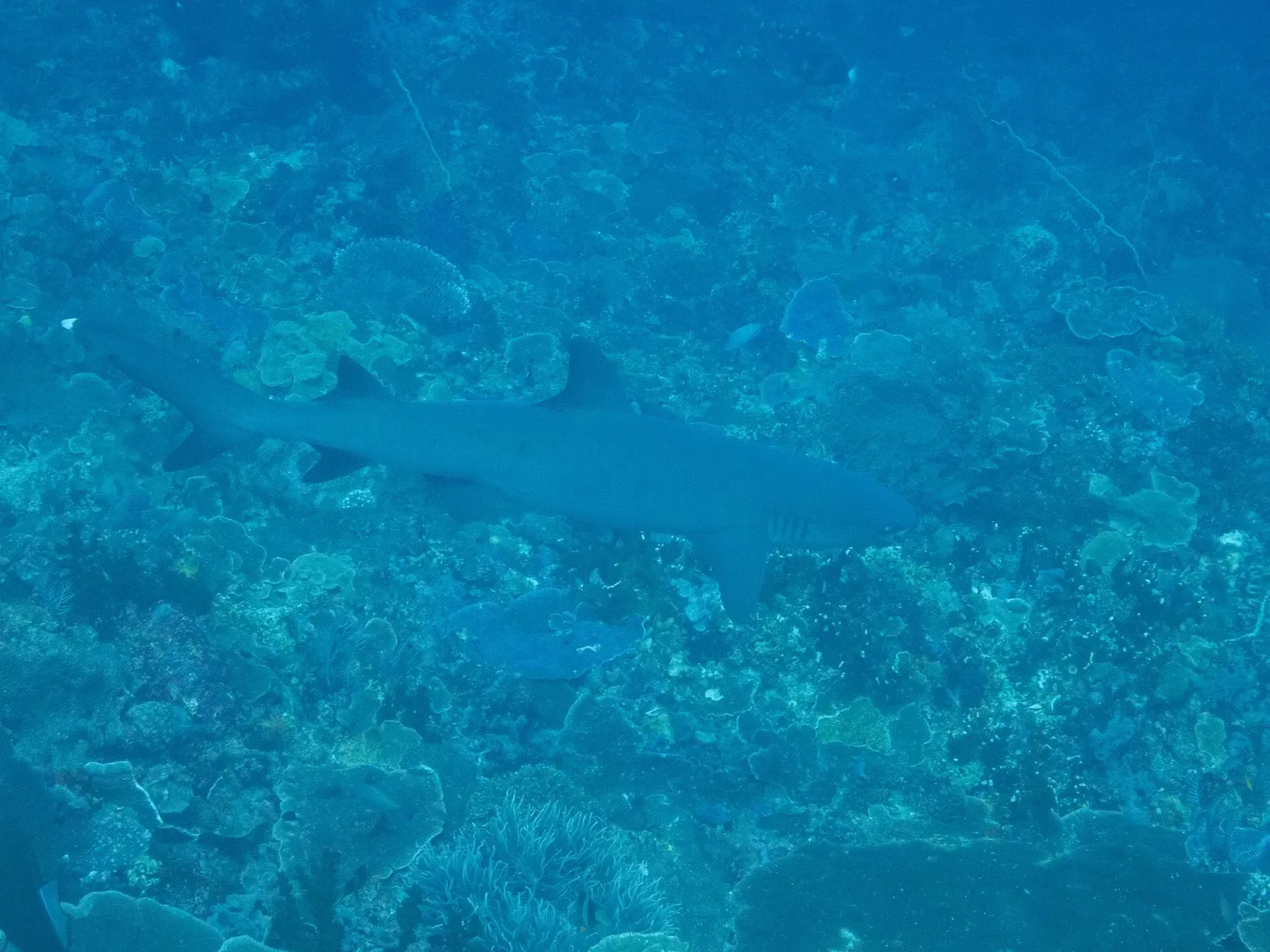
Smaller residents round out the dive: coral trout, moray eels, schooling barracuda and small whitetip reef sharks are all logged on these heads. The whole island lies inside the Green Zone of the Great Barrier Reef Marine Park, the highest classification the park authority designates, so nothing is taken and nothing is handled — with animals that come to you, staying put is also what keeps them there.
Marine life and season
- Manta rays
- Sea turtles
- Trevally & jacks
- Barracuda
- Reef sharks
- Stingrays
| Jan | Feb | Mar | Apr | May | Jun | Jul | Aug | Sep | Oct | Nov | Dec |
|---|---|---|---|---|---|---|---|---|---|---|---|
| Good | Good | Good | Good | Prime | Prime | Prime | Prime | Prime | Good | Good | Good |
Season follows Lady Elliot Island: Mantas peak May–Aug when cooler water brings them in; humpbacks pass Jun–Oct and turtles nest Nov–Mar.
Know before you go
- Crowding a cleaning station empties it. Settle on the sand clear of the coral heads and let the rays choose the distance rather than swimming at them.
Dive videos
Diving Lighthouse Bommie at Lady Elliot Island · Lucy In The Sea on YouTube
Questions divers ask
How deep is Lighthouse Bommie?+
The coral heads sit in 14 to 16 metres, about 100 metres off the island's lighthouse. The resort's own site listing gives 14 m as the working depth, so it is a shallow dive with a long bottom time.
When can you see mantas at Lighthouse Bommie?+
The site is a cleaning station and the resort describes it as a manta haunt all year round, with rays returning to the same bommie to be cleaned by wrasse.
Sources
- Lighthouse Bommie — Lady Elliot Island dive sites — Lady Elliot Island Eco Resort (Internet Archive)
- Dive Sites & Map, Lady Elliot Island — Lady Elliot Island Eco Resort (Internet Archive)
- Lady Elliot Island — Wikipedia
In The Logbook
- Where to dive with manta rays, month by monthBig animals · 8 min read
More dive sites in Lady Elliot Island
Pinnacle
A manta cleaning station beside a coral-covered Admiralty anchor
Cave & cavern
An L-shaped cave in from 14 m and out of the wall at 22 m
Coral garden
Shallow coral regrown since the 1992 cyclone, and a strong night dive
Cave & cavern
A twin-entrance overhang at 24 m below a 16 m cleaning station
Pinnacle
Loose bommie field in 14–19 m that rays and sharks cross
Reef
Branching coral gardens in 5–12 m with three turtle species
Wreck
The island's only wreck, coral-grown at 21 m since 1999
Pinnacle
Resident leaf scorpionfish on bommies at 18 m
Similar dives elsewhere

Bombies at 5 to 15 m where mantas come in to feed

Offshore pinnacle with barracuda, napoleon wrasse and blacktips

A rock formation named for a sunken ship that isn't there

A holed rock at the surface, a coral-covered pinnacle below