Two mantas, three kinds of dive
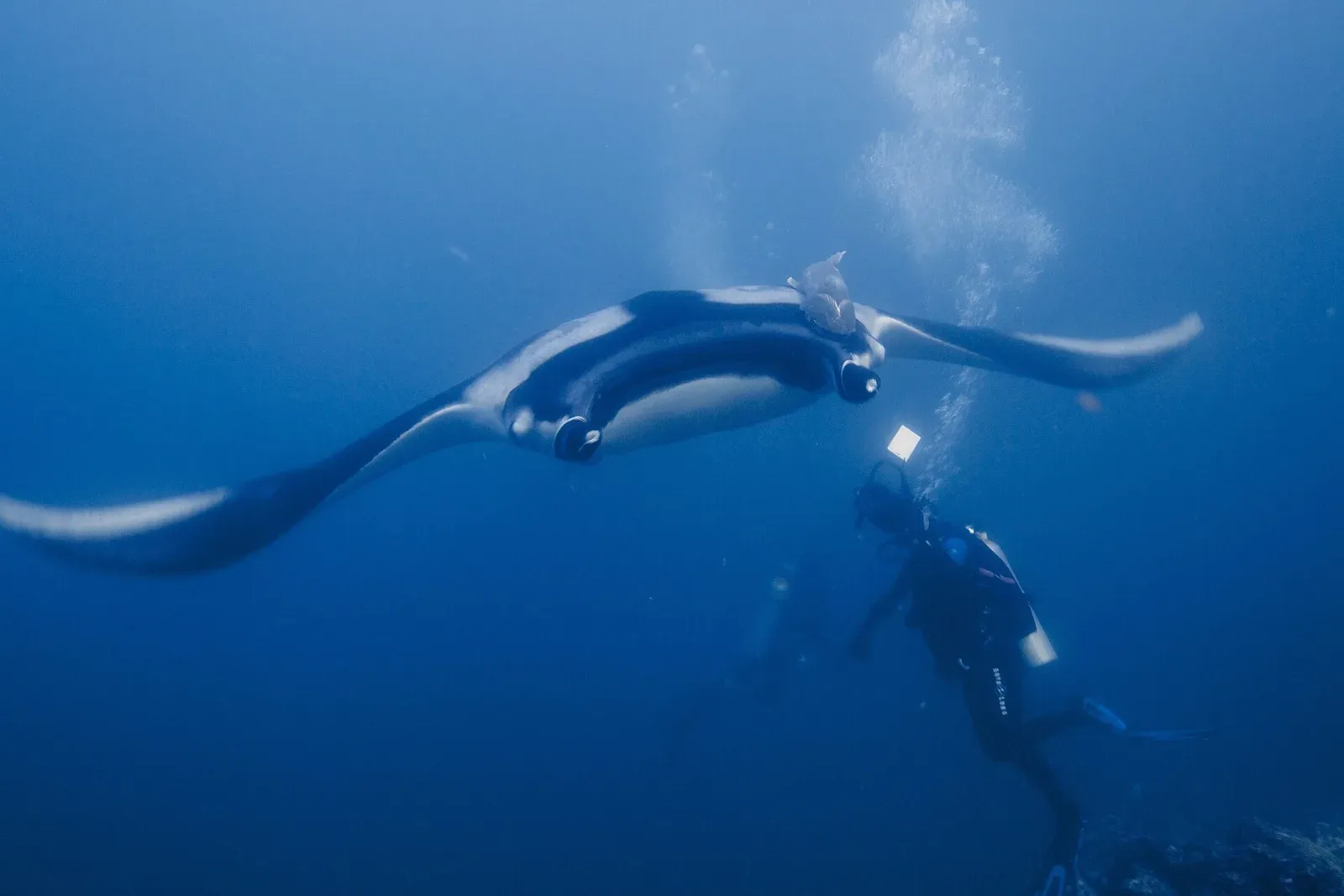
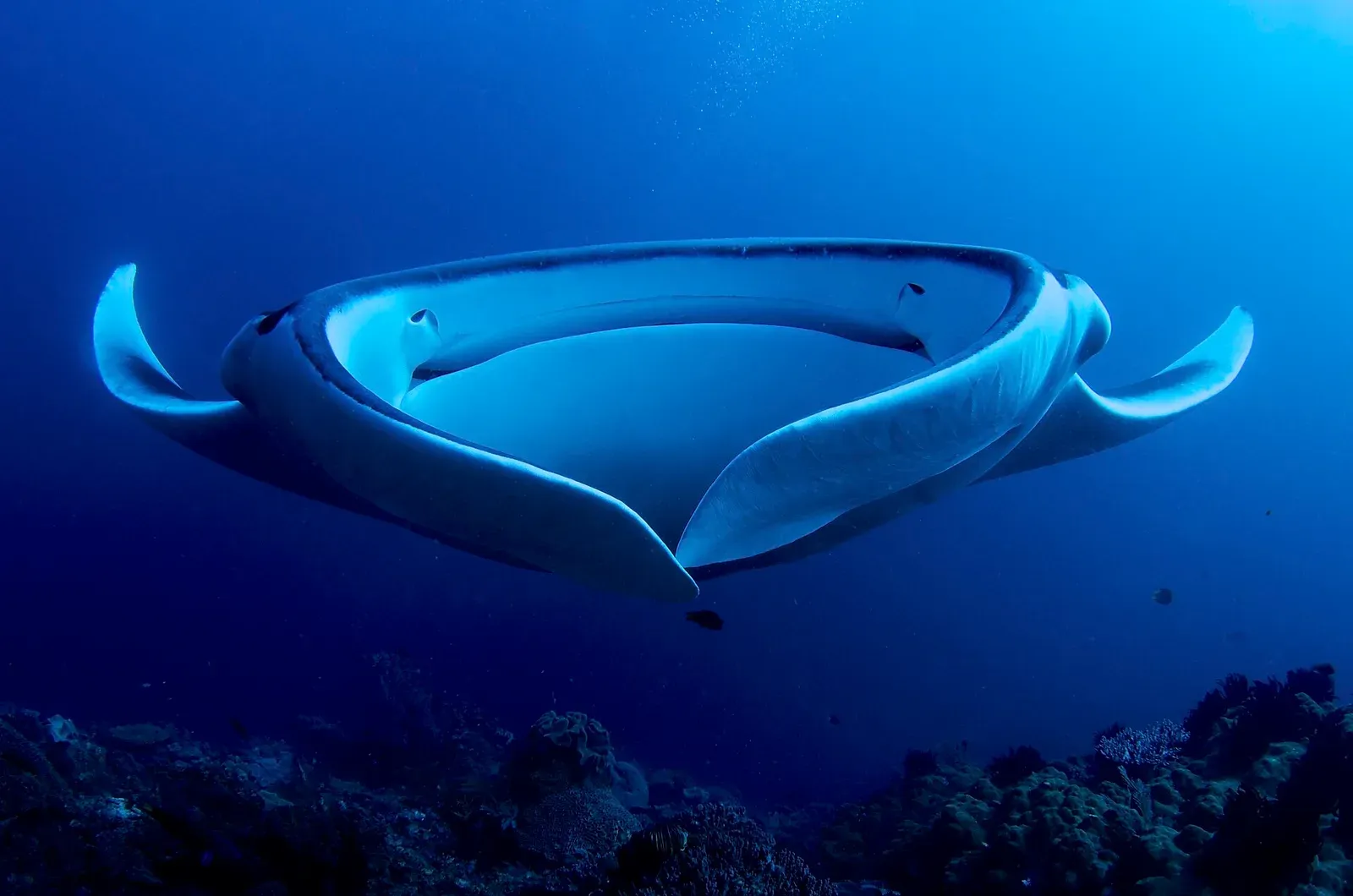
Divers meet two mantas. The reef manta, up to four or so metres across, lives around islands and atolls and returns to the same cleaning stations year after year, which is why so many of the sites below are a single coral head you settle beside and wait at. The giant, or oceanic, manta is bigger and travels further, and the places that hold it are offshore pinnacles and banks like Socorro’s El Boiler and Ecuador’s Bajo Copé.
That gives three kinds of manta dive. At a cleaning station you find the coral head where small wrasse pick parasites off the rays, settle low on the sand at a distance and let them work; Lady Elliot, Yap, Nusa Penida, Ishigaki and Raja Ampat’s Manta Sandy are all this dive. In a feeding channel the plankton is being funnelled by tide or current and the mantas come to eat, so you hook in or drift and they pass over you: Manta Ridge, Manta Alley, German Channel and Yap’s Goofnuw Channel. And at Kona there is a third, invented by hotel floodlights in the 1970s: divers kneel on the sand at 10 m and point their lights up, the plankton gathers in the beams, and the rays come to feed in the lit column overhead.
Where and when
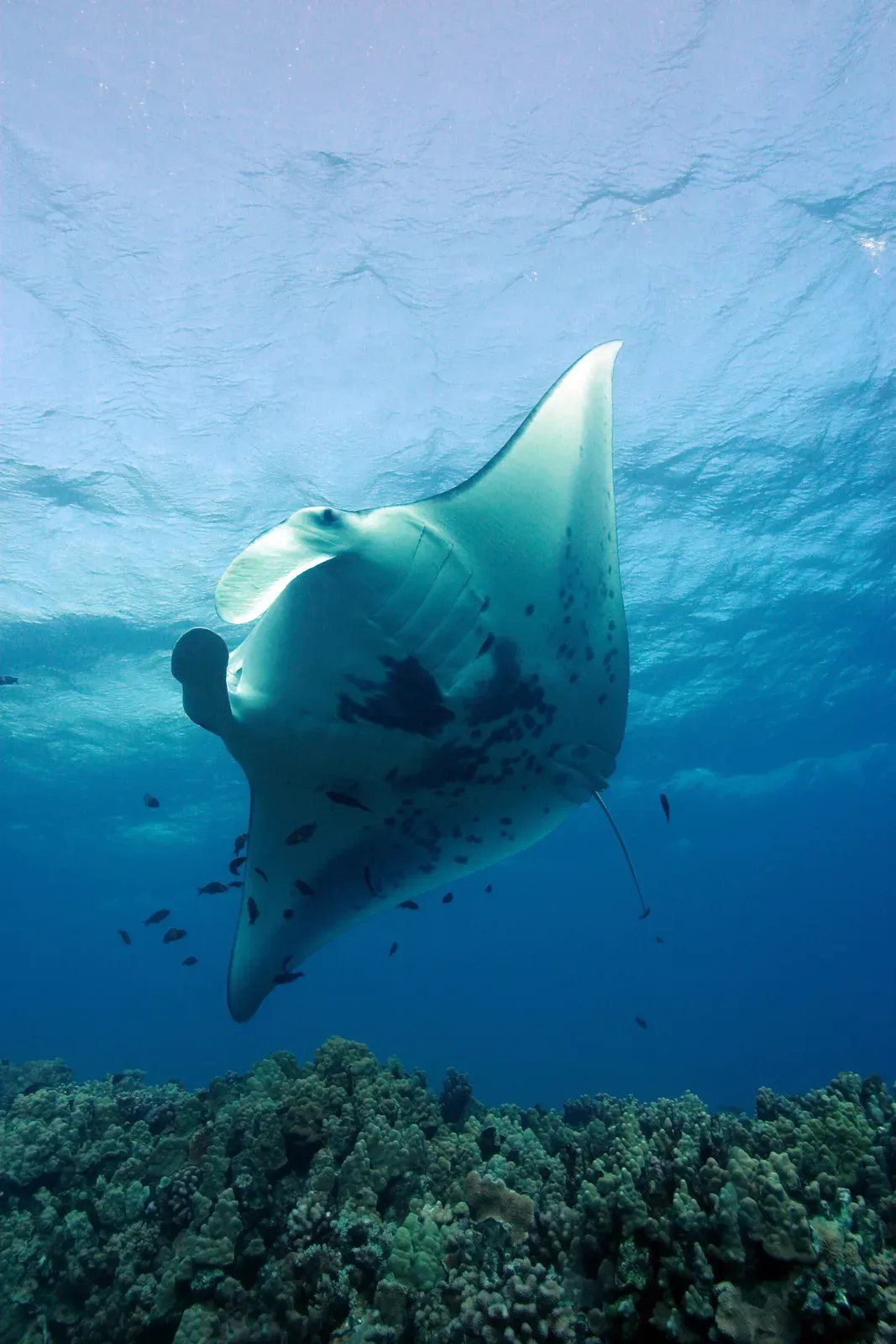
Each row is a site, each column a month, and the colour is the season rating from that site’s own page. Read across for the trip you can take, down for the month you can travel.
| Site | Jan | Feb | Mar | Apr | May | Jun | Jul | Aug | Sep | Oct | Nov | Dec |
|---|---|---|---|---|---|---|---|---|---|---|---|---|
| Manta SandyRaja Ampat | Prime | Prime | Prime | Good | Fair | Fair | Fair | Fair | Good | Good | Prime | Prime |
| Manta PointKomodo | Good | Good | Good | Good | Good | Prime | Prime | Prime | Prime | Prime | Good | Good |
| Manta AlleyKomodo | Good | Good | Good | Good | Good | Prime | Prime | Prime | Prime | Prime | Good | Good |
| Manta PointNusa Penida | Good | Good | Prime | Prime | Prime | Prime | Good | Good | Good | Good | Good | Good |
| Sangalaki Manta PointDerawan & Sangalaki | Fair | Fair | Good | Prime | Prime | Prime | Prime | Good | Good | Good | Fair | Fair |
| Manta ScrambleIshigaki | Fair | Fair | Good | Prime | Prime | Prime | Good | Good | Good | Prime | Prime | Fair |
| Valley of the RaysYap | Prime | Prime | Prime | Good | Good | Fair | Fair | Fair | Fair | Good | Good | Prime |
| German ChannelPalau | Prime | Prime | Prime | Good | Good | Fair | Fair | Fair | Fair | Good | Good | Prime |
| Lighthouse BommieLady Elliot Island | Good | Good | Good | Good | Prime | Prime | Prime | Prime | Prime | Good | Good | Good |
| The NeedlesJulian Rocks | Prime | Prime | Prime | Good | Good | Prime | Prime | Prime | Prime | Good | Good | Prime |
| Manta VillageKona | Prime | Prime | Prime | Prime | Good | Good | Good | Good | Good | Good | Good | Prime |
| El BoilerRevillagigedo (Socorro) | Prime | Prime | Prime | Good | Fair | Off-season | Off-season | Off-season | Off-season | Off-season | Fair | Good |
| Manta ReefTofo | Good | Good | Good | Good | Good | Prime | Prime | Prime | Prime | Prime | Good | Good |
| Bajo CopéIsla de la Plata | Good | Good | Good | Fair | Fair | Prime | Prime | Prime | Prime | Prime | Fair | Fair |
| Dhonfanu ThilaBaa Atoll & Hanifaru Bay | Fair | Fair | Fair | Good | Prime | Prime | Prime | Prime | Prime | Prime | Good | Fair |
| Manta ReefKadavu & the Great Astrolabe Reef | Fair | Fair | Good | Prime | Prime | Prime | Prime | Prime | Prime | Prime | Good | Fair |
| Wrasse StripLayang-Layang | Off-season | Off-season | Prime | Prime | Prime | Good | Good | Good | Off-season | Off-season | Off-season | Off-season |
| Coral BayNingaloo Reef | Fair | Fair | Good | Prime | Prime | Prime | Prime | Prime | Prime | Good | Good | Fair |
| Big ScareBat Islands | Fair | Fair | Fair | Fair | Good | Good | Prime | Prime | Good | Good | Fair | Fair |
| La ReinaSea of Cortez | Fair | Fair | Fair | Good | Good | Prime | Prime | Prime | Prime | Prime | Good | Fair |
The shape of the year: from November to April the action is in Yap, Palau and Socorro, and it is the liveaboard season in Raja Ampat, where Manta Ridge’s mantas come up onto the ridge while Manta Sandy’s cleaning station is reliable all year; from May to October it moves to the Maldives’ Baa Atoll, Sangalaki, Ishigaki, Tofo, Ecuador and the Sea of Cortez. Komodo’s southern channels peak in the wet season around the turn of the year, Nusa Penida is best from March to June, Lady Elliot and Kadavu hold mantas in every month, and Kona runs year-round with its most consistent sightings from September to May.
Indonesia
The Dampier Strait in Raja Ampat has the two sites that show the difference between a station and a channel side by side. Manta Sandy is a broad sandy seabed at 8 to 15 m (50 ft) ringed by low coral outcrops, with nearly no current and 20 to 28 m of visibility: reef mantas of all ages queue over the cleaning station, sometimes stacked vertically waiting their turn, sightings are reliable year-round with the busiest months from May to October, and it is one of the few manta sites that suits Open Water divers and snorkellers. Manta Ridge next door runs current strong enough that a reef hook is required kit; you set it, get low behind the reef edge, and in the November-to-April season the mantas come up onto the ridge and circle above the line of divers.
Komodo divides the same way. Manta Point is a shallow drift over reef no deeper than 12 m inside the national park, easy or fast depending on the tide, with blacktip reef sharks, eagle rays and green turtles logged alongside the rays. Manta Alley is a chain of rock islets in a bay on the exposed south coast, where narrow corridors funnel cold, plankton-rich upwelling through the site; between September and January it is not rare to see twenty mantas on one dive, but the bay takes the full Indian Ocean swell and it is a liveaboard dive only.
Bali’s Manta Point is a cleaning station in a bay under limestone cliffs with a maximum depth of 15 m and no current to speak of, dived year-round with the best chances from March to June. It is popular, and the water gets choppy and the visibility worse through the day, so the morning slots are the ones worth taking. In Kalimantan, Sangalaki is a feeding site: reef mantas work the plankton near the surface with their gills wide open along a run of coral steps, and six or seven rays at once is a realistic good day.
Micronesia and Japan
Yap built a whole dive industry on its channels. At Valley of the Rays three cleaning stations sit in one stretch of channel, the largest a huge formation of lettuce coral the guides call the Merry-Go-Round, and the mantas come in to be cleaned in the morning, so the boats are on the moorings early; Goofnuw Channel is the other dive, a drift in on the incoming tide past a restriction that every manta entering or leaving has to squeeze through, with ten to twenty sharks along the way. Palau’s German Channel is a cleaning station on the sand at the mouth of a cut dug through the reef in 1908, where tidal flow decides which way the dive runs and how much push there is.
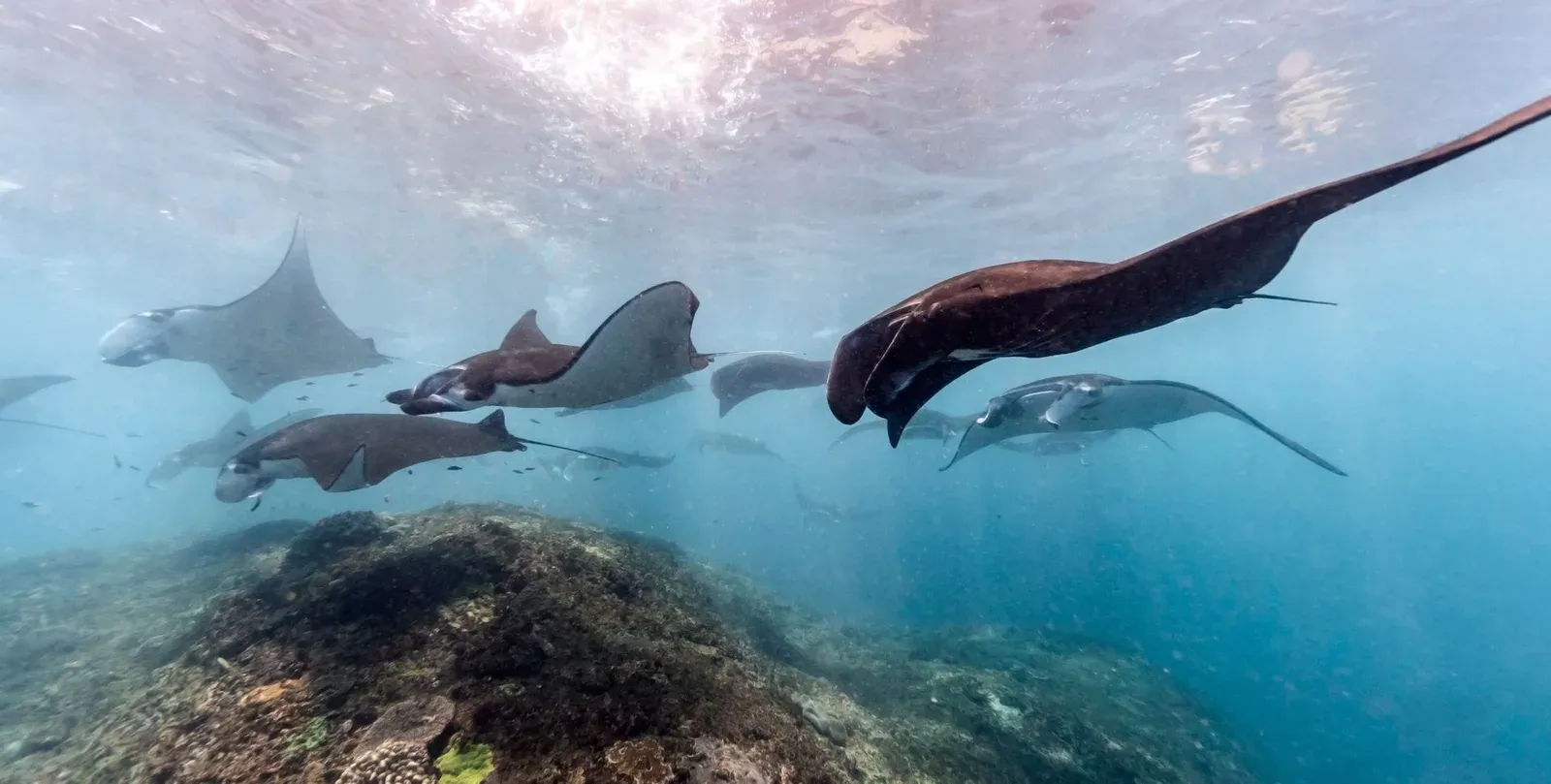
Japan’s answer is Ishigaki, ten to fifteen minutes by boat from the harbour. Manta Scramble is a small hill of seabed in open water that works as a cleaning station and is credited with one of the highest manta encounter rates in the world; the rays pass over it at 5 to 10 m, shallow enough that snorkellers see them from the surface, and autumn is the season the guides rate.
Australia, the Pacific and Hawai’i
Lady Elliot Island at the southern end of the Great Barrier Reef has mantas in every month. Lighthouse Bommie is a group of coral heads on sand in 14 to 16 m, 100 m off the lighthouse, and whole dives are spent low and still around one bommie while animals around four metres across glide over and come back for another pass. Further south, The Needles off Byron Bay is a feeding station where current across the bombies brings the rays in, and in Fiji Manta Reef is a submerged reef outside the Great Astrolabe barrier, 40 minutes by boat, where mantas are seen throughout the year over a coral plateau at 15 m. On the other side of the continent, Coral Bay is a walk-in lagoon seldom deeper than 10 m where turtles, dolphins, reef sharks and mantas all work the same shallow ground.
Then there is Kona. Manta Village off Keauhou Bay is the original manta night dive, in a sand bottom at about 10 m with no wall and no reef: you kneel, aim your light straight up, and the rays turn through the beam above you while snorkellers float on the surface holding lighted boards. It has run since the early 1970s and is diveable year-round, though sighting consistency runs September to May.
Eastern Pacific, Indian Ocean and Africa
The giants belong to the offshore Pacific. El Boiler is a pinnacle rising from 50 m to within 6 or 7 m of the surface off San Benedicto, where giant Pacific mantas come to be cleaned by Clarion angelfish; it is a liveaboard site, the boats run from mid-November to May, and the encounter runs entirely on the animal’s terms. Ecuador’s Bajo Copé is a bank 20 nautical miles off Puerto López whose whole dive sits inside 16 m, with a giant-manta season from June to October. In Costa Rica, a giant Pacific manta is a fairly common visitor on the bull-shark dive at Big Scare, and in the Sea of Cortez La Reina is a lighthouse islet with sea lions and passing mantas, kept for experienced divers because of the open-water current.
The Indian Ocean’s great manta event is not a dive. Inside Baa Atoll & Hanifaru Bay in the Maldives, the south-west monsoon traps plankton in Hanifaru Bay, a cul-de-sac barely 200 m across, and reef mantas arrive to feed in numbers that have reached two hundred at once, barrel-rolling in chains and sometimes joined by whale sharks; scuba has been banned there since 2012, the bay is snorkel-only and permit-limited, and the atoll’s thilas like Dhonfanu Thila carry the actual diving, with mantas seen regularly at the point. The season runs May to November and peaks August to October. In Mozambique, Manta Reef is an amphitheatre of rock with cleaning stations at 21 to 26 m, 16 km down the coast from Tofo, where both reef and giant mantas are recorded but the local operator now reports them on roughly 15% of dives. And on Layang-Layang, Wrasse Strip is a cleaning station worked by reef sharks, turtles, eagle rays and, sometimes, mantas.
| Site | Depth | Level | Best months |
|---|---|---|---|
| Manta Sandy Raja Ampat · Indonesia | 8–15 m | Beginner | Nov–Mar |
| Manta Ridge Raja Ampat · Indonesia | to 20 m | Advanced | Nov–Mar |
| Manta Point Komodo · Indonesia | to 12 m | Advanced | Jun–Oct |
| Manta Alley Komodo · Indonesia | 10–25 m | Advanced | Jun–Oct |
| Manta Point Nusa Penida · Indonesia | to 15 m | Intermediate | Mar–Jun |
| Sangalaki Manta Point Derawan & Sangalaki · Indonesia | 10–40 m | Intermediate | Apr–Jul |
| Manta Scramble Ishigaki · Japan | 10–20 m | Intermediate | Apr–Jun |
| Valley of the Rays Yap · Micronesia | 15–22 m | Intermediate | Dec–Mar |
| Goofnuw Channel Yap · Micronesia | 9–37 m | Advanced | Dec–Mar |
| German Channel Palau · Palau | 3–40 m | Intermediate | Dec–Mar |
| Lighthouse Bommie Lady Elliot Island · Australia | 14–16 m | Beginner | May–Sep |
| The Needles Julian Rocks · Australia | 5–15 m | Intermediate | Jun–Sep |
| Manta Village Kona · United States | to 10 m | Beginner | Dec–Apr |
| El Boiler Revillagigedo (Socorro) · Mexico | 6–30 m | Advanced | Jan–Mar |
| Manta Reef Tofo · Mozambique | 21–26 m | Advanced | Jun–Oct |
| Bajo Copé Isla de la Plata · Ecuador | to 16 m | Intermediate | Jun–Oct |
| Dhonfanu Thila Baa Atoll & Hanifaru Bay · Maldives | 18–30 m | Advanced | May–Oct |
| Manta Reef Kadavu & the Great Astrolabe Reef · Fiji | to 15 m | Intermediate | Apr–Oct |
| Wrasse Strip Layang-Layang · Malaysia | 10–25 m | Advanced | Mar–May |
| Coral Bay Ningaloo Reef · Australia | to 10 m | Beginner | Apr–Sep |
| Big Scare Bat Islands · Costa Rica | to 30 m | Advanced | Jul–Aug |
| La Reina Sea of Cortez · Mexico | 8–30 m | Advanced | Jun–Oct |
How to dive with mantas
The rules are the same at every cleaning station, and breaking them empties the site for everyone.
Settle and stay. Find the spot the guide briefs, get low on the sand clear of the coral heads, and stay there. A manta that is being cleaned will circle back to the same bommie for pass after pass; a manta that is chased leaves. Lady Elliot’s own guidance is blunt about it: crowding a station empties it.
Let the ray set the distance. They are curious and will often come to you, sometimes close enough to feel the wash. Do not swim over them, do not reach out, and do not block their path off the station. At Julian Rocks and Sangalaki, where they are feeding rather than being cleaned, the same applies with the rays moving.
Hook where you are told to hook. Manta Ridge and German Channel run current that will sweep you off the site; a reef hook set before you leave the shelter of the reef edge lets you hold still without touching coral. Never hook into living coral, and unhook before the tide turns.
Lights up, not out, at Kona. The night dive works because everyone’s light points straight up and everyone stays still; a diver who swims or waves a torch around breaks the plankton column and the rays go elsewhere.