María la Gorda · Cuba · Reef · Coral garden
Las Tetas de María
Coral-covered rock heads lined up with two headlands ashore
The site sits directly in line with two rock formations that jut out to sea from the coastline, which is where the name comes from. Underwater it is a spread of large coral-covered rock formations with sandy channels meandering between them, down to 20 m, and the coral variety is the reason the operators put it on the schedule.
Also known as Maria's Breasts.
Where it is and how deep
21.8046° N, 84.5151° WApproximate position — the dashed circle shows where the site lies; your operator's briefing has the mooring.
Site maps published elsewhere
The dive
You find the site by lining up on the coast: two rock formations jut out to sea from the shoreline, conspicuous enough to have named the place, and the dive site sits just in line with the pair. Below, the ground is not a continuous reef but a field of large coral-covered rock formations, with sandy channels meandering around and between them. Those channels are the most prominent feature of the site and the obvious way to work through the structure.
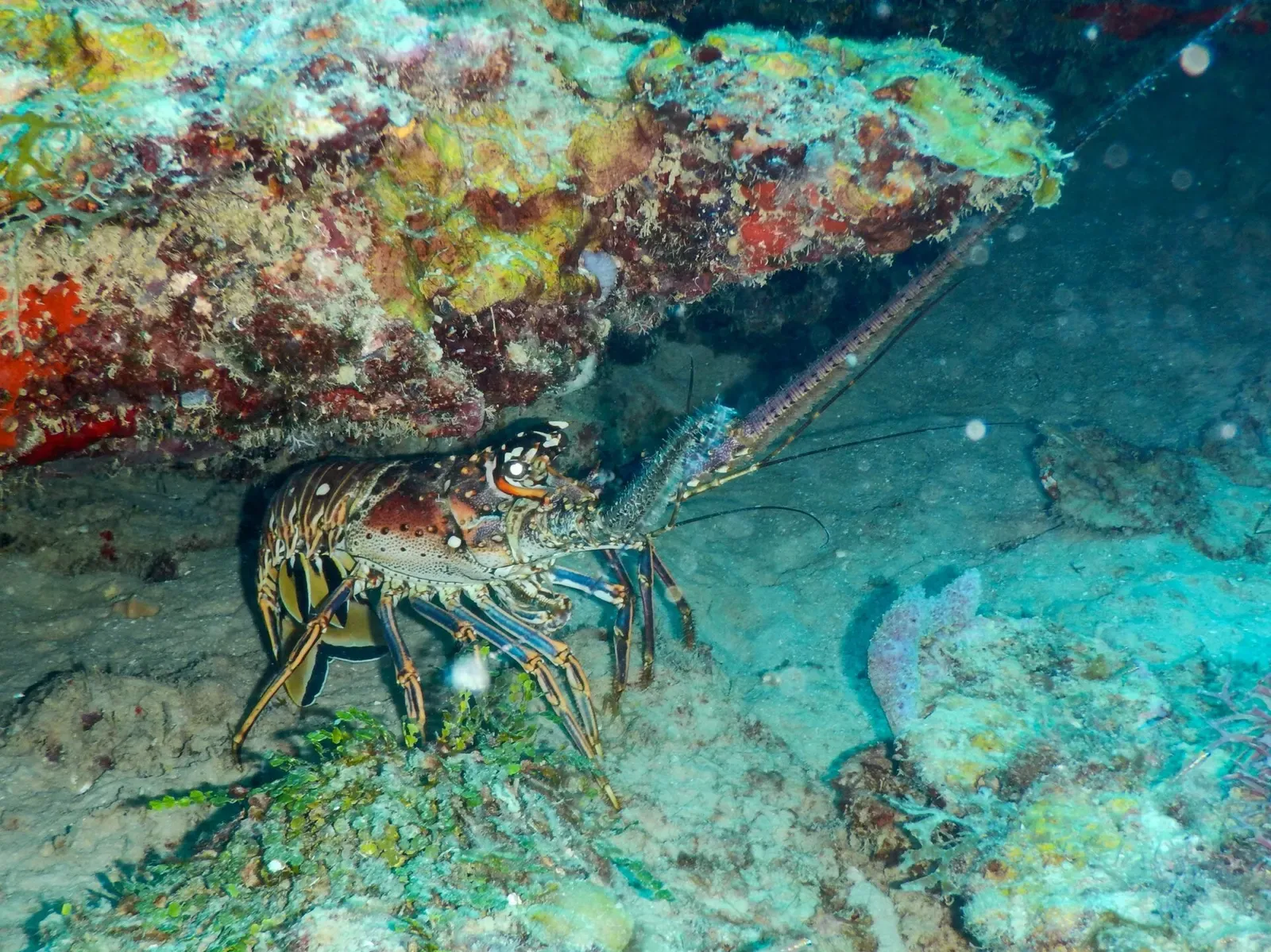
The coral is the reason to look closely rather than swim: flower, leaf, brain and lettuce coral all grow here, with soft corals plentiful between them. Fish life is ordinary Caribbean reef stock in good numbers — snappers, angelfish, jacks and groupers are the ones that stand out among the heads. The site runs to 20 m at its deepest, so a long slow circuit of the formations and a shallow finish over the coral is the way most dives here are shaped.
Marine life and season
- Groupers
- Trevally & jacks
| Jan | Feb | Mar | Apr | May | Jun | Jul | Aug | Sep | Oct | Nov | Dec |
|---|---|---|---|---|---|---|---|---|---|---|---|
| Prime | Prime | Prime | Prime | Good | Good | Good | Fair | Fair | Good | Prime | Prime |
Season follows María la Gorda: Nov–Apr is the dry season with the calmest, clearest water; Aug–Oct carries hurricane risk on this exposed western tip.
Questions divers ask
Where does the name Las Tetas de María come from?+
From two rock formations that jut out to sea from the coastline. Their shape gives the site its name, and the dive site lies just in line with the pair.
How deep is Las Tetas de María?+
The published depth range goes to 20 m, over coral-covered rock formations separated by sandy channels.
Sources
- Maria La Gorda Las Tetas de Maria – Maria's Breasts — cuba-marialagorda.com
- María's Breasts — Villa Maria la Gorda
- Dive Sites Map Location in María La Gorda — cubadiving.org
More dive sites in María la Gorda
Wall
A two-ton eighteenth-century anchor grown into the coral
Reef
Shoaling reef fish in 3 to 5 m of water
Wall
Blue-water wall of sponges and sea fans at 27 m
Coral garden
A small wall from 6 to 15 m packed with gorgonians
Wall
Shoals of jacks, tuna and barracuda on a wall from 18 m
Cave & cavern
A reef cavern with three entrances at around 20 m
Wall
A chimney fracture in the wall from 12 m down to 33 m
Similar dives elsewhere

Sea fans and sponge-covered coral heads in 8 m of water

Up to ten reef sharks over a 15 m patch reef

Plate coral on a shallow slope you can walk into
Six miles of sloping coral from the harbour to Point Saline