Caribbean · Jamaica
Port Antonio
Walls, a coral pinnacle and a Coast Guard wreck on an uncrowded coast
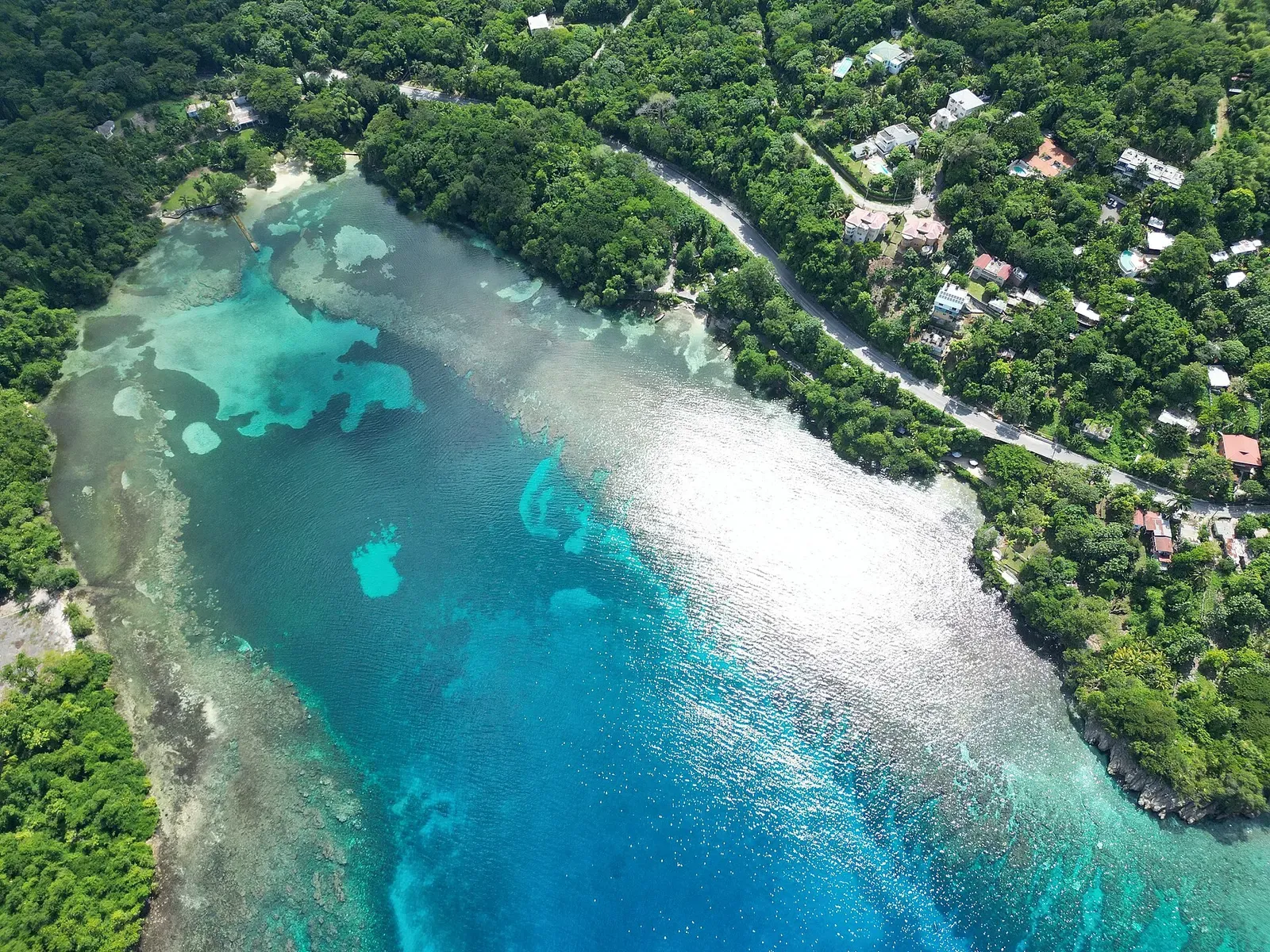
Photo: Layneartz19 · CC BY-SA 4.0
Port Antonio dives Portland's uncrowded northeast coast of Jamaica, where the sites stretch across 12 km of reefs, walls and coves. Small boat groups head for Dragon Wall, the coral pinnacle of Fairy Hill, The Crack and the cactus sculptures of Cactus Drop. The HMJS Paul Bogle, a former Coast Guard cutter sunk as an artificial reef, gives the coast its wreck, and green and hawksbill turtles are the signature encounter at Turtle Town.
About diving in Port Antonio
Diving at Port Antonio runs from boats as two-tank trips for certified divers, normally with two to six guests on board. The sites stretch across 12 km of reefs, walls and coves along Portland's northeast coast, and the day's sites are chosen on the conditions rather than fixed in advance. Private guided dives and Nitrox are offered too on a stretch of coast that stays uncrowded.
The coast mixes coral reef, walls and coves, from seagrass and sandy patches to wall faces that drop away into deep blue. The HMJS Paul Bogle was sunk as a fish habitat and artificial reef and now supports marine growth and schooling fish. At Fisherman’s Stone, a large rock rising almost to the surface above a short swim-through, nurse sharks, barracuda, octopus, eels, jacks and crabs may shelter inside, while sea whips, sponges and sea fans fill the surrounding reef.
Port Antonio suits certified divers who want small groups and a quiet coast with reef, wall and wreck within one stretch. Alligator Reef’s five separate sites each appeal to a different skill level, so a group of mixed experience can be split between them, while the deep walls give experienced divers their deeper dives. Divers who want to give something back can join lionfish removal dives run under local sanctuary practices.
Best time to dive Port Antonio
| Jan | Feb | Mar | Apr | May | Jun | Jul | Aug | Sep | Oct | Nov | Dec |
|---|---|---|---|---|---|---|---|---|---|---|---|
| Fair | Good | Good | Good | Fair | Fair | Fair | Fair | Fair | Fair | Fair | Fair |
February to April is the drier stretch in Port Antonio, though no month is truly dry and rain tops 60 mm (2.4 in) in all 12.
Dive types & marine life
Green and hawksbill turtles are the signature encounter at Turtle Town, and spotted eagle rays sometimes circle San San.
- Reef
- Wall
- Wreck
- Sea turtles
- Eagle rays
- Barracuda
- Trevally & jacks
- Octopus & cuttlefish
Best dive sites in Port Antonio
- 1
HMJS Paul Bogle
Jamaica Defence Force Coast Guard cutter retired after 35 years of service, now an evolving artificial reef.
- 2
Dragon Wall
Wall dive that begins on a gentle slope before descending into deep blue.
- 3
Fairy Hill
Coral-covered pinnacle with sponges and sea fans, explored at several depths around its formation.
- 4
The Crack
Spur-and-groove coral leading to a wall and a striking opening between the rocks.
- 5
Turtle Town
Seagrass, coral passages, small swim-throughs and sand, starting near the Blue Lagoon channel.
- 6
Cactus Drop
Three underwater cactus sculptures by Claudia Comte lead toward a colourful drop-off.
- 7
Alligator Reef
Reef system of five separate sites, each suited to a different skill level.
Site guides
Reef
A narrow coral ridge lined with azure vase sponges and sea fans
Artificial reef
Claudia Comte's cactus sculptures leading to a drop-off
Wall
Black coral and gorgonians on two separate wall sections
Pinnacle
A coral pinnacle that changes shape with every level circled
Wreck
A retired Coast Guard cutter turning into reef in a fish sanctuary
Wall
Shafts of light and a massive barrel sponge inside a rock crack
Reef
Green and hawksbill turtles over seagrass by the Blue Lagoon
How to get to Port Antonio
Divers fly into Norman Manley International Airport in Kingston, then take a taxi or a hire car to Port Antonio on the northeast coast. Ken Jones Aerodrome has no scheduled services.
Dive videos
Diving in Port Antonio, Jamaica · Divingmore on YouTube
This is my Salty Life / Exploring the Depths Scuba Diving in Port Antonio, Jamaica · Salty Rum Diaries on YouTube
Questions divers ask
Do divers need a wreck certification to dive the HMJS Paul Bogle?+
Only to go inside. Entering the wreck requires a Wreck Specialty certification from a recognised training agency, and the local centre offers that specialty for divers who want to qualify.
Is the diving at Port Antonio from shore or by boat?+
By boat. Trips run as two-tank tours for certified divers, and every dive is guided by an instructor or divemaster.
Is the Port Antonio dive area protected?+
Partly. The HMJS Paul Bogle lies in the East Portland Fish Sanctuary and High Point sits at its eastern end, while Navy Island is a rarely visited deep site outside the sanctuary.
Sources
- Experiences | Lady G’Diver — Lady G’Diver
- About Us | Lady G’Diver — Lady G’Diver
- Port Antonio — Wikipedia
- Port Antonio — Wikivoyage
- Port Antonio Average Sea Temperatures — SeaTemperature.org
- Top 5 dive sites in Jamaica — DeeperBlue
- Historic HMJS Paul Bogle laid to rest — Jamaica Observer
- Ken Jones Aerodrome — Wikipedia
Photo credits
- Aerial view of a turquoise bay with patches of shallow reef, ringed by green forest and a coastal road lined with houses by Layneartz19, CC BY-SA 4.0, via Wikimedia Commons
Embed
Run a dive centre, club or blog? Embed this map of 2 dive sites near Port Antonio on your own page.
Similar destinations
Panama's cheapest place to learn to dive, with a national marine park just offshore

Shore and boat reefs, plus wrecks from a shallow tug to a harbour-mouth hull

A Soviet frigate lies broken in two between 15 and 30 m


Hand-feed wild stingrays in chest-deep water, then drop over a sheer wall the same day