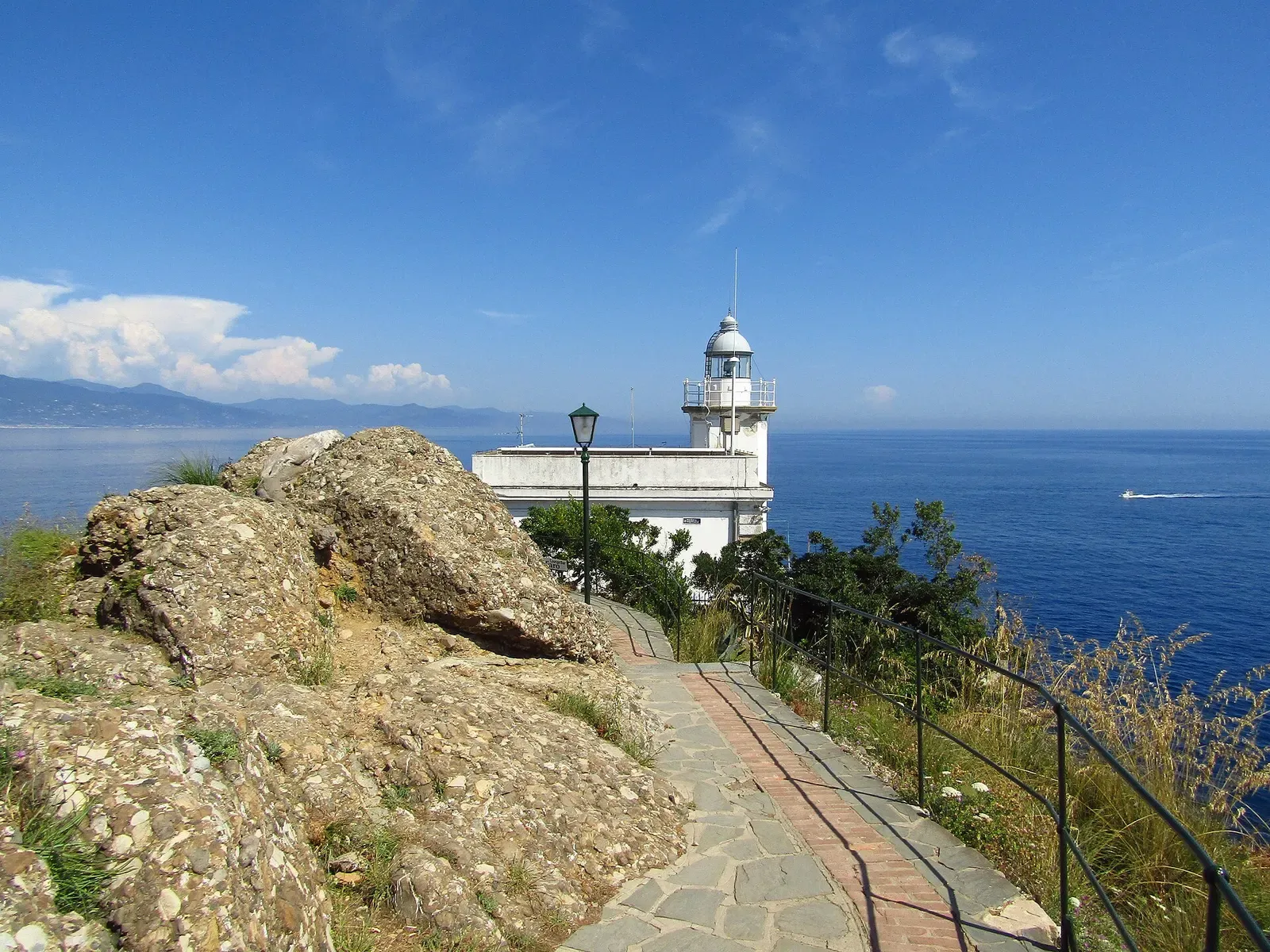
Portofino Marine Reserve · Italy · Wall · Cave & cavern
Punta del Faro
Large red gorgonians on the slope under the lighthouse
Photo: Ruben Holthuijsen · CC BY 2.0
The point below the Portofino lighthouse, where big boulders lie stacked on rock bottom and inclined slabs lean together into tunnels and wide crevices. Large red gorgonians grow on the steep slopes below, and red coral sits back in the grottos and fissures rather than out on open rock. Underwater currents of some strength cross the point and are strongest down on the gorgonian ground.
Also known as Punta del Faro di Portofino.
Where it is and how deep
44.2979° N, 9.2184° EApproximate position — the dashed circle shows where the site lies; your operator's briefing has the mooring.
The dive
You drop on the mooring into a jumble of boulders leaning against one another, and the first job is finding the line through them: the slabs stack into tunnels and large crevices you swim between rather than over. Just beyond 20 m an eastward passage runs between two big rocks and opens into a wider zone of scattered, collapsed rock. Yellow madrepores cover the boulders at the point itself, and yellow zoanthids — Parazoanthus axinellae — stand out on the outcrops.
Deeper, the slope steepens and the large red gorgonians begin. This is the part of the dive that earns the depth, and also where the current is felt most. Red coral is set back in the numerous crevices and grottos rather than out on open rock. Groupers, sea bream, corvina and small red amberjack work the boulder ground, and moray and conger eels hold in the holes between them.
The site sits under the lighthouse on the exposed tip of the promontory and is subject to underwater currents of some strength, strongest along the slopes where the gorgonians grow, so the dive is planned around them: drop on the mooring, work the deep ground while gas allows, then come back up through the boulder field into the brighter shallow rock and ascend inside the 50 m circle.
Marine life and season
- Groupers
- Reef fish swarms
- Trevally & jacks
| Jan | Feb | Mar | Apr | May | Jun | Jul | Aug | Sep | Oct | Nov | Dec |
|---|---|---|---|---|---|---|---|---|---|---|---|
| Fair | Fair | Fair | Good | Good | Prime | Prime | Prime | Prime | Good | Fair | Fair |
Season follows Portofino Marine Reserve: May–Oct is the settled season; visibility is often best in late autumn, and winter storms close the exposed southern walls.
Know before you go
- Underwater currents of some strength cross the point and are strongest on the deep gorgonian slopes; work the deep ground first and stay within reach of the mooring.
Photos from Punta del Faro
Radosław Botev · CC BY 3.0
Radosław Botev · CC BY 3.0
Dive videos
Immersione alla Punta del Faro di Portofino - Massub Lavagna · Paolo Fiorini on YouTube
Immersione Notturna - Punta del Faro - Promontorio di Portofino (GE) · Gus Scuba Diver on YouTube
Questions divers ask
How deep is Punta del Faro?+
The reserve publishes the site as 16 to 40 m. The tunnels and crevices start shallower, with an eastward passage between two large rocks just beyond 20 m, while the large red gorgonians are on the steeper slopes below.
Sources
- Punta del Faro di Portofino (18) — dive site — Area Marina Protetta di Portofino
- Punta del Faro di Portofino (OSM node) — OpenStreetMap
Photo credits
- White lighthouse on a rocky point above the sea, reached by a stone path by Ruben Holthuijsen, CC BY 2.0, via Wikimedia Commons
- Whitewashed lighthouse building with an Italian flag, seen from below among trees by Radosław Botev, CC BY 3.0, via Wikimedia Commons
- Stone path winding along the cliff edge toward the Portofino lighthouse by Radosław Botev, CC BY 3.0, via Wikimedia Commons
More dive sites in Portofino Marine Reserve
Wall
Probably the finest red coral colony in the reserve
Wall
Rare false black coral on the points at 50 m
Cave & cavern
Three caves, the deepest at 30–35 m ringed with red coral
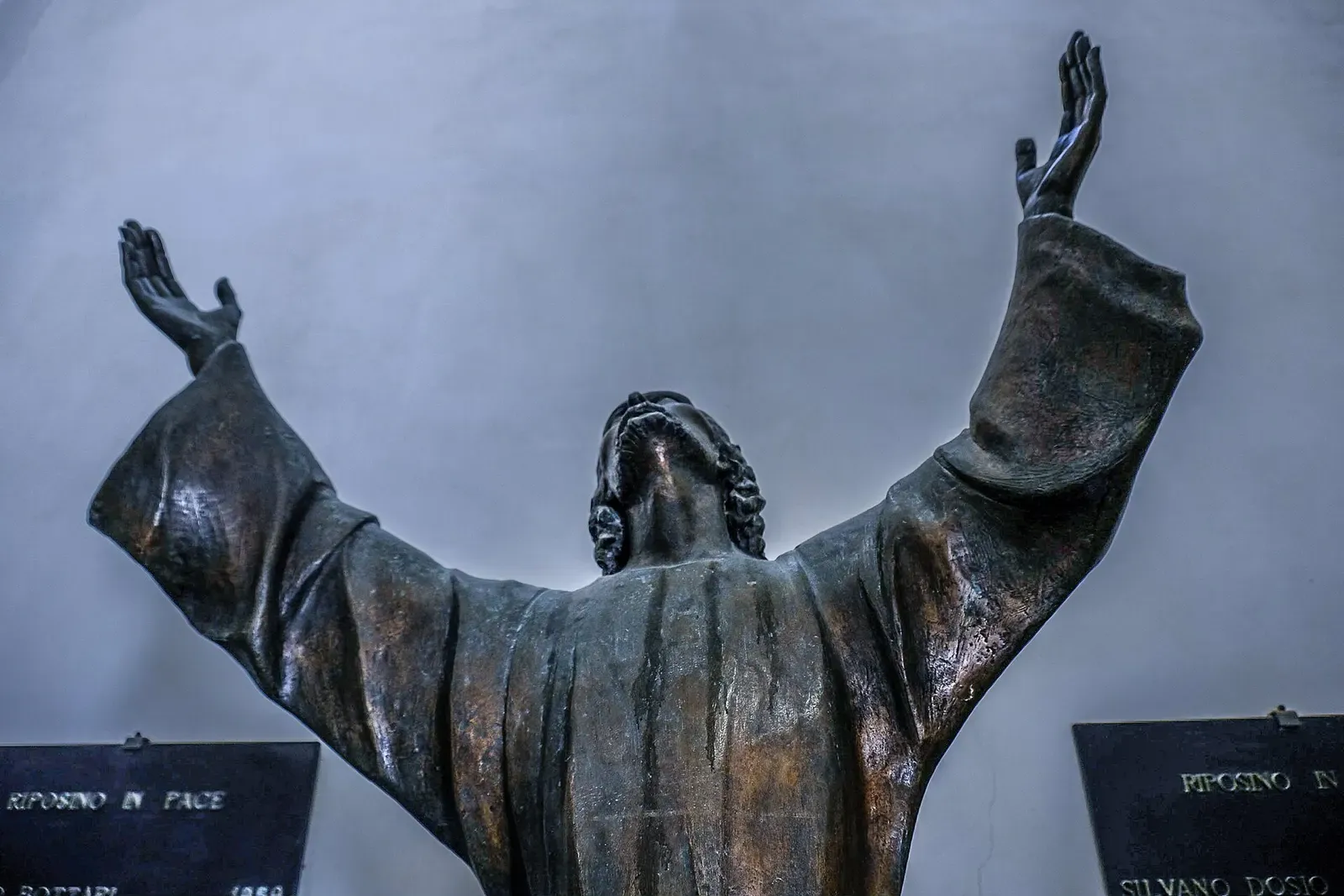
A 2.5 m bronze Christ standing on the seabed at 17 m
Wall
A submerged tunnel through the rock at 18 m
Red coral and lobster on the rocks out towards open water
Wall
A shrimp-filled cave at 37 m under a rock headland
Green ball algae at 12–20 m, nudibranchs on the deep wall
Similar dives elsewhere
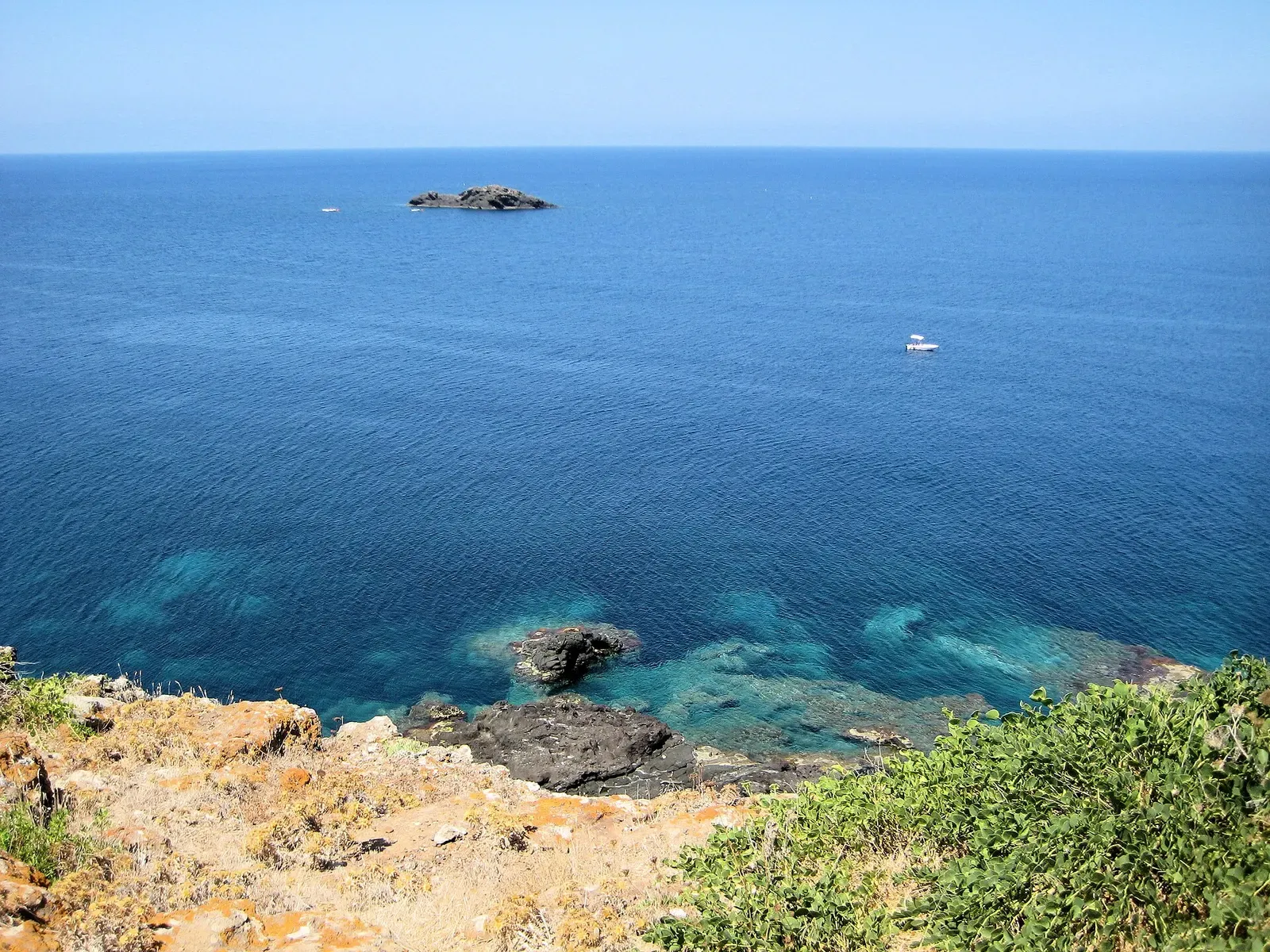
The park's best-known walls, and a cave with an air pocket
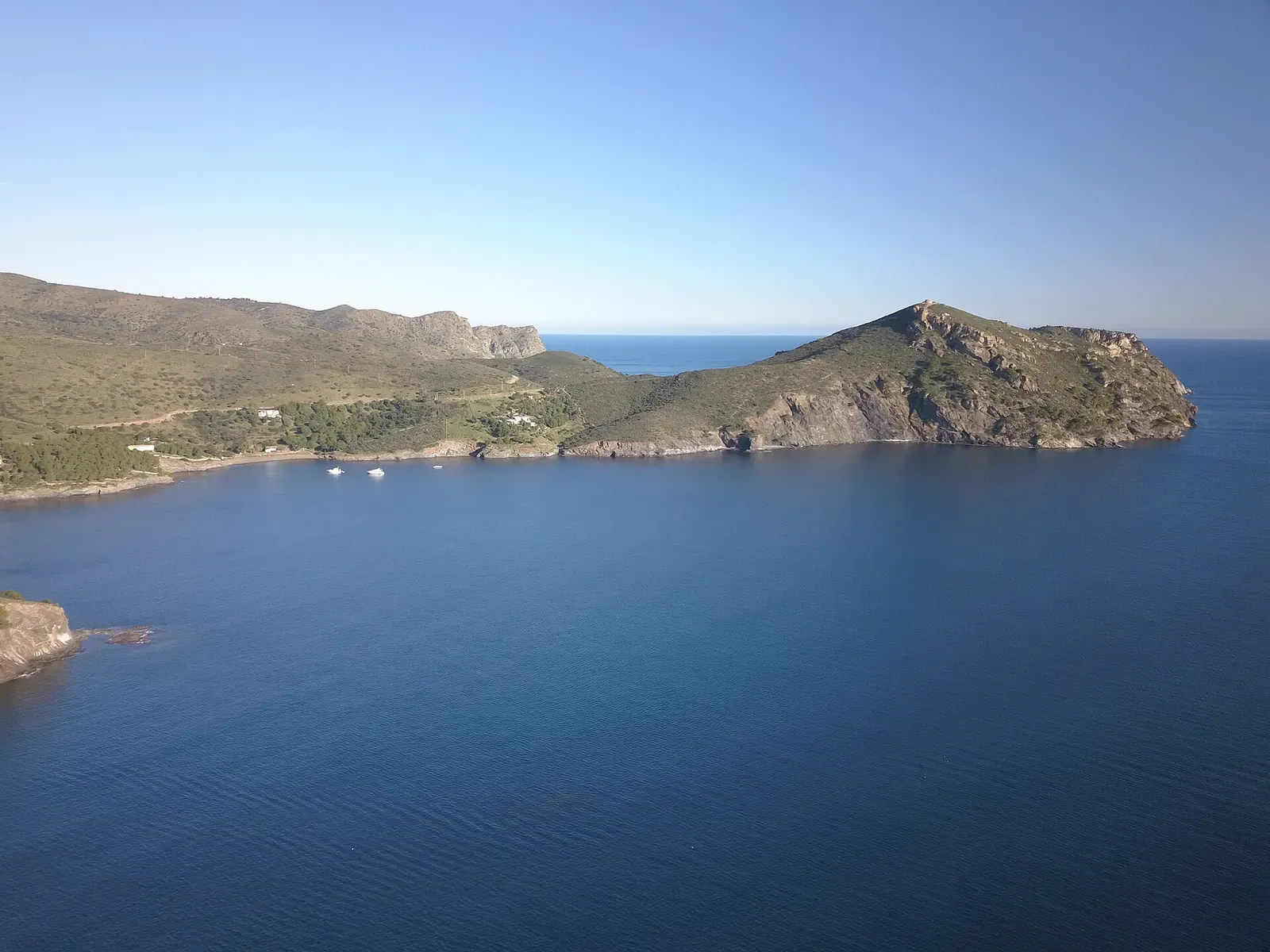
Tunnels, canyons and walls down to a plateau facing open water
Drop-offs and caves that carry on down to 40 m
.jpg)
.jpg)
.jpg)
Stepped platforms, a chimney-tunnel and gorgonian walls