Cap de Creus · Spain · Wall · Cave & cavern · Reef
Cap de Norfeu
The park's best-known walls, and a cave with an air pocket
Photo: 44BART44 · CC BY-SA 4.0
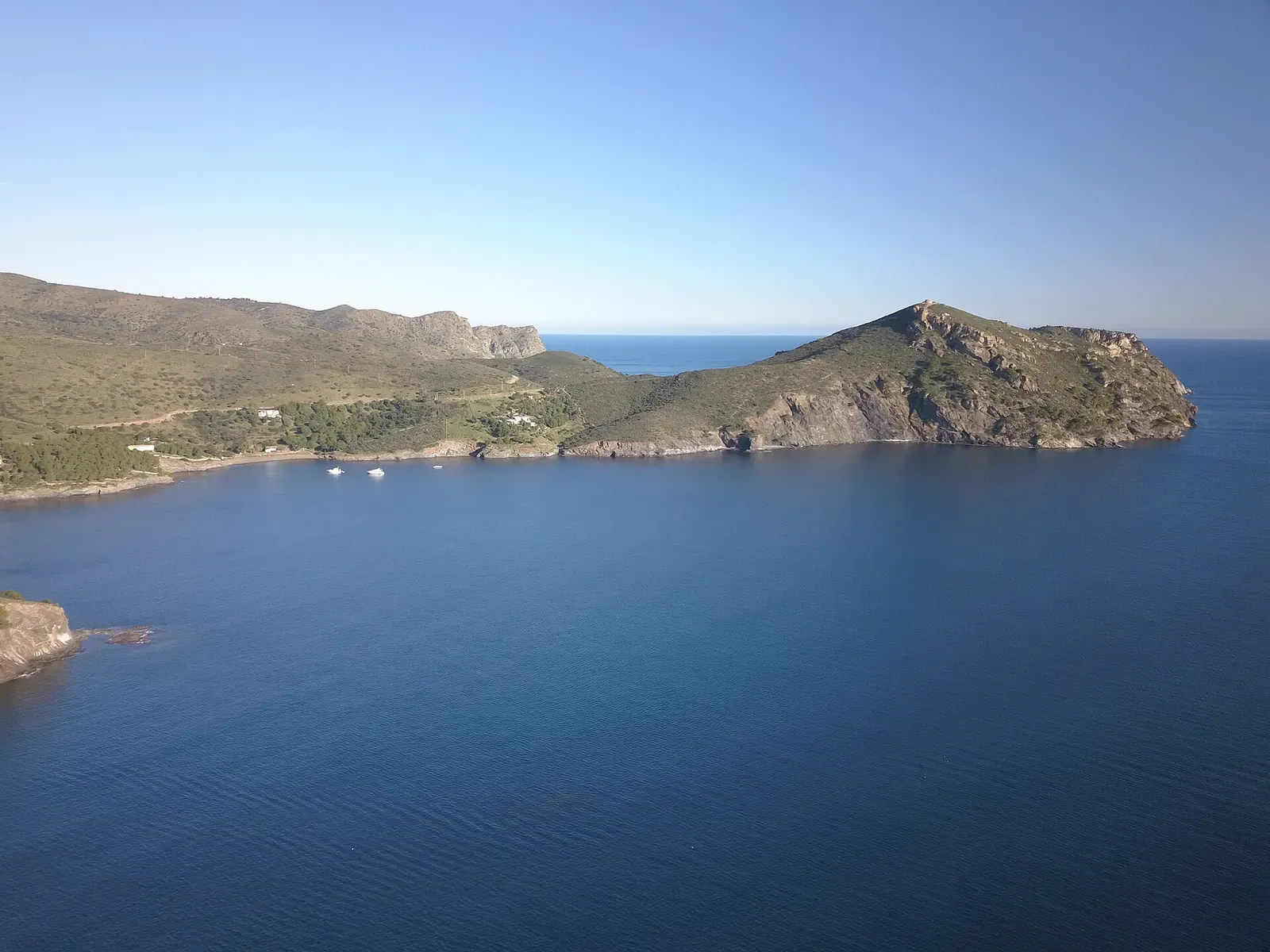
The most popular and well-known dive south of the natural park: a peninsula of caves, platforms, cliffs and walls with rock running from 3 m down to 42 m. Current is often running here and always strong when it does. Gorgonians and red coral grow on the walls, and moray eels, groupers, sea bream and schools of barracuda work them.
Also known as Cap Norfeu, El Gat.
Where it is and how deep
42.2434° N, 3.2660° EPublished position for this site.
The dive
Cap Norfeu is the most popular and well-known dive south of the natural park, and the terrain is the reason: caves, platforms, cliffs and walls along a rugged peninsula about a kilometre long, with rock running from 3 m down to 42 m. Gorgonians and red coral grow on the wall faces, and the deepest published ground on the site goes to 45 m, so it will give you as much depth as you are prepared to plan for.
There is a cave here with an air pocket in it, and a second, larger cave in the northern area. Both are overhead ground and worth treating as such rather than swimming into on the day. Current is the other constant: it is often running at the cape and always strong when it is, so the dive is planned around which side of the peninsula is in the lee, and the group stays tight to the rock rather than spread across the blue.
The fish are the payoff. Moray eels, groupers, sea bream and schools of barracuda work the walls, with octopuses and smaller shoals of fish over the platforms, and gilthead, sargos, pouting and congers fill in the rest of the ground. The land area of the cape is an Integral Nature Reserve, the highest level of protection in the park system, and the seabed around it is protected as well, so it is worth checking what is open before the day.
Marine life and season
- Groupers
- Barracuda
- Octopus & cuttlefish
- Reef fish swarms
| Jan | Feb | Mar | Apr | May | Jun | Jul | Aug | Sep | Oct | Nov | Dec |
|---|---|---|---|---|---|---|---|---|---|---|---|
| Fair | Fair | Fair | Good | Good | Prime | Prime | Prime | Prime | Good | Fair | Fair |
Season follows Cap de Creus: Jun–Sep is warmest and calmest; the Tramuntana blows hardest in winter and spring and regularly cancels boats for days at a time.
Know before you go
- Current is often running at the cape and is always strong when it does; dive the side of the peninsula that is in the lee, stay tight to the rock and keep the group together.
- Two caves cut into the rock, one of them holding an air pocket, are overhead environments; treat them as such, with lights and a plan, rather than swimming in on sight.
Photos from Cap de Norfeu
Oetzipopoetzi · CC BY-SA 3.0
Oetzipopoetzi · CC BY-SA 3.0
Alan Mattingly · CC0
Dive videos
EL GAT (Cap Norfeu - Roses) · Juanjo Saura on YouTube
"El Gat" (Cap Norfeu - Cap de Creus) · Underwater_Video by Marc Pedrals on YouTube
Questions divers ask
Is there current at Cap de Norfeu?+
Yes. It is often running and always strong when it does, which is the main thing that sets the plan: boats pick the side of the peninsula in the lee and groups stay close to the rock.
Can beginners dive Cap de Norfeu?+
It is recommended for beginners and experienced divers alike, and the rock starts at 3 m. The strong current and the 42 m of depth available mean it is best done with a guide and with some experience behind you.
Sources
- Cap Norfeu — Wikipedia
- Inmersión Cap Norfeu — Diving Center Poseidon Roses
- Puntos de buceo Parque Natural del Cap de Creus — Orca Diving
Photo credits
- The rugged peninsula of Cap de Norfeu jutting into the sea, seen from the natural park above by 44BART44, CC BY-SA 4.0, via Wikimedia Commons
- El Gat sea stack at Cap Norfeu, its rock pillar rising from the water on the west side by Oetzipopoetzi, CC BY-SA 3.0, via Wikimedia Commons
- El Gat rock towers at Cap Norfeu, split by a narrow channel on the east side of the cape by Oetzipopoetzi, CC BY-SA 3.0, via Wikimedia Commons
- Entrance to the Cova de les Ermites, a natural limestone cave cut into the cliff at Cap Norfeu by Alan Mattingly, CC0, via Wikimedia Commons
More dive sites in Cap de Creus
Reef
A giant anchor and its chain links lying at 21 m
Sand, coralligenous and rock between 12 and 30 m
Seamount
The park's only offshore seamount, 8 m to 60 m
Circle the reef from 18 to 32 m, with the Phedon's remains on it
Seamount
Seamount rock from 5 m to past 40 m, gorgonians throughout
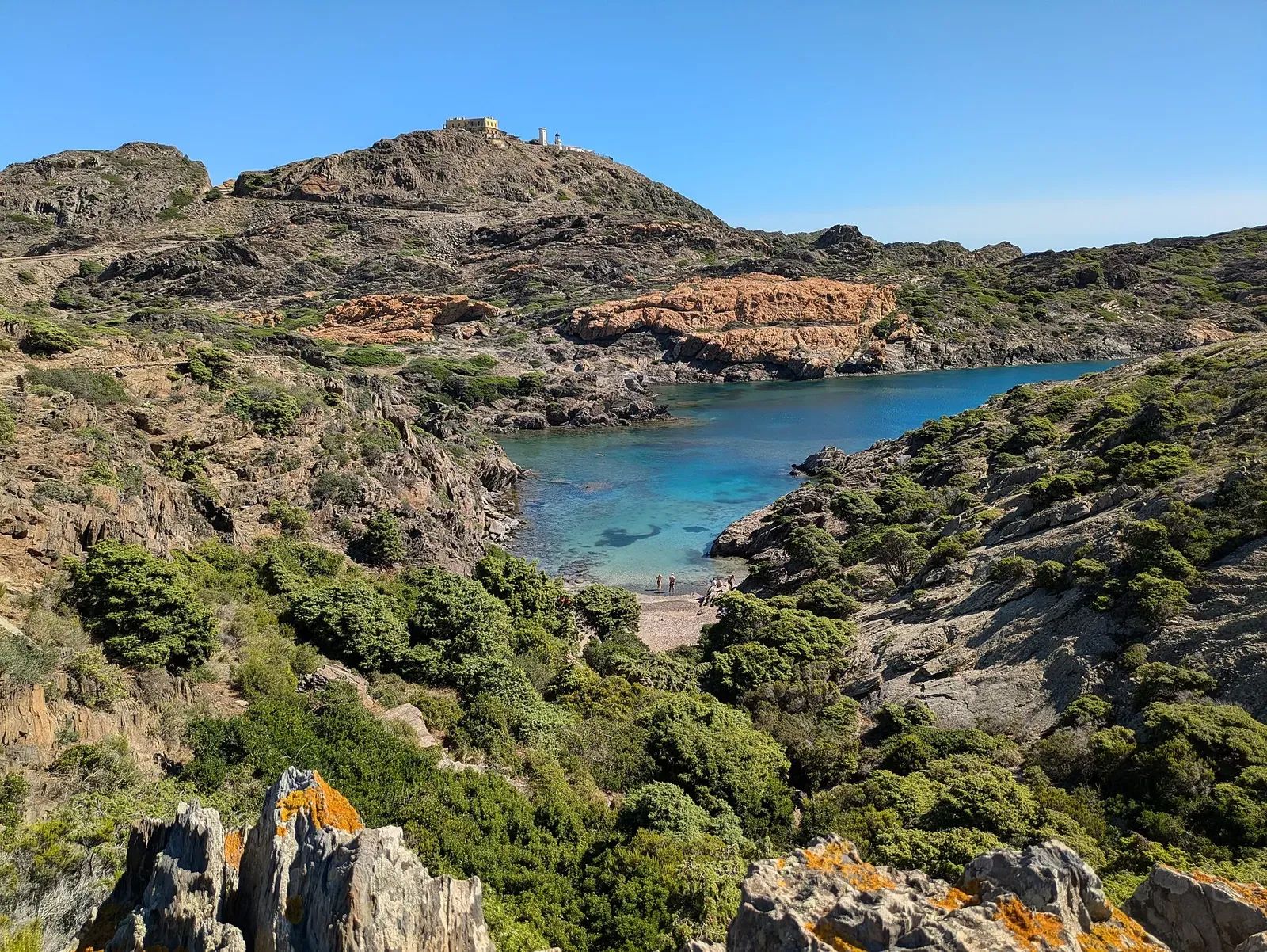
A marine-reserve cove under the Cap de Creus lighthouse
Reef
A 40 m canyon at the end of a 5 to 20 m drop-off
Pinnacle
Maze-like rock stacks full of red sea fans to 40 m
Similar dives elsewhere
Tunnels, canyons and walls down to a plateau facing open water
Two dives in one: an easier south side to 35 m, a deep north side past 40 m
Wall
Devil's Bay
Vlora, Karaburun & Sazan · Albania
Sea turtles, rare in the Adriatic, along Sazan's walls


A wall to nearly 40 m under a rock shaped like a lion's head