St. Croix · U.S. Virgin Islands · Coral garden · Reef
Buck Island
Haystack elkhorn formations at designated scuba moorings
Photo: Jaro Nemčok · CC BY-SA 3.0
Buck Island’s scuba dives pass through haystack formations of elkhorn coral at designated moorings within the national monument. The lagoon and marked underwater snorkel trail have separate rules and are closed to scuba diving.
Also known as Buck Island Reef National Monument.
Where it is and how deep
17.7869° N, 64.6192° WPublished position for this site.
The dive
Scuba dives at the two designated moorings run through haystack elkhorn formations in about 9–12 m (30–40 ft). An elkhorn barrier reef surrounds two thirds of the island and supports over 250 fish species. Fishing and collecting are prohibited throughout the monument.
The monument’s marine life includes spotted eagle rays, nurse and lemon sharks, and juvenile blacktip and whitetip reef sharks. Leatherback turtles nest on the beaches in spring; green and hawksbill turtles nest in summer. These are monument-wide habitats rather than sightings tied to an individual scuba mooring.
The eastern tip has a marked underwater snorkel trail, separate from the scuba dives. Guides take six visitors at a time; the trail closes from sunset to sunrise, and grotto depths reach 4 m (12 ft). Scuba is prohibited both on the trail and in the lagoon.
Background
Buck Island first gained U.S. Government protection in 1948. John F. Kennedy created the national monument in 1961, and Bill Clinton greatly expanded it in 2001 over local fishermen’s opposition. The protected reef includes extensive elkhorn coral habitat.
Marine life and season
- Eagle rays
- Lemon sharks
- Reef sharks
- Sea turtles
| Jan | Feb | Mar | Apr | May | Jun | Jul | Aug | Sep | Oct | Nov | Dec |
|---|---|---|---|---|---|---|---|---|---|---|---|
| Prime | Prime | Prime | Prime | Prime | Good | Good | Fair | Fair | Fair | Good | Prime |
Season follows St. Croix: Nov–Jun is calmest and clearest; Aug–Oct is hurricane season, though the pier and shore walls stay divable in most weather.
Photos from Buck Island
SNORKELINGDIVES.COM · CC BY 2.0
SNORKELINGDIVES.COM · CC BY 2.0
NPS staff · Public domain
Dive videos
Scuba Diving in the Virgin Islands | Buck Island · Salty Locs on YouTube
SCUBA Dive Buck Island Reef, St. Croix · peanutstx on YouTube
Questions divers ask
Where is scuba diving allowed at Buck Island?+
Scuba is allowed only at the two designated scuba moorings. Dives pass through elkhorn formations at about 9–12 m (30–40 ft); the lagoon and underwater snorkel trail are closed to scuba.
Can visitors snorkel the Buck Island underwater trail?+
Yes. The marked trail is at the eastern tip, with guided groups of six visitors. It closes from sunset to sunrise, and the grottoes reach 4 m (12 ft).
Is fishing or collecting allowed at Buck Island?+
No. Fishing and collecting are prohibited throughout the entire national monument.
When do turtles nest at Buck Island?+
Leatherbacks nest on the beaches in spring, while green and hawksbill turtles nest in summer. These nesting seasons concern the monument’s beaches.
Sources
- Buck Island Reef National Monument — Wikipedia
- Buck Island Reef National Monument — Outdoor Activities — National Park Service
- Additional site information — www.nps.gov
Photo credits
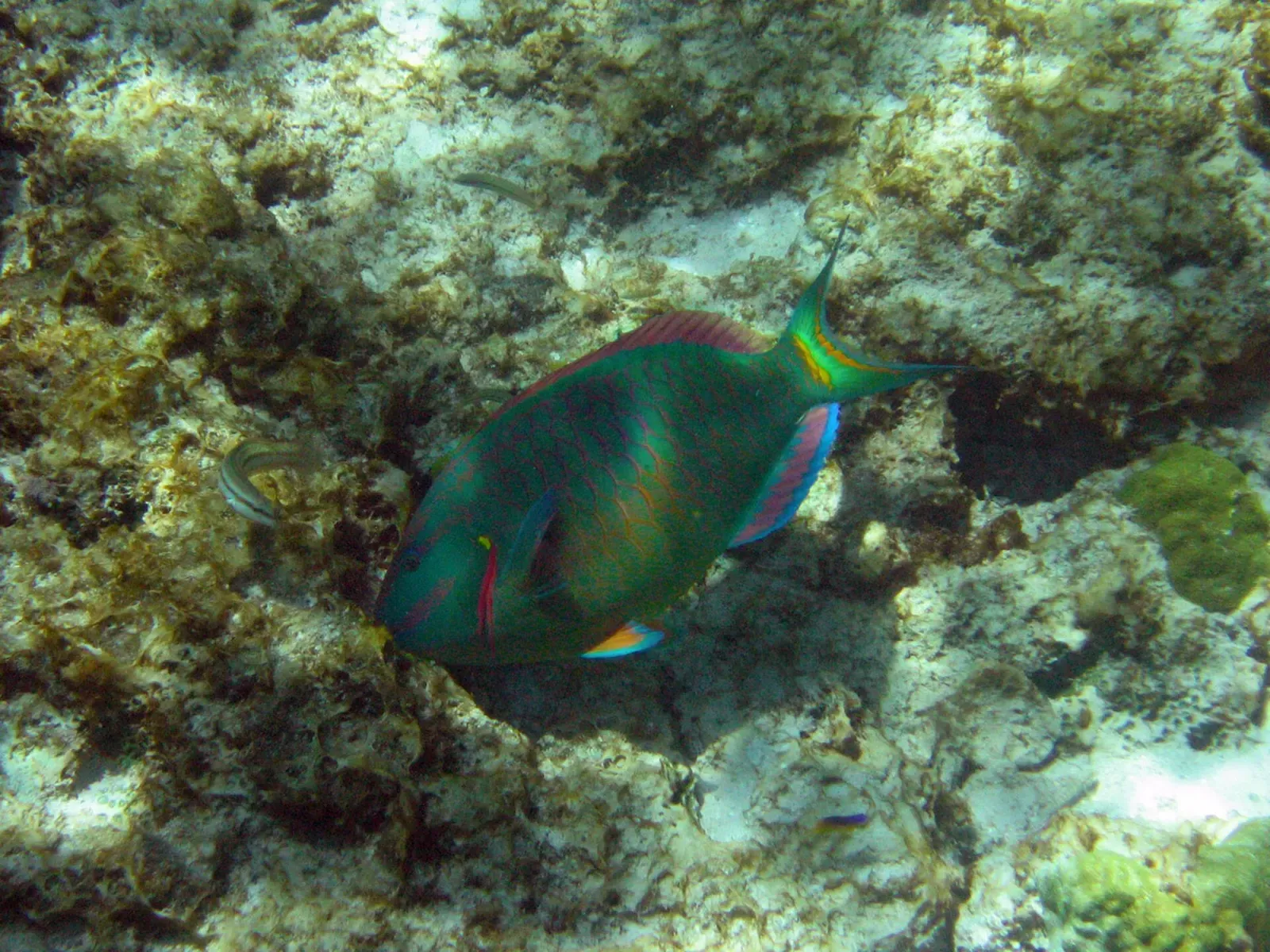
- A stoplight parrotfish grazing on coral at Buck Island Reef by Jaro Nemčok, CC BY-SA 3.0, via Wikimedia Commons
- A dense school of blue tang gathered along the reef at Buck Island by SNORKELINGDIVES.COM, CC BY 2.0, via Openverse
- A queen angelfish and blue tang tucked among coral heads at Buck Island by SNORKELINGDIVES.COM, CC BY 2.0, via Openverse
- Reef fish weaving through a black coral sea fan at Buck Island Reef National Monument by NPS staff, Public domain, via Wikimedia Commons
In The Logbook
- Where to see reef sharks on your first divesBig animals · 14 min read
More dive sites in St. Croix
Wreck
Butler Bay Wrecks
A tug, a trawler and an oil barge share the bay
Wall
Cane Bay Wall
Sand chutes lead from beachside coral gardens to the wall
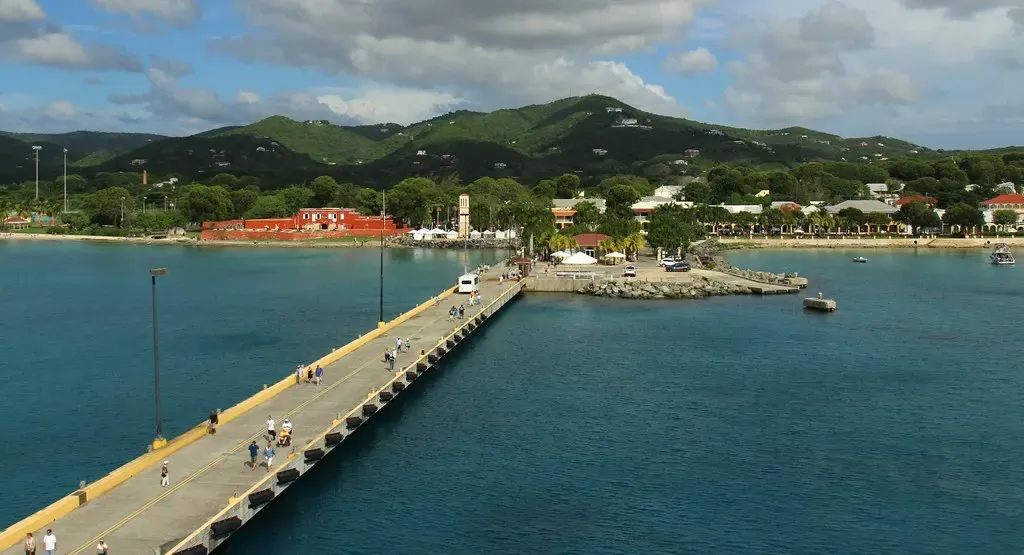
Seahorses, batfish and frogfish beneath a working pier
Wall
Salt River Canyon
Facing canyon walls with sand chutes, ledges and swim-throughs
Similar dives elsewhere
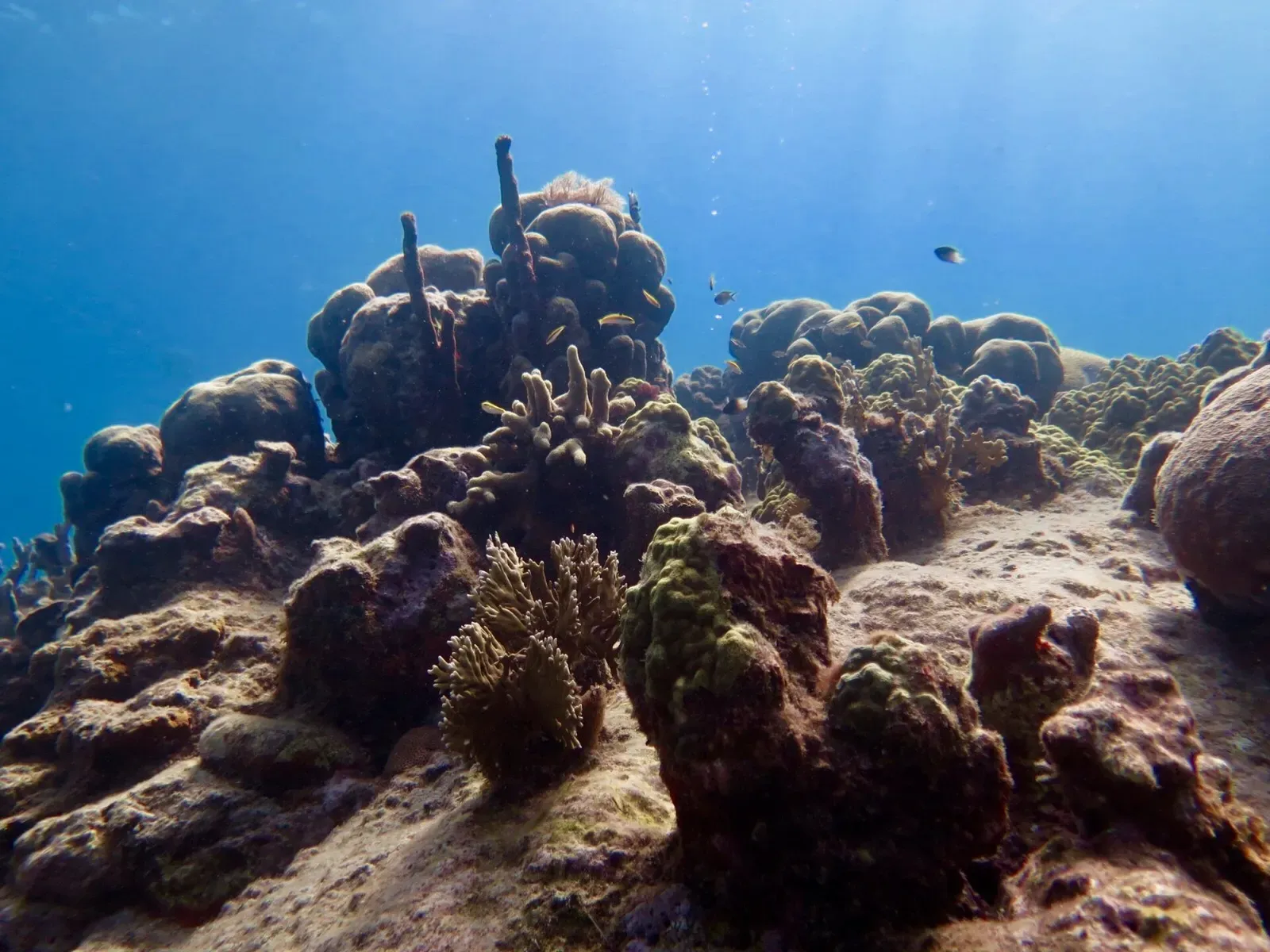
Hawksbill turtles and jack schools over protected coral

Juvenile fish shelter among corals, sea fans and sponges

Star corals form a maze of mushroom-shaped heads


Bioluminescent glow after dark gave this reef its ghost name