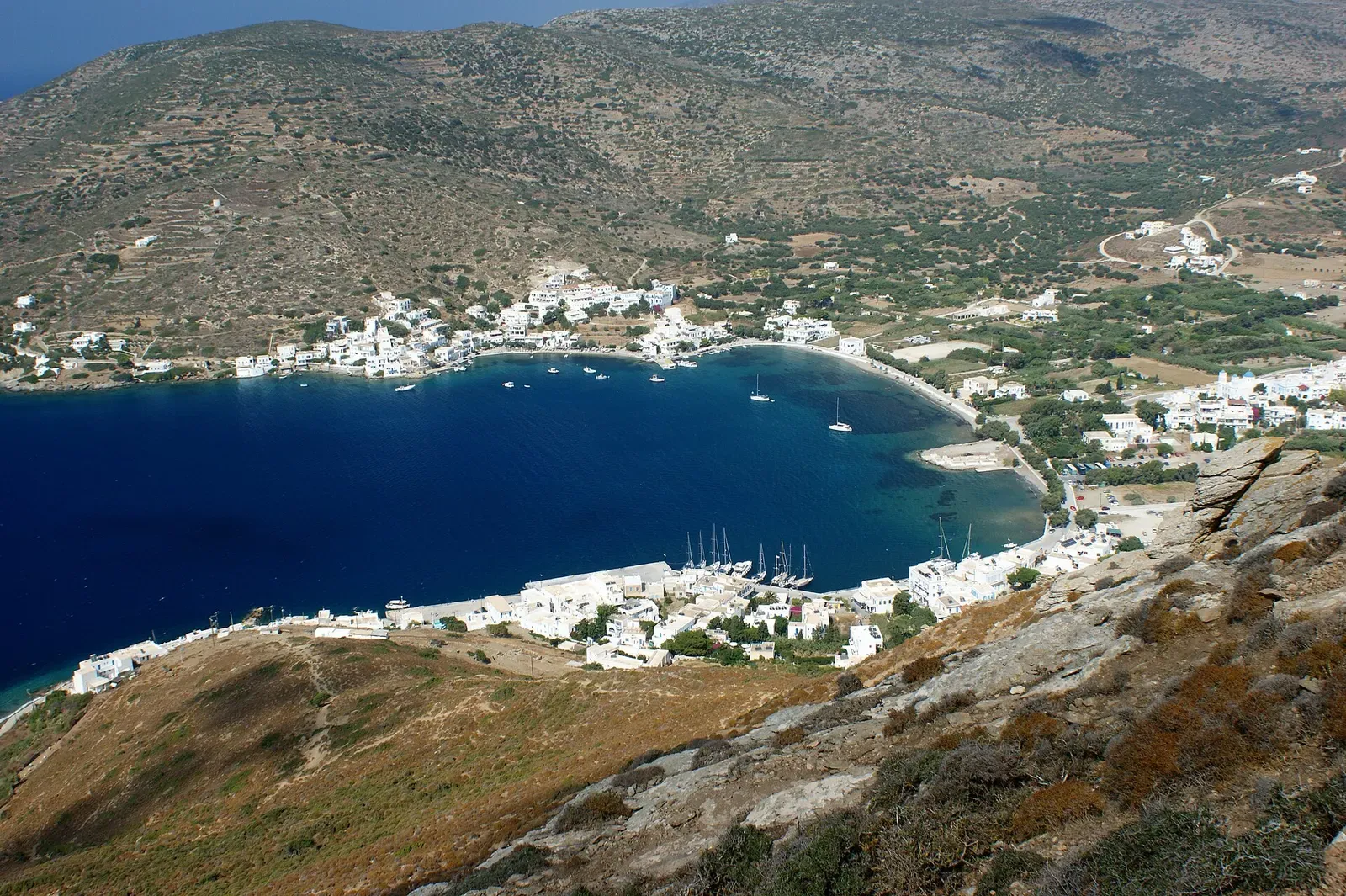
Amorgos · Greece · Wreck
Little Wreck
A wartime debris trail from 13 m past recreational depth
Area photo: Kondephy · CC BY-SA 4.0
Little Wreck is not a hull but a debris field: parts of a Second World War ship scattered down a slope from 13 m to deeper than 60 m. What the vessel was has never been settled, and the dive centre that works the site says so plainly. The shallow end of the trail is inside recreational limits, and turtles are common over the site.
Where it is and how deep
36.7864° N, 25.7444° EApproximate position — the dashed circle shows where the site lies; your operator's briefing has the mooring.
The dive
The shallowest parts sit at 13 m, and that is where a recreational dive on this site happens. You work along scattered ship parts rather than around a structure: there is no hull to swim, no deck line to follow and nothing to go inside, so the dive is a slow search over open ground. Turtles are common here, and they are as much the reason to dive it as the metal on the bottom is.
The debris keeps going down the slope past 60 m, which means the dive is defined by where you stop rather than by where the wreckage ends. Agree a maximum depth on the boat and treat the deeper scatter as something you look down at from above. What the ship was is still open: the operator's own description says it is not clear what kind of boat the parts came from, and that the theories about it are only theories.
The wreck
- Vessel
- Unidentified Second World War ship
- Type
- Ship debris field, no intact hull
- Cause
- Not established; no source identifies the vessel or how it was lost
- Lies
- Broken up and scattered down a slope from 13 m to deeper than 60 m
The parts on the seabed date to the Second World War, and that is close to the whole of what is known about them. The dive centre that works the site says it is still not clear what kind of boat they came from, and that the theories on offer are theories rather than anything concrete. The name describes the dive rather than the ship: what you visit is a trail of pieces spread down a slope, with no identified vessel attached to it.
Marine life and season
- Sea turtles
| Jan | Feb | Mar | Apr | May | Jun | Jul | Aug | Sep | Oct | Nov | Dec |
|---|---|---|---|---|---|---|---|---|---|---|---|
| Fair | Fair | Fair | Fair | Good | Prime | Good | Good | Prime | Good | Fair | Fair |
Season follows Amorgos: Courses and testimonials cluster June to October, with October unpredictable. The meltemi unsettles late summer; winter winds and currents put some sites out of reach without closing the island.
Know before you go
- The scatter trails below 60 m, well past recreational limits, so set a turn depth before you get in and treat the deep end of the field as out of bounds.
Questions divers ask
Can you go inside the Little Wreck?+
No. It is a debris field rather than an intact hull, with ship parts scattered down a slope from 13 m to deeper than 60 m and nothing to penetrate.
What ship is the Little Wreck?+
Unidentified. The dive centre that runs the site states that it is not clear what kind of boat the parts came from and that no theory has been confirmed.
Sources
- Little Wreck — Scubago / WE SHALL SEA
More dive sites in Amorgos
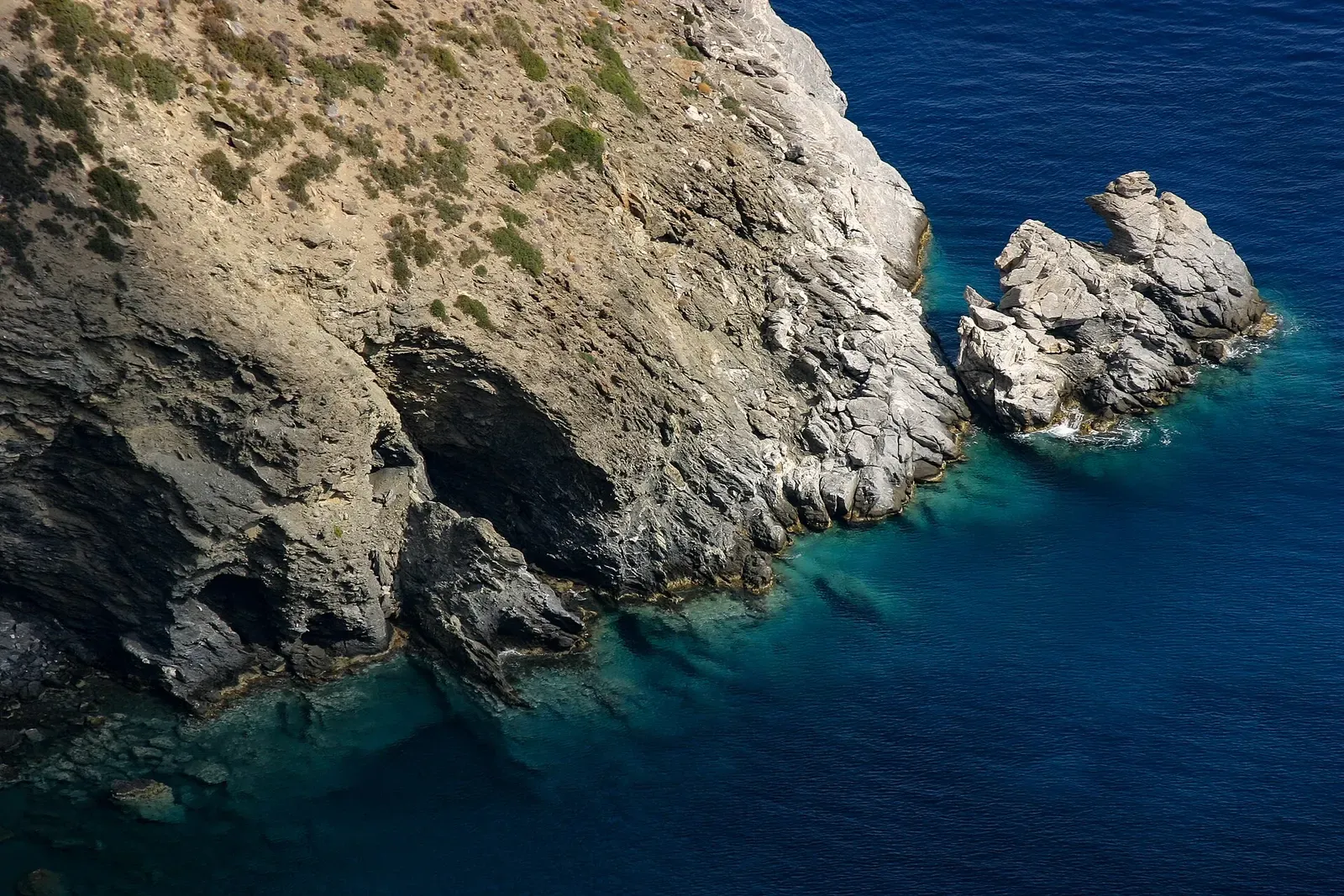
Flat reef to 18 m, then a wall to about 40 m
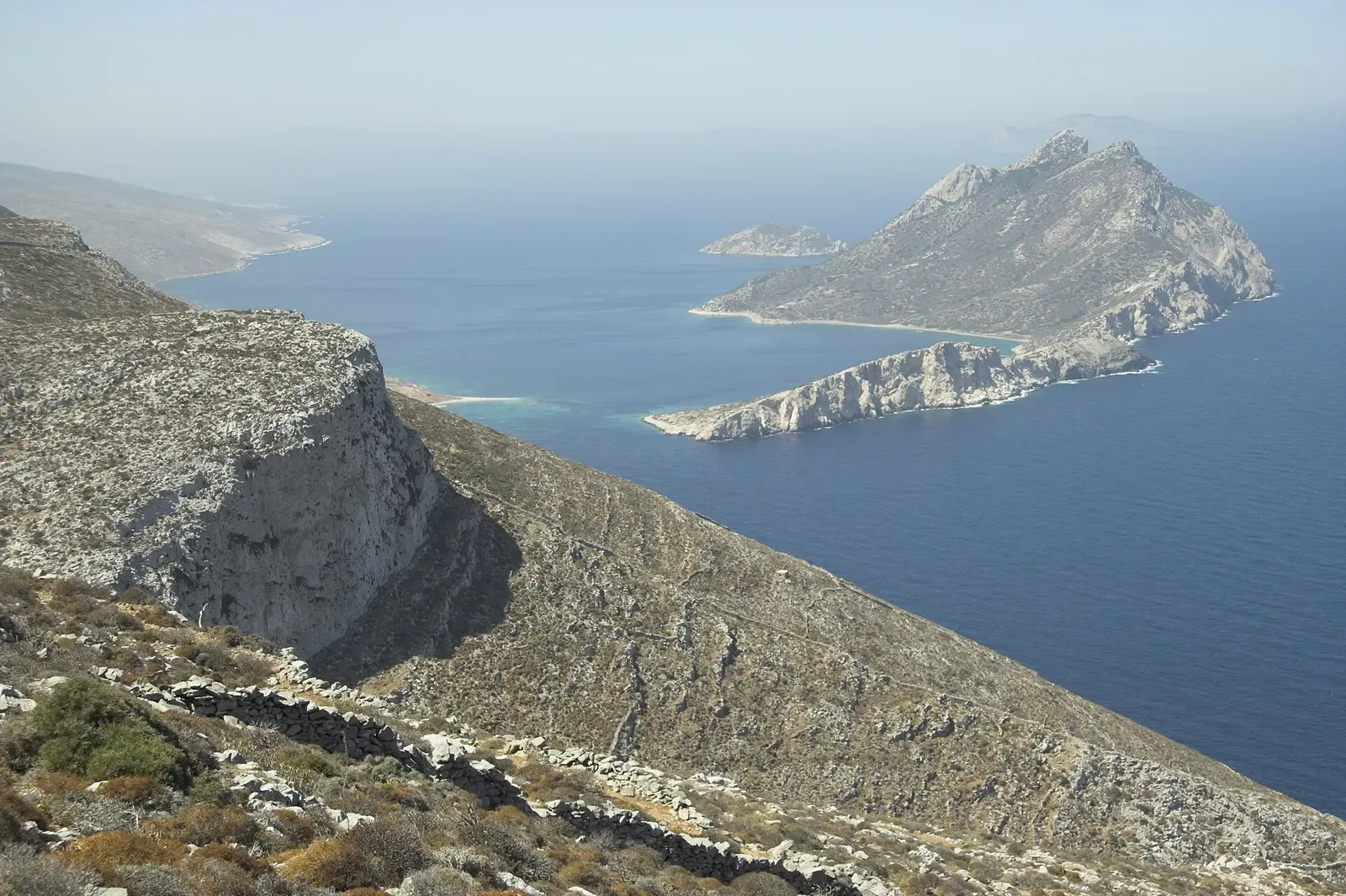
A pocketed wall sloping to 40 m off Nikouria islet
A cavern at around 25 m on the islet's northern wall
Wall
Bauxite loading gear on an 18 m plateau below the mines
Cave & cavern
A narrow passage under fallen rock, entered at about 18 m
Similar dives elsewhere
A WWII bomber, 'Yehunde', on the seabed at 63 m

The park's most intact wreck: a 1908 minesweeper in 27 m
A shot-down jet fighter scattered over 50 by 50 m at 19 m

A 95 m WWII escort cut in two by a torpedo, mast top at 25 m, bow at 50 m