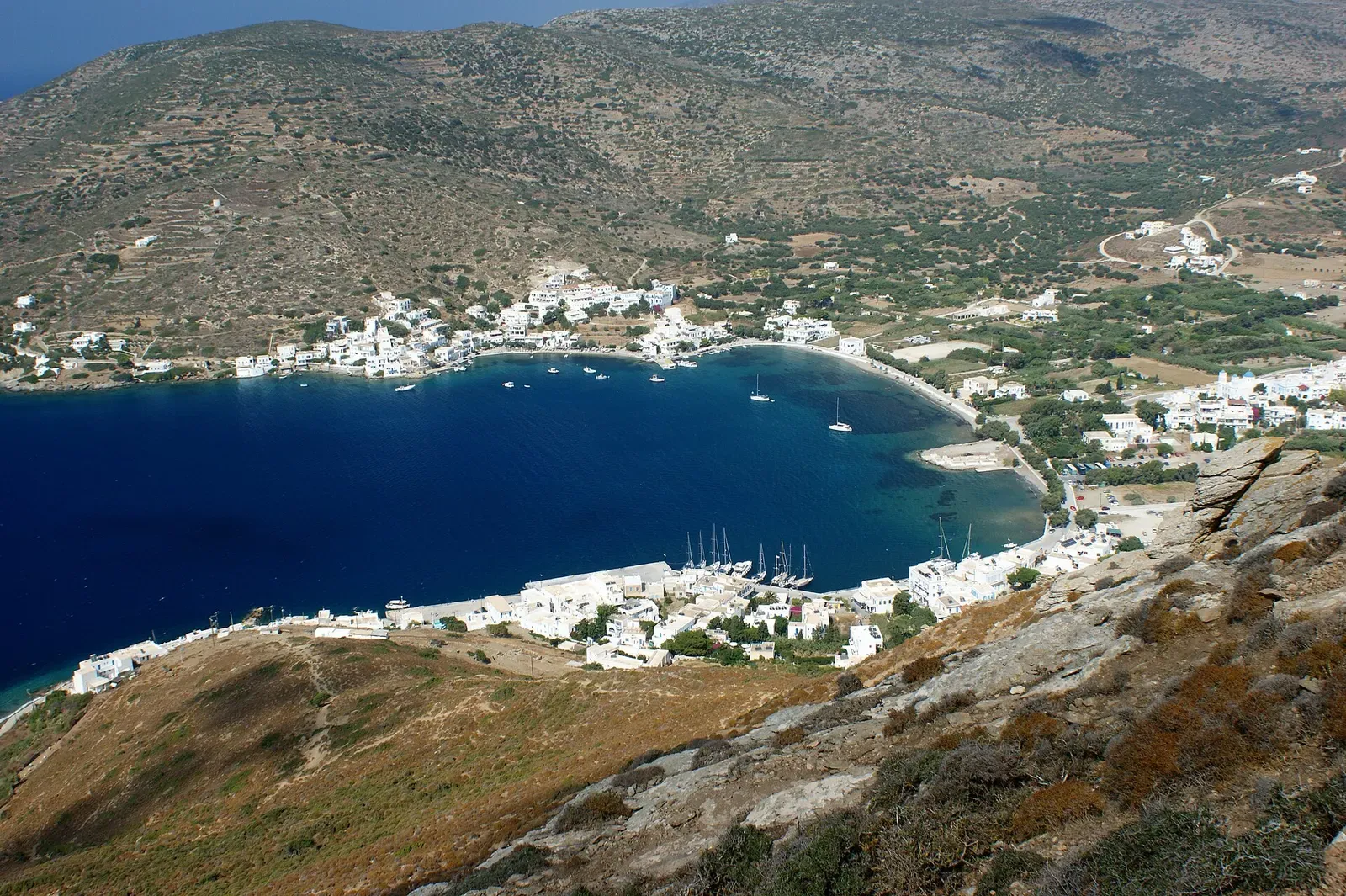
Mediterranean · Greece
Amorgos
A 40 m wall under the monastery filmed in The Big Blue
Photo: Kondephy · CC BY-SA 4.0
Amorgos is the easternmost island of the Cyclades, reached only by ferry, with one dive centre on Aegiali bay and another at Katapola that split the coast between them. The signature dives are walls: Agi Anna, under the Hozoviotissa monastery from The Big Blue, runs flat to 18 m then drops to about 40 m, and the Nikouria wall does much the same off the islet between the two ports. Around them lie caverns, a Neptune grass meadow, a scattered Second World War debris field and shore dives shallow enough for a first tank.
About diving in Amorgos
Diving here runs from two harbours. Amorgos Diving Center has worked the Aegiali bay beachfront since 2007 and takes the northern cluster around Nikouria islet and Grabonissi; WE SHALL SEA, based at Katapola, is credited with the southern sites around Kalotaritissa. Boats are day boats, not liveaboards: the Aegiali centre runs trips at 08:00 and 14:00 and sells night dives. Several of the named sites are shore dives, so a day can mix a boat wall in the morning with a walk-in cavern in the afternoon.
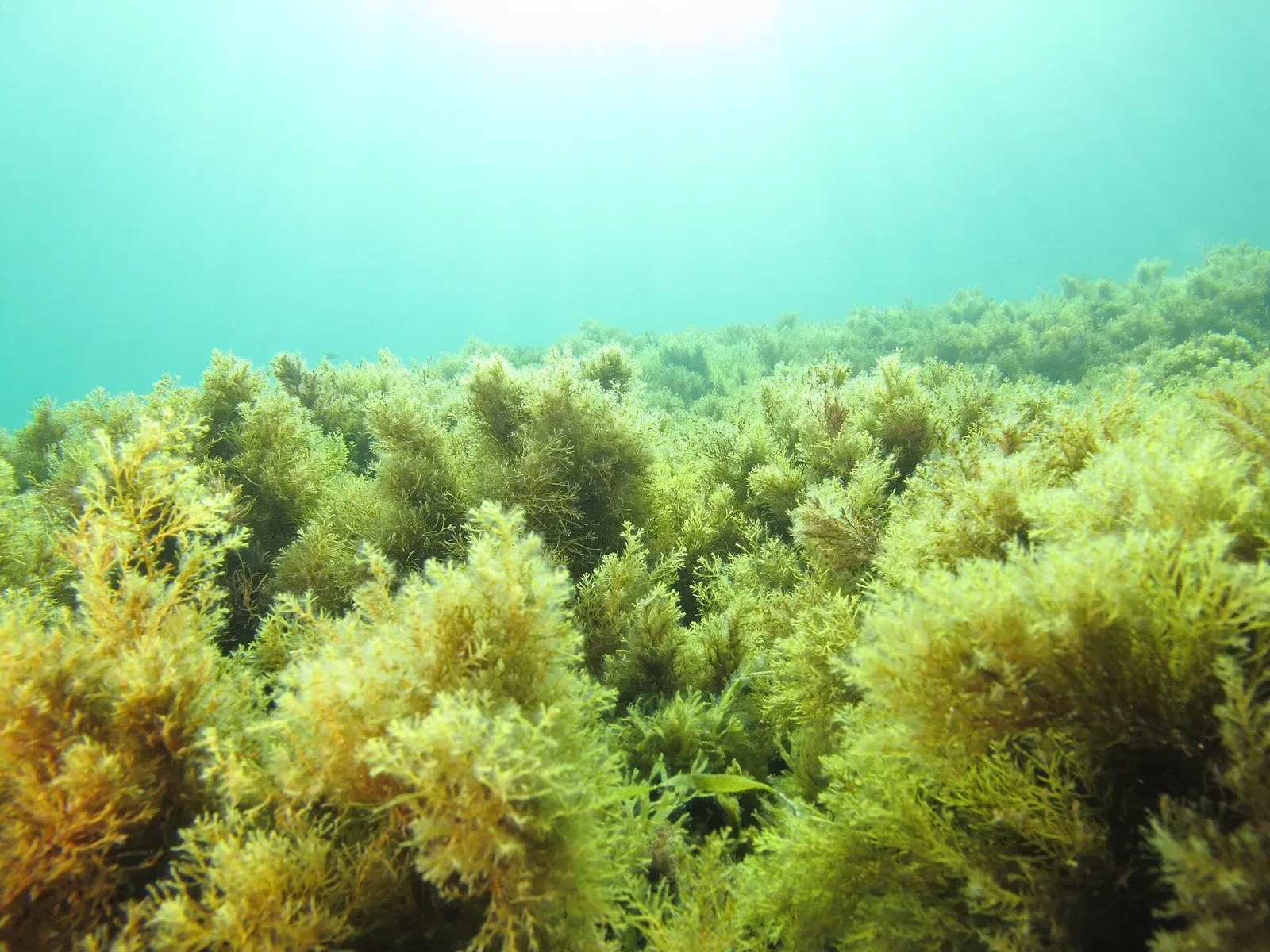
The terrain is shelf and wall. Agi Anna is flat to 18 m before the wall falls to about 40 m, and Nikouria slopes to the same depth; Nikouria Northern Wall holds a cavern at around 25 m, Small Sparti Caves opens a passage through fallen rock at about 18 m, and the Cathedral has a chimney that drops sunbeams into it. A huge Neptune grass meadow near the Nikouria cavern carries fan mussels, nudibranchs and pipefish, and damselfish, groupers and wrasses hold on the rocky reefs. Blue Dive is different in kind, a drop into open water from a fishing boat.
It suits divers who want variety on a quiet island and are content to reach it by ferry: shore entries and a training bay at one end, 40 m walls and a blue-water drop at the other, with amphorae and mine workings in between. It is not a big-animal destination; the logged sightings are octopus, parrotfish, moray and barracuda rather than anything pelagic. Wreck diving is thin as well. Little Wreck is a debris field trailing past recreational depth rather than a hull to swim, and the one dedicated wreck trip on the Aegiali price list, to a wreck listed as Manina 3, runs only when the weather allows. Divers who want an intact marquee hull are better served by the Zenobia at Larnaca.
When to dive Amorgos
| Jan | Feb | Mar | Apr | May | Jun | Jul | Aug | Sep | Oct | Nov | Dec |
|---|---|---|---|---|---|---|---|---|---|---|---|
| Fair | Fair | Fair | Fair | Good | Prime | Good | Good | Prime | Good | Fair | Fair |
Courses and testimonials cluster June to October, with October unpredictable. The meltemi unsettles late summer; winter winds and currents put some sites out of reach without closing the island.
Dive types & marine life
Rock and seagrass life rather than big animals. Barracuda school at Barracuda Point on almost every dive, and community logs record octopus, parrotfish, moray, scorpionfish and invasive lionfish concentrated June to September, with nudibranchs on the rock and fan mussels and pipefish in the Neptune grass. Damselfish school along the Aegiali wall.
- Wall
- Cave & cavern
- Reef
- Wreck
- Pelagic & blue water
- Night
- Barracuda
- Groupers
- Octopus & cuttlefish
- Nudibranchs
- Reef fish swarms
Notable dive sites in Amorgos
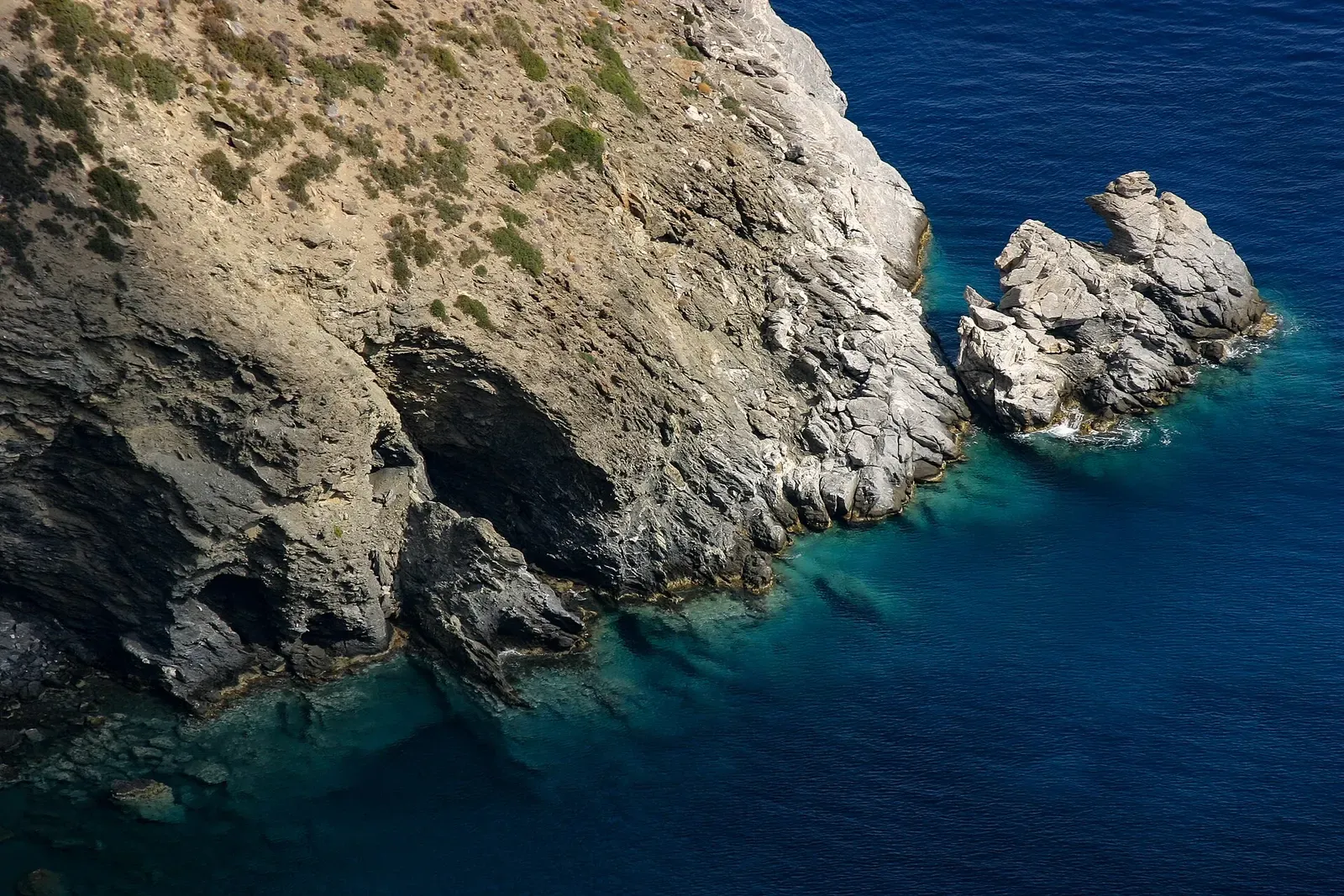
Flat reef to 18 m, then a wall to about 40 m
Wreck
A wartime debris trail from 13 m past recreational depth
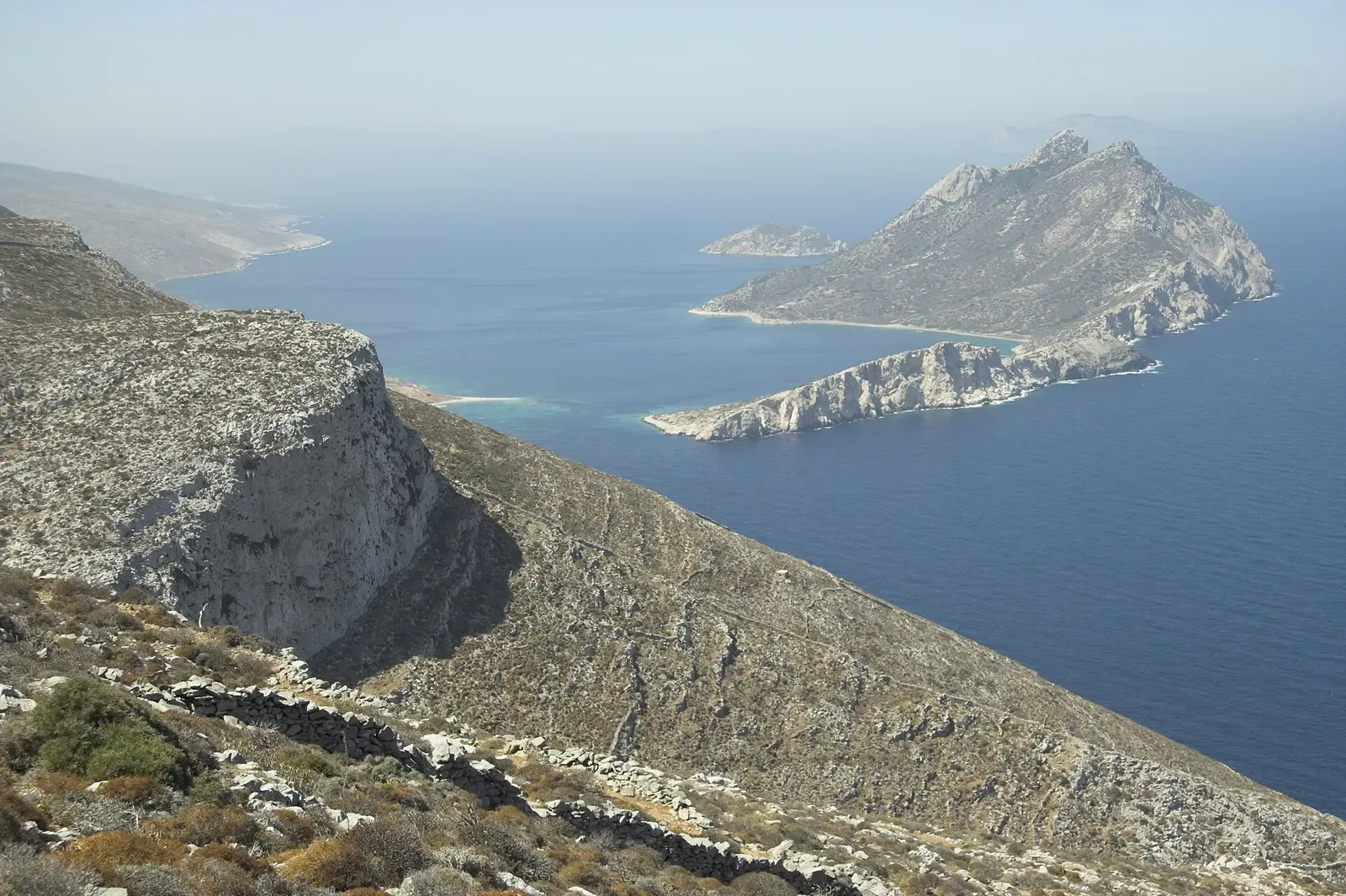
A pocketed wall sloping to 40 m off Nikouria islet
A cavern at around 25 m on the islet's northern wall
Wall
Bauxite loading gear on an 18 m plateau below the mines
Cave & cavern
A narrow passage under fallen rock, entered at about 18 m
Cathedral
Shore dive whose chimney lets sunbeams into the cavern; a wall runs alongside it.
Barracuda Point
Shore dive for all levels; a large school of barracuda shows on almost every dive.
Getting there
There is no airport; Amorgos is reached only by boat, into either Aegiali or Katapola, the two ports the dive centres work from. Blue Star ferries run from Piraeus year-round in about nine hours, with faster seasonal catamarans and summer inter-island connections to Santorini, Naxos and Paros.
Photos from Amorgos
Zde · CC BY-SA 4.0
User:internationalgreg · CC BY-SA 3.0
Oliwan · CC BY-SA 3.0
Photo credits
- Aerial view of Katapola bay on Amorgos, white village around a harbour full of moored boats. by Kondephy, CC BY-SA 4.0, via Wikimedia Commons
- Coastal view of the Agios Prokopios settlement and beach on Amorgos, with Nikouria island offshore. by Zde, CC BY-SA 4.0, via Wikimedia Commons
- The rusting hull of a shipwreck run aground on the rocky coast of Amorgos. by User:internationalgreg, CC BY-SA 3.0, via Wikimedia Commons
- View across Katapola bay on Amorgos toward the white village and Moundoulia hill. by Oliwan, CC BY-SA 3.0, via Wikimedia Commons
Similar destinations
A B-17 bomber upright on the sand at 25 m below the citadel

Fossil elephant tusks inside a cave whose entrance is now at 10 m
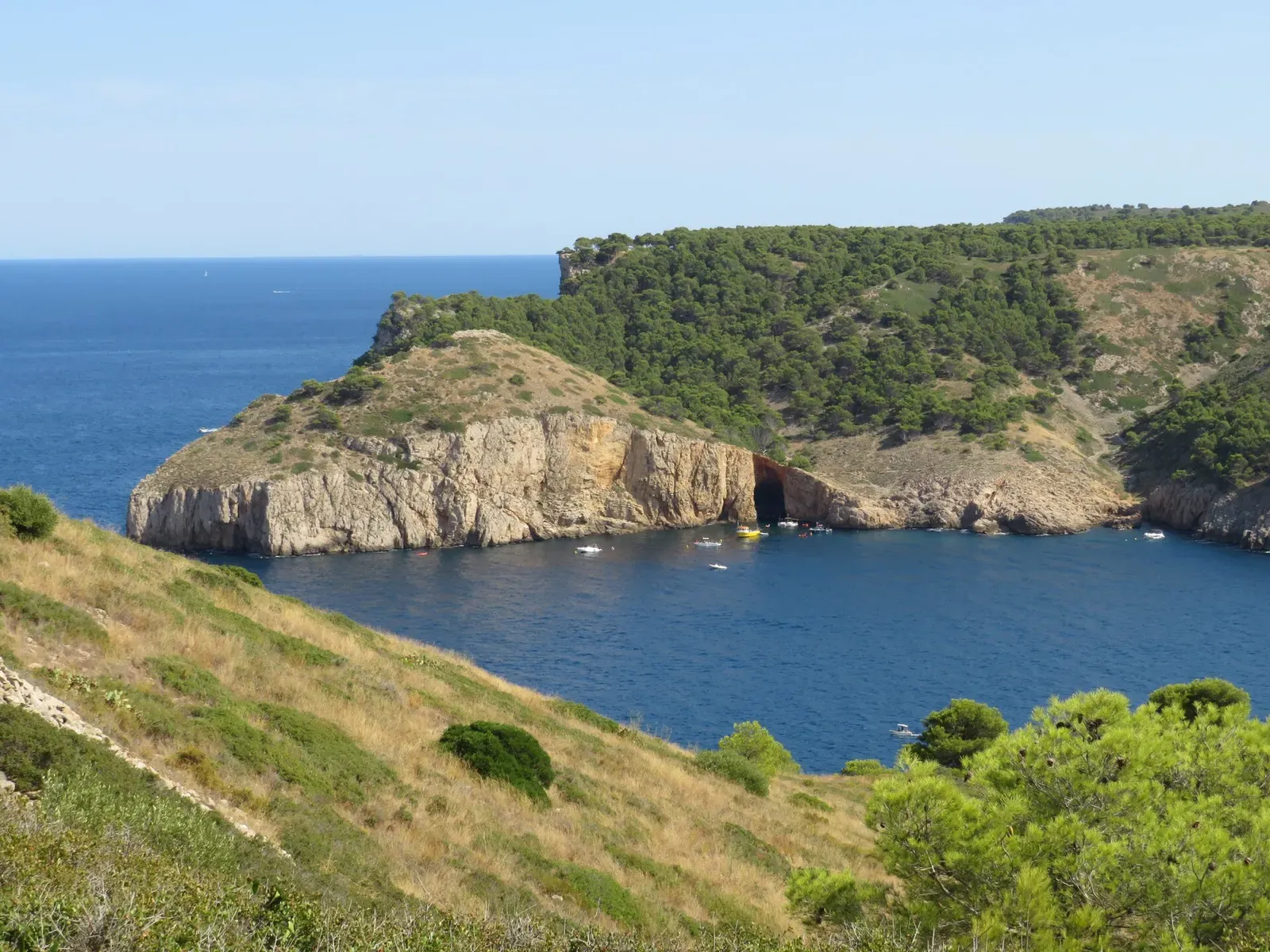
Tunnels, walls and a shallow wreck under the Montgrí cliffs, dived from L'Escala
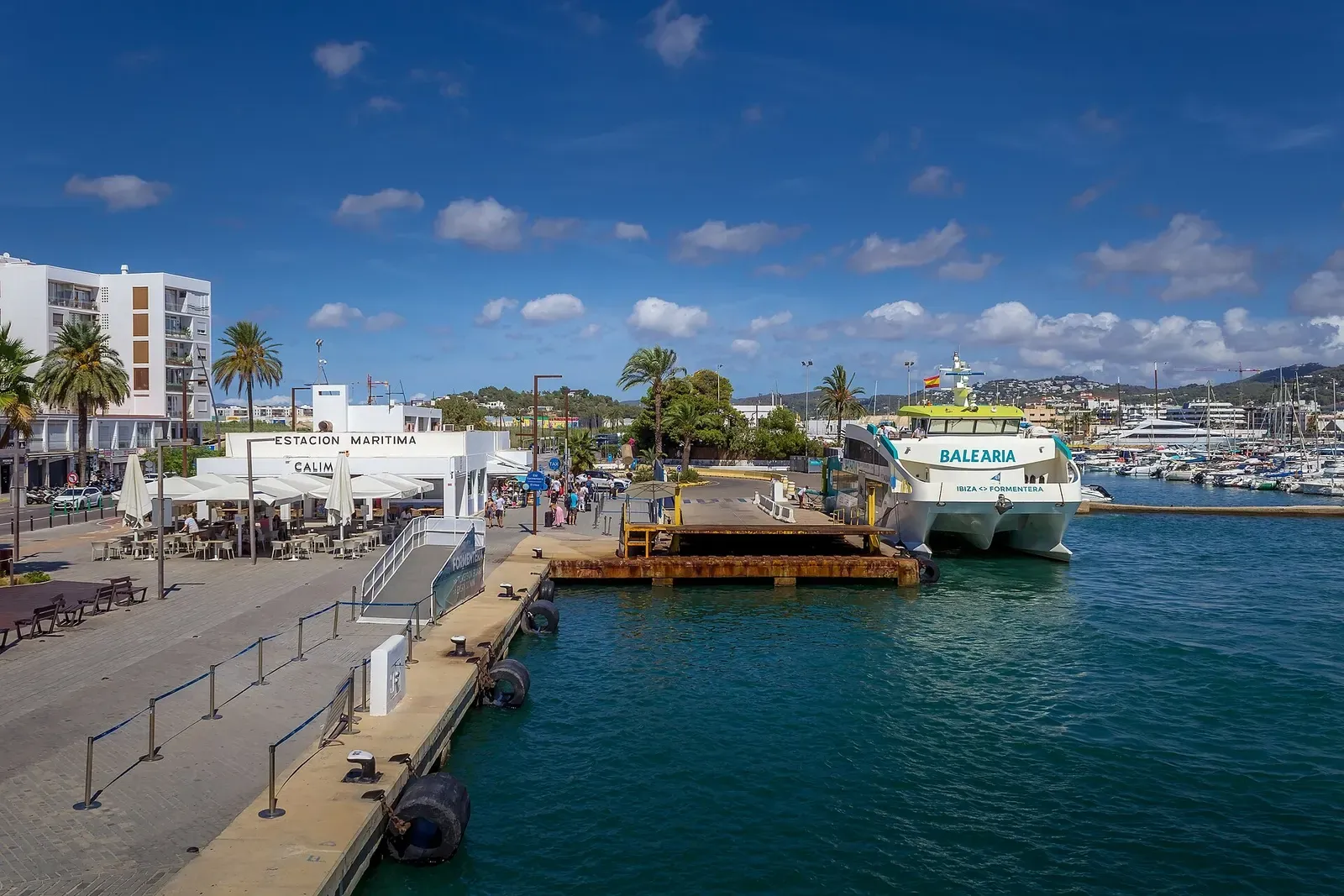


A sunlit limestone cavern, the Don Pedro wreck and the Es Vedrà pinnacles