
Cozumel · Mexico · Reef · Drift
Tormentos
650 m of coral heads and shifting sand valleys
Area photo: Matthew T Rader · CC BY-SA 4.0
A fringing reef that picks up immediately where Yucab ends, dived between about 15 and 21 metres along coral heads separated by sand valleys and dunes that the prevailing current pushes into shape. The run is about 650 metres, and a heading of 40 degrees off the end leads straight to No-name Reef. It is one of the most popular second dives on the Cozumel charter circuit.
Also known as Tormentos Reef, Punta Tormentos.
Where it is and how deep
20.4320° N, 87.0074° WPublished position for this site.
The dive
Tormentos starts where Yucab finishes, and a drift still running at the end of Yucab often carries straight on into it. The reef is a fringing one, about 650 metres end to end, and the profile sits between roughly 15 and 21 metres. Colourful coral heads are separated by sand valleys and dunes pushed up by the prevailing current, and those sand shapes between the coral ribbons change from trip to trip.
How the dive goes depends entirely on the water. When the flow is slack it is a swim you set the pace of; when the current is up it becomes fast drift diving with little chance to stop. Either way the reef holds a big, friendly green moray, and angelfish, groupers, grunts and snapper are common along it. Navigating a heading of 40 degrees off the end of the reef brings you directly onto No-name Reef if there is time and gas for it.
Marine life and season
- Groupers
| Jan | Feb | Mar | Apr | May | Jun | Jul | Aug | Sep | Oct | Nov | Dec |
|---|---|---|---|---|---|---|---|---|---|---|---|
| Prime | Prime | Prime | Prime | Good | Good | Good | Fair | Fair | Fair | Fair | Good |
Season follows Cozumel: January–April is prime with December close behind; lighter trades keep the leeward side calm, though winter nortes can shut the port for a day. Peak hurricane risk falls in September and October.
Know before you go
- Flow here is inconsistent: the site is described both as having little to no current and as holding some of the fastest currents on the island. Plan it as a drift and read the water before you commit.
Questions divers ask
How deep is Tormentos?+
It runs between about 15 and 21 metres, averaging around 20, which is why it is used so often as the shallower second dive after a deeper site in the south of the island.
Sources
- Tormentos dive site — Scuba Du
- Tormentos — Scubago
- Santa Rosa Wall (nearby-sites panel) — Scubago
More dive sites in Cozumel
Hawksbill turtles among barrel and basket sponges
Reef
Cozumel's night-dive reef, and reachable from the beach
Reef
Sheltered reef just off Chankanaab National Park
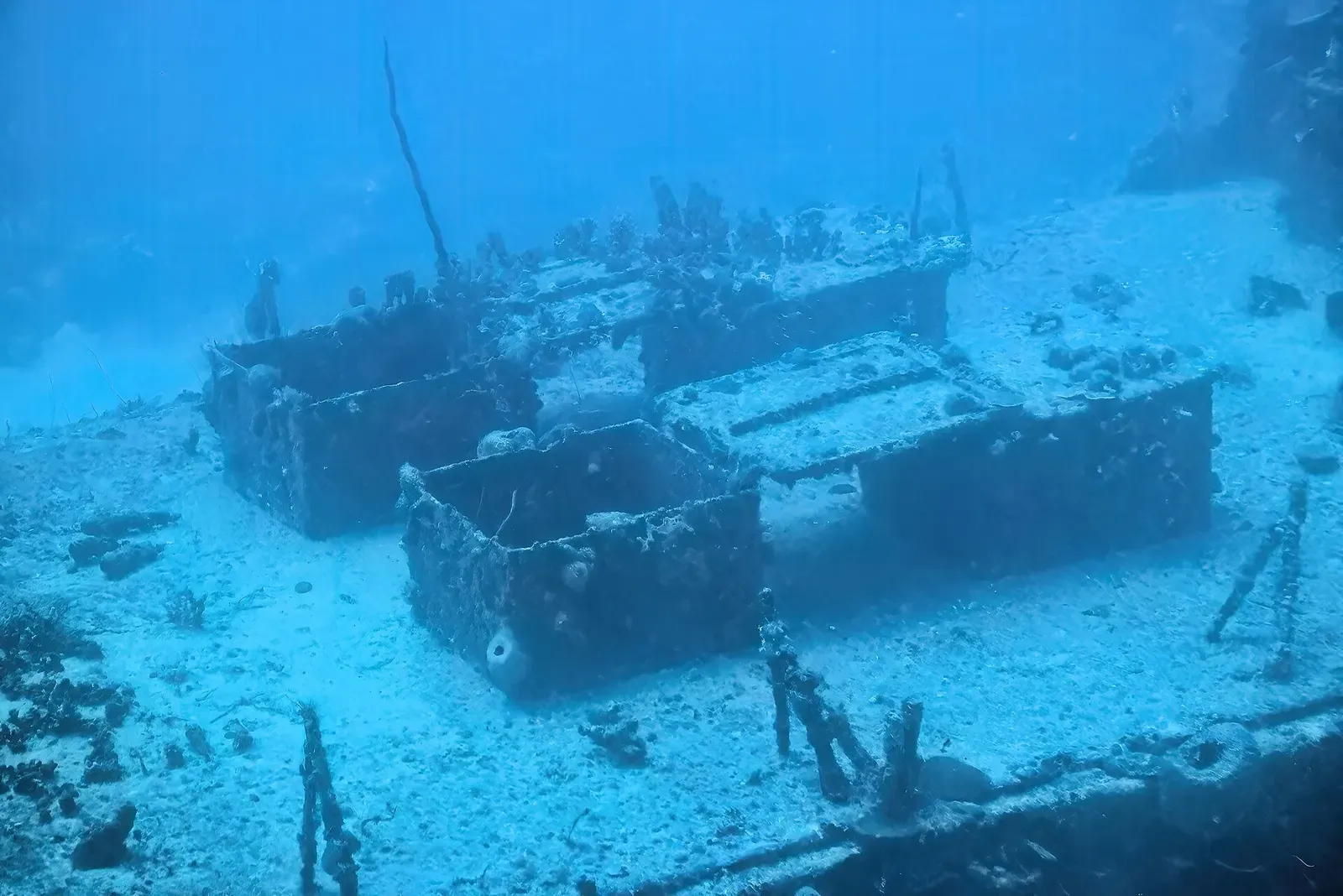
A hull that was placed rather than lost, upright at 25 m
Reef
A strong south-to-north drift over shallow reef, to 17 m
Drift
Schools of grunts and porkfish inside tall sponge-covered reef heads
Reef
A shallow reef for a long last dive or a night dive
A steep drop-off dived at 11 to 15 m, with frequent eagle rays
Similar dives elsewhere
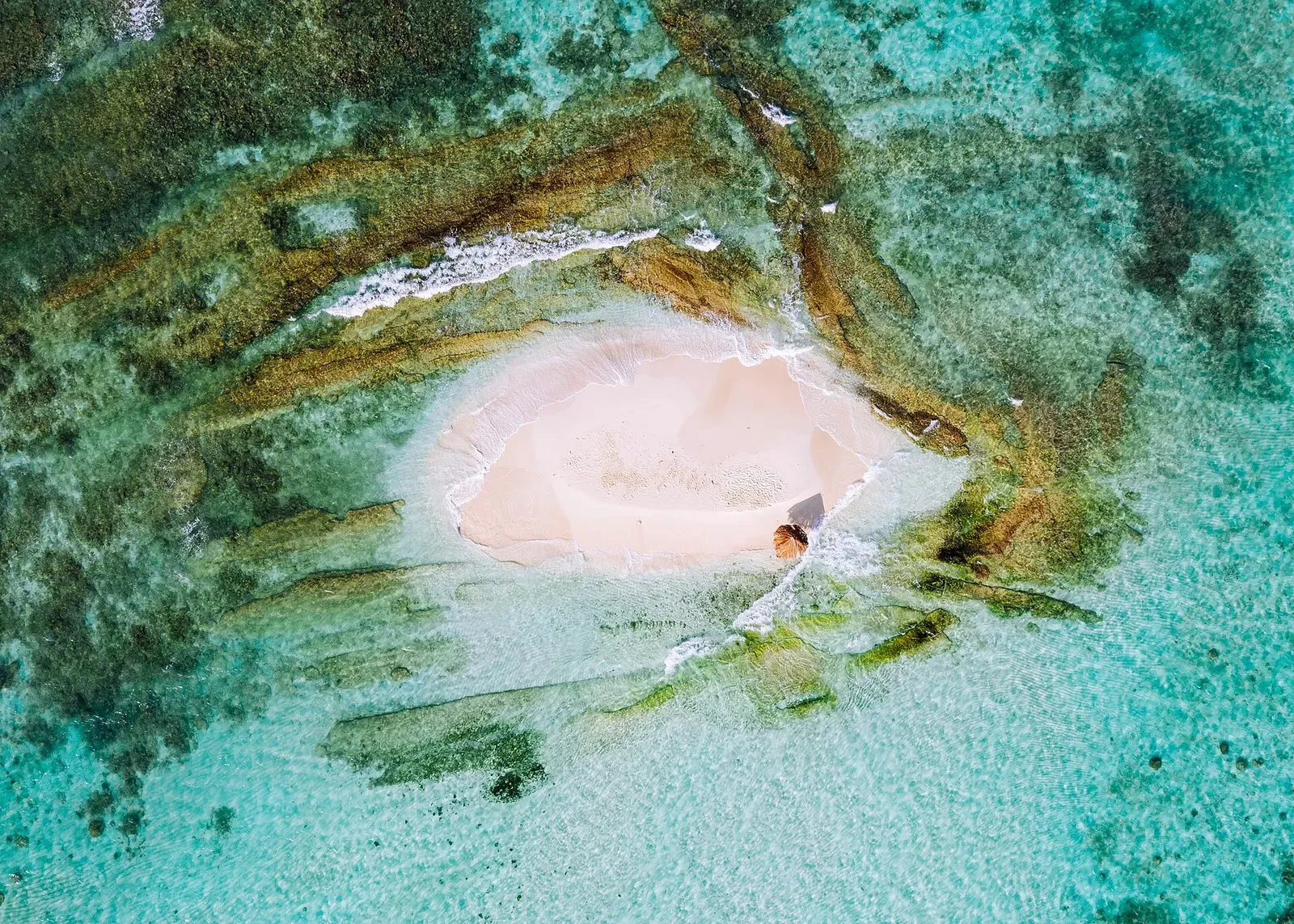
Caribbean reef sharks and huge lobsters off Petit St. Vincent
Drift over a 12 m to 18 m plateau, then the drop
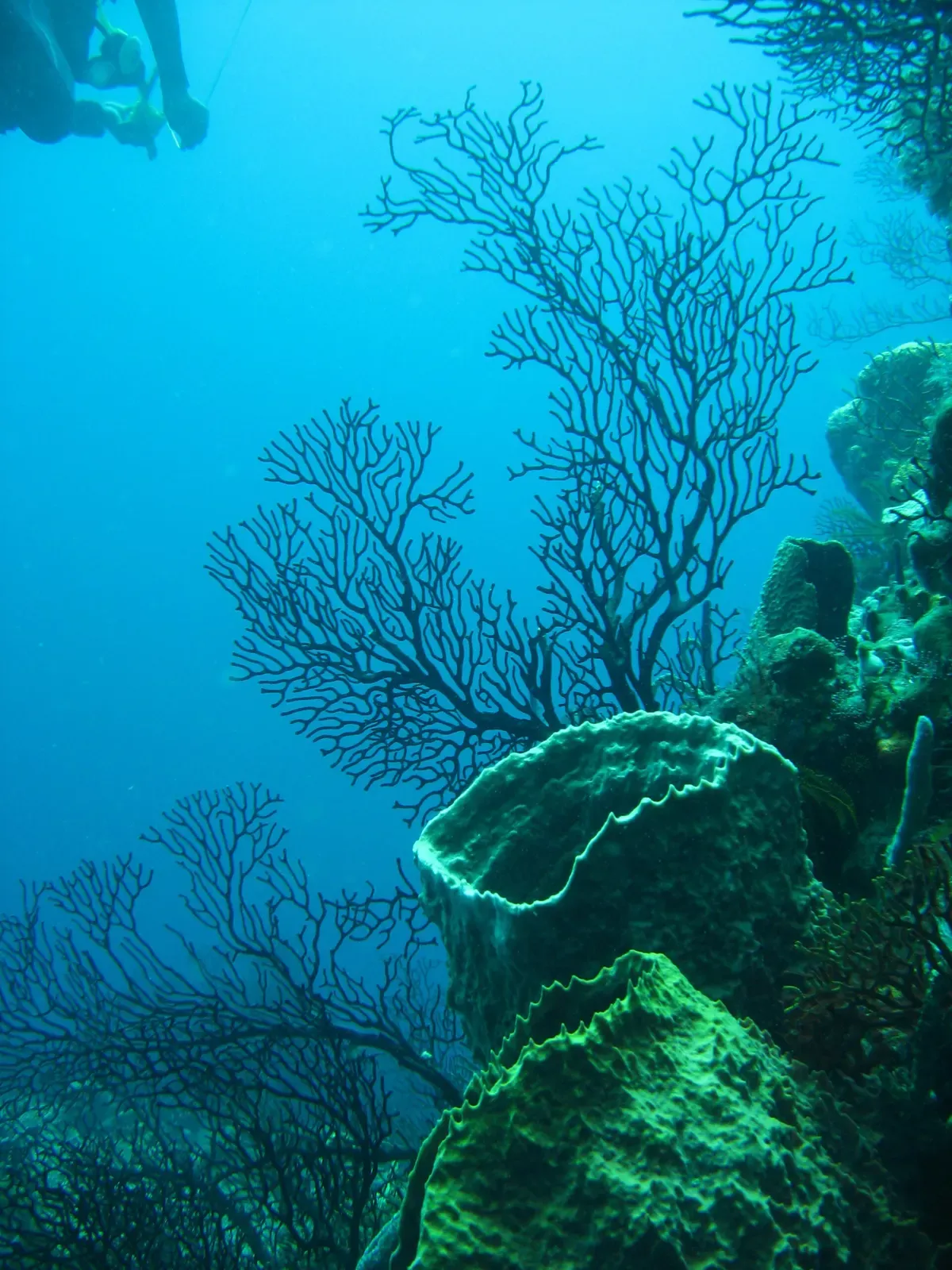
A drift past azure vase corals, home to a colony of giraffe garden eels

Brain coral colonies up to 5 m (15 ft) across