
Caribbean · Mexico
Cozumel
Drift along sponge-covered walls with 20–40 m visibility on the sheltered leeward coast
Photo: Matthew T Rader · CC BY-SA 4.0
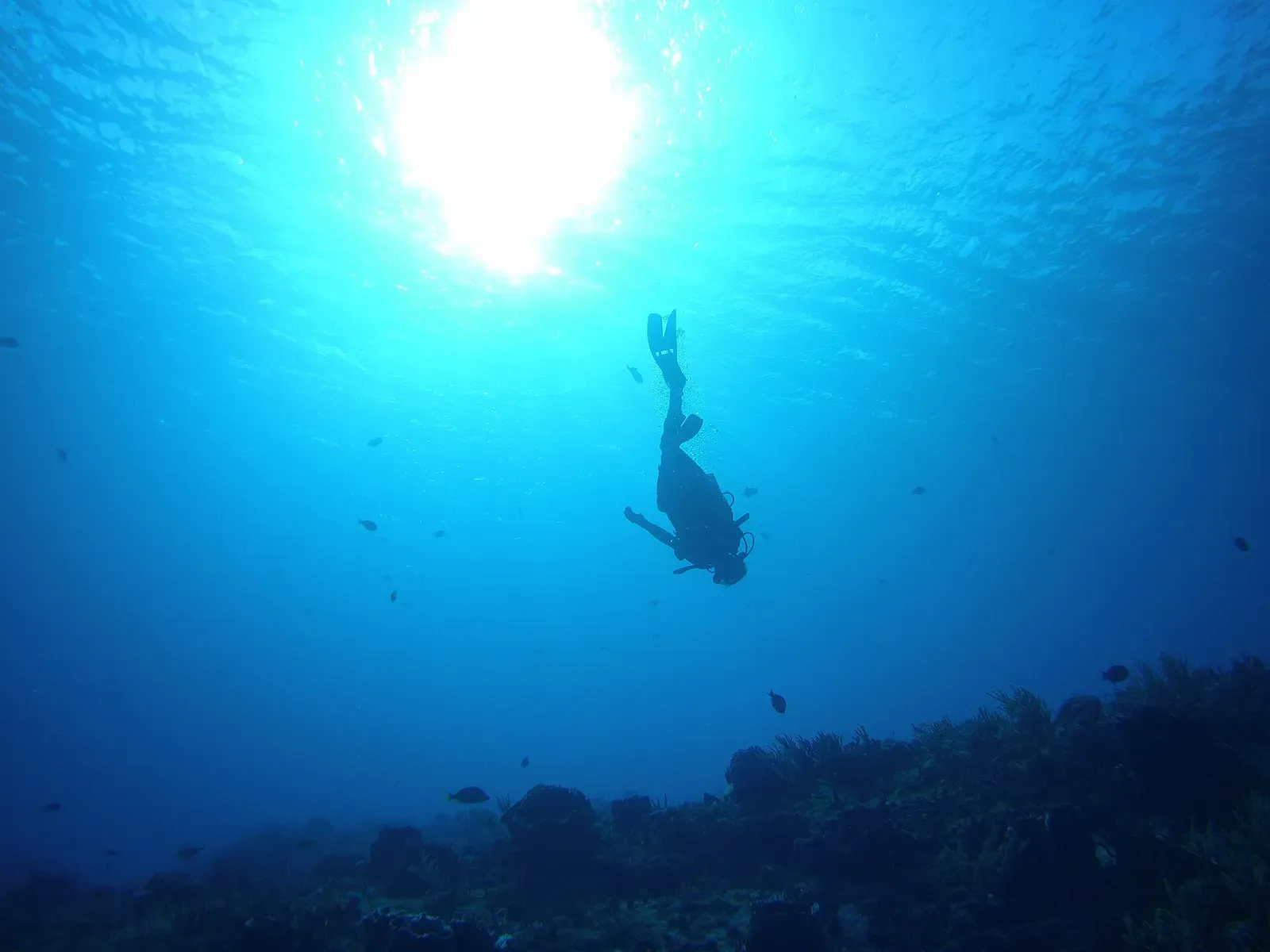
Cozumel is a drift-diving island where the Yucatan Current sweeps divers along a series of spur-and-groove walls draped in barrel sponges and black coral. Boats drop divers up-current and let them ride the reef at 15 to 30 meters, watching eagle rays glide over the drop-off in the cool-water months, while a handful of shore entries along the hotel strip serve checkout, macro and night dives. Punta Sur still hosts a small, protected winter aggregation of Nassau grouper.
About diving in Cozumel
The pattern is a two-tank morning boat and very little else to arrange. Crews run south, dive the deeper site first, break for an hour on the water, then finish shallower and closer to town. Nobody ties up: divers roll in together and the boat follows the bubbles, collecting everyone wherever they surface. Afternoon single-tank trips and night dives leave from the same marinas, and a national marine park fee is charged on top of the trip, usually collected by the operator.
The reefs run in a line down the sheltered west side, and the famous ones sit inside Arrecifes de Cozumel National Park, declared in 1996 and covering 120 km² from just south of the International Pier around Punta Sur. The grooves between the coral buttresses funnel the flow and set the line of the dive, and the buttresses are undercut and tunnelled, so time goes on slipping through gaps rather than following an edge. Sites grow deeper and more carved the further south the boat runs, from Paraiso Reef at 12 to 15 m near town to Palancar at 15 to 34 m and the Devil's Throat at Punta Sur.
Current strength is the day's main variable, and it is rarely known until the boat is over the site. On a fast day one tank covers a long stretch of reef; on a slow one a group can work the same set of canyons properly, which is when the small residents under the ledges get found. Conditions are least dependable from August through November, and even in the calm early-year months a northerly blow can shut the port for a day, so leave slack rather than booking a tight connection home.
It suits divers who can hold trim without fighting the water; buoyancy counts for more here than a logged depth. The shallower northern reefs are where less experienced divers usually start, with a guide setting the pace. It works less well for anyone who wants to park on a subject for twenty minutes: the wall and drift sites are boat-only, though a handful of shore entries along the hotel strip cover checkout dives, macro and night dives. Many people pair the island with the mainland cenotes, a ferry crossing and a drive up the coast away.
Best time to dive Cozumel
| Jan | Feb | Mar | Apr | May | Jun | Jul | Aug | Sep | Oct | Nov | Dec | |
|---|---|---|---|---|---|---|---|---|---|---|---|---|
| Season | Prime | Prime | Prime | Prime | Good | Good | Good | Fair | Fair | Fair | Fair | Good |
| Sea surface | 27°C81°F | 27°C81°F | 27°C81°F | 27°C81°F | 28°C82°F | 29°C84°F | 29°C84°F | 30°C86°F | 30°C86°F | 29°C84°F | 29°C84°F | 28°C82°F |
| Daytime high | 28°C82°F | 28°C82°F | 29°C84°F | 30°C86°F | 30°C86°F | 31°C88°F | 31°C88°F | 31°C88°F | 31°C88°F | 30°C86°F | 29°C84°F | 29°C84°F |
| Rain | 94 mm3.7 in | 50 mm2.0 in | 50 mm2.0 in | 40 mm1.6 in | 78 mm3.1 in | 211 mm8.3 in | 87 mm3.4 in | 132 mm5.2 in | 168 mm6.6 in | 232 mm9.1 in | 152 mm6.0 in | 88 mm3.5 in |
| Jan | Feb | Mar | Apr | May | Jun |
|---|---|---|---|---|---|
| Prime | Prime | Prime | Prime | Good | Good |
| Sea surface | |||||
| 27°C81°F | 27°C81°F | 27°C81°F | 27°C81°F | 28°C82°F | 29°C84°F |
| Daytime high | |||||
| 28°C82°F | 28°C82°F | 29°C84°F | 30°C86°F | 30°C86°F | 31°C88°F |
| Rain | |||||
| 94 mm3.7 in | 50 mm2.0 in | 50 mm2.0 in | 40 mm1.6 in | 78 mm3.1 in | 211 mm8.3 in |
| Jul | Aug | Sep | Oct | Nov | Dec |
|---|---|---|---|---|---|
| Good | Fair | Fair | Fair | Fair | Good |
| Sea surface | |||||
| 29°C84°F | 30°C86°F | 30°C86°F | 29°C84°F | 29°C84°F | 28°C82°F |
| Daytime high | |||||
| 31°C88°F | 31°C88°F | 31°C88°F | 30°C86°F | 29°C84°F | 29°C84°F |
| Rain | |||||
| 87 mm3.4 in | 132 mm5.2 in | 168 mm6.6 in | 232 mm9.1 in | 152 mm6.0 in | 88 mm3.5 in |
2011–2025 averages. Sea surface: NOAA Coral Reef Watch, measured at the surface, so deeper water can run colder. Daytime high and rain: NASA POWER.
January to April is the prime run, with December close behind. Spotted eagle rays gather from December to March, most reliably in January and February, and winter brings the clearest water of the year; the catch is the norte, a northerly cold front that can close the port for a day or two between December and February. May to July stays good, with warm water and generally calm conditions. August to November is the weakest stretch: September and October are the wettest months, averaging over 240 mm of rain each, and they sit at the height of the June-to-November hurricane season. The water runs from about 25 °C in the coolest months to 29 °C in summer.
Best months: January, February, March, April
Cozumel water temperature and weather by month
The sea surface runs from 27 °C (81 °F) in February to 30 °C (86 °F) in September. Most rain falls from August to November, peaking at about 230 mm (9.1 in) in October; February to April are the driest. Daytime highs sit around 30 °C (86 °F) all year. The coldest water here is about 25 °C (77 °F), so pack a 3 mm full suit.
Dive types & marine life
Hawksbill and green turtles, big barracuda and grouper hold on the reef year-round, and nurse sharks lie up under the coral buttresses. Spotted eagle rays gather in the cool-water months, December to March, and thin out through early spring. The splendid toadfish, found essentially nowhere else, stays under ledges in any month.
- Wall
- Drift
- Reef
- Eagle rays
- Sea turtles
- Groupers
- Barracuda
- Trevally & jacks
- Stingrays
Best dive sites in Cozumel
- 1
Palancar Gardens
Pinnacles and swim-throughs on Palancar Reef in 15–34 m; the best-known reef on the island.
- 2
Santa Rosa Wall
Vertical drift wall from about 15 m with big sponges and overhangs; an eagle ray stop in winter.
- 3
Colombia Deep
Giant coral pinnacles along a drop-off in 18–27 m, far down the southern reef line.
- 4
C-53 Felipe Xicoténcatl
Former US and Mexican Navy minesweeper, sunk in 1999 as an artificial reef in 25 m.
- 5
Punta Sur
Deep southern drift in 24–38 m, known for the Devil's Throat tunnel; for experienced divers only.
- 6
Tormentos
Coral heads split by sand valleys in 15–21 m; one of the most popular second dives on the island.
- 7
Paraiso Reef
Three shallow reefs about 180 m off the beach in 12–15 m; the most popular night dive on the island.
Site guides
Drift
Reef sharks seen more often than anywhere else on Cozumel
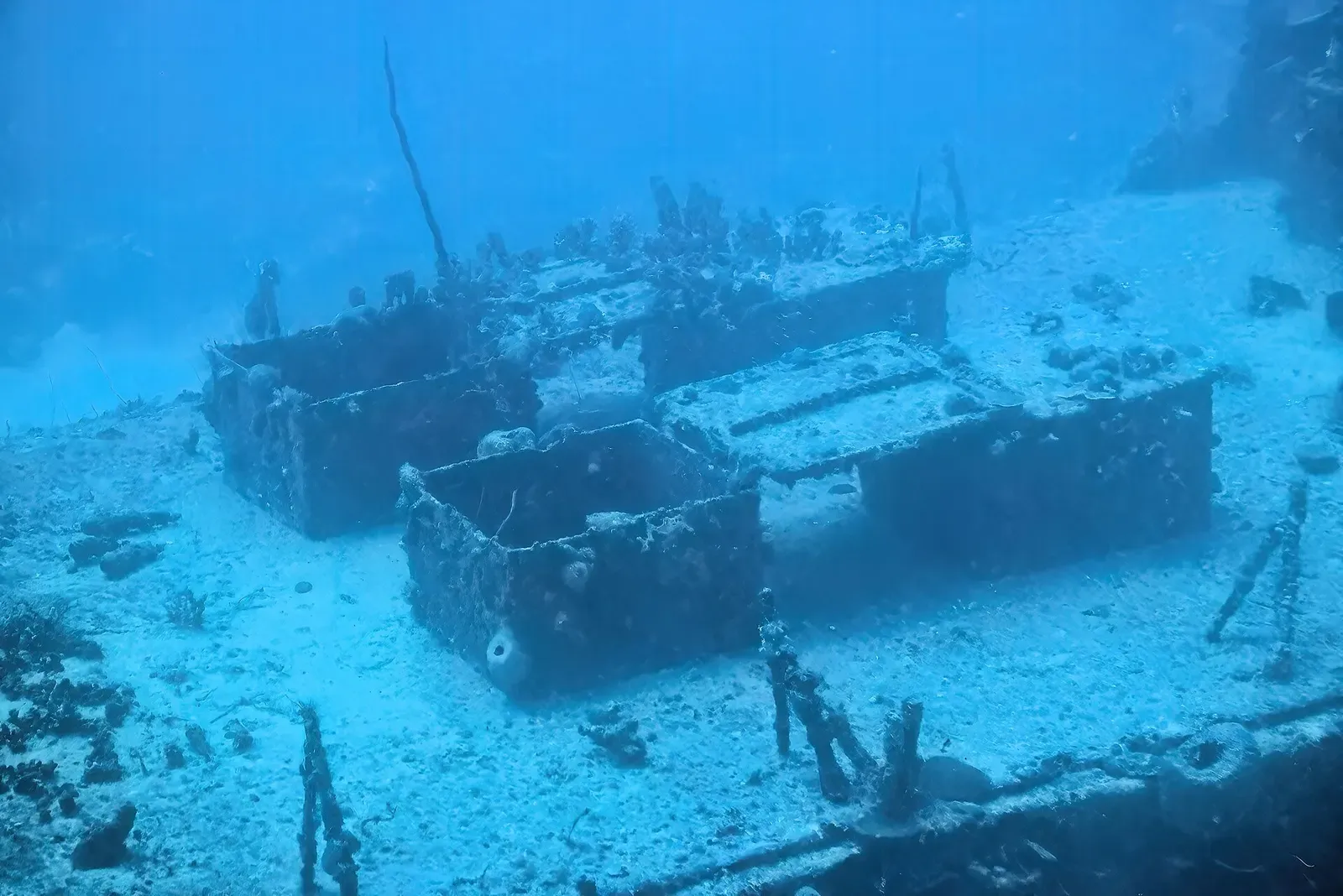
A hull that was placed rather than lost, upright at 25 m
Cave & cavern
Sunlight streaking through a vaulted cavern ceiling
Wall
Coral gardens on the shelf, steep drops below to 27 m
Reef
Sheltered reef just off Chankanaab National Park
Reef
Giant coral pinnacles cut with caves, tunnels and caverns
Mild current in a protected pocket, 9 to 15 m
Reef
Permit cruising over coral heads on open sand
Wall
A deep drop-off from 29 m with a large arch through the wall
Reef
Swim-throughs at several depths with usually mild current
Reef
A multi-level drift through tunnels in the deeper Palancar reef
Splendid toadfish, nurse sharks and turtles along the coral
Coral heads rising from 30 m to within 6 m of the surface
Reef
Cozumel's night-dive reef, and reachable from the beach
Mild-current training reef for a first Cozumel dive
Reef
Relaxed shallow drift with nurse sharks and turtles
The Cathedral cave sits in the same block of reef as the throat
Drift
Schools of grunts and porkfish inside tall sponge-covered reef heads
Reef
A shallow reef for a long last dive or a night dive
A steep drop-off dived at 11 to 15 m, with frequent eagle rays
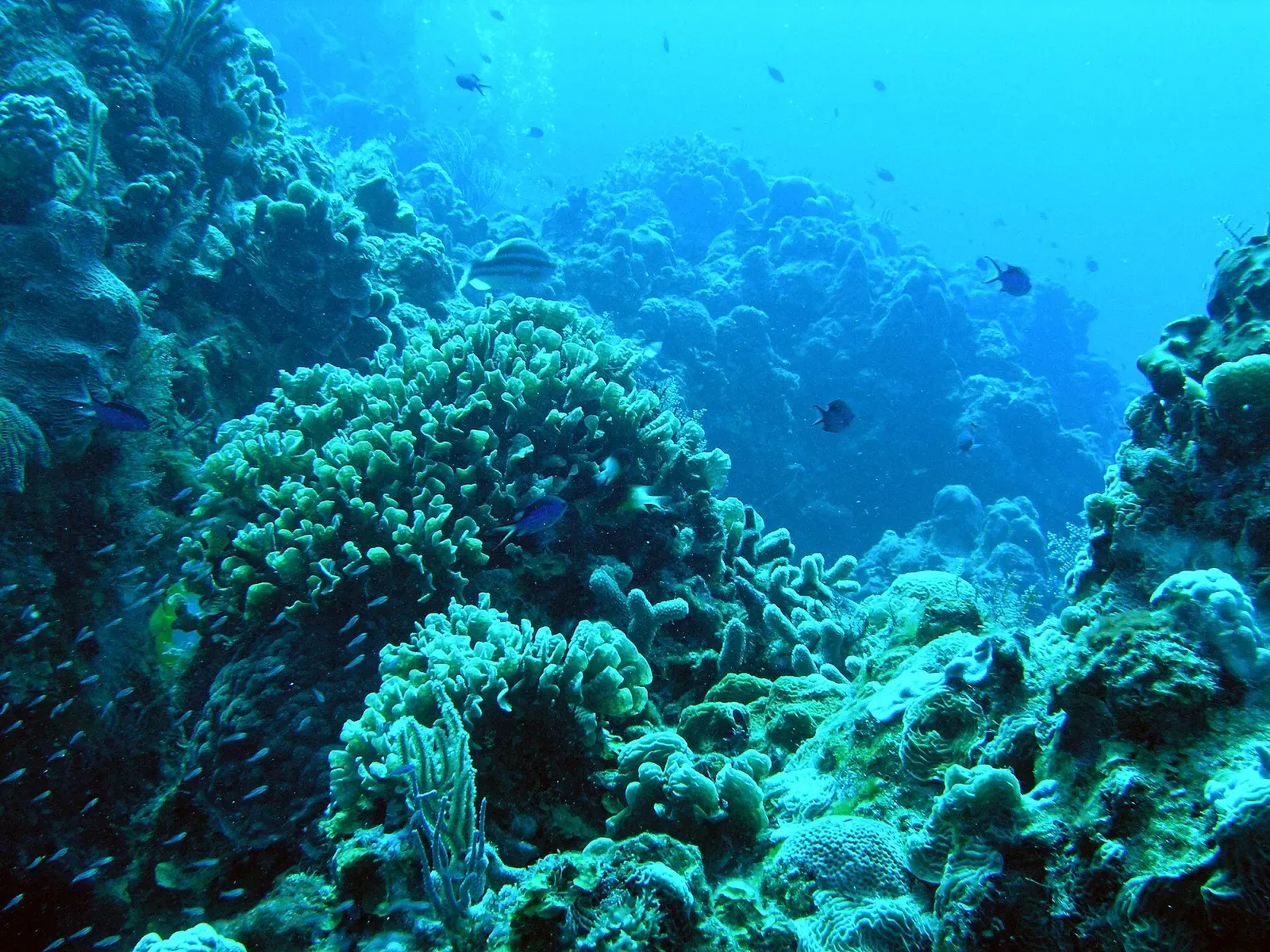
Triggerfish and sponges on coral patches beside Santa Rosa Wall
Wall
A face that starts at 15 m and drops straight into the blue
Reef
650 m of coral heads and shifting sand valleys
Hawksbill turtles among barrel and basket sponges
Reef
A strong south-to-north drift over shallow reef, to 17 m
How to get to Cozumel
The island has its own airport with direct flights from several US and Canadian cities; the alternative is flying into Cancún and taking the passenger ferry across from Playa del Carmen. San Miguel is the base for almost everyone, with shops, marinas and hotels along the waterfront and boats leaving from there. A hire car or scooter only pays off for a trip to the windward side.
Photos from Cozumel
Matthew T Rader · CC BY-SA 4.0
P.Lindgren · CC BY-SA 3.0
Matthew T Rader · CC BY-SA 4.0
Serge Melki · CC BY 2.0
Dive videos
Cozumel, Santa Rosa Wall: A Drift Dive in Cozumel · Dispatches from Somewhere on YouTube
Best Scuba Diving in the World, Cozumel, Mexico: Palancar Caves Wall (HD - 1080p) · Oleg Kaplun on YouTube
Questions divers ask
Do I need Advanced Open Water to dive Cozumel?+
It is the sensible card rather than a strict rule. Most dives are drifts along walls and pinnacles between 15 and 30 m, and Punta Sur's Devil's Throat runs to 38 m. Newer divers start on Paraiso Reef and Colombia Shallows, in 9 to 15 m with gentler current.
When is eagle ray season in Cozumel?+
December to March, with January and February the most reliable months. Santa Rosa Wall and San Francisco Wall are the usual sites for them, and the season overlaps the clearest, coolest water of the year.
How warm is the water in Cozumel?+
Between about 25 and 29 °C all year. It is coolest from December to February, during the eagle ray season, and warmest from June to August.
Is there a marine park fee for diving Cozumel?+
Yes. Diving inside Arrecifes de Cozumel National Park carries a park fee on top of the trip, usually collected by the dive operator. The park, declared in 1996, covers 120 km² of reef from just south of the International Pier around Punta Sur.
How do divers get to Cozumel?+
Fly direct into Cozumel International Airport, or fly into Cancún and take the passenger ferry from Playa del Carmen to San Miguel. Nearly all diving leaves by boat from the marinas around San Miguel.
Sources
- Cozumel — Wikipedia
- Arrecifes de Cozumel National Park — Wikipedia
- Palancar Reef — Wikipedia
- Devil's Throat at Punta Sur — Wikipedia
- Cozumel — Wikivoyage
- Diving in Cozumel — PADI
- Cozumel Scuba Diving Guide — Island Life Mexico
- Paradise — Scuba Du
Photo credits
- Scuba divers swim through a coral archway lit by shafts of sunlight on a Cozumel reef by Matthew T Rader, CC BY-SA 4.0, via Wikimedia Commons
- Reef fish swim over coral heads and sea fans in Cozumel's protected marine park by Matthew T Rader, CC BY-SA 4.0, via Wikimedia Commons
- A green moray eel swims freely over the sandy bottom as a diver looks on in the distance by P.Lindgren, CC BY-SA 3.0, via Wikimedia Commons
- A spotted eagle ray glides over the white sand trailed by two smaller fish by Matthew T Rader, CC BY-SA 4.0, via Wikimedia Commons
- A sea turtle swims through open blue water off Cozumel by Serge Melki, CC BY 2.0, via Openverse
Embed
Run a dive centre, club or blog? Embed this map of 12 dive sites near Cozumel on your own page.
In The Logbook
- Where to dive with sea turtlesBig animals · 15 min read
- The best wall dives in the worldWalls & drop-offs · 11 min read
- Ships sunk on purpose, and where to dive themWrecks · 14 min read
- Where to dive in every month of the yearTrip planning · 14 min read
- What is decompression sickness (the bends)?Body & health · 18 min read
- Sunfish diving: where and when to see a molaBig animals · 11 min read
- How long does a tank of air last?Gear & kit · 9 min read
- How a dive computer calculates no-stop timeBody & health · 10 min read
- Air, nitrox or trimix: which gas, and when?Gear & kit · 15 min read
- Drift diving: how to read and ride a currentDrift & current · 8 min read
- DPV diving: what an underwater scooter changesGear & kit · 10 min read
- Your first wreck dive: what to expect and whereFirst dives · 6 min read
Similar destinations
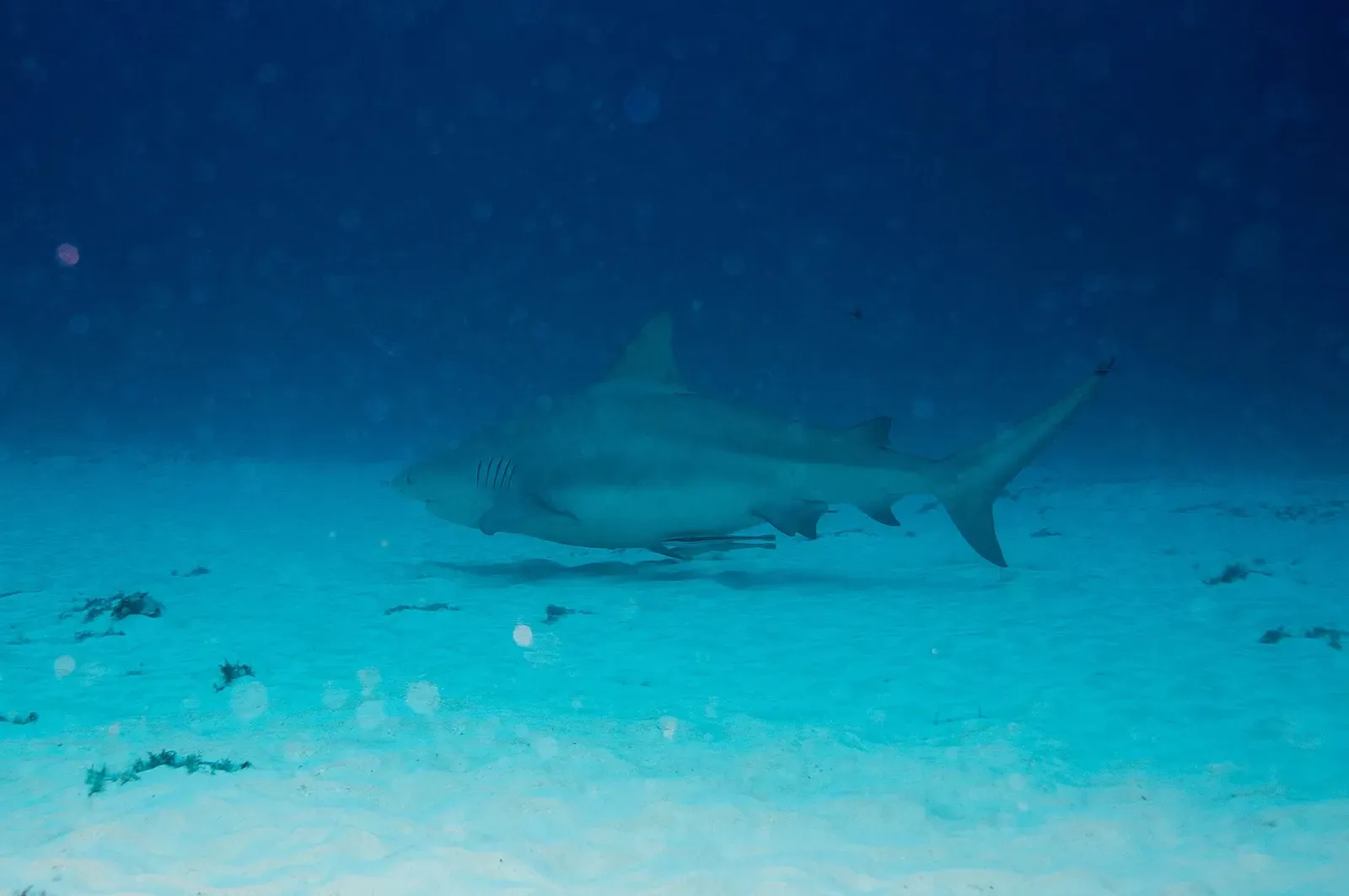
Pregnant bull sharks gather on open sand minutes off the beach each winter

Descend into Angelfish Blue Hole, a vertical shaft opening onto a coral-rimmed cavern

Hand-feed wild stingrays in chest-deep water, then drop over a sheer wall the same day


,_Cozumel.jpg)
_in_Cozumel,_Mexico.jpg)
A 34 km shelf-edge wall a short boat ride from two south-coast towns