
Donsol & Ticao Pass · Philippines · Reef
R.A.C. Point
Rock cover that puts you close to passing mantas
Area photo: AwOiSoAk KaOsIoWa · CC BY-SA 3.0
A rocky reef covered in coral on the Ticao Pass shoal, running between 18 and 22 metres over a mix of rock, coral and sandy bottom. Current is strong, but the rocks give you something to tuck behind, which is what makes the manta encounters here close rather than distant.
Also known as RAC Point.
Where it is and how deep
12.5574° N, 123.8431° EPublished position for this site.
The dive
The reef sits between 18 and 22 metres, a rocky bottom covered in coral mixed with stretches of sand. The current is strong, which is why the site is reserved for intermediate divers and up, but it is also the reason the animals are here, and the terrain gives you options: the rock formations are big enough to get behind and out of the flow.
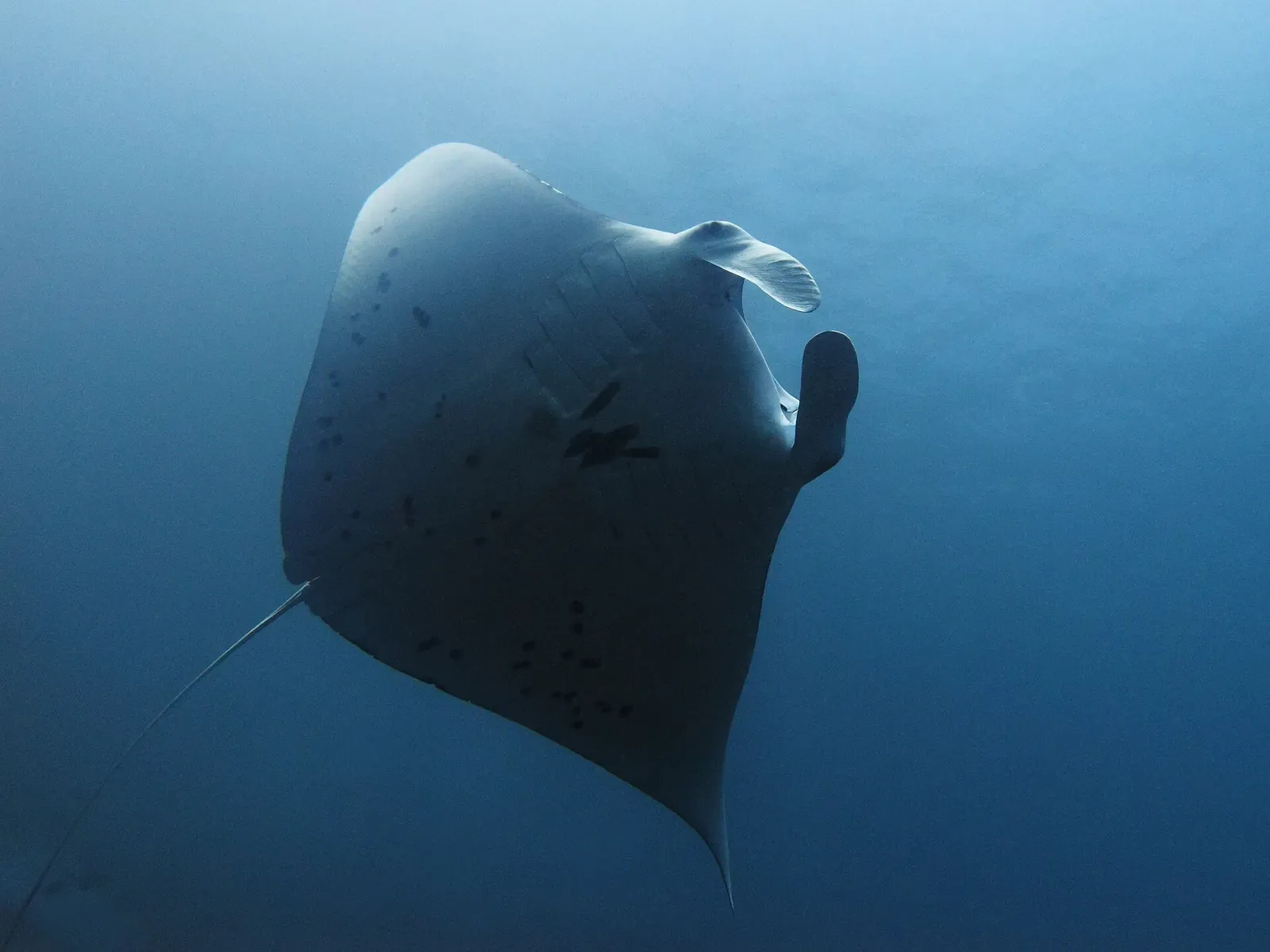
That shelter is the point of the dive. R.A.C. Point is described as a playground for manta rays, and because you can hide behind rocks the encounters tend to be dramatic rather than a glimpse of something leaving. Small reef sharks, moray eels and big groupers work the same ground, so there is a reason to keep looking at the reef between passes.
On the reef itself the fish life is dense and easy to photograph in the shallow depth range: surgeonfish, sweetlips, butterflyfish, comet fish and clouds of fusiliers and damsels. Ascend from the shallow end of the profile rather than drifting off the shoal, and expect the current to dictate how long you can hold a given patch of rock.
Marine life and season
- Manta rays
- Reef sharks
- Groupers
- Reef fish swarms
| Jan | Feb | Mar | Apr | May | Jun | Jul | Aug | Sep | Oct | Nov | Dec |
|---|---|---|---|---|---|---|---|---|---|---|---|
| Good | Prime | Prime | Prime | Prime | Good | Fair | Fair | Fair | Fair | Good | Good |
Season follows Donsol & Ticao Pass: Whale sharks are in Donsol Nov–Jun, peaking Feb–May; manta activity at the Bowl follows a similar window before typhoon season.
Know before you go
- Strong current over the shoal: plan the dive around shelter behind rock formations rather than swimming against the flow.
Sources
- From Manta Bowl Shoal To Sweetlips Rock: Diving Five Of Luzon's Best Donsol Dive Sites — Just Gotta Dive
- Diving in Donsol and Ticao — Thresher Shark Divers
- Ticao Island dive sites — Scubago
More dive sites in Donsol & Ticao Pass
Wall
Overhangs and ledges worked at macro range
Reef
A steep face with frogfish on it and tuna off it
Reef
Squid and cuttlefish eggs wedged between the rocks
Reef
Four hectares of shallow cleaning station in the pass
Cave & cavern
A half-drowned cavern where two currents meet
Reef
Whitetips lying up between boulders on white sand
Pinnacle
A mushroom rock you can circle in one dive
Reef
Limestone swim-throughs off a white sand beach
Similar dives elsewhere
Rock corridors on the south coast where the mantas feed

Whitetip sharks and turtles on three coral levels at 18-24 m

.jpg)
White sand to 15 m, no current, twenty minutes from town
Hard coral, soft coral and sea fans on a sand slope to 20 m