Guarapari · Brazil · Reef · Wall
Ilhas Rasas
A sand classroom for trainees and a wall from 6 to 22 m
The Ilhas Rasas are two rocky islets, Rasa de Terra and Rasa de Fora, and the second most visited dive site off Guarapari. Sheltered classroom areas used for training, a rock wall running from 6 to 22 m and an exposed outer side rich in fish, where strong current turns the dive into a drift, give the islets several different dives.
Also known as Rasa de Fora, Rasa de Terra.
Where it is and how deep
20.6779° S, 40.3658° WApproximate position — the dashed circle shows where the site lies; your operator's briefing has the mooring.
The dive
On Rasa de Fora, the sala de aula, the classroom, is usually sheltered from the northeast wind and is used for training beginners, trial dives and snorkelling. From there the Paredão, the wall on the southwest side, follows the line where rock meets sand from 6 m down to 22 m. This side is usually sheltered from the northeast wind and the currents, and the holes in the rock are worth checking for octopus, lobsters and morays.
The outer side of Rasa de Fora is almost always exposed to both the south and northeast winds, and it is one of the richest stretches for fish, with large boulders gathered in a few spots and an excellent drift in the current. On Rasa de Terra, a white-sand classroom sheltered from the south-southwest wind leads south to a rock formation, and the fish species across the islets are very similar to Ilha Escalvada's.
On the white sand bottom, flying gurnards, lizardfish and batfish are the finds to look for. Elephant-ear and monkey-tail gorgonians, stony corals, sea stars, anemones with small shrimps, sponges, spider crabs, lobsters and octopus are the notable invertebrates.
Background
Until the end of the seventies the Ilhas Rasas were a firing target for Brazilian Navy training, and many unarmed projectiles could be found on the bottom. They have since been removed by local divers. The classroom on Rasa de Fora also holds the remains of a small fishing boat, now completely buried.
Marine life and season
The sources we used don't single out particular species here.
| Jan | Feb | Mar | Apr | May | Jun | Jul | Aug | Sep | Oct | Nov | Dec |
|---|---|---|---|---|---|---|---|---|---|---|---|
| Prime | Prime | Prime | Prime | Good | Fair | Fair | Fair | Fair | Fair | Good | Prime |
Season follows Guarapari: Diving runs all year; November to May is the best time at Ilha Escalvada and the Ilhas Rasas, and December to April at Três Ilhas.
Know before you go
- The canyons of Rasa de Fora are not well sheltered from the current; when it runs very hard, a drift dive is the best option.
Dive videos
Mergulho Ilhas Rasas, Guarapari-ES · planetxbrasil on YouTube
Questions divers ask
How deep is the diving at the Ilhas Rasas?+
Dives at the Ilhas Rasas run from 3 to 22 m; the wall on Rasa de Fora follows the rock from 6 m down to 22 m.
Are the Ilhas Rasas good for beginners?+
Basic certification is the stated level, and the classroom on Rasa de Fora is used to train beginners and for trial dives.
Sources
- Ilhas Rasas – Acqua Sub — Acqua Sub Mergulhos
- Ilhas Rasas – Scubago — Scubago
More dive sites in Guarapari
A 102 m British steamer lying between 15 and 27 m
Two sheltered faces, a small cave and boulder fields to swim between
Reef
A shallow, protected archipelago for macro and juvenile fish
Wreck
A cargo ship sunk as an artificial reef in 2003, from 18 to 36 m
Similar dives elsewhere
Reef
Pedra da Cachorra
Ubatuba · Brazil
Stingrays mating in numbers in September and October
Portinho mooring out of the east wind, reef and walls to 25 m
The exposed mooring, with walls and boulders from 10 to 25 m
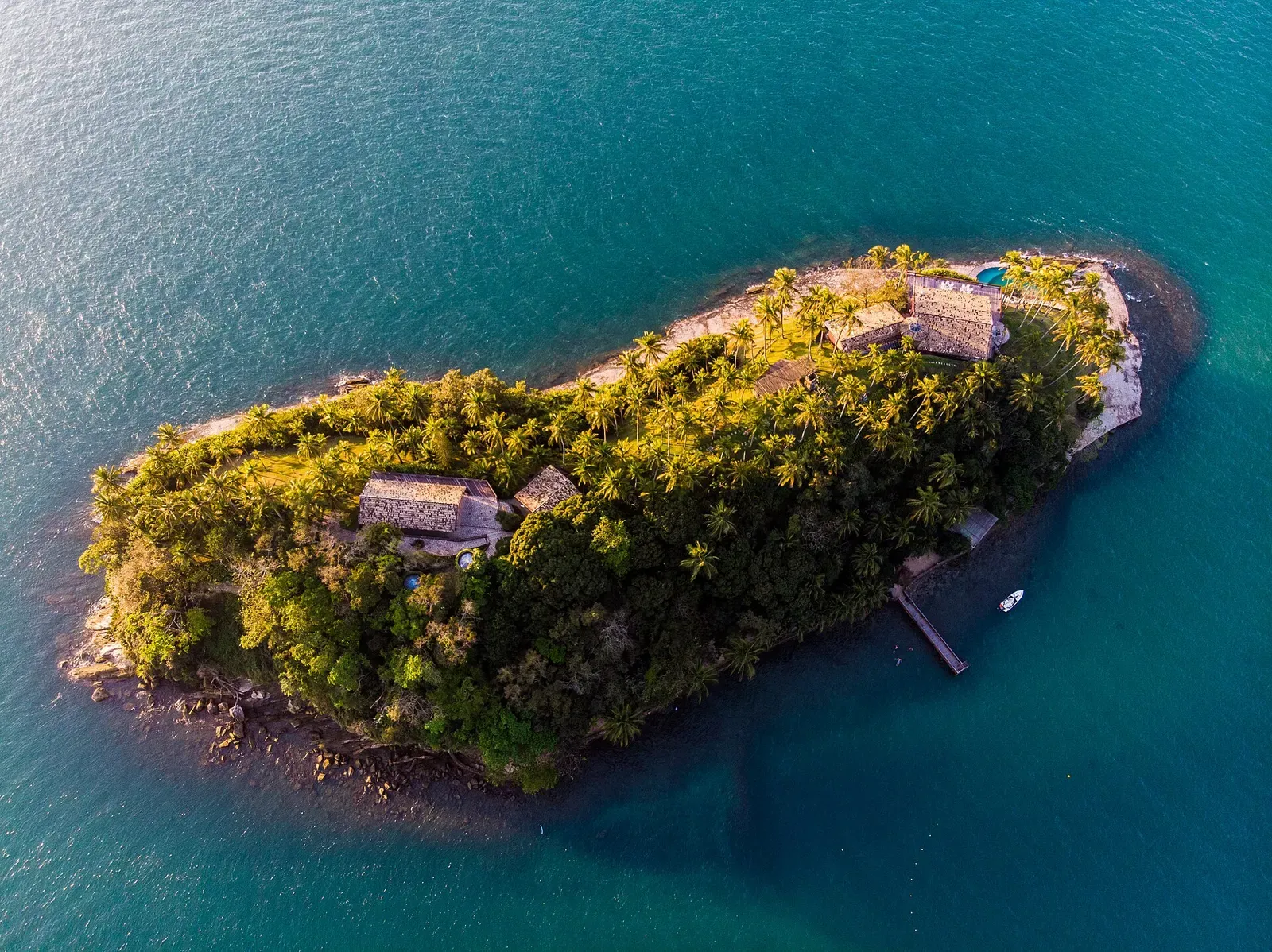
Boulder walls and canyons to 35 m inside a no-fishing zone