
Jervis Bay · Australia · Cave & cavern
Spider Cave
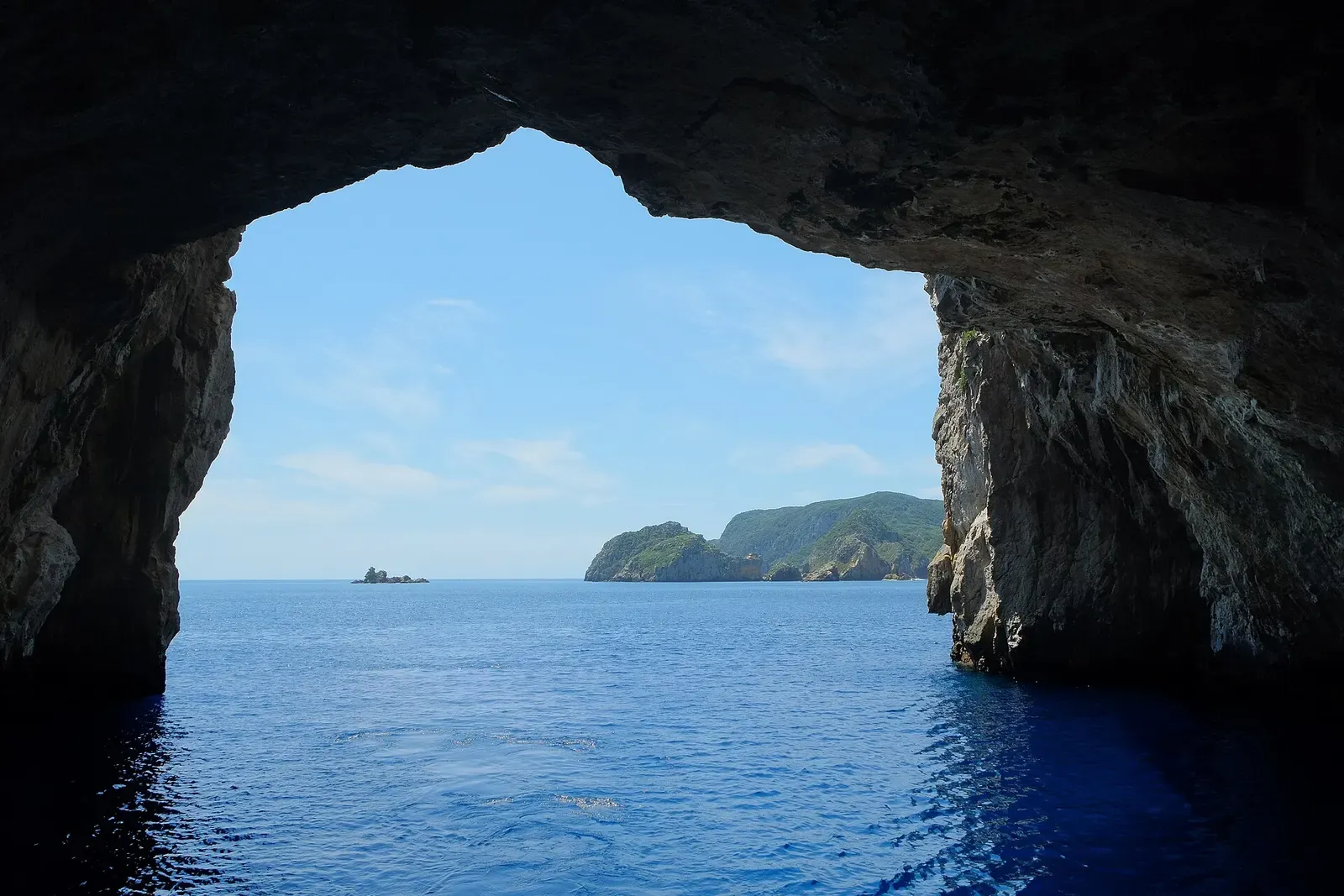
A true overhead cave running 70-80 m back into the cliff
Area photo: Dave Naithani · CC BY-SA 3.0
Spider Cave lies just south of Bowen Island at the southern entrance to Jervis Bay, and unlike Slot Cave it is a genuine overhead environment, extending 70 to 80 m back into the rock. The diving in front of it reaches 30 m and shallows to about 16 m against the cliff face, and the entrance is calmest in winter when the westerlies blow.
Where it is and how deep
35.1135° S, 150.7650° EApproximate position — the dashed circle shows where the site lies; your operator's briefing has the mooring.
The dive
The site sits just south of Bowen Island. In front of the cave the ground reaches a maximum of 30 m and shallows to about 16 m against the cliff face, which makes the outside dive a natural multi-level along the wall: deepest at the start, shallow against the rock on the way back. That is the dive most visitors actually get, because whether the cave is open to you depends on the conditions at its mouth.
The cave extends back 70 to 80 m and is an overhead environment, with everything that implies for training, gas planning and running a line. Conditions at the mouth decide access: the site is best done in winter, when the westerly winds blow and leave minimal or no swell as you enter the cave. On days when swell is pushing onto this coast the entry, not the cave, is the part of the dive that hurts you.
Marine life and season
The sources we used don't single out particular species here.
| Jan | Feb | Mar | Apr | May | Jun | Jul | Aug | Sep | Oct | Nov | Dec |
|---|---|---|---|---|---|---|---|---|---|---|---|
| Good | Good | Good | Prime | Prime | Prime | Prime | Good | Good | Good | Good | Good |
Season follows Jervis Bay: Apr–Jul is clearest as summer runoff clears; seals are present through winter and grey nurse numbers peak in the cooler months.
Know before you go
- The cave is a genuine overhead environment running 70-80 m back into the rock: enter it only with overhead training, a line and the gas reserves that go with it.
- Swell at the cave mouth is the deciding condition. Winter westerlies leave it calm; any direction that pushes swell onto this coast makes the entrance the hazard.
Sources
- Jervis Bay Dive Site Locations (2019 archive) — Deep 6 Diving Jervis Bay (Wayback Machine)
More dive sites in Jervis Bay
Reef
Juvenile fish over sand and rock groups, from 5 m to about 20 m
Reef
A boat-only deep dive to about 30 m on the Beecroft Peninsula
Multi-level sponge reef, 10-30 m, with the Wandra wreck alongside
Reef
Kelp gardens and rock gutters, no deeper than about 13 m
Reef
A self-guided shore dive over kelp and seagrass in 8-12 m
Boulder swim-throughs under a 100 m cliff, from 6 m to 35 m
Reef
Winter seals over boulder ground, with the bottom at 25-30 m
Cave & cavern
A 60 m slot in the cliff, entered at 16-18 m and naturally lit
Similar dives elsewhere

An L-shaped cave in from 14 m and out of the wall at 22 m

Grey nurse sharks around a cave at the island's deep end
A large whale jaw bone on the sand at 12 metres, inside the cave

Beginner and intermediate caves in stone, down to 28 m