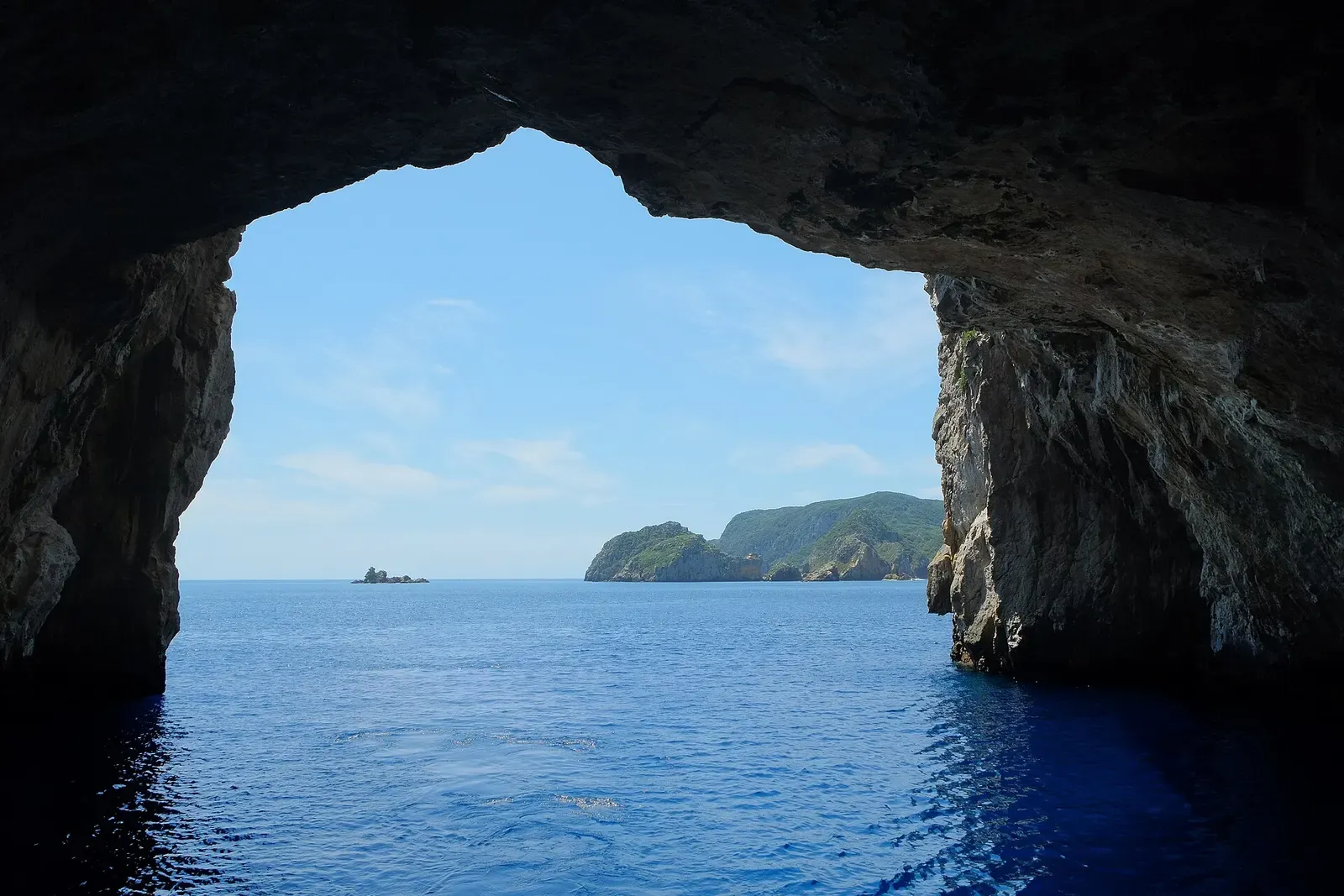
Poor Knights Islands · New Zealand · Cave & cavern
Rikoriko Cave
A large whale jaw bone on the sand at 12 metres, inside the cave
Rikoriko is a sea cave large enough for a small tour boat to motor into, and the largest by volume in the southern hemisphere at 221,494 cubic metres. Divers work the walls inside, where sponges and hydroids replace the kelp that stops at the entrance, over a boulder floor sitting between 16 and 20 metres. The entrance itself slopes down to 25-30 metres.
Also known as RikoRiko Cave.
Where it is and how deep
35.4818° S, 174.7342° EPublished position for this site.
The dive
The dive starts from the anchorage inside the cave. Head for the southwestern corner, where a large whale jaw bone lies on the sand at around 12 metres. From there the route follows the walls, which are lined with sponges and hydroid growth rather than kelp; kelp only grows near the entrance, where there is enough consistent light for it, and the interior has none.
Working along the wall means picking your way over the large boulders on the bottom, which sit between 16 and 20 metres. Nudibranchs on the rock are why divers go slowly here. Scorpionfish, moray eels and stingrays are all on the site's common sightings list, along with pelagic fish moving through the cave.
The way out is the way you came in, with the floor sloping down towards the mouth and reaching 25 to 30 metres at the entrance itself, where the kelp picks up again as the light returns. Look up on the way: light hitting the water throws a shimmer across the ceiling above you, and ferns and plant life grow on the rock it reaches.
Background
Rikoriko's chamber measures 130 by 80 metres with a ceiling 35 metres above the water and extends 26 metres below the surface, 221,494 cubic metres in all, which makes it the largest sea cave by volume in the southern hemisphere. Its opening is wide enough for small tour boats to enter, and that is how most visitors see it. The islands around it are protected as a nature reserve: a permit is required to land or tie boats up, and permits are usually granted only for scientific research.
Marine life and season
- Nudibranchs
- Stingrays
| Jan | Feb | Mar | Apr | May | Jun | Jul | Aug | Sep | Oct | Nov | Dec |
|---|---|---|---|---|---|---|---|---|---|---|---|
| Prime | Prime | Prime | Prime | Good | Good | Fair | Fair | Fair | Good | Good | Good |
Season follows Poor Knights Islands: The East Auckland Current brings the warmest water and best visibility Jan–Apr; winter (Jul–Sep) is colder with more swell.
Know before you go
- This is an overhead environment, and light drops off away from the mouth - kelp cannot grow inside for that reason. Carry a torch and keep your exit in sight.
- The floor slopes to 25-30 metres at the entrance, well below the 16-20 metre boulder field inside, so watch gas and no-decompression time if the dive drifts that way.
Photos from Rikoriko Cave
Pseudopanax at English Wikipedia · CC BY 4.0
Pseudopanax at English Wikipedia · CC BY 4.0
Anna Barnett · CC BY 2.0
Dive videos
Scuba Diving at RikoRiko Cave, Poor Knights Islands, N.Z. · Malissa Usher on YouTube
Questions divers ask
How deep is Rikoriko Cave?+
The boulder floor inside sits between 16 and 20 metres and the whale jaw bone on the sand is at around 12 metres. The deepest part of the dive is the entrance, which slopes down to 25-30 metres; PADI lists 30 metres as the site maximum.
Can you dive inside Rikoriko Cave?+
Yes. The opening is large enough for small tour boats to enter, and the dive runs from an anchorage inside the cave. Access is by boat only - the islands are a nature reserve and landing needs a permit that recreational visitors do not get.
Sources
- RikoRiko Cave dive site — PADI
- Poor Knights Islands — Wikipedia
Photo credits
- Looking out through Rikoriko Cave's giant arch-shaped entrance toward Kaka Rock and Tawhiti Rahi Island. by Pseudopanax at English Wikipedia, CC BY 4.0, via Wikimedia Commons
- A second view out through the mouth of Rikoriko Cave toward open water and distant cliffs. by Pseudopanax at English Wikipedia, CC BY 4.0, via Wikimedia Commons
- The vaulted rock ceiling of Rikoriko Cave rising above the water inside the chamber. by Pseudopanax at English Wikipedia, CC BY 4.0, via Wikimedia Commons
- Anemones and encrusting sponges covering the submerged rock walls inside Rikoriko Cave. by Anna Barnett, CC BY 2.0, via Wikimedia Commons
In The Logbook
- Cavern and cenote diving without cave trainingCaves & caverns · 8 min read
More dive sites in Poor Knights Islands
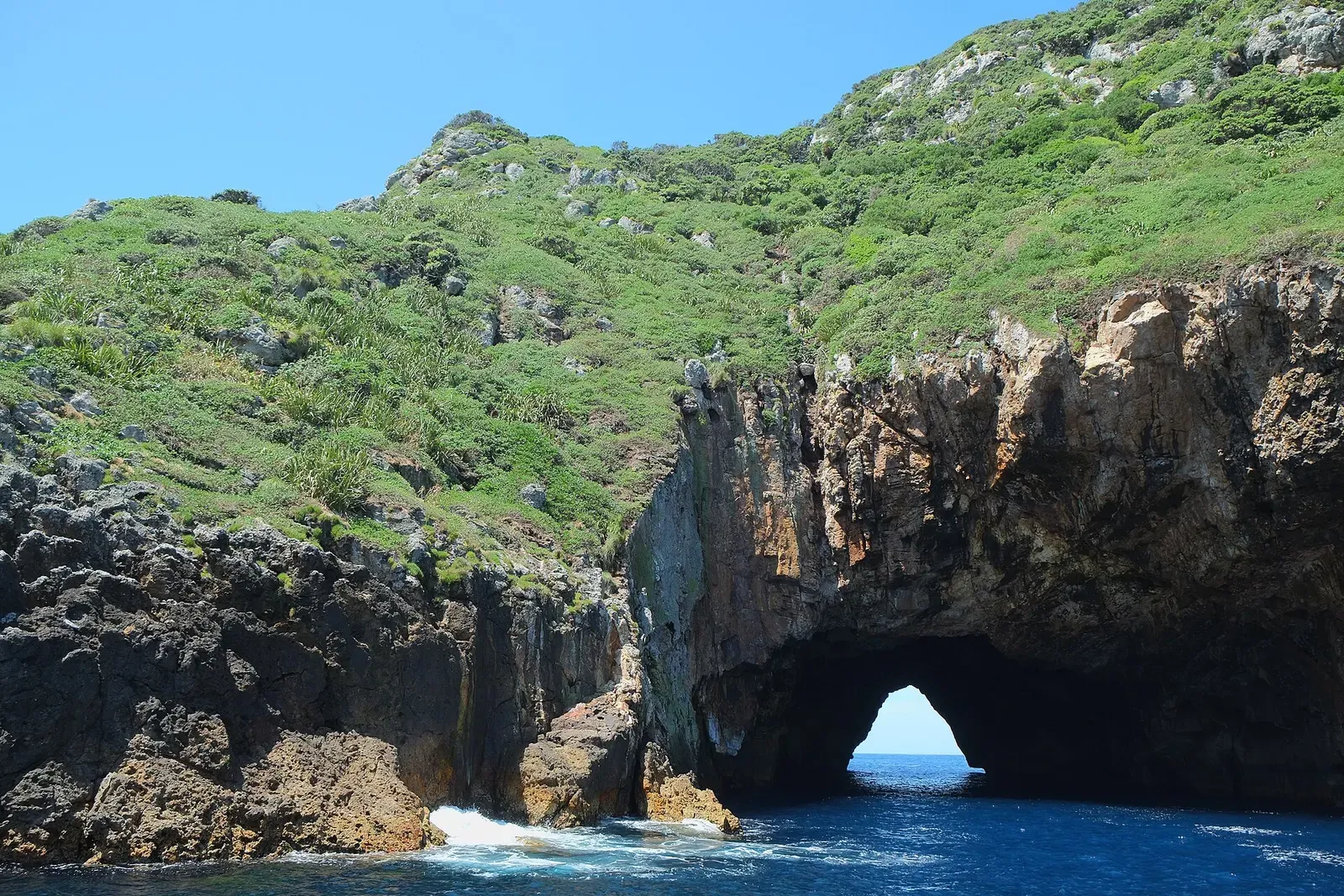
Schools of blue maomao packed into an eight-metre arch
Channel & pass
An underwater air bubble cave beside drop-offs past 40 metres
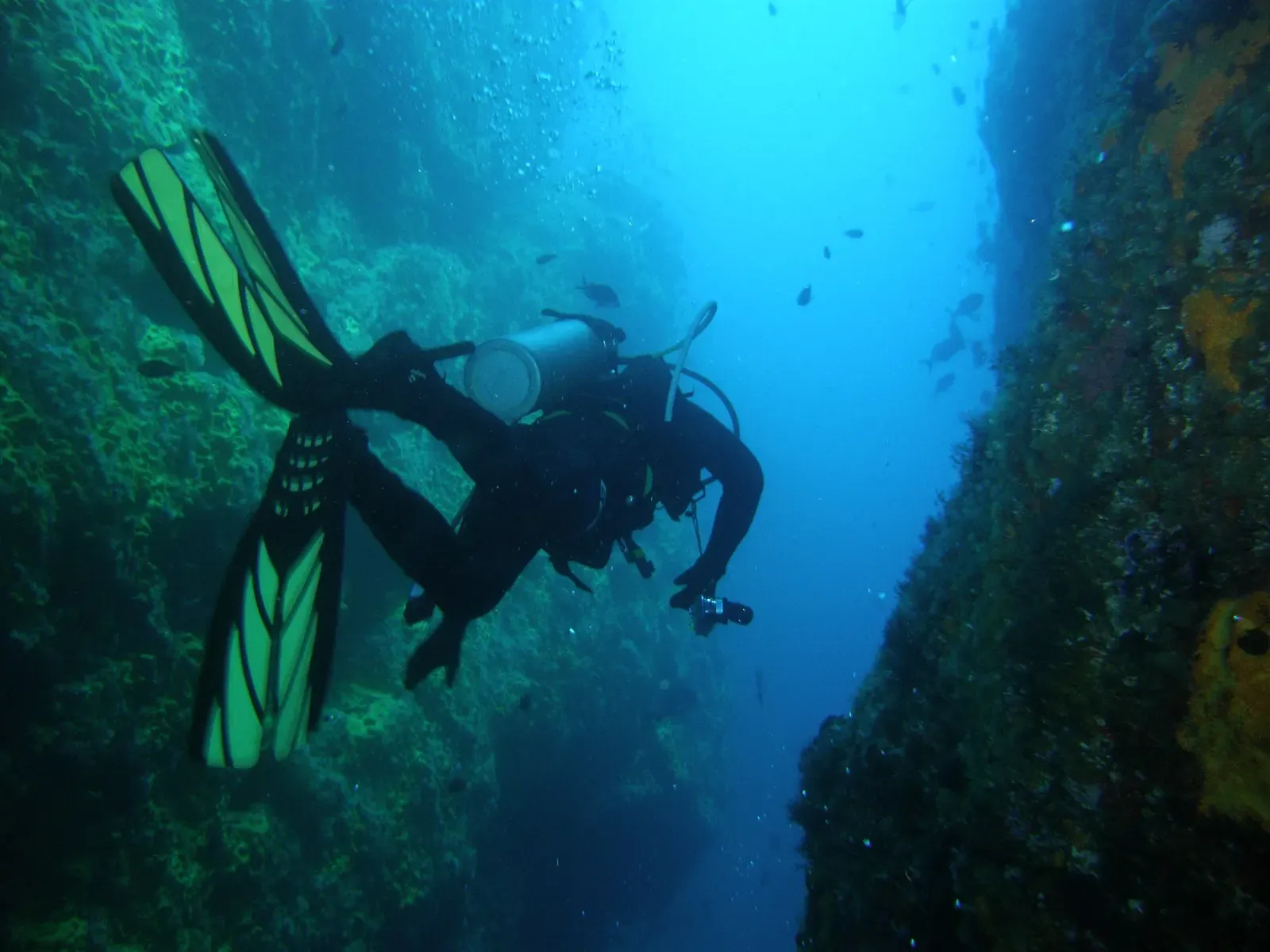
A 12-15 metre gap over a 40 metre bottom, stacked with stingrays
Similar dives elsewhere

Grey nurse sharks around a cave at the island's deep end

An L-shaped cave in from 14 m and out of the wall at 22 m
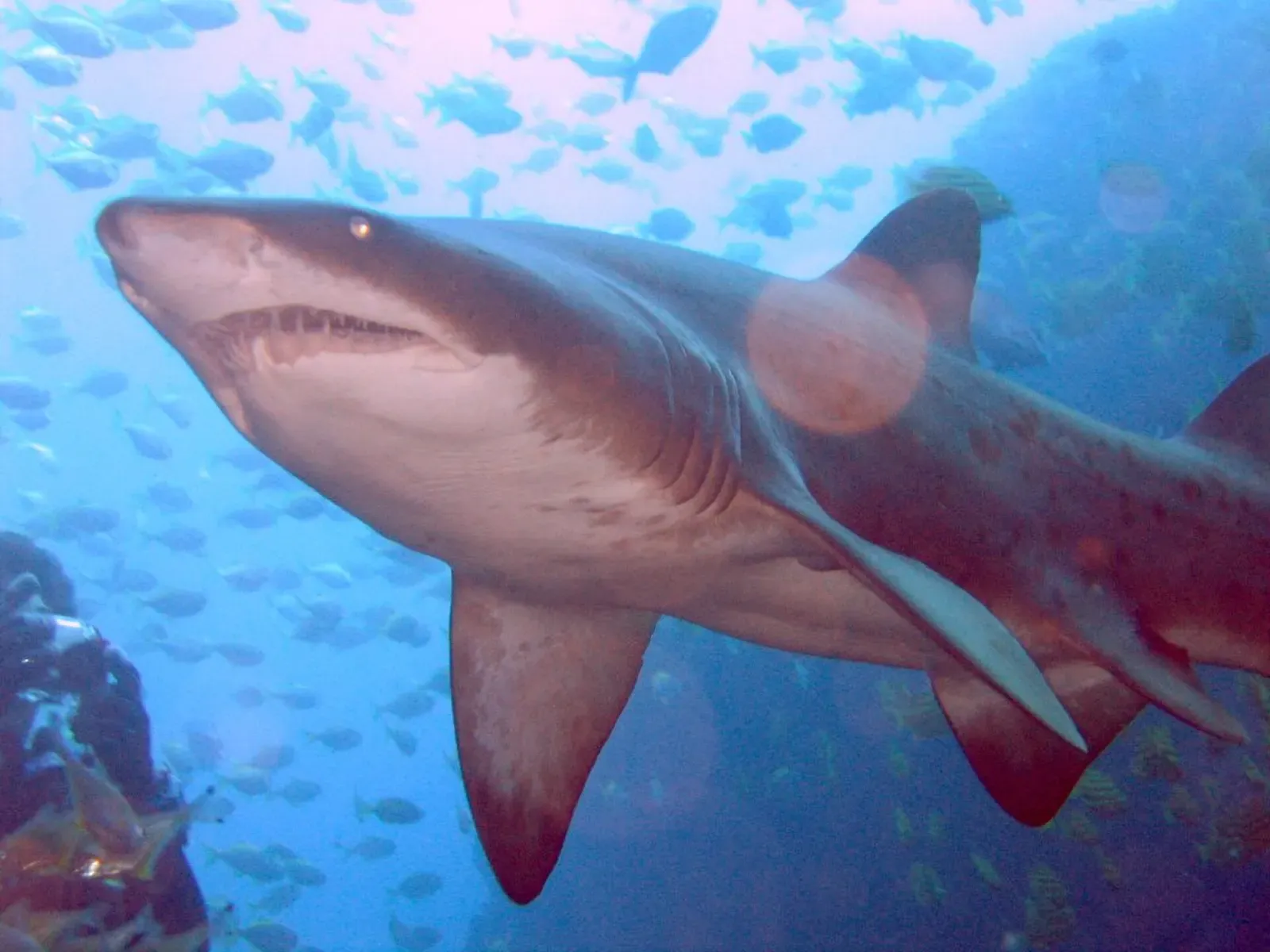
One of the largest ocean caverns in the Southern Hemisphere


A true overhead cave running 70-80 m back into the cliff