
Australia & New Zealand · Australia
Montague Island
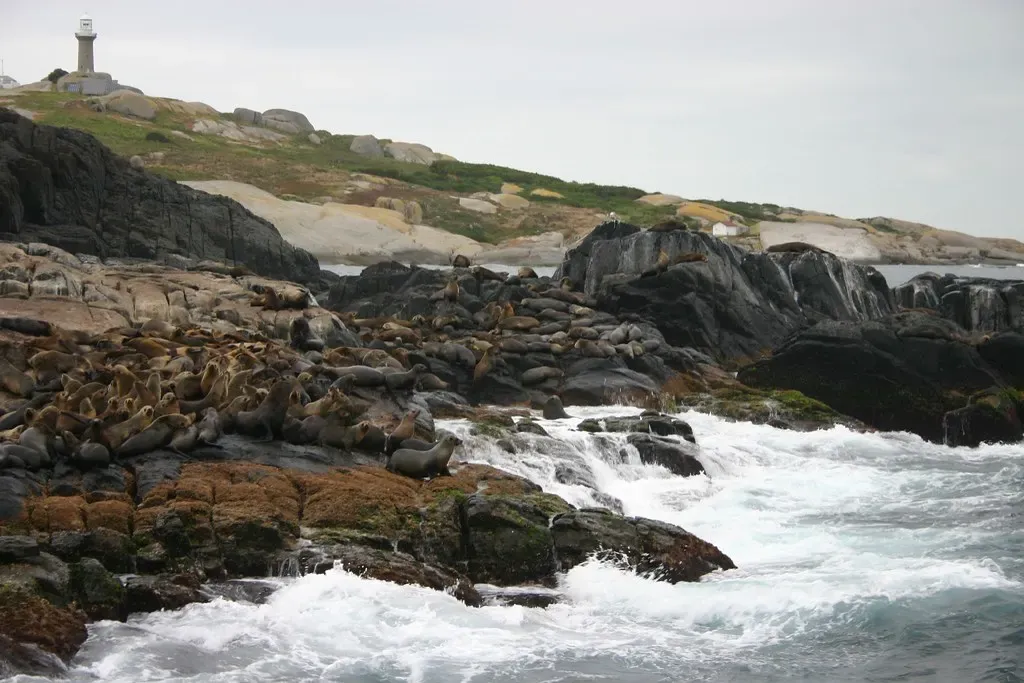
A thousand fur seals, and the juveniles come out to play with divers
Photo: Maksym Kozlenko · CC BY-SA 4.0
Montague Island sits nine kilometres off Narooma and carries a colony of Australian and New Zealand fur seals that runs to a thousand animals in winter. The dive is straightforward: a boat drops divers on the granite shelf beside the haul-out, and juveniles come out to spin, bite fins and hang upside down in front of masks for the entire dive. Grey nurse sharks use the deeper gutters, and humpbacks pass close inshore on migration.
About diving in Montague Island
Everything starts at Narooma. Boats run out from the inlet and have to cross the entrance bar to reach open water, which is the single thing most likely to cancel a trip, since swell can shut the bar on a morning that looks fine from the beach. The crossing to the island is short but exposed, and often lumpy. Once out there, a standard trip is two dives: the colony first, then a reef or a gutter on whichever side of the island the wind has left alone.
The island is granite, and underwater that means clean boulder slopes, kelp over the shallow tops and channels cut through the rock where water pushes between. Nothing goes much past 25 m, so the limiting factor is cold rather than depth. The seal dive itself is shallow and unstructured: you stay near the shelf, keep your hands to yourself and let the animals set the distance, which they will do repeatedly and at speed. On the outer sides the current picks up and dives become short drifts along the rock.
It suits divers who are there for an animal encounter more than for a dive site; the topography is pleasant rather than the point. What it does ask for is tolerance of an exposed boat ride and water between 14°C and 22°C. May through September rate highest, with the colony still busy into October, and those are also the months when the ride out is least comfortable. Summer is warmer and generally clearer with a quieter haul-out, so pick the season for what you want from it. The island is a nature reserve, so any landing happens on a separate guided walk rather than as part of the dive day.
Best time to dive Montague Island
| Jan | Feb | Mar | Apr | May | Jun | Jul | Aug | Sep | Oct | Nov | Dec | |
|---|---|---|---|---|---|---|---|---|---|---|---|---|
| Season | Good | Good | Good | Good | Prime | Prime | Prime | Prime | Prime | Good | Good | Good |
| Sea surface | 22°C72°F | 22°C72°F | 22°C72°F | 22°C72°F | 20°C68°F | 18°C64°F | 17°C63°F | 17°C63°F | 17°C63°F | 18°C64°F | 19°C66°F | 20°C68°F |
| Daytime high | 34°C93°F | 33°C91°F | 30°C86°F | 26°C79°F | 22°C72°F | 18°C64°F | 18°C64°F | 20°C68°F | 24°C75°F | 28°C82°F | 31°C88°F | 32°C90°F |
| Rain | 99 mm3.9 in | 103 mm4.1 in | 144 mm5.7 in | 74 mm2.9 in | 45 mm1.8 in | 60 mm2.4 in | 47 mm1.9 in | 55 mm2.2 in | 40 mm1.6 in | 86 mm3.4 in | 99 mm3.9 in | 82 mm3.2 in |
| Jan | Feb | Mar | Apr | May | Jun |
|---|---|---|---|---|---|
| Good | Good | Good | Good | Prime | Prime |
| Sea surface | |||||
| 22°C72°F | 22°C72°F | 22°C72°F | 22°C72°F | 20°C68°F | 18°C64°F |
| Daytime high | |||||
| 34°C93°F | 33°C91°F | 30°C86°F | 26°C79°F | 22°C72°F | 18°C64°F |
| Rain | |||||
| 99 mm3.9 in | 103 mm4.1 in | 144 mm5.7 in | 74 mm2.9 in | 45 mm1.8 in | 60 mm2.4 in |
| Jul | Aug | Sep | Oct | Nov | Dec |
|---|---|---|---|---|---|
| Prime | Prime | Prime | Good | Good | Good |
| Sea surface | |||||
| 17°C63°F | 17°C63°F | 17°C63°F | 18°C64°F | 19°C66°F | 20°C68°F |
| Daytime high | |||||
| 18°C64°F | 20°C68°F | 24°C75°F | 28°C82°F | 31°C88°F | 32°C90°F |
| Rain | |||||
| 47 mm1.9 in | 55 mm2.2 in | 40 mm1.6 in | 86 mm3.4 in | 99 mm3.9 in | 82 mm3.2 in |
2011–2025 averages. Sea surface: NOAA Coral Reef Watch, measured at the surface, so deeper water can run colder. Daytime high and rain: NASA POWER.
Seal numbers peak May–Oct when the colony is fullest; summer brings warmer, clearer water from the East Australian Current.
Best months: May, June, July, August, September
Montague Island water temperature and weather by month
The sea surface runs from 17 °C (63 °F) in August to 22 °C (72 °F) in February. Most rain falls from October to March, peaking at about 140 mm (5.5 in) in March; September is the driest. Daytime highs reach 34 °C (93 °F) in January and drop to 18 °C (64 °F) in June. Below the surface the water can drop to about 14 °C (57 °F), so pack a 7 mm suit with a hood, or a semi-dry.
Dive types & marine life
Fur seals are the constant, and the haul-out is fullest through winter, roughly May to September, easing off through spring. Grey nurse sharks hold in the deeper channels through the same cool months, usually as a second dive away from the colony. Humpbacks on migration are a sighting from the boat rather than underwater, and rays, schooling fish and nudibranchs fill out the reef dives year-round.
- Reef
- Drift
- Kelp forest
- Wall
- Seals & sea lions
- Sand tiger sharks
- Stingrays
- Reef fish swarms
- Nudibranchs
- Octopus & cuttlefish
- Whales
- Macro critters
Best dive sites in Montague Island
Fur seals on the surface within 20 m of the anchored boat
The Gutter
Rock channel at 18 m used by grey nurse sharks in the cooler months.
Montague Bommie
Offshore pinnacle with kelp, schooling fish and passing rays.
How to get to Montague Island
Narooma is the base, a long drive south from Sydney or south-east from Canberra, and every dive is a boat dive out of the inlet there. Departures are usually in the morning and hinge on the entrance bar, so allow a spare day rather than pinning a trip on a single crossing.
Photos from Montague Island
ross bate · CC BY 3.0
Frank Eden · Public domain
Joe “velojo” A · CC BY-SA 3.0
Dive videos
MONTAGUE ISLAND SEALS: The Ultimate SCUBA and SNORKEL Destination · Pursue The Adventure on YouTube
Diving with Seals in Narooma (Montague Island) · Filip Ekberg on YouTube
Photo credits
- Turquoise surf wrapping around a granite breakwater onto the beach at North Narooma, near Montague Island by Maksym Kozlenko, CC BY-SA 4.0, via Wikimedia Commons
- Montague Island seen across the water through the natural rock arch at Narooma by ross bate, CC BY 3.0, via Wikimedia Commons
- Crested terns nesting in grass on Montague Island, home to the island's seal haul-out by Frank Eden, Public domain, via Wikimedia Commons
- Boats moored at Forsters Bay Marina in Narooma, the mainland town near Montague Island by Joe “velojo” A, CC BY-SA 3.0, via Wikimedia Commons
Similar destinations

White quartz sand lifts the light over temperate sponge gardens

Weedy seadragons drift through cold-water kelp forests off the Tasman Peninsula.

A thousand-metre canyon reaches to within metres of the shore
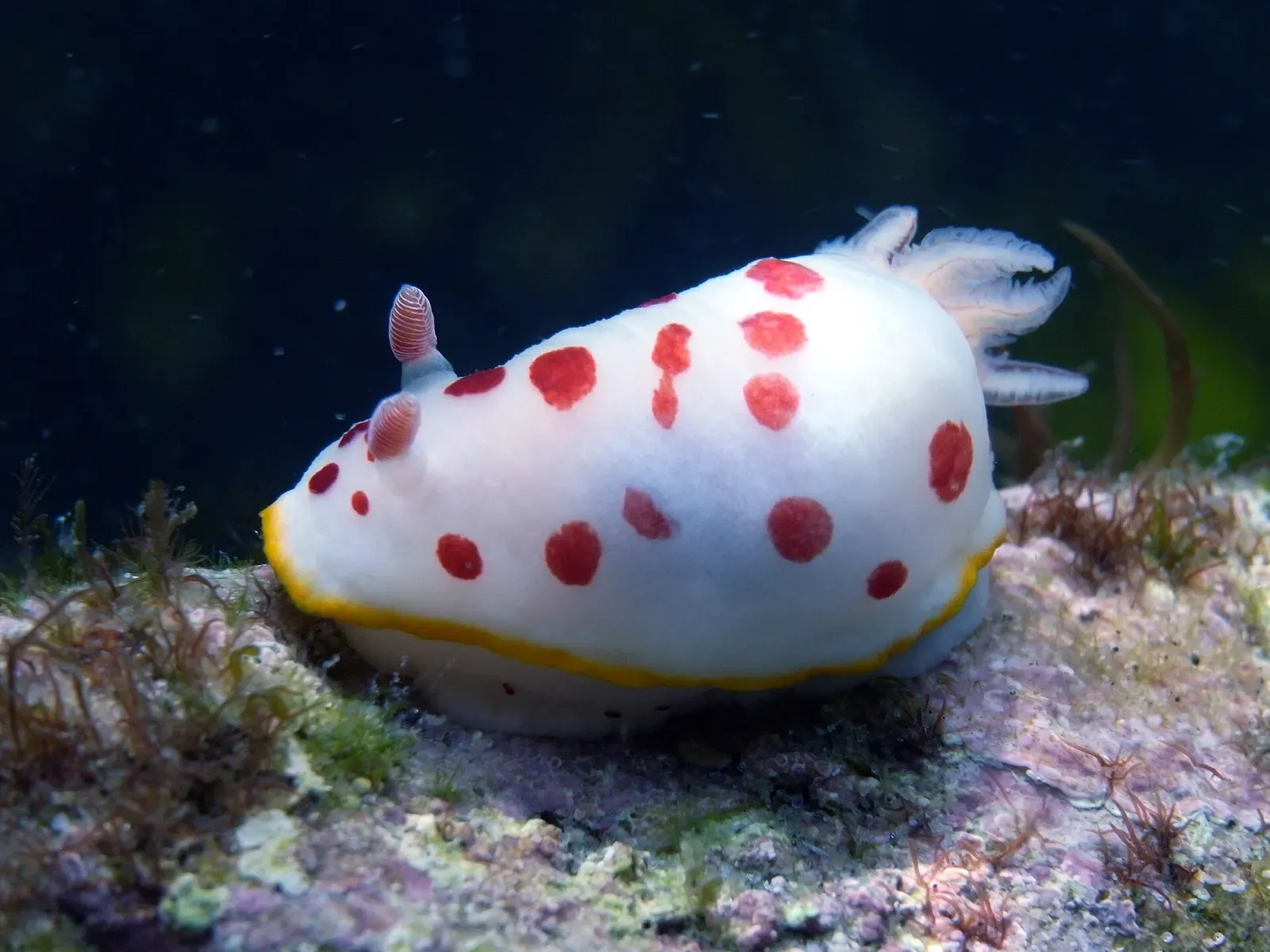


Weedy seadragons over temperate sponge gardens, entered from a car park