Australia & New Zealand · Australia
Nelson Bay — Fly Point
Weedy seadragons over temperate sponge gardens, entered from a car park
Photo: Sylke Rohrlach · CC BY-SA 2.0
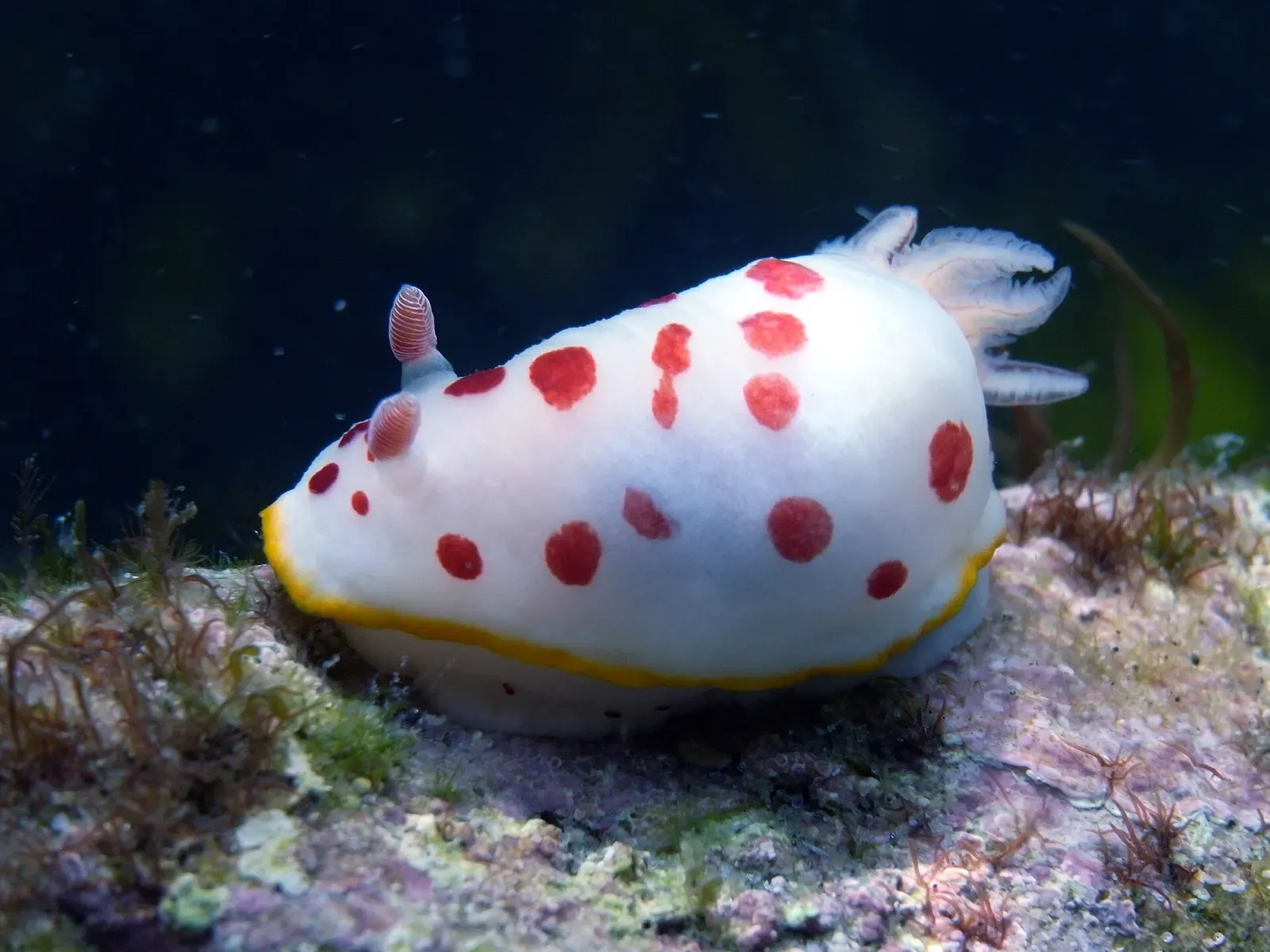
Fly Point and Halifax Park sit inside Port Stephens as a protected aquatic reserve, and the sponge gardens along their tidal walls are as good a temperate macro dive as Australia has — walked into from a car park. Weedy seadragons drift over the sponges, giant cuttlefish court in winter, and the nudibranch list runs into the hundreds. Everything is shallow, everything is a shore dive, and the whole thing has to be timed to slack water or the tide simply takes you.
About diving in Nelson Bay — Fly Point
A day here is land-based and tide-led: check the tables, drive to the car park, walk down in full kit and be in the water as the flow dies. The slack windows rather than surface intervals set the schedule, and two or three shallow dives fit around them in a day with a tank change between. Entries and exits are short, over sand and rock. Shops in town fill cylinders and hire gear by the day, so plenty of visitors dive the reserve independently, though guided shore dives are easy to arrange.
The reserve reads as one long wall running below the shoreline, dropping from shallow rubble down a growth-covered face to sand. Depth and density change along it more than the terrain does, which keeps navigation simple: swim out, descend, keep the reef on one shoulder and turn on air. The interest is at centimetre scale, in the sponge, ascidian and sea-tulip growth and everything tucked inside it. Charter days to the offshore islands are a different sort of diving and need settled seas and a booking rather than a tide table.
This rewards patience over range. Macro photographers and night divers get more out of it than anyone hoping for blue water and big structure, and hovering over one square metre for twenty minutes is the right technique rather than a wasted dive. It is also a gentle way into temperate diving, being shallow, sheltered and boat-free. The catch is that the clearest water comes with the coldest: hood and gloves matter through the best months, and the warmer half of the year trades visibility for comfort.
Best time to dive Nelson Bay — Fly Point
| Jan | Feb | Mar | Apr | May | Jun | Jul | Aug | Sep | Oct | Nov | Dec | |
|---|---|---|---|---|---|---|---|---|---|---|---|---|
| Season | Good | Good | Good | Prime | Prime | Prime | Prime | Prime | Good | Good | Good | Good |
| Sea surface | 23°C73°F | 24°C75°F | 23°C73°F | 23°C73°F | 21°C70°F | 20°C68°F | 19°C66°F | 18°C64°F | 18°C64°F | 19°C66°F | 20°C68°F | 22°C72°F |
| Daytime high | 38°C100°F | 36°C97°F | 33°C91°F | 28°C82°F | 24°C75°F | 21°C70°F | 21°C70°F | 24°C75°F | 29°C84°F | 33°C91°F | 36°C97°F | 37°C99°F |
| Rain | 112 mm4.4 in | 119 mm4.7 in | 146 mm5.7 in | 93 mm3.7 in | 65 mm2.6 in | 79 mm3.1 in | 56 mm2.2 in | 55 mm2.2 in | 43 mm1.7 in | 68 mm2.7 in | 90 mm3.5 in | 78 mm3.1 in |
| Jan | Feb | Mar | Apr | May | Jun |
|---|---|---|---|---|---|
| Good | Good | Good | Prime | Prime | Prime |
| Sea surface | |||||
| 23°C73°F | 24°C75°F | 23°C73°F | 23°C73°F | 21°C70°F | 20°C68°F |
| Daytime high | |||||
| 38°C100°F | 36°C97°F | 33°C91°F | 28°C82°F | 24°C75°F | 21°C70°F |
| Rain | |||||
| 112 mm4.4 in | 119 mm4.7 in | 146 mm5.7 in | 93 mm3.7 in | 65 mm2.6 in | 79 mm3.1 in |
| Jul | Aug | Sep | Oct | Nov | Dec |
|---|---|---|---|---|---|
| Prime | Prime | Good | Good | Good | Good |
| Sea surface | |||||
| 19°C66°F | 18°C64°F | 18°C64°F | 19°C66°F | 20°C68°F | 22°C72°F |
| Daytime high | |||||
| 21°C70°F | 24°C75°F | 29°C84°F | 33°C91°F | 36°C97°F | 37°C99°F |
| Rain | |||||
| 56 mm2.2 in | 55 mm2.2 in | 43 mm1.7 in | 68 mm2.7 in | 90 mm3.5 in | 78 mm3.1 in |
2011–2025 averages. Sea surface: NOAA Coral Reef Watch, measured at the surface, so deeper water can run colder. Daytime high and rain: NASA POWER.
Apr–Aug is clearest and coldest, with giant cuttlefish courting in winter; summer runoff can drop visibility to a few metres.
Best months: April, May, June, July, August
Nelson Bay water temperature and weather by month
The sea surface runs from 18 °C (64 °F) in August to 24 °C (75 °F) in February. It is 24 °C (75 °F) or warmer from February. Most rain falls from January to April, peaking at about 150 mm (5.9 in) in March; September is the driest. Daytime highs reach 38 °C (100 °F) in January and drop to 21 °C (70 °F) in June. Below the surface the water can drop to about 15 °C (59 °F), so pack a 7 mm suit with a hood, or a semi-dry.
Dive types & marine life
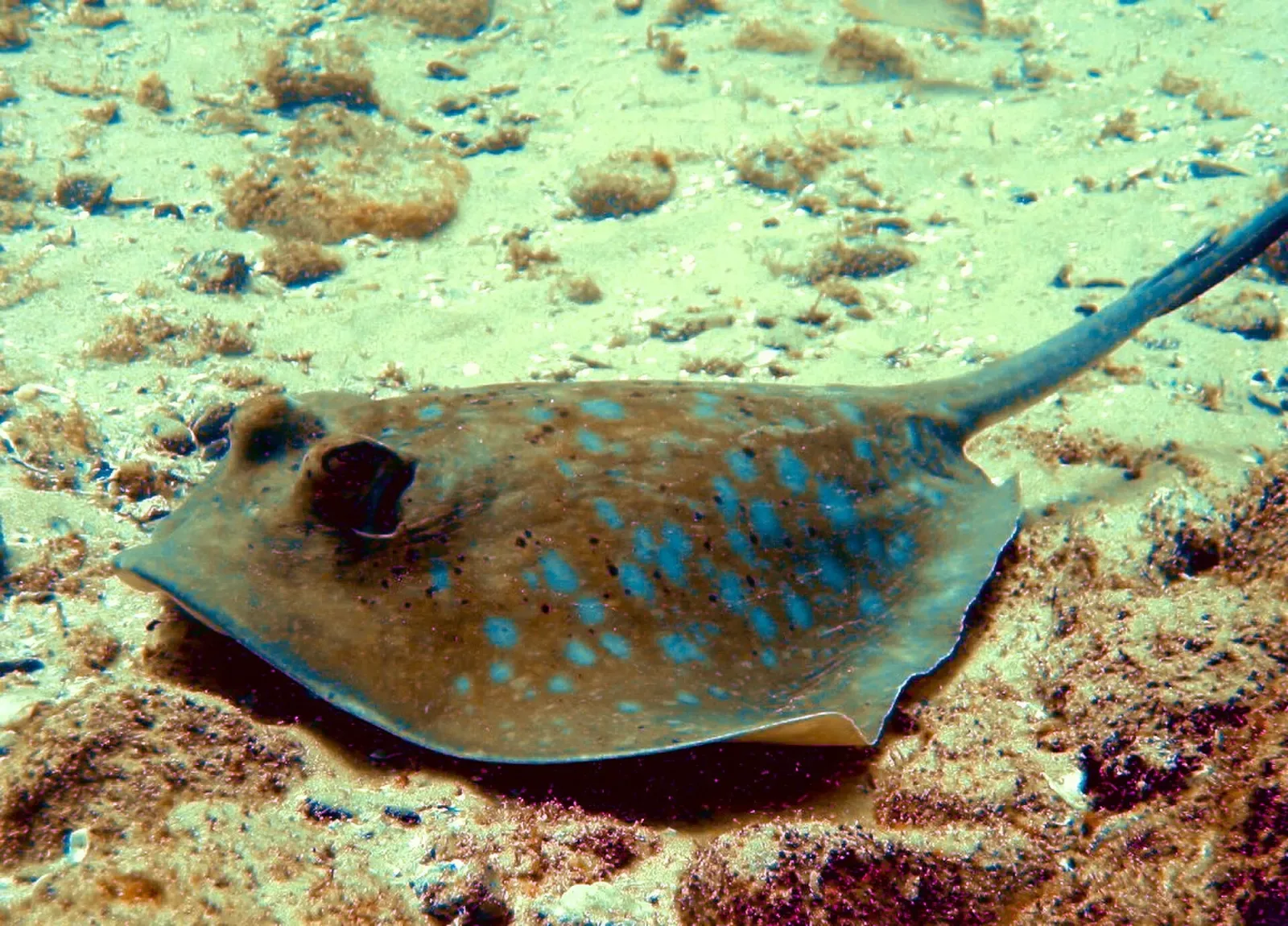
Weedy seadragons are the reliable resident, alongside seahorses, pipefish, octopus and enough nudibranch species that regulars still turn up new ones. Giant cuttlefish court through the colder mid-year months, which are also the clearest. Wobbegongs and rays sit under ledges year-round, while grey nurse sharks are an offshore-island dive rather than something met on the wall.
- Muck & macro
- Reef
- Night
- Drift
- Wall
- Weedy seadragons
- Nudibranchs
- Macro critters
- Octopus & cuttlefish
- Wobbegongs
- Stingrays
- Sand tiger sharks
- Reef fish swarms
Best dive sites in Nelson Bay — Fly Point
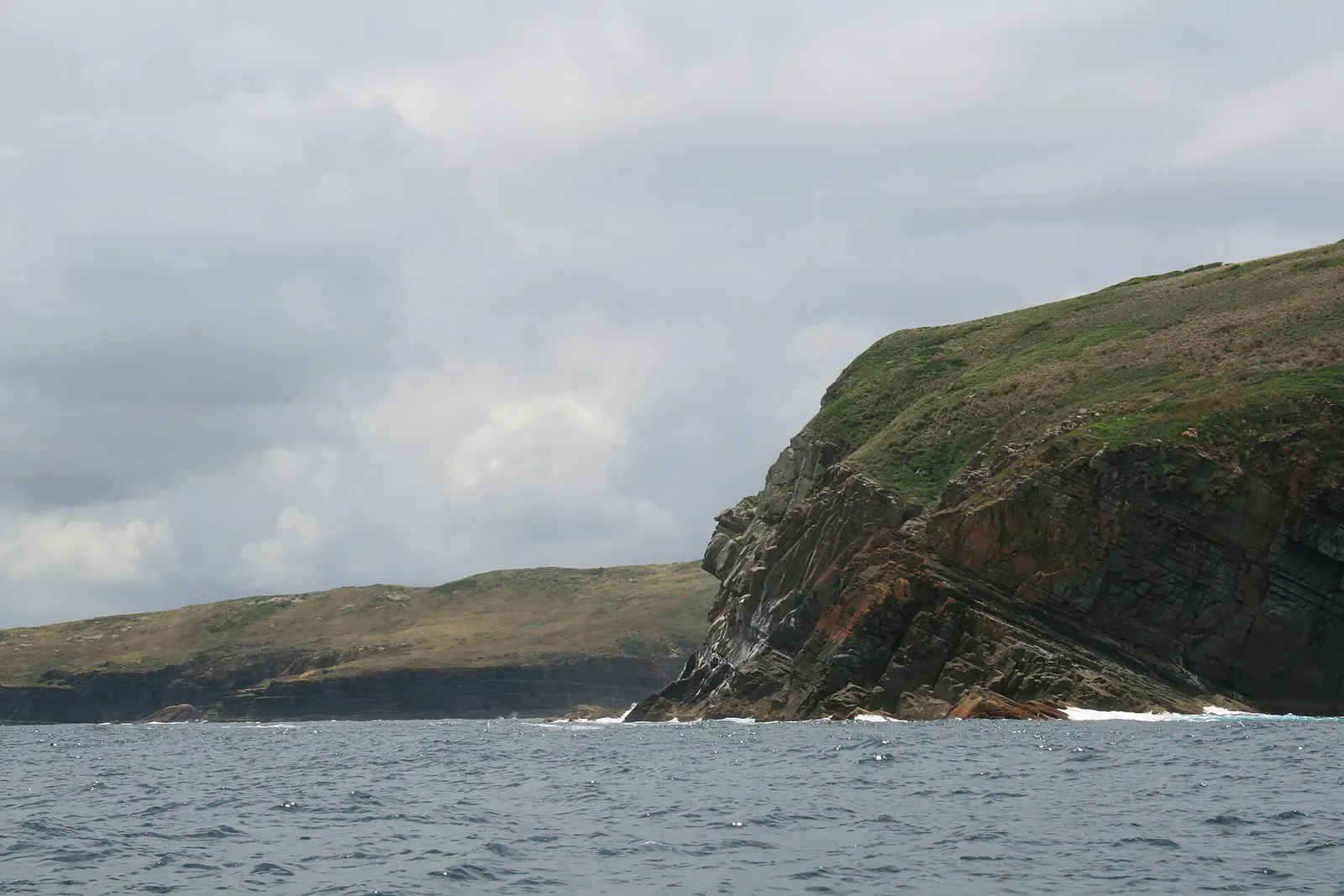
A protected colony of endangered grey nurse sharks
Reef
Pineapplefish under the same ledge for at least seven years
Wall
Sponge-covered ledges to 26 m, walked in from shore
Reef
Beach entry to a jetty and a sunken barge at 12 m
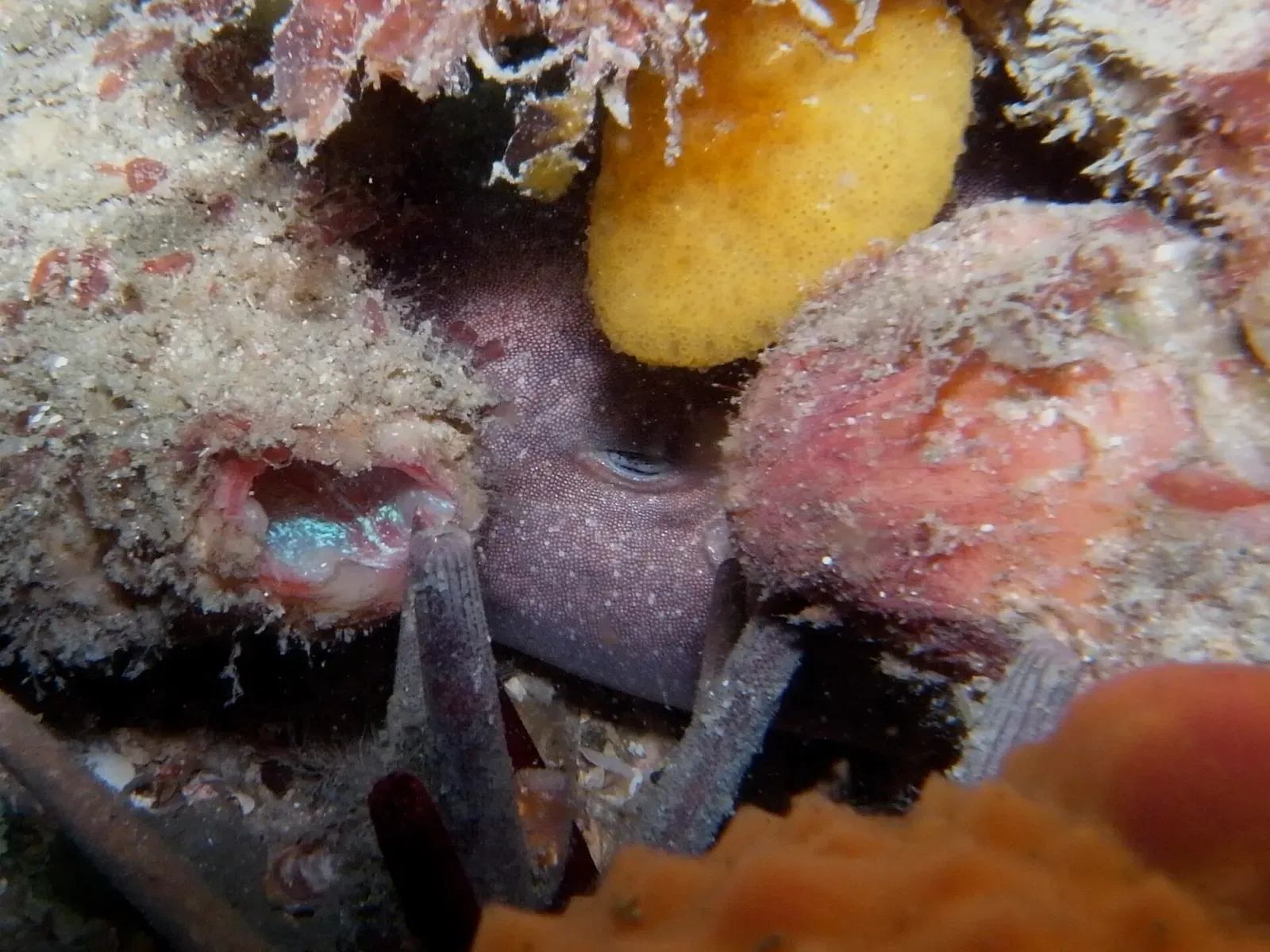
Blue-lined octopus and pyjama squid along a submerged pipe
Seahorse Gardens
Shallow sponge and sea-tulip patch in 8 m, dense with macro.
How to get to Nelson Bay — Fly Point
Nelson Bay sits on the southern shore of Port Stephens, about half an hour from Newcastle Airport at Williamtown and two and a half hours north of Sydney by road. The town is the base: reserve dives are shore entries from public car parks a few minutes apart, while charters to the offshore islands leave from the marina.
Photos from Nelson Bay — Fly Point
Matthew Kane · CC0
Sylke Rohrlach · CC BY-SA 2.0
Sylke Rohrlach · CC BY-SA 2.0
Maurice van Creij · CC BY 3.0
Dive videos
SCUBA DIVING FLY POINT NELSON BAY: it's like being in an aquarium · Jim's UWPhotography on YouTube
Diving Fly Point, Nelson Bay, NSW · OZ Underwater Adventures on YouTube
Photo credits
- Aerial view of a turquoise wave curling onto a white sand beach at Nelson Bay by Matthew Kane, CC0, via Wikimedia Commons
- A variable aphelodoris nudibranch grazes on sponge along the Fly Point tidal wall by Sylke Rohrlach, CC BY-SA 2.0, via Wikimedia Commons
- A Baeolidia australis nudibranch crawls over sponge and anemone at Fly Point by Sylke Rohrlach, CC BY-SA 2.0, via Wikimedia Commons
- A splendid chromodoris nudibranch, cream with red spots, moves across the Fly Point wall by Sylke Rohrlach, CC BY-SA 2.0, via Wikimedia Commons
- Morning light over Nelson Bay's rocky point and calm harbour waters near Port Stephens by Maurice van Creij, CC BY 3.0, via Wikimedia Commons
Embed
Run a dive centre, club or blog? Embed this map of 5 dive sites near Nelson Bay on your own page.
In The Logbook
- Nudibranchs: species, habits and where to diveMacro & muck · 13 min read
- Night diving: the best night dives in the worldNight diving · 12 min read
- Do you need a safety stop? What it buys youBody & health · 11 min read
- The best muck diving in the worldMacro & muck · 6 min read
Similar destinations

White quartz sand lifts the light over temperate sponge gardens

Thousands of spider crabs mass under a Melbourne pier each winter
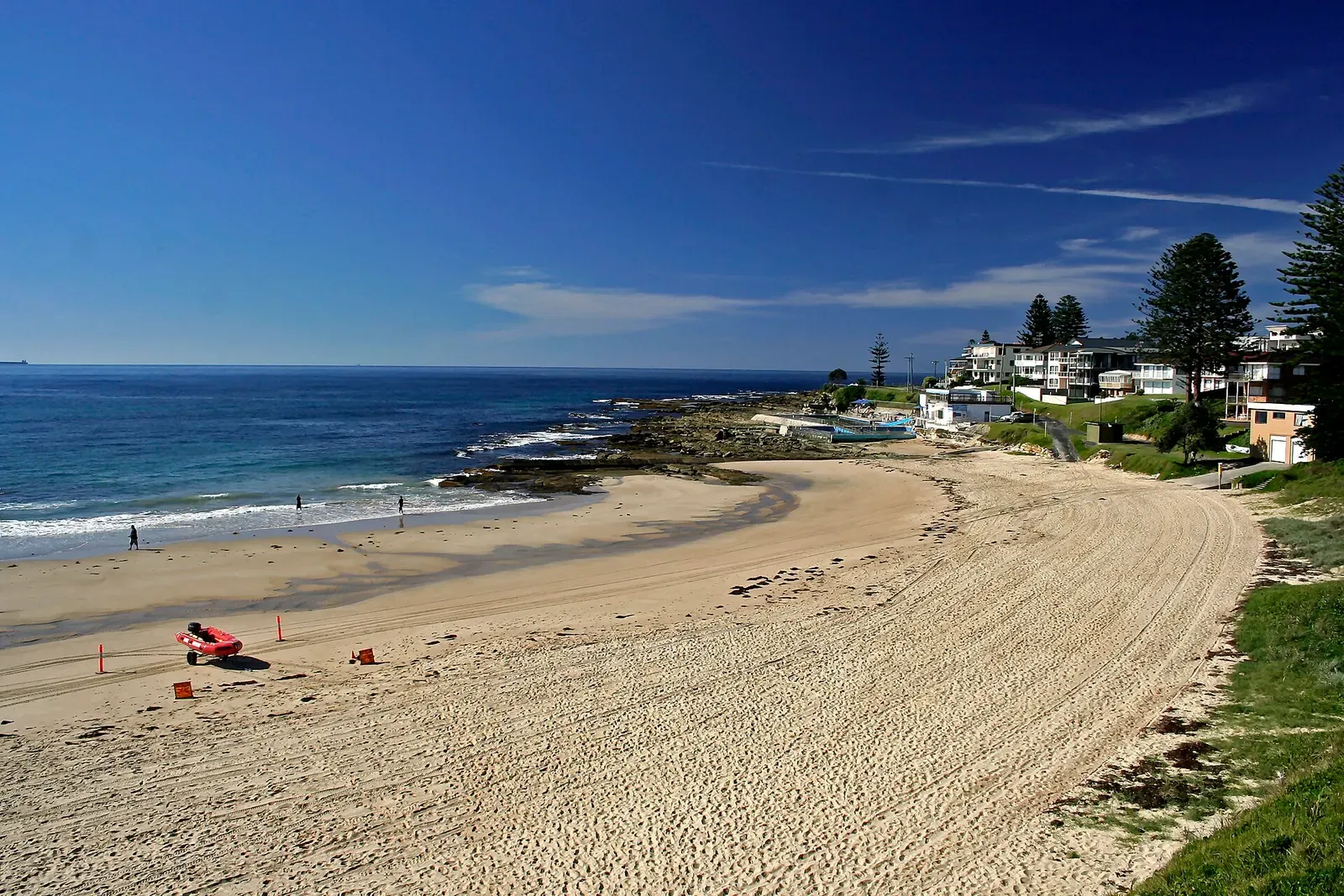
Blue gropers, seagrass critters and deep collier wrecks an hour north of Sydney
.jpg)
.jpg)
_(16440734868).jpg)
_(16627437502).jpg)
.jpg)
A 125 m ocean through-cave, and grey nurse sharks in the gutters