The bands, and why the lines fall where they do
Ask what wetsuit thickness suits what water temperature and every shop hands you the same five-row table. Here is ours, with the reasons attached, because the reasons are what let you adjust it. Above about 27 °C, a 2 to 3 mm one-piece — the NOAA Diving Manual’s own line is that “for warm waters, above 80°F (26.7C), a one-piece suit, two to three millimeters thick, may be all that is necessary for most divers,” and it allows a bare Lycra skin only for a diver who is working hard — for a lazy warm-water dive it recommends a wetsuit or a Polartec skin, which it rates as insulation “equivalent to a 2-millimeter suit” with none of the buoyancy. 24 to 26 °C is 3 mm full-suit country: DAN quotes the industry’s own rule that “for Caribbean destinations, diving in a ‘three-mil’ is acceptable,” and 24 is no accident, because NOAA puts the point at which people become “chilled when the water temperature drops below 75°F (23.9C)”. 18 to 23 °C is the 5 mm band. 12 to 17 °C is 7 mm with a hood, or a semi-dry. Below 12 °C is drysuit water — NOAA’s thermal-protection figure puts the drysuit range at 10 °C and colder, and its general rule is that wetsuits are “most effective at water temperatures above 60°F (15.6C)”.
Two of those four lines come from NOAA and one is a manufacturer’s rule of thumb quoted by DAN. The two in the middle — 18 and 12 — are the interesting ones, because the arithmetic reproduces them once the skin is held near 33.5 °C, and the arithmetic is worth seeing.
What a wetsuit chart is actually drawing
A wetsuit insulates with the gas foamed through its rubber, and heat conducted through a slab of anything is proportional to the temperature difference across it and inversely proportional to its thickness. That is the whole model. Put a 3 mm suit in 24 °C water with the skin behind it at 33.5 °C — the cool end of the normal range for the trunk — and the foam passes about 300 watts. Now ask what water a 5 mm suit needs to leak exactly the same: the answer is 17.7 °C. And a 7 mm: 11.3 °C. Those are the shop chart’s middle lines — once the skin temperature is chosen, which is the model’s one free number: hold the skin at 32 °C and the lines land at 18.7 and 13.3, at 35 °C at 16.7 and 9.3. The chart is not five opinions; it is one number — a tolerable rate of loss — drawn as a contour across three thicknesses.
Two things follow. First, thickness is linear and temperature is linear, so the bands are evenly spaced: every 2 mm of foam buys roughly six degrees of water, and a 5/3 — Wikipedia’s naming, 5 mm on the torso and 3 on the limbs — is exactly what it sounds like, a suit that sits between the two lines. Second, the chart is a ceiling, not a bill. We held the skin at 33.5 °C and gave the foam all the work; a real diver’s skin cools and vasoconstricts, and a still film of water helps a little, so the true loss is lower, and a cooler skin also nudges the middle lines warmer, because it narrows the gradient to warm water more than to cold. What does not move is the ratio between suits at any one water temperature: a 5 mm passes three-fifths of what a 3 mm passes and a 7 mm three-sevenths, whatever the skin is doing. The watts are approximate; the ratios are the physics.
For scale, the breath bill in the same 24 °C water is 37 watts at the surface. The suit is where the heat goes.
The same suit is a thinner suit at 20 metres
The trapped gas that insulates you obeys pressure, and the heat guide has already drawn what depth does to the millimetres. This chart holds the depth fixed and turns the temperature dial instead, and the dashed lines are the result: at 20 m every line is 56 per cent steeper, with the foam’s conductivity held at its surface value — compressed foam also conducts better, so the real dashed lines are steeper still. A 5 mm suit that leaks 180 watts at the surface in 24 °C water leaks 281 at 20 metres — near enough what the 3 mm leaks at the surface. Read that as a rule: a 5 mm at 20 metres is a 3 mm at the surface, and a 7 mm at 20 metres has become a 4.5. To stay on the 300-watt contour at 20 metres rather than the surface, the 5 mm needs 23.4 °C water instead of 17.7, and the 7 mm needs 19.3 instead of 11.3.
This is why the chart’s one honest instruction is “choose for the temperature at depth”. A 24 °C surface over a 19 °C bottom is not a 3 mm dive with a cold patch; it is a 5 mm dive that begins warm. The compression that strips lift from the suit — and that guide has the lead-per-millimetre arithmetic, so we won’t redo it — is stripping warmth in the same breath, and what the shop chart calls “5 mm” is only true at the surface where you tried it on.
Semi-dry, or dry?
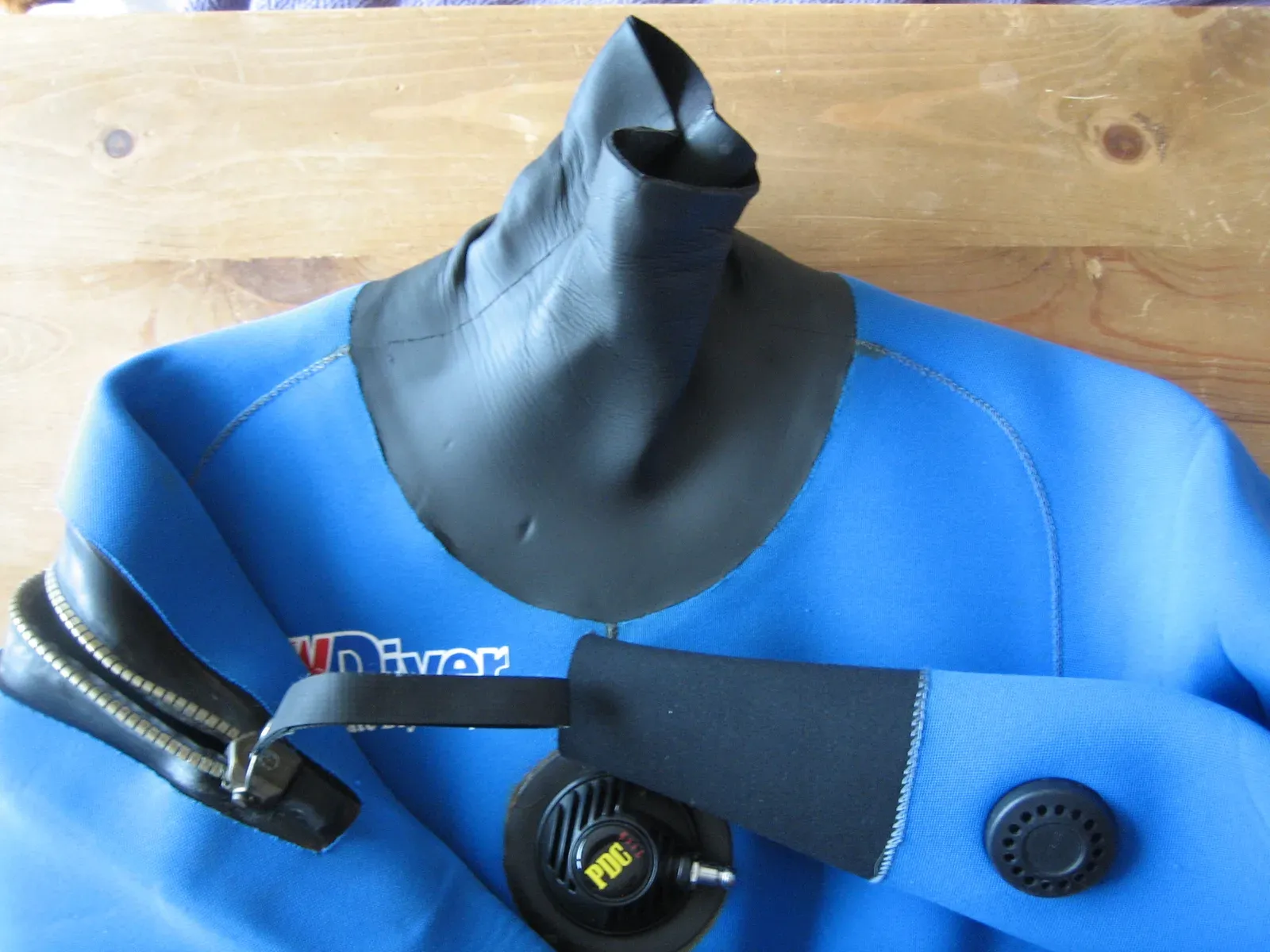
Between 12 and 17 °C the honest answer is often not a thicker wetsuit but a tighter one. Wikipedia’s description of the semi-dry suit is the mechanism in one paragraph: a wetsuit with better seals at wrist, neck and ankle and usually a watertight zip, so that “the wearer gets wet in a semi-dry suit but the water that enters is soon warmed up and is not ‘flushed’ out by colder water entering from the outside environment.” Its stated home is water “between 10 and 20 °C” — a figure the article itself flags as uncited, so treat it as the rule of thumb it is, not as a NOAA number. The physics behind it is sound regardless: our watts chart assumes the water trapped against your skin stays there, and a semi-dry is simply a wetsuit that makes the assumption true.
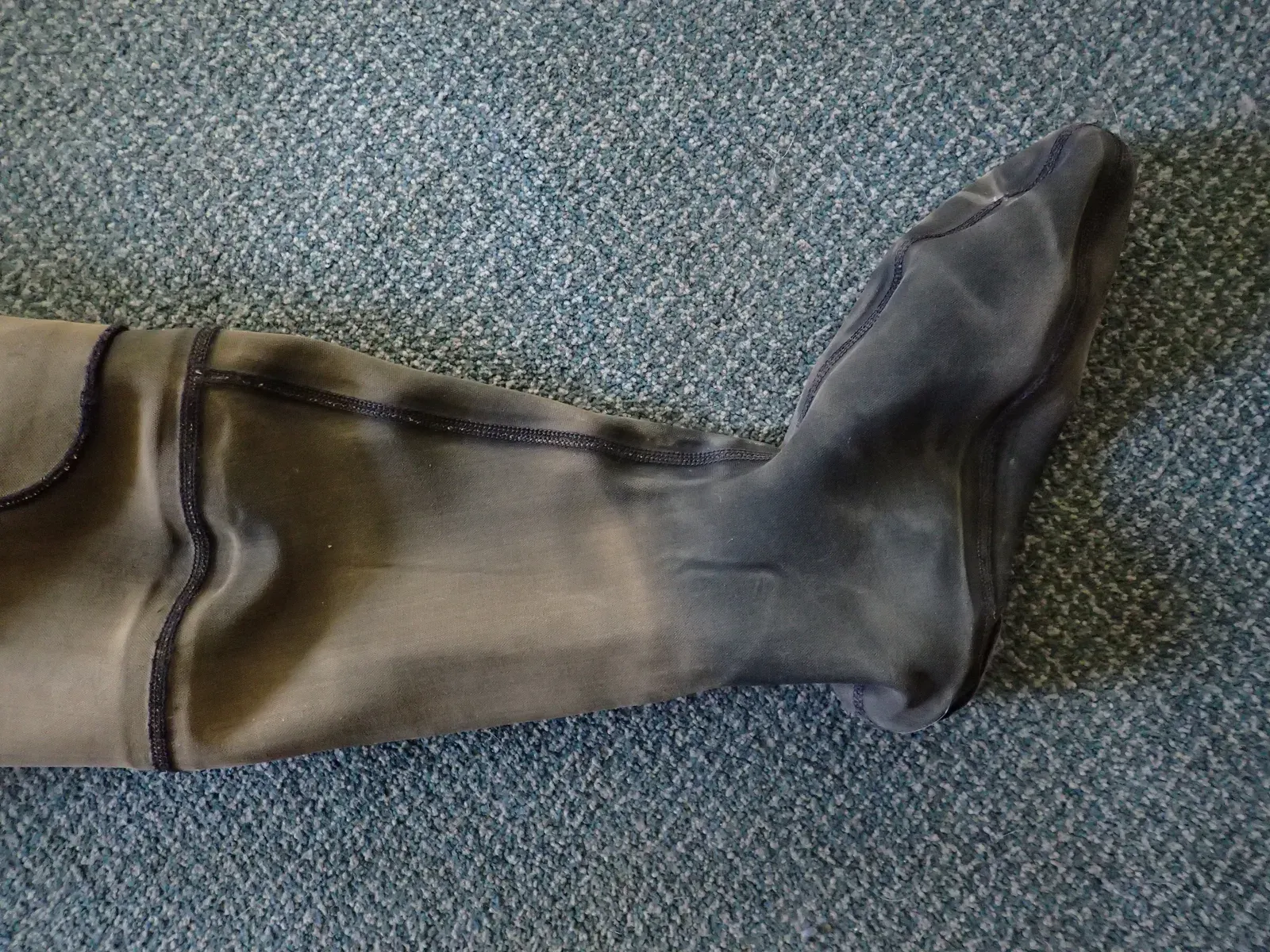
Below about 12 °C the foam loses the argument. NOAA’s 15.6 °C line above is the manual’s own hedge — the heat guide explains why foam that thins with depth eventually cannot win, and the cold-water guide covers what the drysuit course and the first ten dives cost. What is worth adding here is DAN’s note on the three drysuit families, because it is the wetsuit chart’s last lesson in a different material: shell suits are thin and light and insulate only with what you wear underneath. “Standard neoprene drysuits are relatively inexpensive, but the thermal protection of the neoprene decreases as the suit compresses with depth”; and “crushed-neoprene suits are the most expensive, but they offer a greater degree of stability across dive depths.” A foam drysuit is dry, but it is still foam, and the dashed lines still apply to it.
What the chart cannot know about you
Four variables, none of which have a column on the laminated card. Every one moves you at least a band.
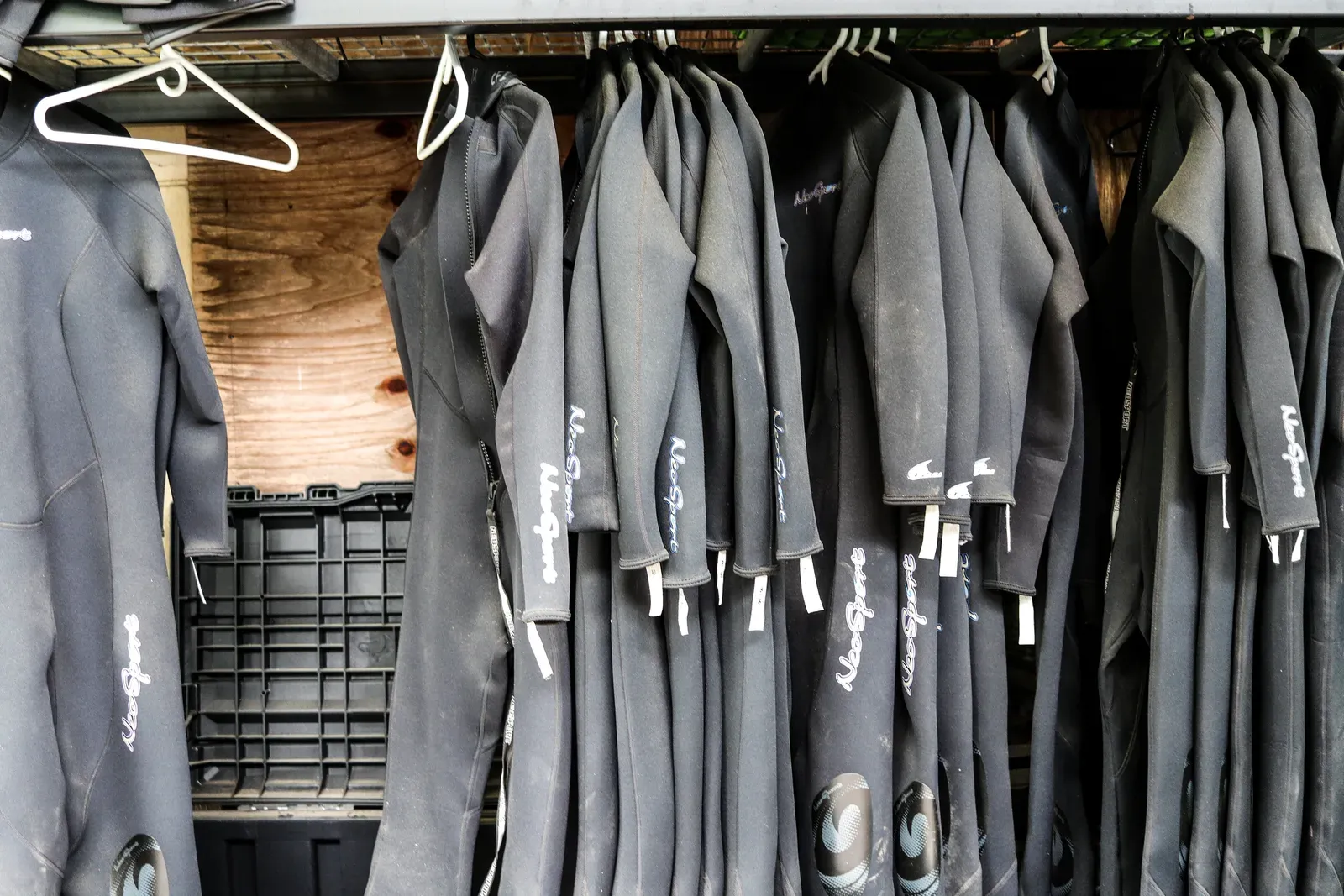
Fit, which is to say flushing. DAN’s wetsuit piece is the clearest source we have: “for optimum thermal protection, it should fit like a second skin,” because “the theoretically ideal wetsuit would have no water flushing through,” and “poor fit compromises the potential warmth of even the best suit.” Our chart models a suit that holds its water. A loose 5 mm that pumps sea through the neck with every kick is not a point on the 5 mm line; it is somewhere between the 3 mm line and no line at all. A snug 3 mm beats a baggy 5 in the same water, and the rental rack is where most people meet the baggy 5.
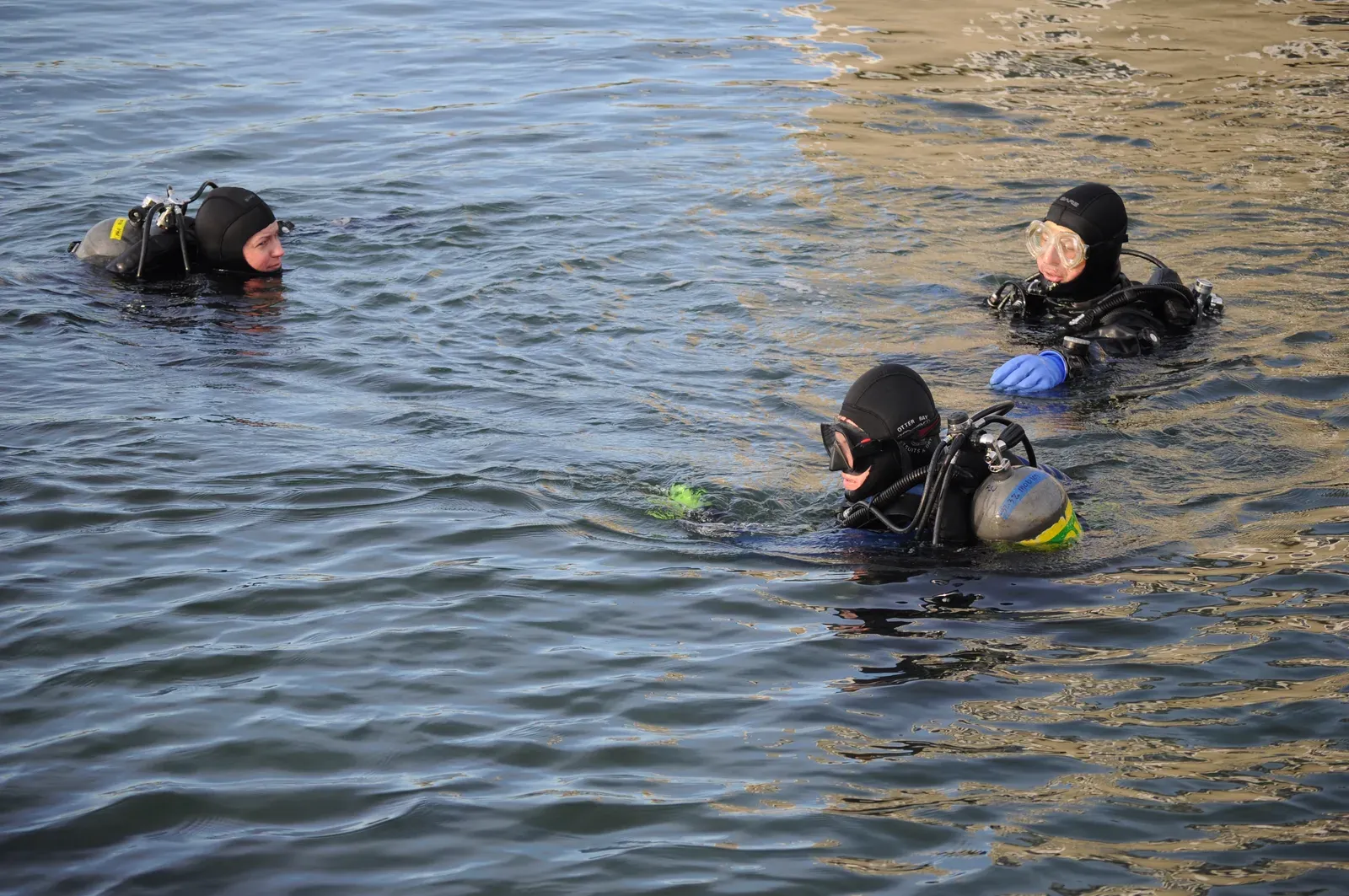
Head and hands. You have heard a percentage for how much heat leaves through the head. Wikipedia’s wetsuit article declines to give one, and so do we: the honest statement is that heat loss from the head and neck is “roughly proportional to the exposed surface area” — about its share of your skin, perhaps a little more because the scalp does not vasoconstrict as hard as the hands and feet — with the caveat that once the rest of you is insulated, “the percentage can be considerably higher.” That is not a myth being confirmed; it is a plainer point. A hood does not close a special leak; it closes the last open window in an otherwise-insulated wall, and the hooded vest DAN mentions as a layering option does the same on the chest. In our chart terms, hood and gloves do not change the slope of your suit’s line; they shrink the uninsulated area that the chart quietly leaves out.
Repetition and duration. The chart is a rate, in watts, and a dive is a rate multiplied by minutes. NOAA’s wetsuit-versus-drysuit table — summarised in the heat guide, so we won’t repeat it — has the same wetsuit delivering less of its needed protection on each successive dive of a day, because a wetsuit’s second dive begins with a colder diver. The 3 mm that was fine for the first 45 minutes on a liveaboard is the wrong suit for the fourth dive of the day in identical water, and the chart has no way to say so.
You. DAN’s drysuit article lists the individual factors as “skinfold thickness, body-mass-to-surface-area ratio, metabolic rate, activity during the dive and even one’s attitude toward cold-water diving,” and the physiology literature adds texture. Body fat is real insulation: a 2018 review finds that people with obesity “cool less rapidly and have to elevate their metabolism less significantly than lean individuals when immersed in water.” But fat is a smaller share of the story than the stereotype suggests. A 1982 immersion study found that the fat-and-skin shell could account for “only 10-15% of overall” maximal tissue insulation at rest, and 35 to 40 per cent during mild exercise — most of a resting body’s insulation is its poorly perfused muscle, not its subcutaneous fat. And when a 1993 trial matched body fat across small and large men and put them in 18 °C water for two hours, tissue insulation “was similar” between the groups: size alone, with fat held equal, did not change the number. Seven subjects, one study — but it argues that the variable is composition, not bulk, and that the working diver finning into current is a different animal from the photographer hanging still on a wall in the same suit.
There is a fifth variable the chart cannot know because the dataset cannot know it: the thermocline. Our area records carry an annual range, not a month, and Nusa Penida is the honest example — 18 to 28 °C in the same reef system, because Crystal Bay’s famous mola mola arrive on cold upwelled water that turns a 3 mm reef into a 5 mm one on the same afternoon. Where our record says a place spans two bands, believe both ends.
Crystal Bay, Nusa Penida (Bali) Indonesia (HD) · WesternRoo on YouTube
A sixth variable ages in: DAN calls a wetsuit “a depreciable commodity,” because “repeated exposure to the pressure at depth can also decrease the thickness and warmth” of the foam. The 5 mm line on our chart is drawn for new neoprene. A rental suit that has done three hundred dives to 20 metres has been on the dashed line so often that it has partly stayed there.
The world by the suit it needs
Of the 365 areas in our records with a water-temperature range, 165 never drop below 24 °C: the 3 mm belt is the largest single band, nearly half the diving world by count, which is why the “three-mil” is the suit most divers own first. Sixty-five of those never fall below 27 — chiefly the Coral Triangle, the Maldives, Micronesia and both coasts of Thailand — where a 3 mm is worn against coral and sun as much as against cold. Here is the chart applied to real places, banded by the coldest water our record has seen for each area, because the coldest water is the one you should pack for.
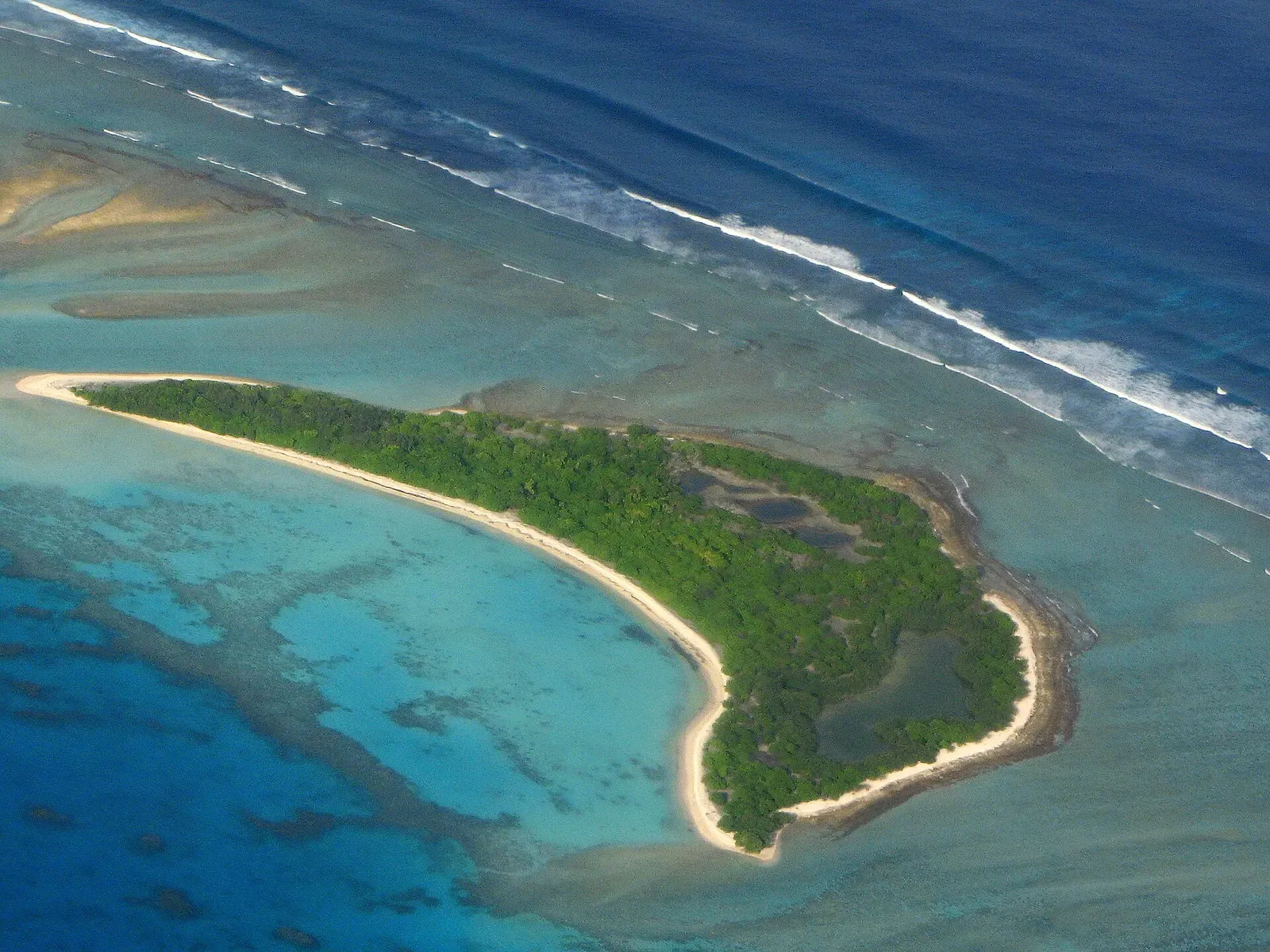
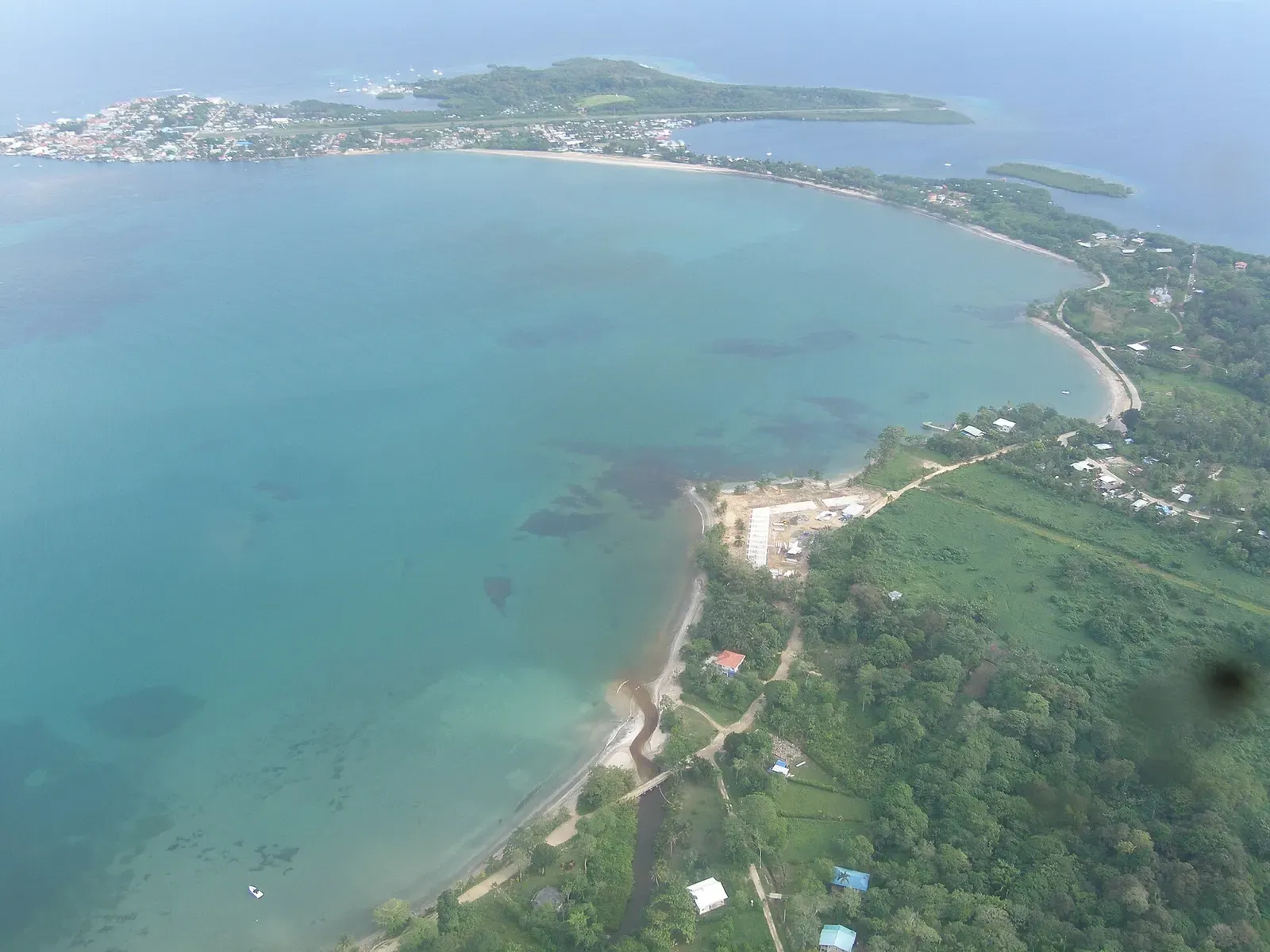
3 mm, all year. Addu Atoll and Guam never drop below 27 °C in our records; Bocas del Toro holds 27 to 29. Isla Mujeres and Tiger Beach reach down to 24 in their cool season — still on the 3 mm line, but the lean diver kneeling motionless on Tiger Beach’s sand for an hour will be glad of a 5.
| Site | Depth | Level | Best months |
|---|---|---|---|
| Banana Reef Addu Atoll · Maldives | 0–30 m | Intermediate | Jan–Apr |
| Piti Bomb Holes Guam · Guam | to 9 m | Beginner | Dec–May |
| Hospital Point Bocas del Toro · Panama | to 14 m | Beginner | Feb–Mar |
| Manchones Reef Isla Mujeres · Mexico | to 10 m | Beginner | Jun–Aug |
| Tiger Beach Tiger Beach · Bahamas | 5–10 m | Intermediate | Jan–Mar |
5 mm water. The Canaries are the type specimen: El Hierro and Lanzarote & Museo Atlántico both span 18 to 24 °C, so the same El Bajón is a 3 mm dive at the top of its range and a 5 mm dive at the bottom, and the 18-to-26-metre swim-through of Lanzarote’s Blue Hole is exactly the depth at which a 5 mm has become a 3.
| Site | Depth | Level | Best months |
|---|---|---|---|
| El Bajón El Hierro · Spain | 18–40 m | Advanced | Jun–Oct |
| Blue Hole Lanzarote & Museo Atlántico · Spain | 18–26 m | Advanced | Jun–Oct |
The 7 mm and semi-dry belt. The Mediterranean’s winter is the surprise for warm-water divers: Cap de Creus and Menorca both bottom out at 12 °C, the same floor as California’s Channel Islands, whose 12 to 19 °C range is the water NOAA had in mind when it described the Southern Californian norm as “six or seven millimeters thick with a ‘farmer john’ set of bib overalls and a jacket of the same material with an attached hood.”
| Site | Depth | Level | Best months |
|---|---|---|---|
| Bau de Cap Falcó Cap de Creus · Spain | 5–30 m | Intermediate | Jun–Sep |
| Barbada de Cala Galdana Menorca · Spain | to 35 m | Advanced | Jun–Sep |
| Anacapa Island — Arch Rock Channel Islands · United States | 15–37 m | Advanced | Sep–Nov |
Drysuit water. Below 12 °C the chart hands over. The Farne Islands run 6 to 15 °C, the Faroe Islands 6 to 12, and Stoney Cove — Britain’s inland training quarry, and fresh water, so the salt arithmetic changes too — drops to 4 °C in winter and is where a great many British divers first learn what the dashed lines feel like.
| Site | Depth | Level | Best months |
|---|---|---|---|
| Knivestone Farne Islands · United Kingdom | 3–20 m | Advanced | Jun–Sep |
| Shores at Tjørnuvík Faroe Islands · Faroe Islands | 3–12 m | Intermediate | Jun–Aug |
| The Wessex Helicopter Stoney Cove · United Kingdom | to 22 m | Intermediate | Oct–Jan |
The compression curve behind the dashed lines lives in buoyancy and weighting; the conductivity, the breath bill and the repetitive-dive table are in why the water steals your heat; and what the water below 12 °C gives you in exchange for the suit is the subject of the cold-water guide.