Nelson Bay · Australia · Reef · Wall
Fly Point
Pineapplefish under the same ledge for at least seven years
Area photo: Sylke Rohrlach · CC BY-SA 2.0
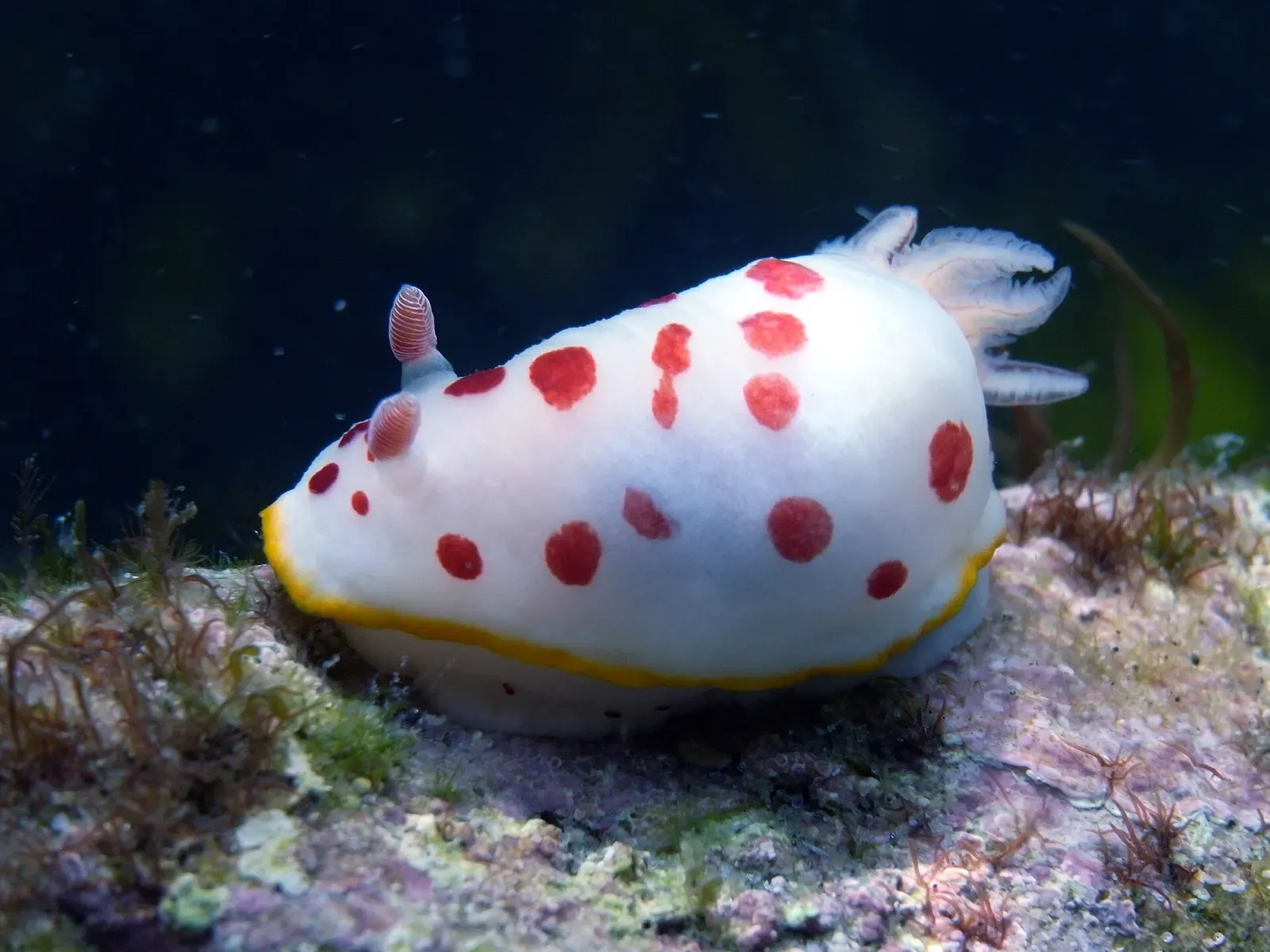
Fly Point is the signature shore dive of the Fly Point Halifax Park Aquatic Reserve, on the Nelson Bay waterfront. A coral-covered slope drops to an east-west ledge at 12-14 m and on into sponge and gorgonian gardens between 14 and 26 m. Divers come for what sits still: nudibranchs on every contour, wobbegongs over the bowl corals, resident green turtles under the shallow ledge.
Where it is and how deep
32.7139° S, 152.1515° EPublished position for this site.
The dive
You walk in from the reserve shoreline and follow the coral-covered slope down to the east-west ledge at 12-14 m, the stretch local divers call the fish bowl. It is the busiest part of the site: pineapplefish and sawtail surgeonfish tucked under the overhang, Eastern blue groupers and leatherjackets working the edge, bream schooling off it, and moray and conger eels back in the cracks.
From the ledge the route runs north into the sponge and gorgonian garden, which spreads between 14 and 26 m and holds the biggest growth on the site. Wobbegongs lie over the orange bowl corals and nudibranchs turn up on every depth contour, so the middle of the dive is usually spent hovering over one patch rather than covering ground.
Turn south and come back up the slope, finishing with a safety stop that traverses the 5-7 m kelp-covered ledge heading east. One of the reserve's four resident green sea turtles is often parked underneath it. Stingrays, cowries, pipefish, shrimp and sea hares fill out the shallows, and the shallow end of the site is close enough in to be worth a look on snorkel as well.
Background
Fly Point sits inside the Fly Point Halifax Park Aquatic Reserve, which protects the sponge-covered shoreline it shares with Halifax Park. The residents are settled enough to be counted individually: a small group of pineapplefish has been documented under the same overhang here for at least seven years, and four green sea turtles are treated as residents of the site rather than as passing visitors.
Marine life and season
- Sea turtles
- Wobbegongs
- Nudibranchs
- Stingrays
- Groupers
- Macro critters
- Reef fish swarms
| Jan | Feb | Mar | Apr | May | Jun | Jul | Aug | Sep | Oct | Nov | Dec |
|---|---|---|---|---|---|---|---|---|---|---|---|
| Good | Good | Good | Prime | Prime | Prime | Prime | Prime | Good | Good | Good | Good |
Season follows Nelson Bay: Apr–Aug is clearest and coldest, with giant cuttlefish courting in winter; summer runoff can drop visibility to a few metres.
Dive videos
SCUBA DIVING FLY POINT NELSON BAY: it's like being in an aquarium · Jim's UWPhotography on YouTube
Questions divers ask
How deep is Fly Point?+
The slope runs from a 5-7 m ledge down past the main 12-14 m ledge into sponge and gorgonian gardens between 14 and 26 m. PADI lists the site maximum as 25 m, and most of the dive sits well above that.
Is Fly Point a shore dive?+
Yes. It is a shore and beach entry from the Nelson Bay waterfront inside the aquatic reserve, with no boat involved. The shallow ledge close in also puts part of the site within snorkelling range.
What will I see at Fly Point?+
Nudibranchs on every depth contour, wobbegongs over the orange bowl corals and green sea turtles under the shallow ledge, plus a ledge community of pineapplefish, Eastern blue groupers, morwong, leatherjackets, bream schools, moray and conger eels, cowries and pipefish.
Sources
- Fly Point Dive Site — PADI
- Fly Point — Feet First Dive
- Cleidopus gloriamaris — Wikipedia (Italian)
In The Logbook
- Do you need a safety stop? What it buys youBody & health · 11 min read
More dive sites in Nelson Bay
A protected colony of endangered grey nurse sharks
Wall
Sponge-covered ledges to 26 m, walked in from shore
Reef
Beach entry to a jetty and a sunken barge at 12 m
Blue-lined octopus and pyjama squid along a submerged pipe
Similar dives elsewhere
Moorings from an 8 m coral garden to a 30 m wall
Sheltered ledge from 16 m up to 5 m, thick with nudibranchs
A long eastern wall dropping into deep water

.jpg)
A training-depth bay with a reef regrowing after Cyclone Debbie