Paros & Naxos · Greece · Wreck
Bristol Beaufighter
A WWII heavy fighter at 33 m, found in 2007 after a year-long search
Area photo: kallerna · CC BY-SA 4.0
The wreck of a Bristol Beaufighter, a British WWII heavy fighter, lies on the seabed near Naxos at 33 m. It was found in June 2007 by a team of divers who had spent more than a year searching for it on the strength of stories of a wartime ditching. It is a short, deep dive on the aircraft, with large scorpionfish, sea bass and grouper on the wreck, run for Advanced divers with 20 or more logged dives.
Also known as Bristol Beaufighter (Wreck), Beaufighter Plane.
Where it is and how deep
36.9702° N, 25.3729° EApproximate position — the dashed circle shows where the site lies; your operator's briefing has the mooring.
The dive
The Naxos operator that runs the site is based at Agios Prokopios. This is a deep, short dive: the operator lists a maximum depth of 33 m and plans 15 minutes of bottom time, so the descent is direct and the plan is agreed on the surface. Average water temperature is given as 21 °C and visibility as 20 m, which is enough to take in the shape of the aircraft as you arrive on it rather than piece it together at arm's length.
The remains are those of a Bristol Type 156 Beaufighter, a long-range heavy fighter developed from the Beaufort torpedo bomber. Spend the bottom time working around the airframe: large scorpionfish sit motionless on the wreck, and sea bass and grouper use it for cover. With 15 minutes at depth the dive is over quickly, and the ascent and stops take up the balance of the profile.
The wreck
- Vessel
- Bristol Beaufighter
- Type
- WWII British long-range heavy fighter aircraft
- Cause
- Reported ditched in the area during World War II
- Lies
- On the seabed near Naxos at 33 m; located in June 2007
The Bristol Type 156 Beaufighter, often called simply the Beau, was a British long-range heavy fighter developed by the Bristol Aeroplane Company from its earlier Beaufort torpedo bomber design. Stories persisted that one had been ditched near Naxos during World War II, and a team of divers spent more than a year searching for it before finding the remains in June 2007.
Marine life and season
- Groupers
| Jan | Feb | Mar | Apr | May | Jun | Jul | Aug | Sep | Oct | Nov | Dec |
|---|---|---|---|---|---|---|---|---|---|---|---|
| Off-season | Off-season | Off-season | Fair | Good | Prime | Good | Good | Prime | Good | Off-season | Off-season |
Season follows Paros & Naxos: The Naxos centre opens mid-April to early November. The meltemi blows mid-May to mid-September, most constant in July and August, when boats keep to moorings sheltered from the north wind.
Know before you go
- The whole dive is at 33 m with 15 minutes of bottom time; gas and no-decompression limits set the plan, not the wreck.
- Large scorpionfish rest on the airframe; keep hands off the wreck.
Questions divers ask
How deep is the Beaufighter wreck at Naxos?+
The operator lists a maximum depth of 33 m with 15 minutes of bottom time. Visibility is given as 20 m and average water temperature as 21 °C.
What certification do you need for the Beaufighter?+
The Naxos operator asks for an Advanced diver with at least 20 logged dives, because the whole dive is at 33 m.
When was the Beaufighter wreck found?+
In June 2007, after a team of divers had searched for more than a year following stories that a Beaufighter was ditched in the area during World War II.
Sources
- Bristol Beaufighter (Wreck) — Scubago
- Beaufighter plane — Blue Fin Divers
More dive sites in Paros & Naxos
Pinnacle
A single rock out of a Posidonia meadow at 25 m, a hundred metres from Tripiti
Reef
A 50-minute lap of a rocky islet a mile off Alyko Bay
Wall
Amphorae from a pirate-era wooden wreck below a current-free wall
Wall
The area's big fish: barracuda and amberjack schools off a wall from 10 to 40 m
Reef
Canyons and a swim-through that fill with nudibranchs late in the season
Wreck
A 1981 cargo wreck whose crane still breaks the surface; the bow section rests at 24 m
Reef
Ridge tops at 5 m, a Classical amphora, and amberjack hunting over the reef
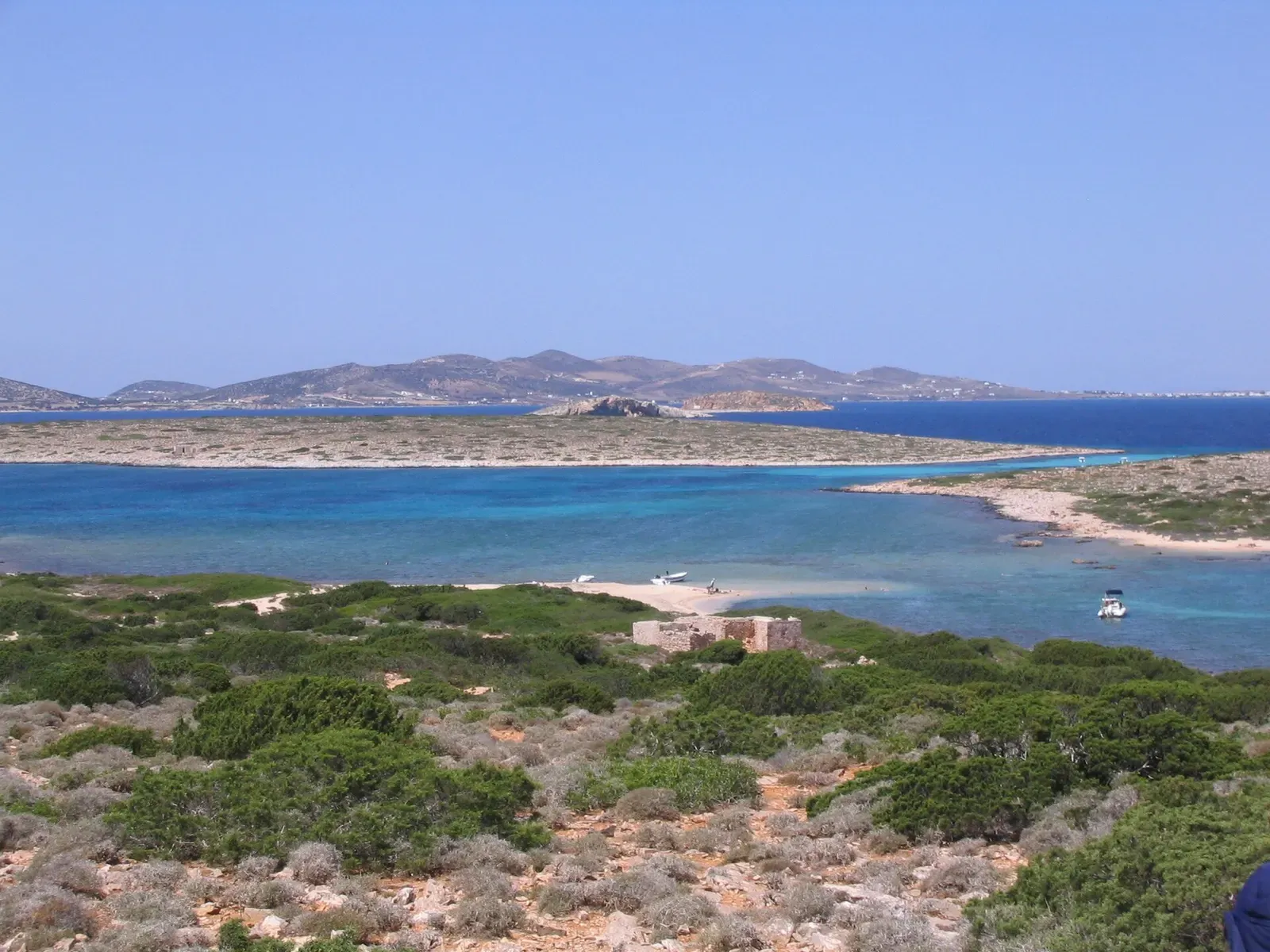
Surface inside the cavern beneath live stalactites, lit by blue light from below
Similar dives elsewhere
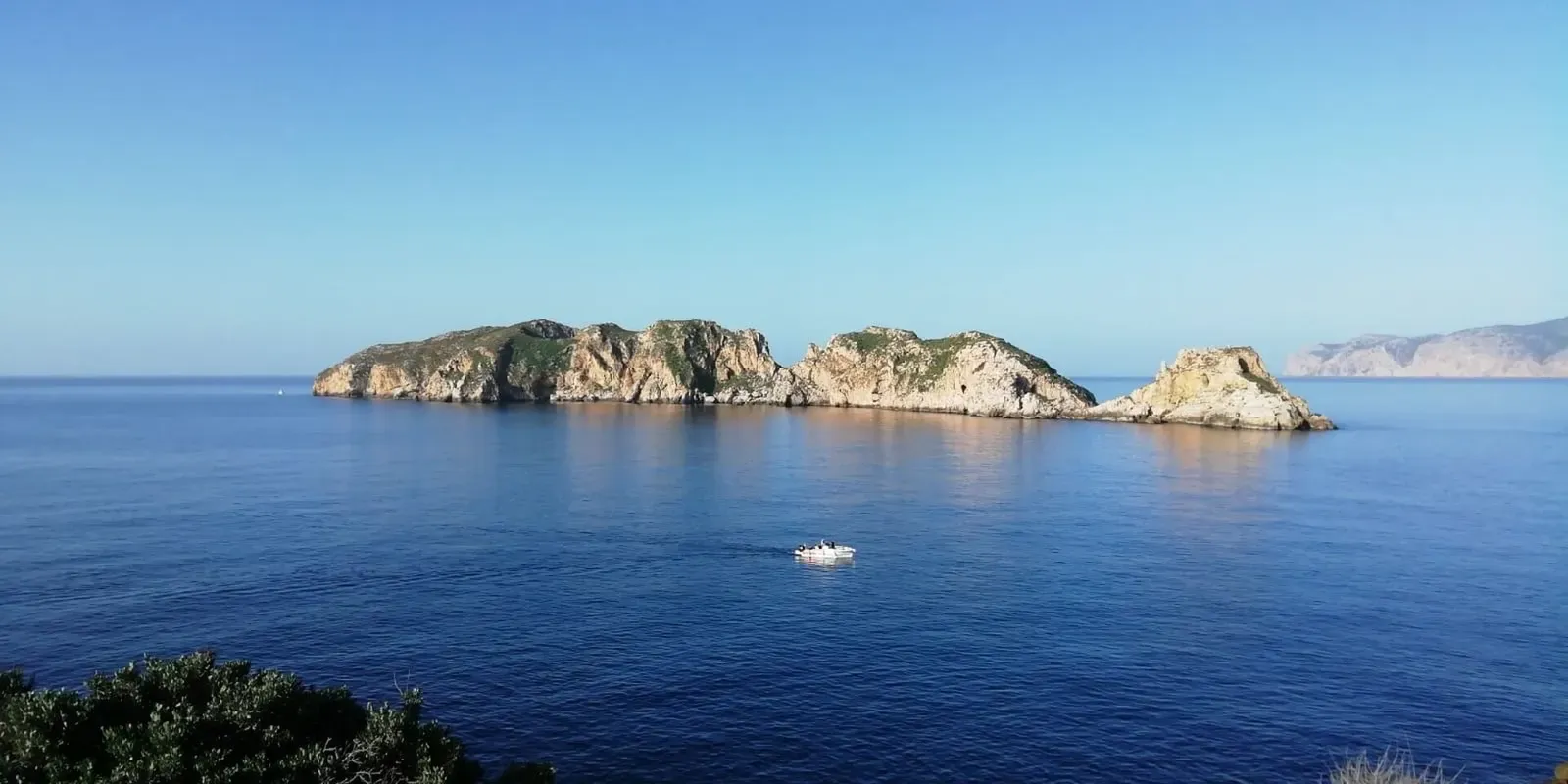
A small boat at 18 m with mast and boxes intact, two more hulls at 27 m

The park's most intact wreck: a 1908 minesweeper in 27 m
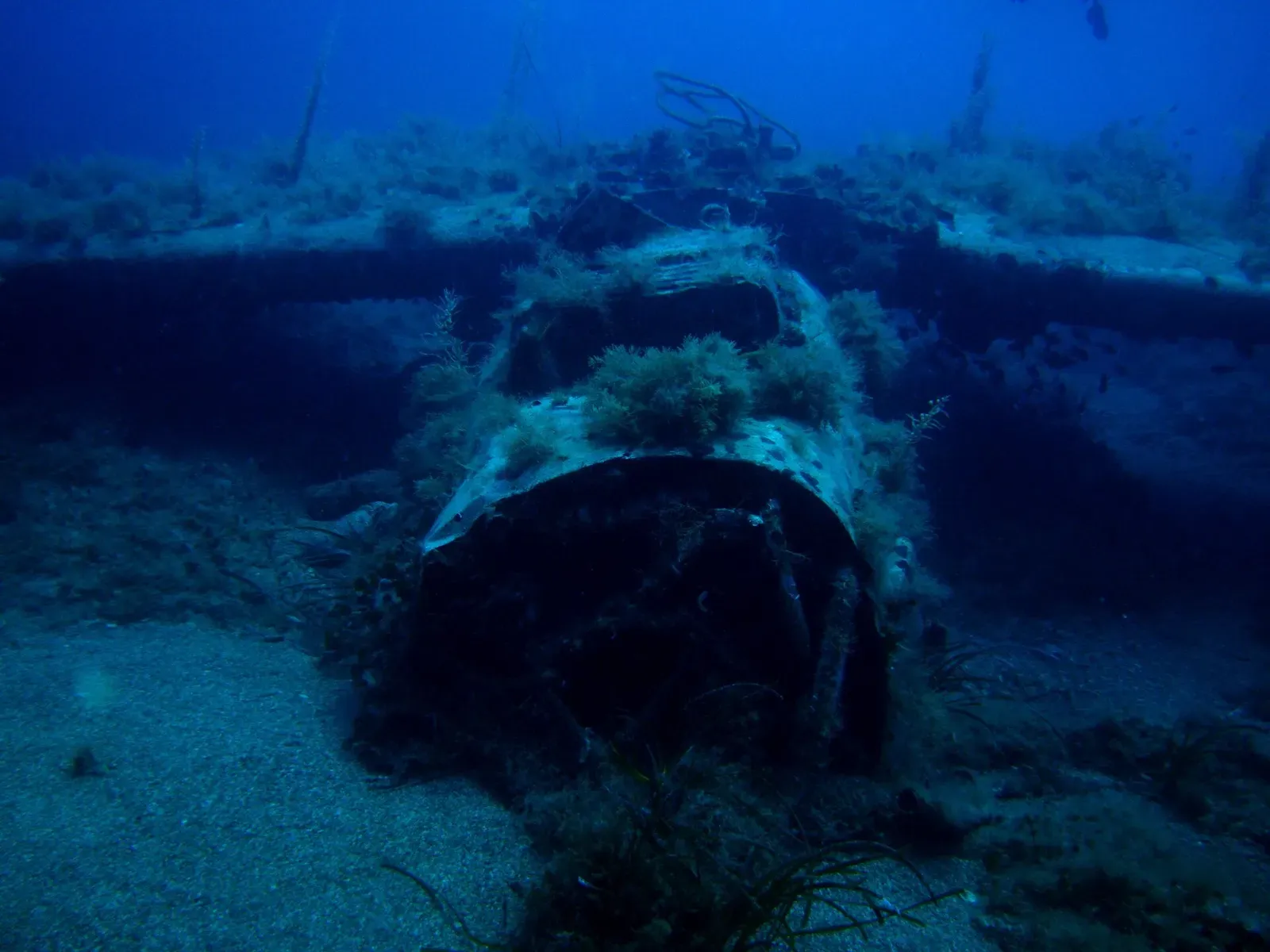
A Bf 109 upside down on sand, its guns and ammunition still in place

A 23 m barge at 27 m, sunk as an artificial reef off Son Bou