Mediterranean · Greece
Paros & Naxos
A WWII Beaufighter at 34 m and a cavern that surfaces among stalactites
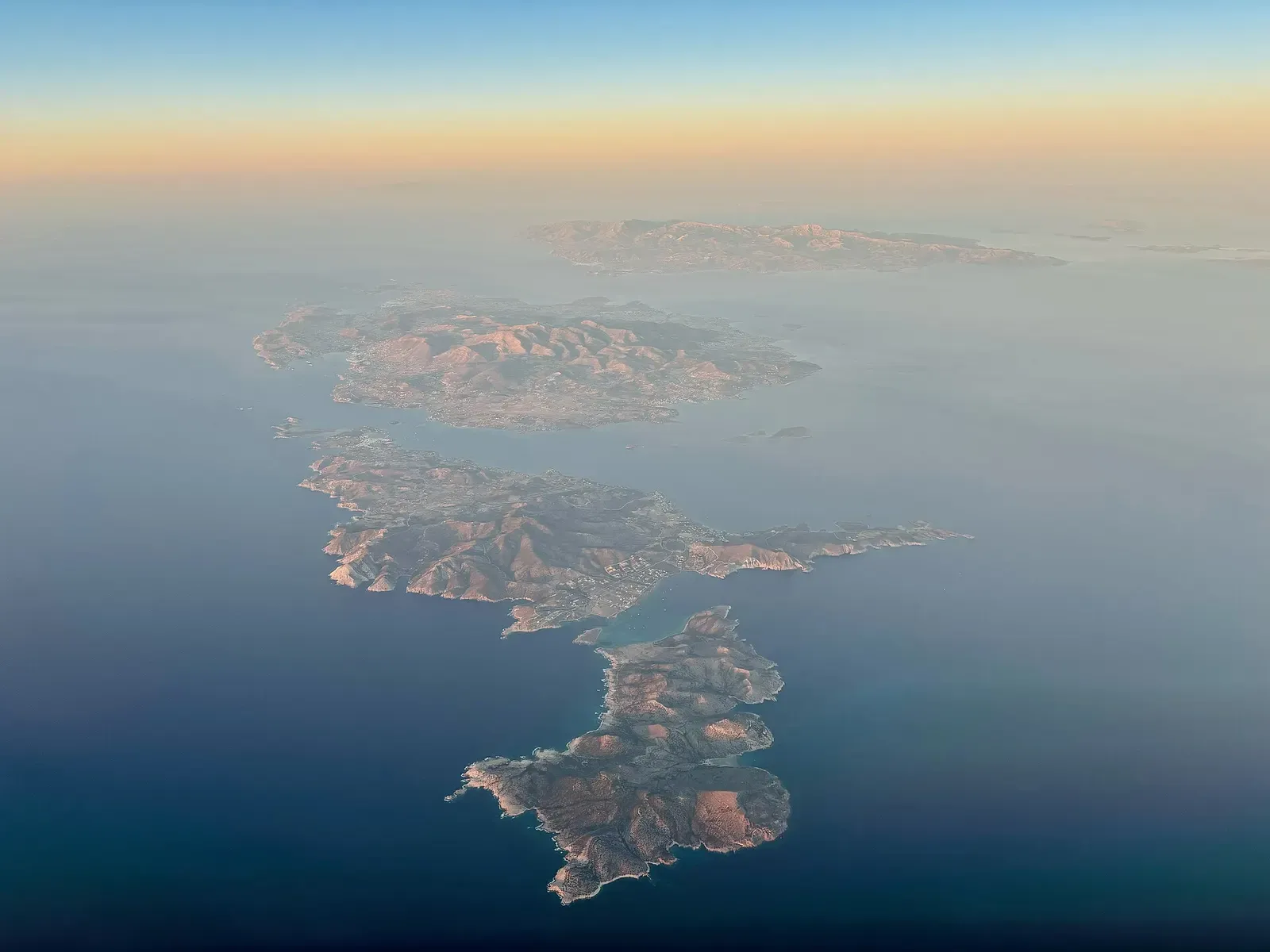
Photo: kallerna · CC BY-SA 4.0
Paros, the Cyclades' main ferry hub, has two dive centres on its south coast, at Aliki and Golden Beach, and a shoreline of short walls, caverns and rocky islets a few minutes out by boat. Across the strait, Naxos has run its own PADI centre at Agios Prokopios since 2006, and Antiparos adds two sites on day trips. The draw is the range: the Panteronisi cavern where divers surface among stalactites, Tripiti's overhung wall, a 1981 cargo wreck at 24 m and a WWII Beaufighter at about 34 m, all worked around a summer meltemi that decides which coves get dived.
About diving in Paros & Naxos
The diving is split across two islands and three centres. On Paros, Cycladic Diving works from the Aliki waterfront and Paros Diving Center from Golden Beach on the south-east coast; both run the local coves and islets by boat, with sites such as Hôtel des Badèches a seven-minute ride from Aliki port on a fixed mooring. On Naxos, Blue Fin Divers has been a PADI centre on Agios Prokopios beach since 2006, with a boat leaving from in front of the beach. All three run to the two wrecks in the strait, and the Aliki boat also crosses to Faneromeni and the Labyrinth off Antiparos. Beginners start from shore at Piso Aliki, a short walk from the village, or in Agios Prokopios bay.
The terrain is Cycladic rock: boulders, short walls, canyons and caverns, with Posidonia meadows on the sand between. Tripiti slopes to 8 m before a steep wall and a large overhang of soft-coral growth; the Cathedral is a wall named for the light through its formations; at Panteronisi the wall leads to a cavern where divers surface among stalactites. Ayers Reef rises from a Posidonia meadow at around 25 m. The Beaufighter lies in fine silt at around 34 m, cockpit and gunner's seat still open, large scorpionfish on the wreck and one propeller bent by the impact. The Mariana lies in two parts against its reef and carries nudibranchs, worms and morays, with barracuda from May to September.
It suits divers who want variety: a beginner can start from the beach, and an Advanced diver can fill a week with walls, a cavern, a drift and two wrecks. The constraint is the meltemi. From mid-May to mid-September the north wind blows at up to force 7 to 8, strongest in the afternoon, and can stop ferries; operators answer with north-sheltered moorings such as Hôtel des Badèches and Faneromeni, so a July week is mostly protected coves rather than open water, and divers set on the wrecks have better odds in June or September. Those after one marquee wreck are better served by the Peristera amphora wreck at Alonissos, and wreck-first divers by the Zenobia at Larnaca.
When to dive Paros & Naxos
| Jan | Feb | Mar | Apr | May | Jun | Jul | Aug | Sep | Oct | Nov | Dec |
|---|---|---|---|---|---|---|---|---|---|---|---|
| Off-season | Off-season | Off-season | Fair | Good | Prime | Good | Good | Prime | Good | Off-season | Off-season |
The Naxos centre opens mid-April to early November. The meltemi blows mid-May to mid-September, most constant in July and August, when boats keep to moorings sheltered from the north wind.
Dive types & marine life
Rock and seagrass life, not big animals: groupers and large scorpionfish on the wrecks, morays on the Mariana, nudibranchs and fireworms on the rock, damselfish at the shallow Aquarium site, and small barracuda off Makronisi and over the Mariana from May to September. Lionfish are now logged on both wrecks. Monk seals live around Despotiko, 12 km south-west, but are not reported at the dive sites.
- Wall
- Cave & cavern
- Wreck
- Drift
- Reef
- Barracuda
- Groupers
- Nudibranchs
Notable dive sites in Paros & Naxos
Pinnacle
A single rock out of a Posidonia meadow at 25 m, a hundred metres from Tripiti
Reef
A 50-minute lap of a rocky islet a mile off Alyko Bay
Wreck
A WWII heavy fighter at 33 m, found in 2007 after a year-long search
Wall
Amphorae from a pirate-era wooden wreck below a current-free wall
Wall
The area's big fish: barracuda and amberjack schools off a wall from 10 to 40 m
Reef
Canyons and a swim-through that fill with nudibranchs late in the season
Wreck
A 1981 cargo wreck whose crane still breaks the surface; the bow section rests at 24 m
Reef
Ridge tops at 5 m, a Classical amphora, and amberjack hunting over the reef
Surface inside the cavern beneath live stalactites, lit by blue light from below
Reef
A 6 m reef at the end of a sandy shore entry, minutes from Aliki village
Reef
An 8 to 12 m plateau where big barracuda schools pass over nudibranch-rich rock
A collapsed-cavern arch, then a steep wall with a soft-coral overhang from 8 m
Faros
Naxos-side site with very strong current, dived as a drift or straight from the back of the boat.
Getting there
Paros has its own airport about 10 km from Parikia in the south-west of the island, close to the Aliki dive centre, and Parikia is the Cyclades' main ferry hub with several daily sailings to Piraeus and Heraklion. Antiparos is a ten-minute ferry from Pounta. Naxos has its own port and airport, both within 5 km of Blue Fin Divers at Agios Prokopios.
Photos from Paros & Naxos
Paolo Gamba from Paris, France · CC BY 2.0
Paolo Gamba from Paris, France · CC BY 2.0
Zde · CC BY-SA 4.0
Photo credits
- Aerial sunset view of Despotiko, Antiparos, Paros and Naxos strung across the sea by kallerna, CC BY-SA 4.0, via Wikimedia Commons
- A moray eel looks out from an algae-covered rock crevice underwater off Paros by Paolo Gamba from Paris, France, CC BY 2.0, via Wikimedia Commons
- Small fish hover over a sandy seabed dotted with tube worms near Paros by Paolo Gamba from Paris, France, CC BY 2.0, via Wikimedia Commons
- Rocky cliffs of Paros seen from the sea near the entrance to Parikia harbour by Zde, CC BY-SA 4.0, via Wikimedia Commons
Similar destinations

A hot spring vents into the sea off Karaada's caves

Granite seamounts rising to the surface off Sardinia's south-east corner

A sunken DC-3 and a replica Bronze Age ship on the Lycian coast


.jpg)
.jpg)

Where Cousteau ran the first underwater archaeological dig in 1952