Ponza & the Pontine Islands · Italy · Seamount · Wall
Secca di Punta Papa
A bank capping at 33 m and dropping to 58 m, with red gorgonians and a Roman anchor stock
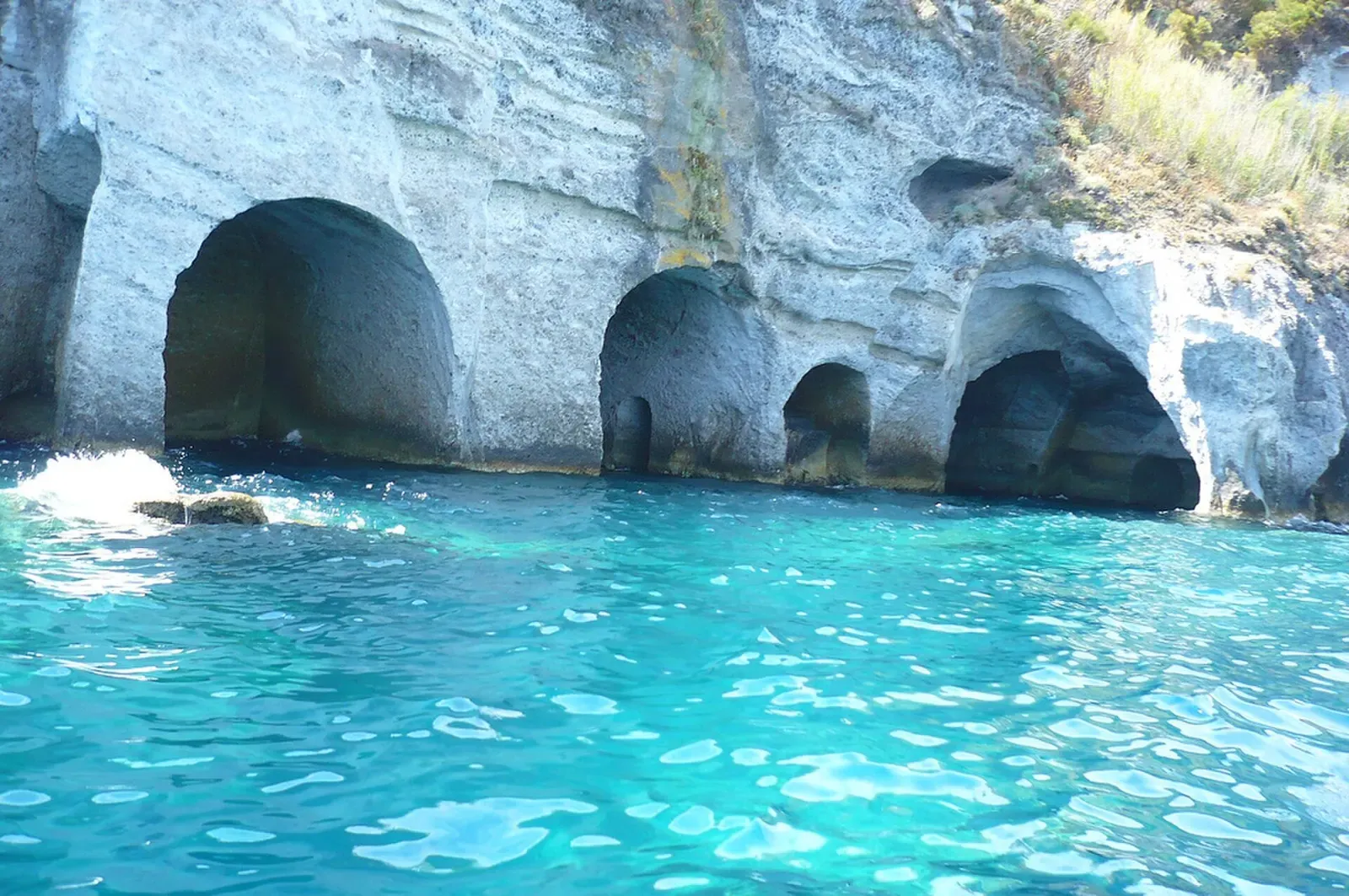
Area photo: Seba Sofariu from Dublin, Ireland · CC BY 2.0
Secca di Punta Papa is a sheer rock bank about half a mile west of Punta Papa, outside the bay of Cala Feola, whose cap lies at 32 to 33 m and drops to 58 m. That makes it a decompression dive pitched at open-circuit and rebreather divers only. The rock carries red gorgonians over a metre high, large yellow sponges, sea urchins and lobsters, and a crevice holds the lead stock of a Roman anchor.
Where it is and how deep
40.9301° N, 12.9641° EPublished position for this site.
The dive
This is a dive that starts where most recreational dives end. The cap of the bank is at 32 to 33 m and the rock falls to a flat bottom at 55 m and to 58 m at its deepest, so the descent is through open water outside the bay of Cala Feola, and Ponza Diving takes only its most experienced divers here. Plan it as a decompression dive on open circuit or a rebreather with the gas to match. Ponza Diving's route runs westward along a crevice full of lobsters at around 45 m before reaching the bank itself.
Cross the crest at 33 m and work the sheer face at your planned depth. The rock is dressed in red gorgonians over a metre high and large yellow sponges, sea urchins sit on the ledges and lobsters look out of the holes; at 40 m a small cave holds part of a lead Roman anchor, left where it fell. Dentex and barracuda pass over the shallow cap. When the run time is up, the ascent and the long decompression are usually made on the LST 349 wreck and the wall beside it, with the last stop at 3 m; Ponza Diving quotes total times of around two and a half hours.
Background
The bank was discovered in July 1994 by Andrea Donati and Valentina Lombardi of Ponza Diving, and it is still dived mainly with them. The lead stock of a Roman anchor in a cave on the bank is the site's archaeological curiosity; it stays where it is.
Marine life and season
- Barracuda
- Macro critters
| Jan | Feb | Mar | Apr | May | Jun | Jul | Aug | Sep | Oct | Nov | Dec |
|---|---|---|---|---|---|---|---|---|---|---|---|
| Off-season | Off-season | Fair | Fair | Good | Prime | Prime | Prime | Prime | Good | Fair | Off-season |
Season follows Ponza & the Pontine Islands: Diving runs April to early November and all but stops December–February; water peaks at 23–24°C in August–September and is down to 14–15°C in March–April. Naples ferries are summer-only.
Know before you go
- The cap of the bank is at 32-33 m and the rock drops to 58 m: this is a decompression dive needing technical planning, gas and a schedule.
- The long decompression is usually finished on the LST 349 wreck: agree the plan and the reference before the dive and carry a surface marker.
Questions divers ask
How deep is Secca di Punta Papa?+
The top of the bank is at 32 to 33 m, the flat bottom lies at 55 m and the deepest point is 58 m. The dive is planned as a decompression dive on open circuit or CCR.
Sources
- Secca di Punta Papa — Scubago
- Secca Punta Papa — Ponza Diving
More dive sites in Ponza & the Pontine Islands
A wall of dens rising from 40 m to a 5 m plateau, dived multilevel
Sea stacks five minutes from port: a wall from 4 m to 20 m, an arch and a swim-through
Wall
Gullies at 30 m over a ledge past 50 m, with a cave entered by a siphon at 18 m
A sheltered 17 m wall behind Punta Madonna used as a natural pool for courses
A 6 m wreck with propeller and rudder on show, snorkelled as often as dived
A WWII landing ship's stern, in navigation trim and partly penetrable at 19 m
The split bow of a WWII landing ship at the foot of a wall at 30 m
Seamount
A meadow of red gorgonians on a current-swept shoal from 27 to 62 m
Similar dives elsewhere
A rock needle to 3 m, with a conger cave at 22 m on its east side

A submerged mountain from 55 m to 3 m, four hulls on its flanks
A seamount circled at the edge of the northern reserve

Gorgonian walls from 25 m down to a 53 m bottom