Puget Sound · United States · Artificial reef · Reef
Keystone Jetty
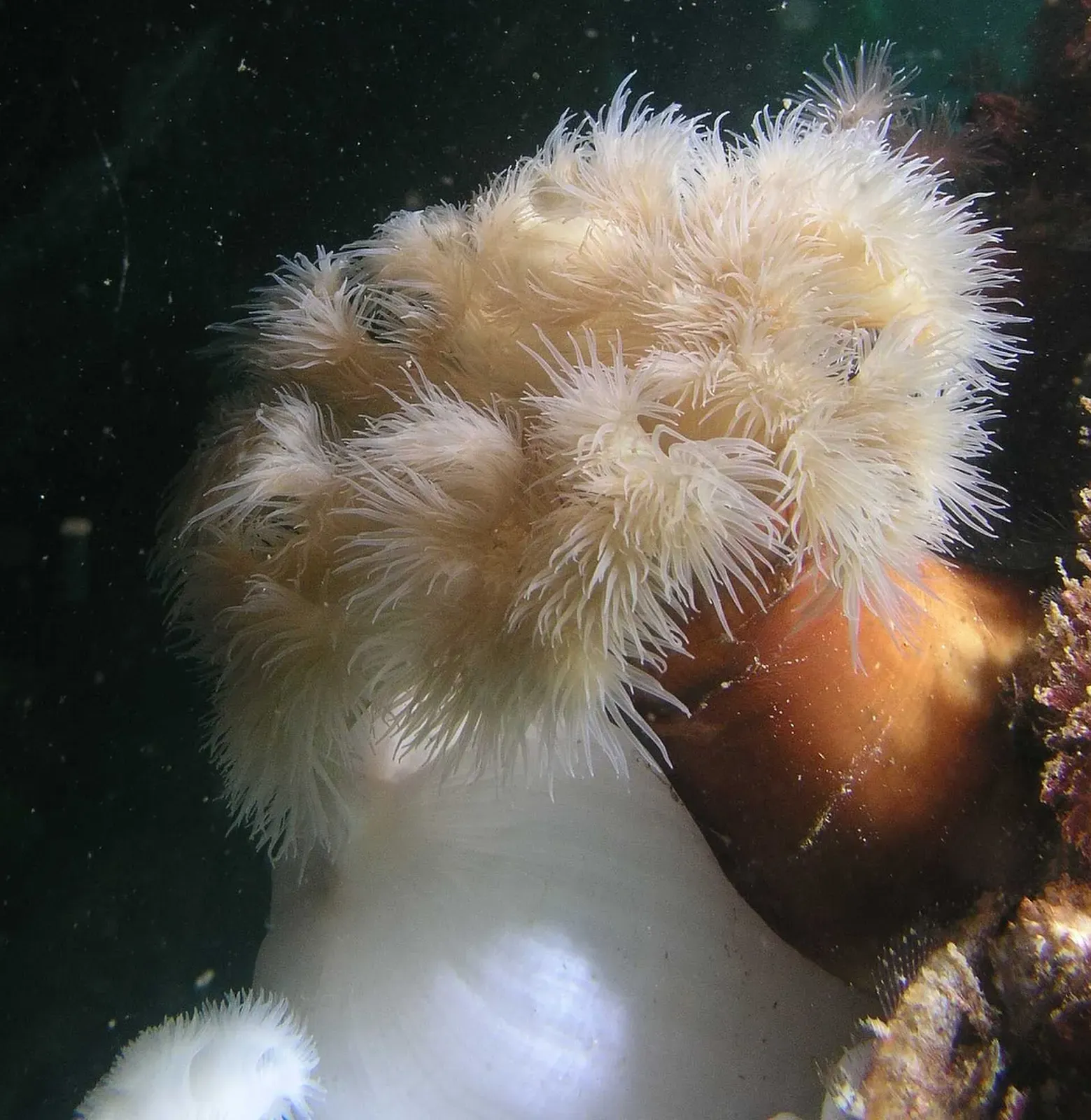
Rockfish, greenling and giant anemones packed onto revetment boulders
Area photo: USEPA Environmental-Protection-Agency · Public domain
Keystone Jetty is a man-made structure that works like a reef: large revetment boulders creating high-relief, structurally complex habitat on an otherwise plain bottom of sand and broken shell. The site runs from the intertidal down to 70-odd feet (21 m), and the offshore terminus takes strong tidal currents, which is what governs when the dive happens.
Also known as Keystone Conservation Area.
Where it is and how deep
48.1595° N, 122.6722° WApproximate position — the dashed circle shows where the site lies; your operator's briefing has the mooring.
The dive
The dive works the eastern side of the jetty, into Keystone Ferry harbor and extending eastward to the old military dock pilings. The ground between is sand and broken shell running through moderate-sized cobble, which is why the rock pile itself is the whole point: high-relief, structurally complex habitat sitting on a bottom that offers very little otherwise.
Depth runs from the intertidal down to 70-odd feet (21 m) at mean lower low water, so the profile is really a choice of how far out along the structure to work. Copper, quillback and black rockfish hold on the boulders with lingcod, kelp greenling and painted greenling, striped seaperch and pile perch school around them, and Pacific herring, sandlance and coho salmon pass through.
The invertebrate cover is what photographers come back for: giant anemones, giant barnacles, red rock crabs and red sea cucumbers on the rock. The offshore terminus of the jetty is subjected to strong tidal currents, so the far end dictates the timing of the whole dive, and the eddies there push flotsam and jetsam onto the beach behind you.
Marine life and season
- Reef fish swarms
- Macro critters
| Jan | Feb | Mar | Apr | May | Jun | Jul | Aug | Sep | Oct | Nov | Dec |
|---|---|---|---|---|---|---|---|---|---|---|---|
| Prime | Prime | Good | Good | Good | Good | Good | Good | Good | Prime | Prime | Prime |
Season follows Puget Sound: Diving runs all year; visibility is often best in fall and winter, while summer brings 16 hours of daylight.
Know before you go
- The offshore terminus of the jetty is subjected to strong tidal currents, so the far end is a slack-water proposition rather than somewhere to swim out to and look around.
- Eddies at the jetty bring flotsam and jetsam onto the beach, which is worth a look before committing to an exit in poor light.
- The eastern side of the jetty runs into Keystone Ferry harbor, so any plan needs to account for working boat traffic overhead.
Dive videos
Keystone Jetty Dive, Whidbey Island · Russell Sparkman on YouTube
Questions divers ask
How deep is Keystone Jetty?+
From the intertidal down to 70-odd feet (21 m) at mean lower low water. Because the site is a boulder jetty rather than a slope, you choose your depth by choosing how far out along the structure to work.
Do you need a pass to dive Keystone Jetty?+
Yes. Access is through Fort Casey Historical State Park along the southern shore, and a Washington Discover Pass is required in order to park there.
Sources
- Ebey's Landing National Historical Reserve — Wikivoyage
In The Logbook
- How far you can see underwaterOcean science · 12 min read
- Why is some sea green instead of blue?Ocean science · 8 min read
More dive sites in Puget Sound
A creviced rock wall with resident wolf eels and octopus
The most popular diving location in Seattle, entered off the beach
The large tugboat Triumph, and very large ling cod on the structures
Artificial reef
Old Hood Canal Bridge slabs and I-beams turned into fish habitat
Wolf eels in the rock on the north and south walls
Wreck
A 21-metre wooden hull (70 feet) under a field of white plumose anemones
Similar dives elsewhere
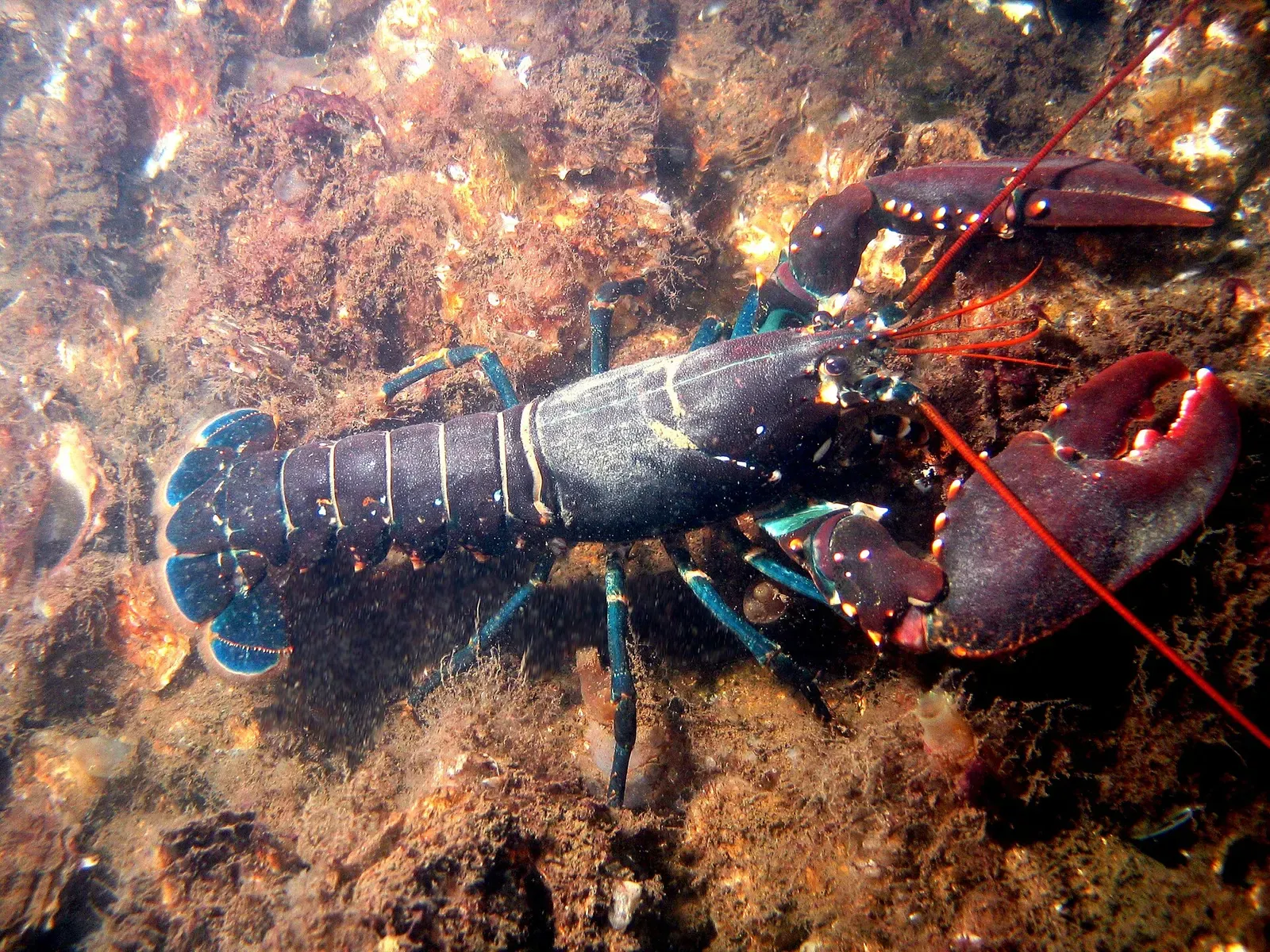
An artificial reef on the tideless side of Zeeland

A broken wartime hull at 12 m that the reef fish have taken over

Coral-encrusted pillars off a beach opened in 2017
.jpg)
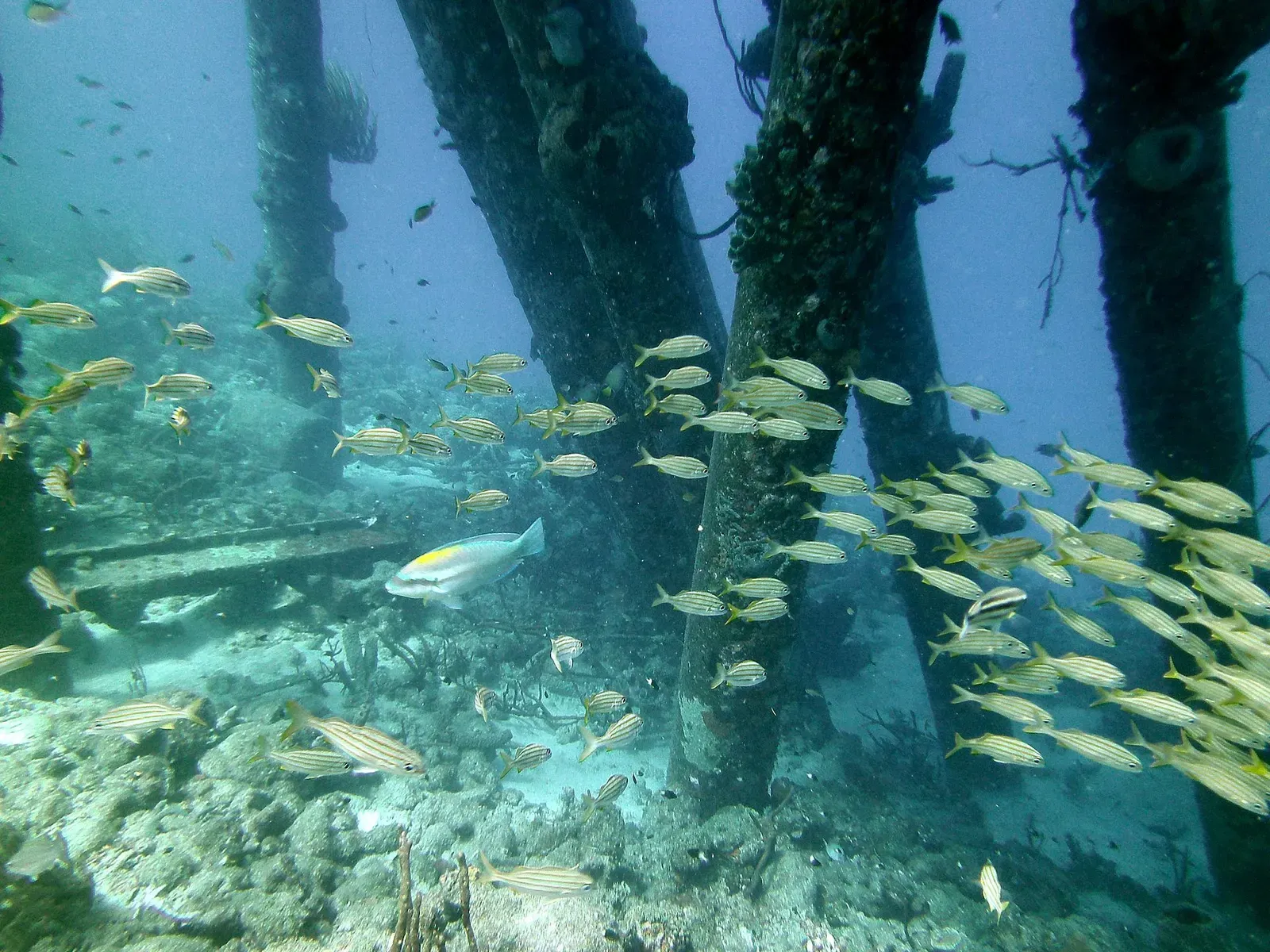
Fish schooling in the shade under a working salt pier