Réunion · France · Reef · Drift · Channel & pass
Passe de l'Ermitage
An open-water-friendly pass with turtles and eagle rays
Photo: Unknown author · CC BY-SA 3.0
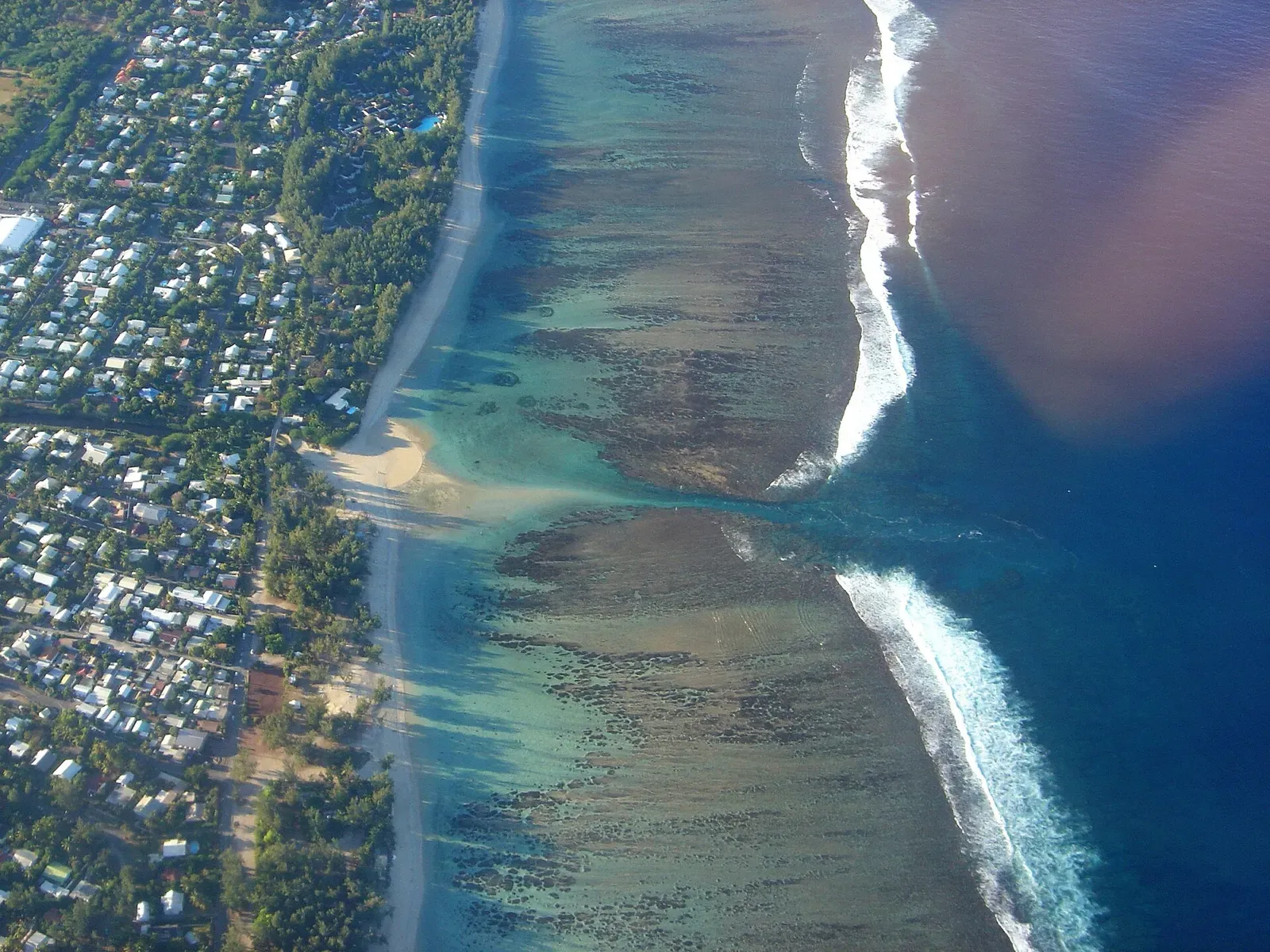
The pass at l'Ermitage lies in the prolongation of the barrier reef on the west coast, in 6 to 25 metres. The ground changes constantly along it: sand, pebbles, a coral plateau, and fissures, tunnels and small caves cut into the reef. PADI lists it as accessible to open-water divers, and Manawa counts it among the island's essential first dives.
Where it is and how deep
21.0853° S, 55.2216° EPublished position for this site.
The dive
The pass runs off the end of the fringing reef, and the appeal is how much the ground changes over a short distance. The shallow end of the site is at 6 metres over sand and pebble bottom, the coral plateau picks up from there, and the deeper part of the dive works down to 25 metres. Fissures, tunnels and small caves are cut into the reef along the way, which is what gives a shallow site its shape.
It is dived as a drift, so the plan is to let the water carry you along the reef edge with the coral on one shoulder. Turtles are seen over the coral, and eagle rays and stingrays cross the open ground, so the sand patches between coral heads are worth watching as much as the reef itself. Coral fish hold on the plateau in numbers. With the shallow end at 6 metres, the last stretch of the dive can be spent on top of the reef.
Because the pass takes open-water divers and its shallow end is at 6 metres, it is one of the island's standard first dives rather than a site you work up to. That shapes the pace: the route follows the pass and the shape of the reef rather than a fixed line of features, and there is no reason to push the deep end at 25 metres when the plateau and the cut-up reef are where the dive is.
Marine life and season
- Sea turtles
- Eagle rays
- Stingrays
| Jan | Feb | Mar | Apr | May | Jun | Jul | Aug | Sep | Oct | Nov | Dec |
|---|---|---|---|---|---|---|---|---|---|---|---|
| Fair | Fair | Good | Good | Prime | Prime | Prime | Prime | Prime | Prime | Good | Fair |
Season follows Réunion: May–Oct is the dry season with the calmest water and humpbacks Jul–Oct; Jan–Mar is cyclone season.
Photos from Passe de l'Ermitage
JarodFR · CC BY-SA 4.0
Dive videos
Plongée du 1er mars 2016/Reunion island/Passe de l'Ermitage/Gopro · Romain Vandaele (Cam&Rhum) on YouTube
Tortue - Passe de l'Ermitage - Île de la Réunion · POA Dive on YouTube
Questions divers ask
Can beginners dive Passe de l'Ermitage?+
Yes. PADI's guide lists the pass as accessible to open-water divers, and Manawa counts it among the essential stops for new divers. Depths run from 6 to 25 metres, so a shallow profile is easy to plan.
What can you see at Passe de l'Ermitage?+
Turtles, eagle rays and stingrays, plus coral fish over the plateau. The terrain itself is part of it: sandy bottom, pebbles, coral plateau, and fissures, tunnels and caves cut into the reef.
Sources
Photo credits
- Aerial view of a channel cutting through the barrier reef into the lagoon on Reunion's west coast by Unknown author, CC BY-SA 3.0, via Wikimedia Commons
- Aerial view of L'Ermitage-les-Bains coastline with lagoon, reef flat and breaking surf by JarodFR, CC BY-SA 4.0, via Wikimedia Commons
In The Logbook
- Drift diving: how to read and ride a currentDrift & current · 8 min read
More dive sites in Réunion
Wreck
A 1999 scuttling on her port side, holds full of soldierfish
Cave & cavern
A ten-metre arch cresting at 20 m, its feet on the bottom at 42 m
A coral flat to 20 m, then a wall from 20 down to 40 m
Reef
A shore entry in the marine reserve, 4 m to a small drop-off
Cave & cavern
A collapsed reef cavern with easy galleries at 3 to 17 m
Pinnacle
Two basalt organ pipes 25 m tall, one pierced by a cave
Wall
Black sand to scree at 40 m, and a shy grouper at 50 m
A stepped wall dropping in two stages from 40 m to 70 m
Similar dives elsewhere
Manta cleaning stations at 10–15 m, with 8–9 mantas at once on a good day
Sharks, jacks and eagle rays on the channel-mouth current
Groups of eagle rays and barracuda on the incoming current


Granite arches and swim-throughs at the top of the chain