What a drift dive actually is
The definition people give — a dive where you let the current carry you — is true and unhelpful, because it describes the easy half. The useful definition is about who is responsible for what. On an ordinary dive the boat stays put and you come back to it. On a drift dive the boat comes to you, which means the whole dive is built around the crew knowing where you are, and around you finishing somewhere they can reach.
That inversion is why drift diving feels so different from the surface up. The briefing is about the water rather than the reef. The entry is fast and simultaneous, because a group that trickles in over four minutes is a group spread over 200 metres of ocean before the last person has cleared their ears. Nobody swims back for anything. And the dive ends when the current says it does, not when the site runs out.
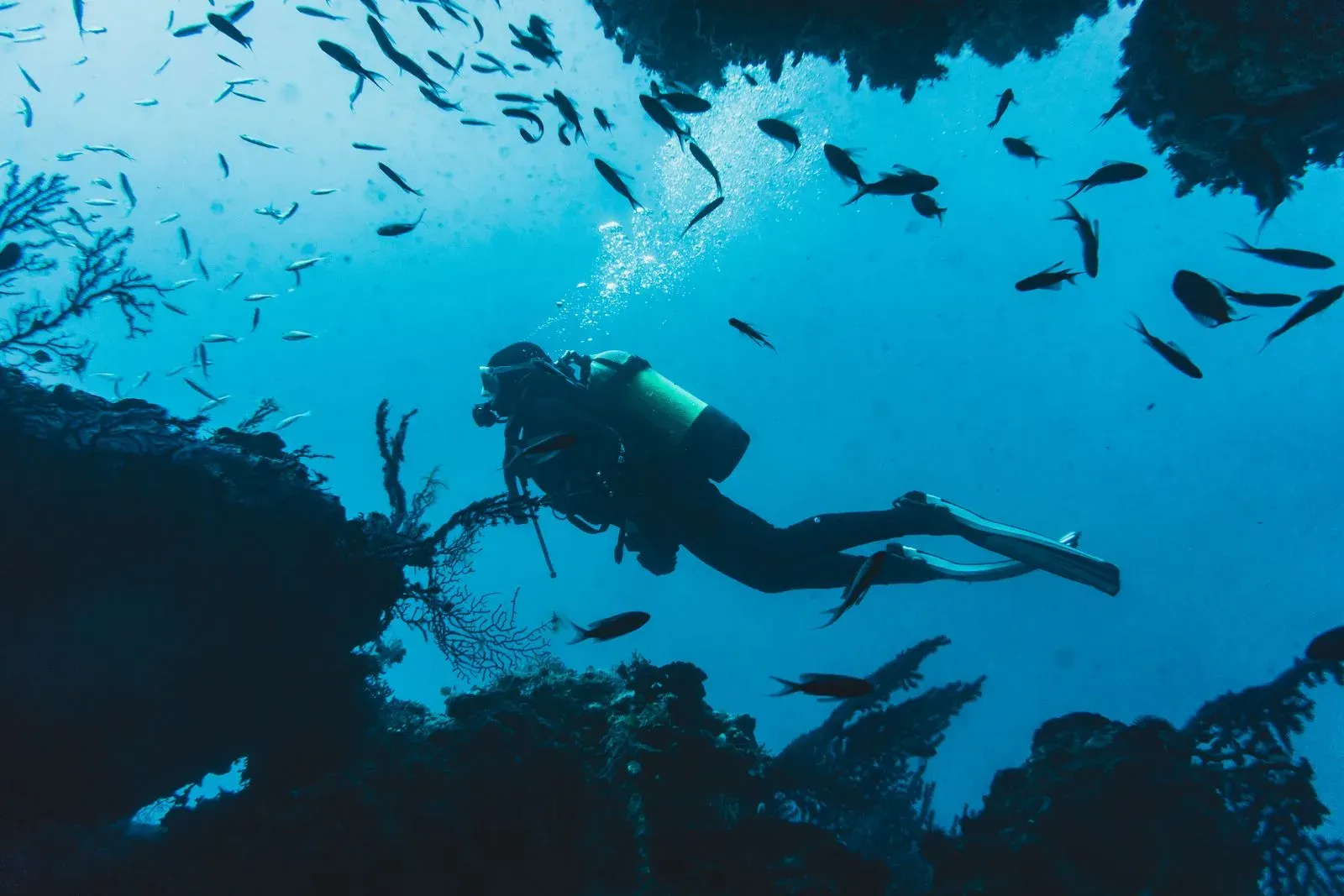
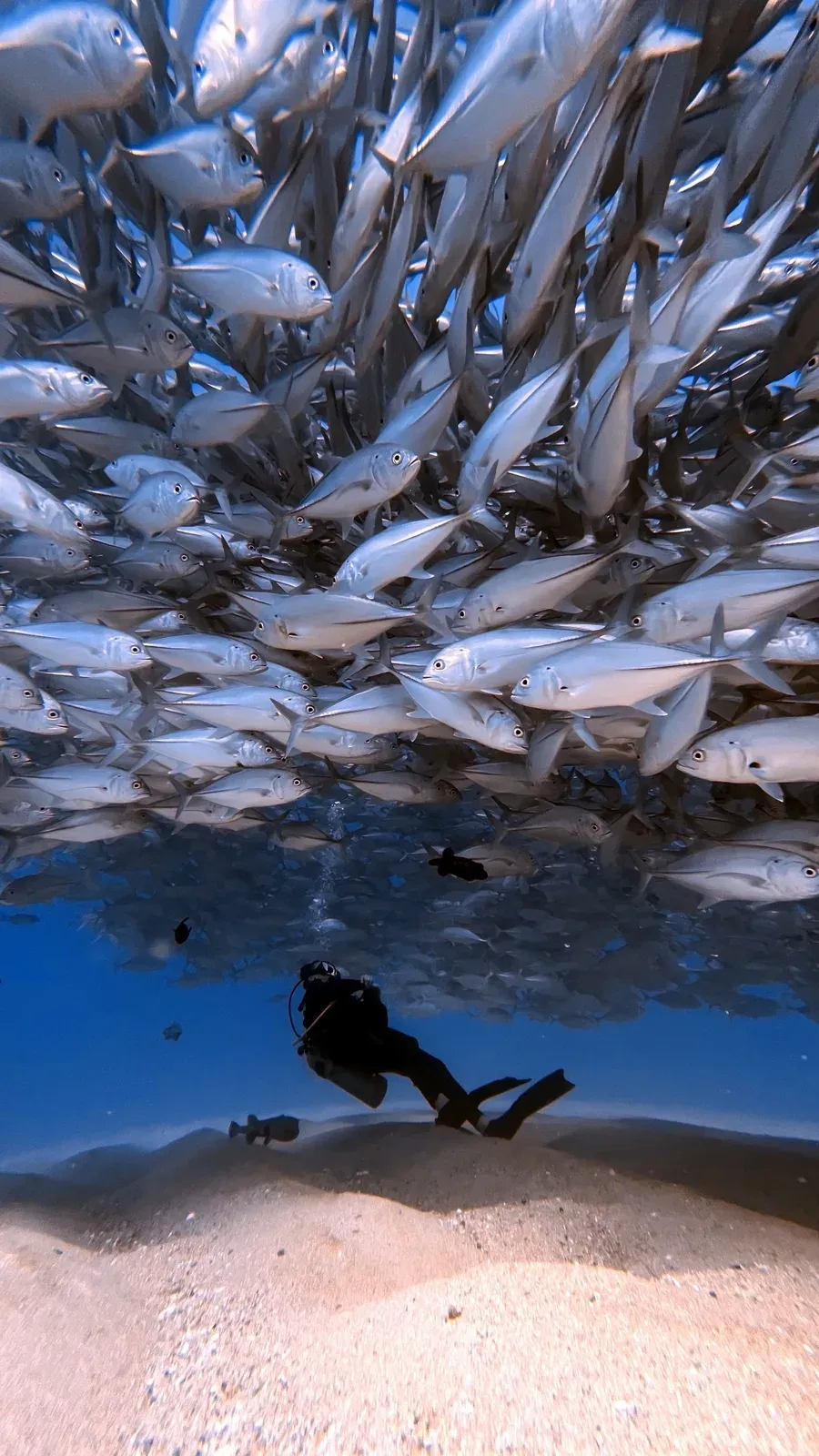
What you get in return is the reason people cross the world for it. Moving water is a food delivery system, so the animals that eat what it brings — barracuda, trevally, sharks, mantas, anything that would rather hold station and let dinner arrive — gather where the current concentrates. That is the whole logic of a pass dive. Cape Kri in Raja Ampat is dived for fish biomass rather than for any feature, and Barracuda Point is a corner off Sipadan where the current pins thousands of barracuda into a slowly wheeling tornado. There is no version of those dives in still water.
The second thing you get is effortlessness, and it is a genuine trap. Being carried costs you almost nothing, so gas lasts, the reef streams past, and it is very easy to be 900 metres downstream of anything familiar before you have thought about it. The current giveth range; it does not giveth it back.
Reading the water before you get in
Almost every serious drift site runs on tide, and tide is predictable — which is the good news, because it means the difficult part of a drift dive is mostly decided before anyone gets wet.
Direction changes everything. In an atoll pass, an incoming (flooding) tide pushes clear ocean water into the lagoon, so visibility is good and the drift takes you somewhere sheltered. An outgoing tide flushes lagoon water out, which is murkier, and takes you into open sea. This is not a preference, it is a rule at some sites: DAN’s account of Fakarava is blunt that Garuae, the north pass and the largest in French Polynesia at 1.37 km across, is dived on the incoming current only, because the outgoing one is dangerous.
Slack is a window, not a state. Between the tides the flow drops to almost nothing and a pass becomes an ordinary reef dive. Some sites are dived at slack precisely to make them accessible; others lose their point entirely, because the sharks and the schools are there for the moving water. Yap’s Mi’il Channel is a good illustration of the range involved: barely perceptible at slack, up to about 4 mph — 6 km an hour — at the change.
Strength has a threshold worth knowing. DAN’s guidance is that divers should not dive in currents above 1 knot without training for it. One knot is a bit over 30 metres a minute, which is roughly twice a comfortable fin pace: at that speed you are not going anywhere you do not want to go, but you are also not swimming back. (For the record, this is exactly the arithmetic behind diving with a scooter — a DPV cruises at about 45 metres a minute, so it beats a one-knot current and loses to a two-knot one.)
Ask the crew what the plan is if it is wrong. Good current operations have an abort. Crystal Bay at Nusa Penida cannot always be dived at all, and the local answer is that the crew calls it off rather than pressing on; at Batu Bolong the operator reads the tide and keeps the group tight to the rock. A boat that has never cancelled a dive at a tidal site is telling you something.
The three skills that actually matter
Everything else about drift diving is ordinary diving done in moving water. These three are not.
Deploying a marker buoy from depth. This is the skill the whole system rests on, because on a live-boat drift your SMB is how the crew knows which patch of ocean to come to. Learn it on a still, shallow dive until it is boring: reel or spool untangled, no loop around a wrist or a hose, a controlled shot of gas, and no part of you going up with it. On Kandooma Thila the outgoing current runs off the pinnacle straight into open water, and the safety stop is made in the blue on a deployed buoy with the boat following the group — which only works if everyone can put one up.
The negative entry. In current you do not float on the surface waiting for a head count; you go in with an empty BCD and keep descending. Done as a group it puts everybody on the same patch of reef at the same depth. Done badly it separates you from people who are still fiddling with their masks, which is why the briefing on these dives is worth listening to twice.
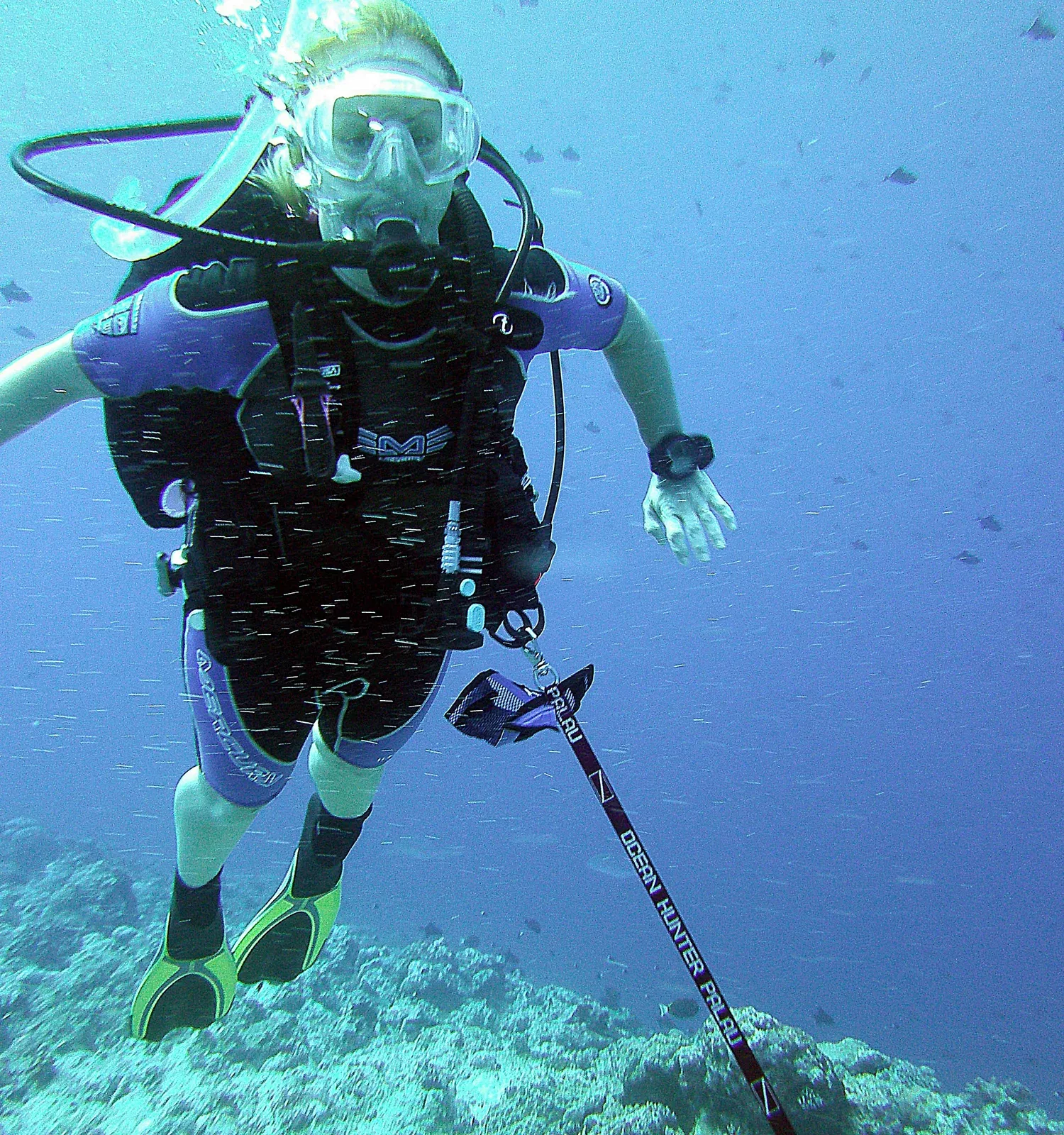
Hooking in. Where the point of the dive is to stay somewhere the current wants to move you, a reef hook — a short line with a stainless hook and a way to clip it to your harness — lets you fly on the end of a tether and watch. The technique was invented at Blue Corner in Palau, which is still where most divers first use one: divers set the hook on the lip of the plateau at around 8 to 30 metres (100 feet) and hang there while grey reef sharks and big-eye trevally hold station off the edge. Two rules travel with the tool. Hook into bare rock or dead rubble, never live coral — Fakarava’s north pass expects the same discipline. And unhook after five or ten minutes; a hooked diver occupies a piece of reef edge that other people also want.
Where the current is the dive
Drift sites divide into three kinds, and it is worth knowing which one you have booked.
Passes and channels, dived on the tide. These are the ones that justify the whole discipline. Fakarava’s Tumakohua is only about 200 m wide and holds a single resident school of grey reef sharks that estimates put somewhere between 500 and 700 animals — the densest gathering recorded anywhere — and the technique there is holding position off the coral rather than swimming. Rangiroa’s Tiputa Pass is a permanent tidal bore where sharks circle by the hundred and resident bottlenose dolphins play in the same water. German Channel is a cut dug through Palau’s barrier reef in 1908 whose mouth now works as a manta cleaning station on the tidal flow. Kinasi Pass on Mafia, Tuheiava in Tikehau and Manta Alley in Komodo are the same idea at different scales.
Shark TV - Fakarava, Diving the South Pass with Sharks, tons of Fish and the Famous Napolean Wrasse · underWATERcam - Your Window to the Ocean & Nature on YouTube
Corners and walls, where current stacks the fish. No channel needed — just a piece of reef sticking out into moving water. Barracuda Point and Palau’s Blue Corner are the archetypes. In the Red Sea, Shark & Yolanda is run as a one-way drift from Shark Reef down to the scattered cargo of a 1980 wreck, and it pushes hardest on the incoming tide, which is both the best chance of pelagics and the least forgiving version of the dive. Elphinstone, Shaab Rumi and Batu Bolong belong to the same family.
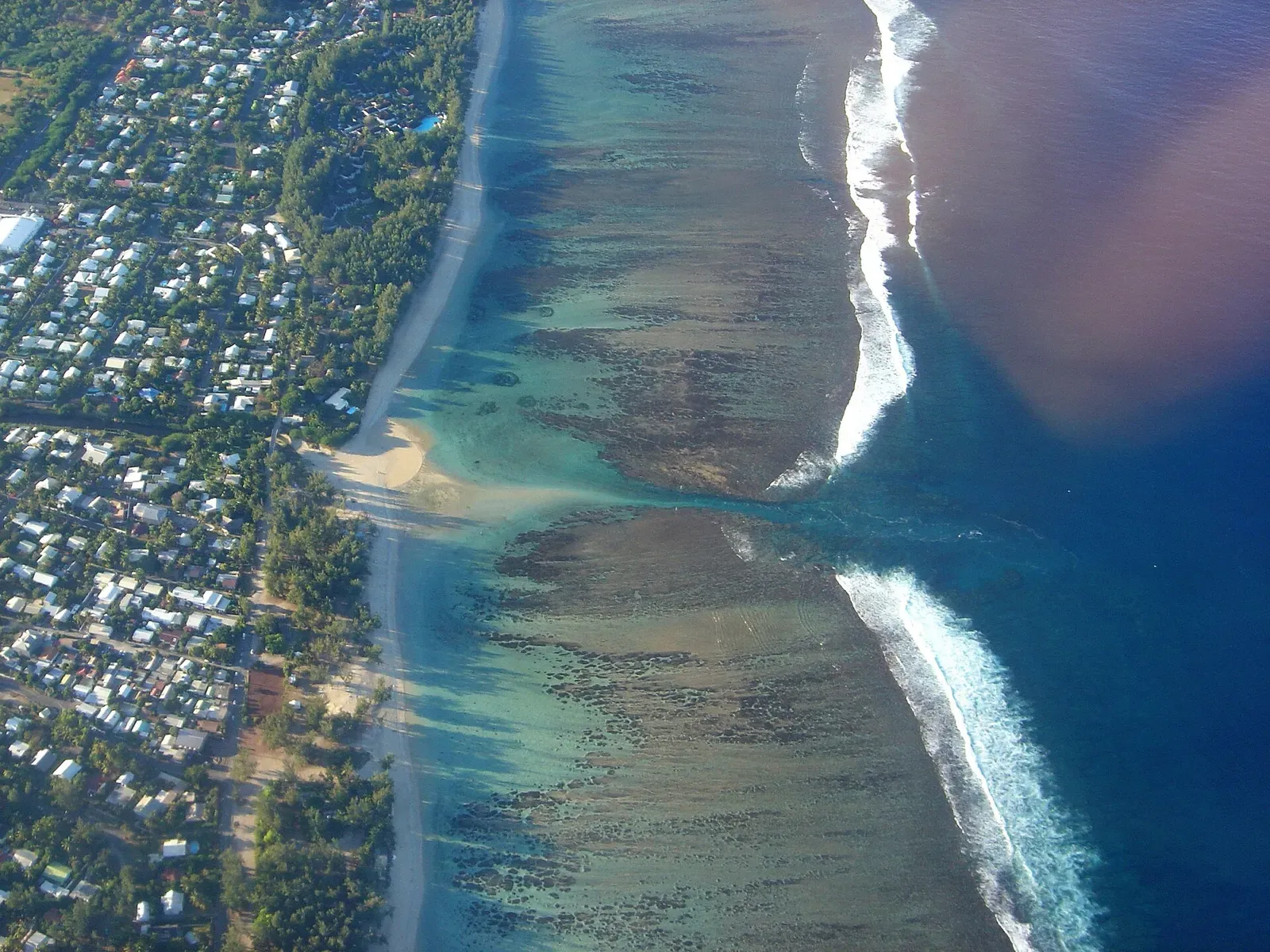
Gentle drifts, where you learn all of it. The best first drift dives are the ones where being carried is pleasant and the consequences are small. Palancar Gardens in Cozumel is the textbook: the boat drops you up-current and collects you wherever you surface, and that is simply how Cozumel dives. Molasses Reef, Belize’s Hol Chan channel, Breakers Reef off Palm Beach, Lekuan I, Toyapakeh and Réunion’s Passe de l’Ermitage are all drifts a competent Open Water diver can enjoy rather than survive.
| Site | Depth | Current | Level | Best months |
|---|---|---|---|---|
| Palancar Gardens Cozumel · Mexico | 15–34 m | Moderate | Intermediate | Jan–Apr |
| Molasses Reef Florida Keys · United States | 2–18 m | Mild | Beginner | Apr–Aug |
| Hol Chan Marine Reserve Belize Barrier Reef · Belize | 1.5–9 m | Mild | Beginner | Mar–Jun |
| Breakers Reef Palm Beach & Jupiter · United States | 13–18 m | Moderate | Intermediate | Jan–Mar |
| Lekuan I Bunaken · Indonesia | 10–25 m | Moderate | Intermediate | May–Oct |
| Toyapakeh Nusa Penida · Indonesia | 10–25 m | Mild | Intermediate | Jul–Oct |
| Passe de l'Ermitage Réunion · France | 6–25 m | Mild | Beginner | May–Oct |
| Rainbow River Crystal River · United States | 2–7 m | Mild | Beginner | Nov–Feb |
| South Pass (Tumakohua) Fakarava · French Polynesia | to 27 m | Moderate | Intermediate | Jun–Jul |
| North Pass (Garuae) Fakarava · French Polynesia | 15–21 m | Strong | Advanced | Jun–Jul |
| Tiputa Pass Rangiroa · French Polynesia | to 35 m | Strong | Advanced | Dec–Apr |
| German Channel Palau · Palau | 3–40 m | Moderate | Intermediate | Dec–Mar |
| Tuheiava Pass Tikehau · French Polynesia | to 30 m | Moderate | Intermediate | Apr–Oct |
| Mi'il Channel Yap · Micronesia | 15–30 m | Moderate | Intermediate | Dec–Mar |
| Kinasi Pass Mafia Island · Tanzania | 6–26 m | Strong | Advanced | Oct–Feb |
| Manta Alley Komodo · Indonesia | 10–25 m | Strong | Advanced | Jun–Oct |
| Blue Corner Palau · Palau | 8–30 m | Strong | Advanced | Dec–Mar |
| Barracuda Point Sipadan · Malaysia | 10–22 m | Strong | Advanced | Mar–Sep |
| Shark & Yolanda Reef Sharm El Sheikh · Egypt | 15–30 m | Strong | Advanced | May–Oct |
| Elphinstone Reef Marsa Alam & Port Ghalib · Egypt | 18–40 m | Strong | Advanced | Mar–May |
| Kandooma Thila South Malé Atoll · Maldives | 13–35 m | Strong | Advanced | Dec–Apr |
| Cape Kri Raja Ampat · Indonesia | to 40 m | Moderate | Advanced | Nov–Mar |
| Batu Bolong Komodo · Indonesia | 10–25 m | Strong | Advanced | Jun–Oct |
| Shaab Rumi Sudanese Red Sea · Sudan | 5–30 m | Strong | Advanced | Apr–May |
| Lillie Parsons Brockville · Canada | 6–21 m | Strong | Intermediate | Jul–Sep |
| Crystal Bay Nusa Penida · Indonesia | 15–30 m | Strong | Advanced | Jul–Oct |
Fresh water gets a footnote of its own, because rivers drift too and they never go slack. Rainbow River in Florida is a two-to-seven-metre float over spring boils that beginners do for fun. At the other end, the Lillie Parsons in the St Lawrence is an 1868 schooner lying upside down against Sparrow Island: the current is quick enough that you must descend on the anchor chain or be swept past the wreck before you reach it, and the dive ends by letting go and running the island wall with the flow behind you.
Wreck of the Lillie Parsons (Lillie Long Drift) - Scuba in Brockville · Toronto Diver on YouTube
When the current stops going sideways
Horizontal current is a transport problem. Vertical current is a safety problem, and it is the part of drift diving worth rehearsing in your head before you need it.
A downwelling happens where a horizontal current hits an obstacle — a wall, a pass mouth, the corner of an island — and is forced down. It is the specific warning at Crystal Bay, where the hazard is not the mola mola but the down-currents near the corners; at Blue Corner, where the flow can change direction horizontally or vertically at any moment; and at Fakarava’s north pass, where it can carry you over the reef edge.
DAN’s guidance for being caught in one is unglamorous and worth memorising. Keep equalising continuously, because you may be going down faster than your ears expect. Stop the descent as fast as you can — this is the one situation where grabbing solid substrate is the right answer, avoiding fire coral and anything else that bites. Streamline vertically to cut your drag. Then, once you have control, ascend at a normal rate and watch your gas hard, because you will have been breathing much faster than usual. Do it with your buddy if you can find them.
An upwelling is the mirror image and its own kind of unpleasant: the fix is to exhale continuously, inhaling only when you need to, and keep exhaling until you are back in control. The instinct to hold a breath while being lifted is exactly the wrong one.
The general principle behind all of it: on a wall in current, depth is the thing that creeps. At Barracuda Point the wall runs past 22 m with no bottom in sight and it is easy to follow sharks down; at German Channel the slope drops vertically past 40 m into open water. Set a hard depth before you drop and watch the computer rather than the blue.
Blue Corner scuba dive, Palau · DonAnderson51 on YouTube