San Sebastián & Getaria · Spain · Reef
La Redonda
A small cave holding an old wooden ship's cargo of iron
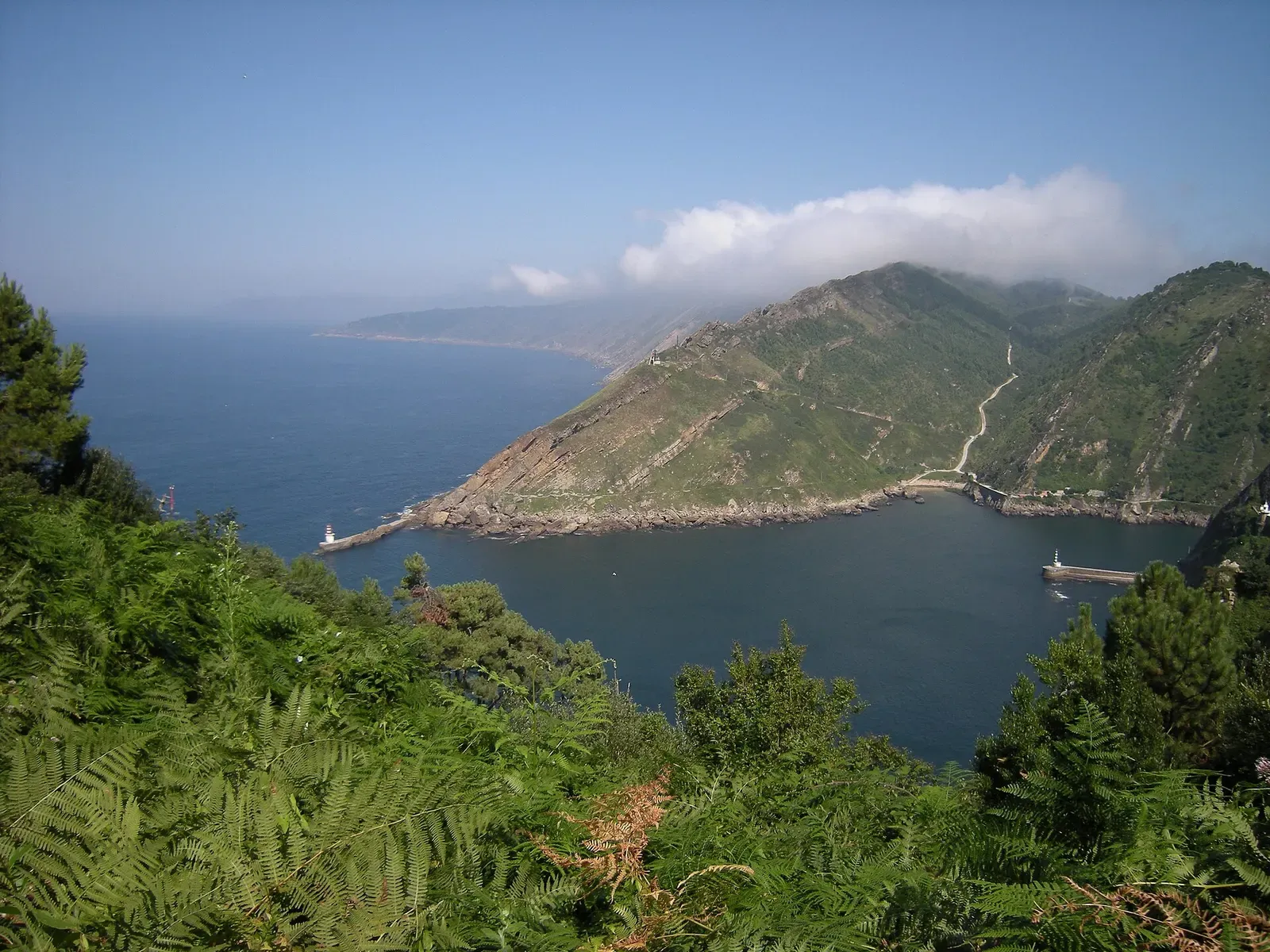
A shallow rocky area at the foot of the silver lighthouse on Mount Ulia, named for a round rock that shows at low tide. A small cave holds iron strips from the cargo of a wooden ship of the XVII or XVIII century, with untreated iron ore inside, and a channel at 15–20 m leads to the round rock. Canyons, conger eels and spider crabs fill the rest of the dive.
Also known as Redonda.
Where it is and how deep
43.3364° N, 1.9346° WApproximate position — the dashed circle shows where the site lies; your operator's briefing has the mooring.
The dive
The boat anchors at 10–12 m on a shoal with the east-west orientation typical of the Ulia dives. A few metres north and slightly east of the anchorage slab, with the wall on the right, there is a small cave. Iron strips from a ship's cargo lie in its upper part and untreated iron ore inside. It has entrances on the north and east sides, and the usual exit is a vertical chimney on the south side; it holds 3 or 4 divers at a time.
From the cave the usual route heads north over a slab to a channel at about 15–20 m, then east to the round rock that gives the site its name, which is turned before the return. The way back runs west along the slab on the south side of the rock, in shallower water, past a broken anchor near the rock. Canyons lie scattered around, including a group at about 8–10 m on the south side of the anchorage slab.
The interest lies more in the rock formations, the iron cargo and the canyons, but the nooks hold plenty of life. Conger eels and spider crabs are the most common, with octopus, cuttlefish, squat lobsters and santiaguiños, and macro life such as nudibranchs and flatworms.
Background
In this shallow area close to the coast, at the foot of the silver lighthouse, lies the cargo of a wooden ship from the XVII or XVIII century that carried iron strips, linked to the industrial activity of the forges of Gipuzkoa. Remains of the iron straps sit in the upper part of a small cave, with untreated iron ore inside it. The site takes its name from a rock that emerges at low tide and is hidden, or almost hidden, as the tide rises.
Marine life and season
- Octopus & cuttlefish
- Nudibranchs
| Jan | Feb | Mar | Apr | May | Jun | Jul | Aug | Sep | Oct | Nov | Dec |
|---|---|---|---|---|---|---|---|---|---|---|---|
| Good | Good | Good | Good | Good | Prime | Prime | Prime | Prime | Good | Good | Good |
Season follows San Sebastián & Getaria: Getaria boats sail Tuesday to Sunday from June to September and only at weekends from October to May; August has the warmest water.
Know before you go
- The cave is an overhead environment that takes 3 or 4 divers at a time; the usual exit is a vertical chimney on its south side.
Dive videos
Salida de buceo a La Redonda - Octubre 2011 · Buceo Donosti on YouTube
Sources
- Buceo Donosti - La Redonda — Buceo Donosti
- La Redonda — scubago.com
More dive sites in San Sebastián & Getaria
Wall
Astillero
A rock arch and lobster-filled caves on a deep north wall
Reef
Bajo de las Gorgonias
Large gorgonians over a rocky south face full of crustaceans
Reef
Ondartxo
A broken slab of boulders to zigzag through, with a wall to 32 m
Reef
Gran Cañón
A ravine between two slabs, from 12 m down to 22 m
An 1895 gunboat skeleton at the mouth of Pasaia
Reef
El Seno
Old anchors and cannons at the sheltered mouth of Pasaia
Reef
Cala Illurgieta
Mosaic rays in a sheltered cove used for training
Reef
Las Grietas
Merchant anchors among east-west slabs off Mount Ulia
Similar dives elsewhere
Reef · Cascais & Cabo Raso · Portugal
Furada
Large gorges that look like the Sintra hills on a clear day
Sandy harbour-side terrain and life in rocky holes
Pool-shaped sandy pockets among the rocks

A lava-reef drift back to Playa Chica