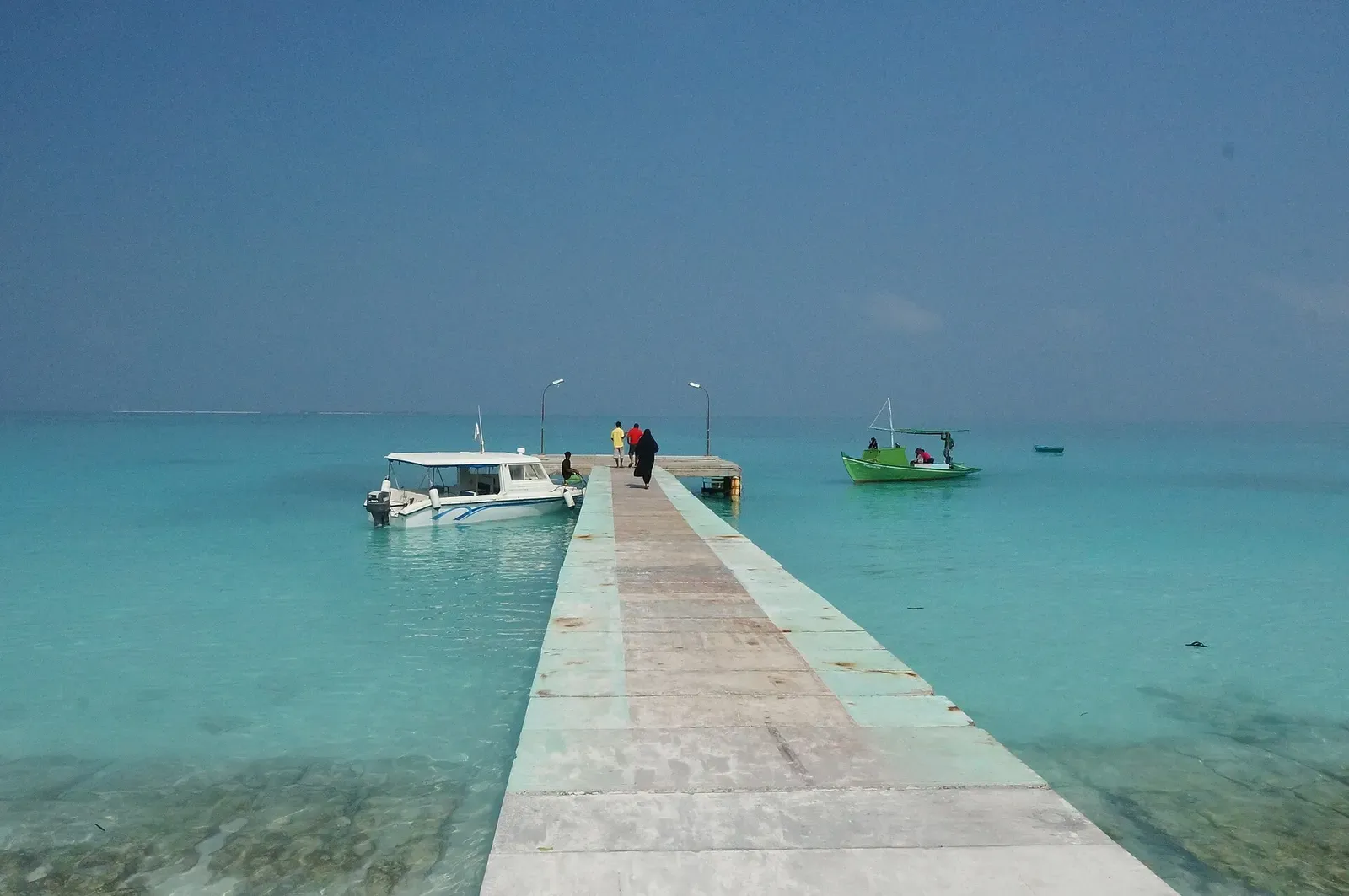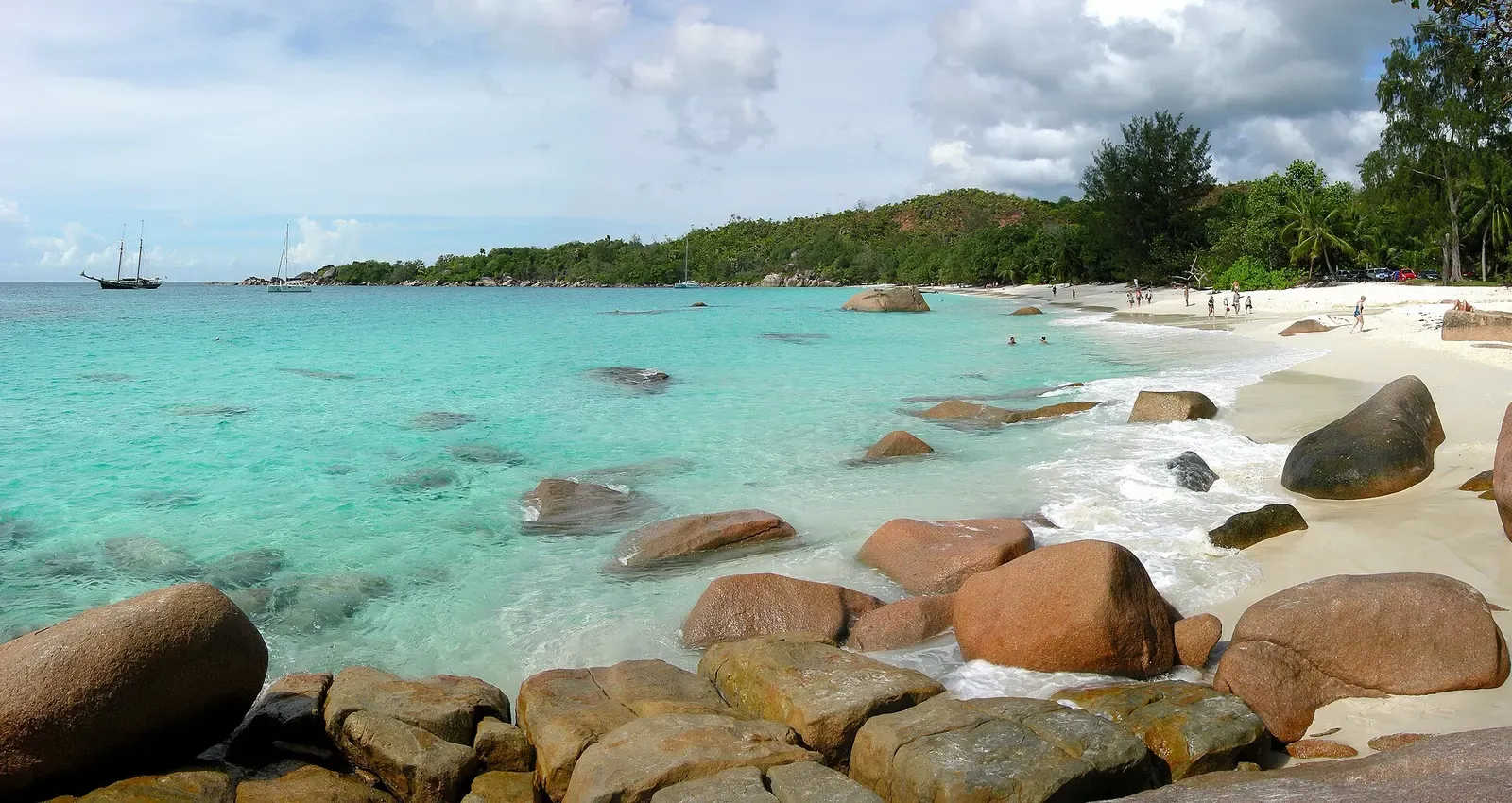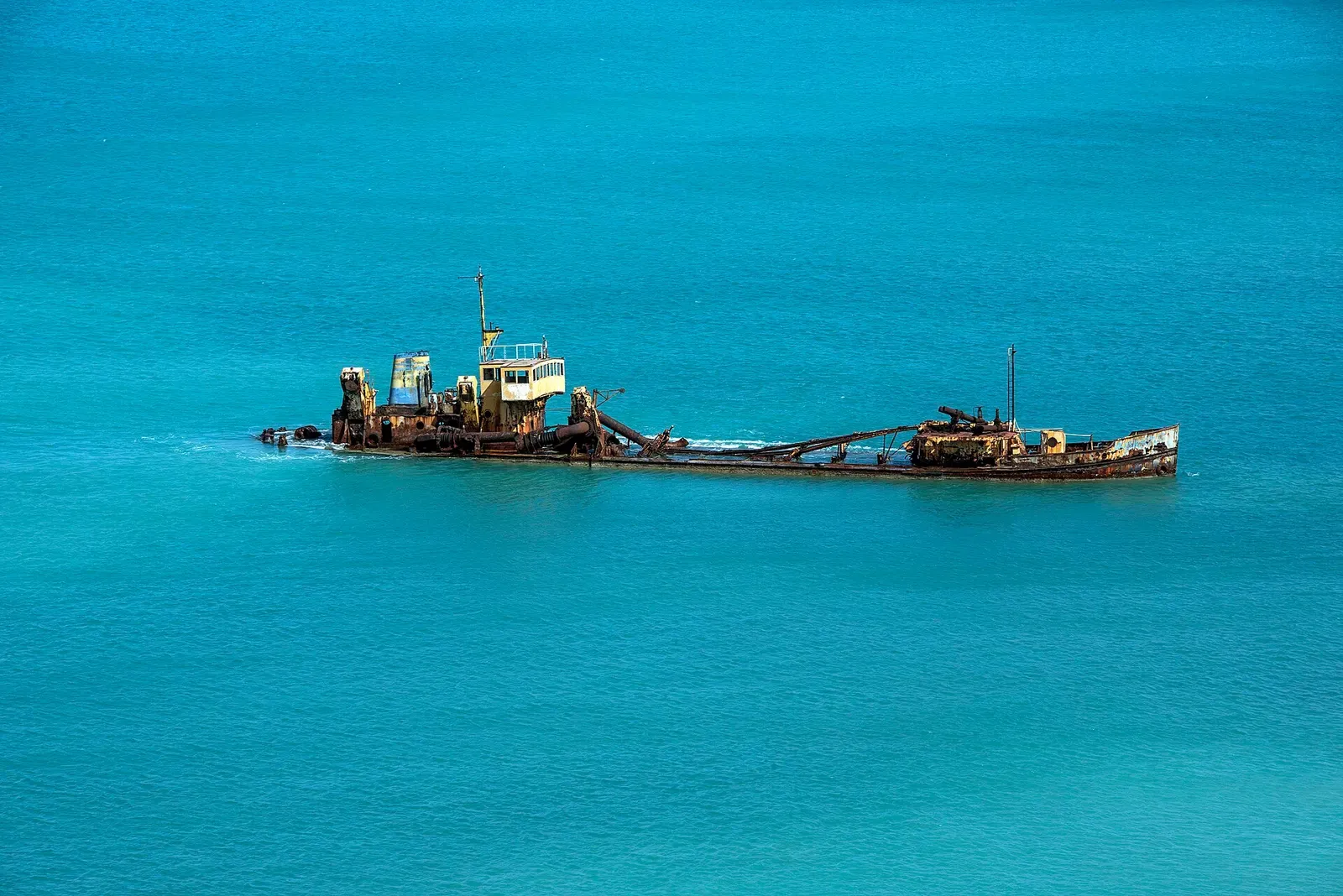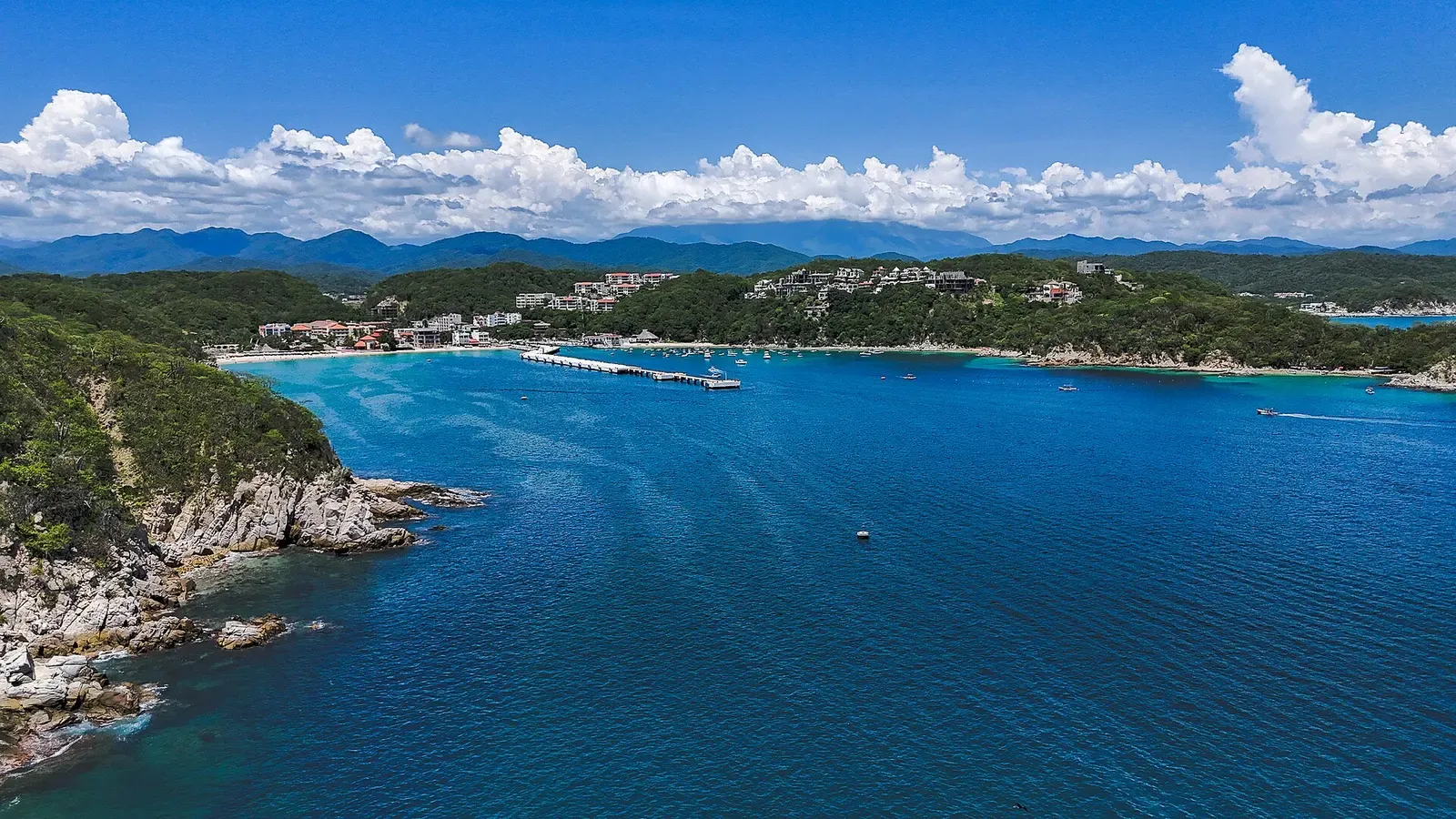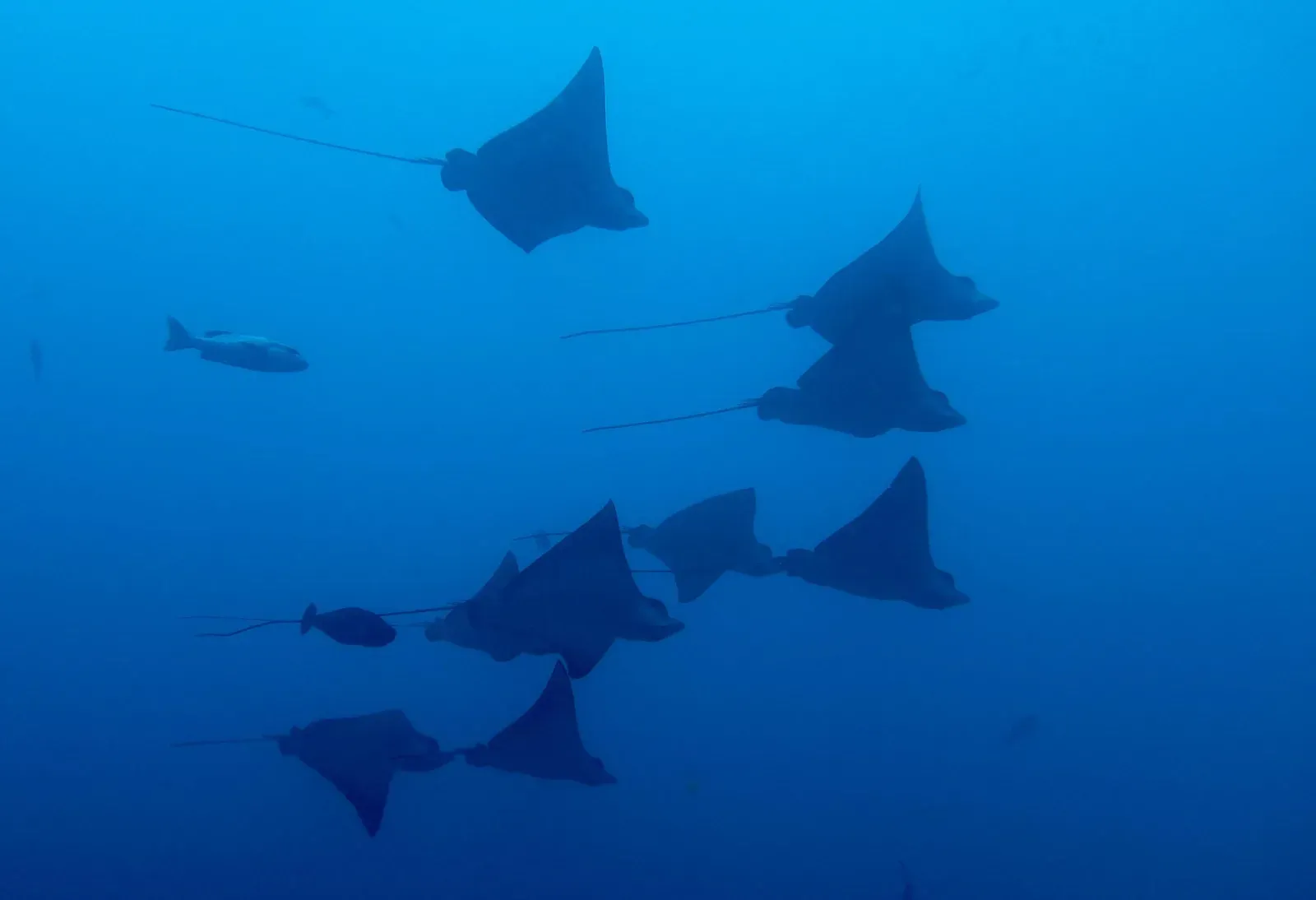
For a winter eagle ray gathering, start with Cozumel from December through March. In the Maldives and Seychelles, individual reefs, channels and wrecks have documented encounters. If a strong-current channel is beyond your experience, look at the Gregory, a shallow wreck in Sint Maarten, or the sheltered rocks of La Montosa in Huatulco. Every sighting is a possibility. We chose these dives for the specificity of the ray reports and for the range of depths and conditions they offer.
Where can you dive with eagle rays?
A report of schools at one islet tells you where groups have been seen. A winter gathering gives you a time to plan around. Use this table to pick an area, then check which of its routes fits your training and experience.
| Area | Encounter evidence | Eagle ray timing | Diving constraints |
|---|---|---|---|
| Cozumel | Winter schooling documented by local researchers. | December–March planning window | Wall drifts, with strong current possible even on shallow routes. |
| Central Maldives | Regular visitors at Fish Head, occasional passes at Maaya Thila and a channel species list at Rasdhoo. | No verified monthly peak | Advanced pinnacles and a deep channel edge. |
| Haa Atoll | Schools reported at Filladhoo Wreck and passing rays on nearby reefs. | No verified monthly peak | A shallow wreck with moderate current, plus deeper reef routes. |
| Mahé | Schools reported in the L’Ilot passage, and possible sightings at Shark Bank. | No verified monthly peak | Strong passage drift or deep offshore pinnacle. |
| Praslin and La Digue | Eagle rays among sightings on granite dives at Red Point and Ave Maria. | No verified monthly peak | Intermediate boat dives, with deep sections beyond entry-level limits. |
| Sint Maarten | Rays reported around an upturned barge and a sunken tug. | No verified monthly peak | Shallow wreck exterior or a deeper advanced wreck. |
| Huatulco | Eagle rays reported over La Montosa’s volcanic rock. | No verified monthly peak | Sheltered shallows, with surge around holes in the rock. |
Dive profiles at a glance
Depths and levels come from the site records. Depths can include reef or seabed beyond the planned route. Ask the crew about current where the record gives no details.
| Site | Recorded depth | Level | Current or other demands | Eagle ray evidence |
|---|---|---|---|---|
| San Francisco Wall | 11–15 m | Advanced | Strong current possible along the drop-off | Frequent sightings reported at the drop-off |
| Santa Rosa Wall | 15–40 m | Advanced | Unpredictable wall drift, deep training for the full profile | Sightings reported alongside the wall |
| Fish Head | 10–35 m reef | Advanced | Strong, unpredictable current. Recreational limit 30 m | Frequent visitors to the pinnacle |
| Maaya Thila | 6–30 m | Advanced | Strong, changeable current | Rays sometimes pass the pinnacle |
| Rasdhoo Channel | 22–30 m | Advanced | Moderate current along the channel edge | Included in the channel’s species list |
| Filladhoo Wreck | 5–18 m | Intermediate | Moderate current, collapsed hull | Schools reported at the wreck |
| Utheemu Reef | 25 m recorded maximum | Intermediate | Moderate current on a slope | Frequent sightings in the reef account |
| Baarah Corner | 8–30 m | Intermediate | Changeable current, Advanced Open Water for the full wall | Rays reported passing the wall |
| L'Ilot | 6–25 m | Advanced | Strong drift, extreme current possible | Schools reported in the passage |
| Shark Bank | 18–30 m | Advanced | Moderate current, offshore pinnacle | Possible encounter on a shark dive |
| Red Point | 10–20 m | Intermediate | Current not specified | Rays reported among the granite boulders |
| Ave Maria | 5–25 m | Intermediate | Current not specified, depth varies with the route | Divers have logged sightings |
| Gregory | 15 m to the sand | Beginner | Current not specified, exterior wreck circuit | Rays reported around the barge |
| The Porpoise | About 21 m at the tug, about 28 m to the sand | Advanced | Current not specified, deeper wreck profile | Rays reported visiting the wreck |
| La Montosa | 24 m maximum | Beginner on the shallow route | Sheltered rocks, with surge at the holes | Local divers report encounters |
When is eagle ray season in Cozumel?
December through March is the local planning window. Cozumel Ocean Research observes spotted eagle rays schooling in winter and lists its own citizen-science dives from December through February. Those dates describe when the programme runs. March is still in the window local dive operators report for encounters. The reason for the winter visits remains unresolved.
A regional photo-ID study documented winter sightings in the Mexican Caribbean and includes photos from both San Francisco and Santa Rosa walls off Cozumel. Much of the sampling came from photos taken when divers happened to encounter rays at popular sites. The study can tell us where and when some individuals were photographed. Predicting the odds for a week on a particular Cozumel wall would take comparable survey effort across sites and months. The paper’s evidence of site fidelity at the C-58 wreck concerns Cancún.
Leave some flexibility in a winter itinerary. Nortes, the north winds that interrupt otherwise favourable diving weather, can close the port and stop boats from going out.
Which eagle ray are you looking at?
Older accounts often use “spotted eagle ray” for similar-looking rays from different oceans. For the destinations here, start with the basin and use the animal’s features to check what you saw.
| Basin | Species | Examples in this guide |
|---|---|---|
| Atlantic and Caribbean | Atlantic spotted eagle ray (Aetobatus narinari) | Cozumel and Sint Maarten |
| Indo-Pacific | Ocellated or whitespotted eagle ray (Aetobatus ocellatus) | Maldives and Seychelles |
| Eastern Pacific | Pacific whitespotted eagle ray (Aetobatus laticeps) | Huatulco |
The school in the opening photograph is Aetobatus ocellatus in the Maldives.
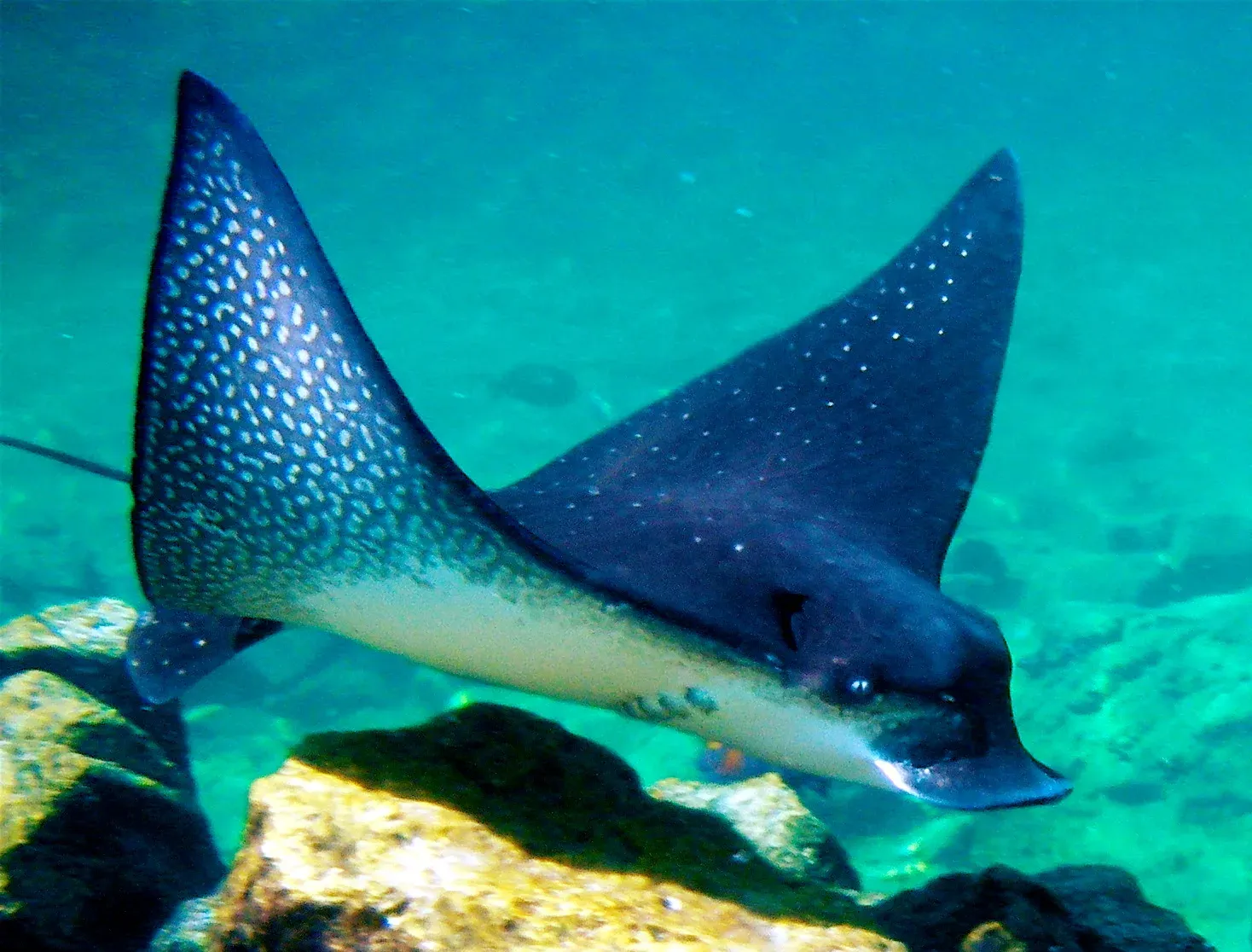
Look for a projecting snout, a spotted upper disc and a long, whip-like tail. Eagle rays have spines near the base of the tail. A manta has a pair of fleshy head lobes on either side of its broad mouth. Those lobes funnel water and plankton towards the mouth as it filter feeds. The Atlantic spotted eagle ray feeds mainly on molluscs such as clams and sea snails. When a ray is silhouetted below you, the head shape may be easier to see than the spots. Use geography as a clue and leave the species open when a photograph gives you little to go on.
Cozumel: walls and the winter gathering
Off Cozumel, Sand Dollar Sports reports winter groups at Cantarel, also called Eagle Ray Wall. It describes a strong-current dive. Scuba Du lists Cantarel and San Juan Reef on a winter trip, subject to conditions and a minimum group size.
At San Francisco Wall, eagle rays are reported at the drop-off. The recorded route is only 11–15 m (35–50 ft), but strong current can make it an advanced drift. Santa Rosa Wall starts at about the same depth and extends to 40 m (130 ft) on the full profile, with unpredictable current beside a much deeper drop. If a ray passes, keep your depth and stay with the group as it drifts.
The Maldives: thilas, channels and passing rays
In the central Maldives, Fish Head has the clearest report of regular visits among these three profiles. The reef extends to 35 m, below the Maldives’ 30 m recreational limit. Strong current can put the group in the lee of the pinnacle. Maaya Thila has a shallower crown and occasional rays. Conditions decide whether the group returns to the mooring or finishes as a drift. The fusiliers that gather on its crown after dark are a separate reason to dive there. Rasdhoo Channel is an advanced choice even with moderate current. Its route follows the channel edge at 22–30 m, with eagle rays among the wildlife recorded there.
In the northern Haa atolls, Filladhoo Wreck offers a shallower profile at 5–18 m. Its listing reports schools of eagle rays, and the collapsed deck keeps the dive on the outside of the hull. At Utheemu Reef the sand lies at about 25 m and deeper, and the record gives no minimum. At Baarah Corner, passing eagle rays are reported along the wall. The cleaning stations on its top reef are described for mantas and turtles. Plan the full 30 m wall only if your certification and current experience fit.
The central atolls’ calmer seas from December to May and Haa’s calmer, clearer January to April are useful for choosing travel dates. The Maldives manta seasons answer a different wildlife question. For eagle rays, ask which of these sites the boat can actually reach from your base.
Seychelles: granite passages and reef encounters
Off Mahé, the L’Ilot site description specifically reports schools of eagle rays. The passage can run at extreme current, even though the route begins at 6 m. Choose it for a drift suited to experienced divers. Shark Bank is an offshore pinnacle with a deeper working range. Eagle rays pass through, and the dive’s main draw is sharks.
Around Praslin and La Digue, Red Point offers granite boulders at Curieuse, while Ave Maria has canyons between boulders beneath a group of rocky islets. Both have reports of eagle rays. At Ave Maria the route through the rocks determines whether you stay on the shallow granite or descend towards 25 m. Clearer water between monsoons can improve the view on both island groups. Sightings in dive logs give you places to look, with too little information about the dives made each month to establish an eagle ray season.
Sint Maarten: a shallow wreck alternative
In Sint Maarten, the Gregory is the straightforward option for an Open Water diver. The upturned barge lies on sand at 15 m (about 50 ft). You can follow the outside of the hull and watch the water above it, where eagle rays and turtles have been reported.
The Porpoise is a separate advanced dive. The tug is at about 21 m (70 ft), with the surrounding seabed at 28.3 m (93 ft). Ask which depth the guide is planning, since a lap at the tug and a drop to the sand give you different dive profiles. The reports describe visits by rays, so plan for the wreck itself and watch for movement beyond the steel.
Huatulco: eagle rays over volcanic rock
On Mexico’s Pacific coast, Huatulco offers a different setting at La Montosa. A local dive master describes seeing a large group there on one dive. That account places the animals at the site but gives little basis for timing a trip. The shallow, sheltered volcanic rocks are the route to ask for if you’re an Open Water diver. The full site reaches 24 m (about 79 ft), and surge near holes in the rock adds a separate demand deeper on the site. Agree on the route with the crew before entering.
How to watch an eagle ray without chasing it
Stay with your guide and buddy, give the ray a clear path, and keep away from the tail. A ray crossing a wall or wreck may pass beside you if you hold your position in the water. If it swims away, let it go. Avoid feeding or touching it and follow the local wildlife briefing. On a drift, keep the group in sight when your attention turns towards open water.
If a ray passes close enough to photograph from where you are, a clear image of the spotted upper surface can help identify the individual. The Cozumel photo-ID programme explains how to submit a sighting and images for its catalogue.
For trip planning, see the area pages for Cozumel, the central Maldives, Haa Atoll, Mahé, Praslin and La Digue, Sint Maarten and Huatulco. If a wall or passage is on your shortlist, check the entry, group and pickup considerations in our drift-diving guide.