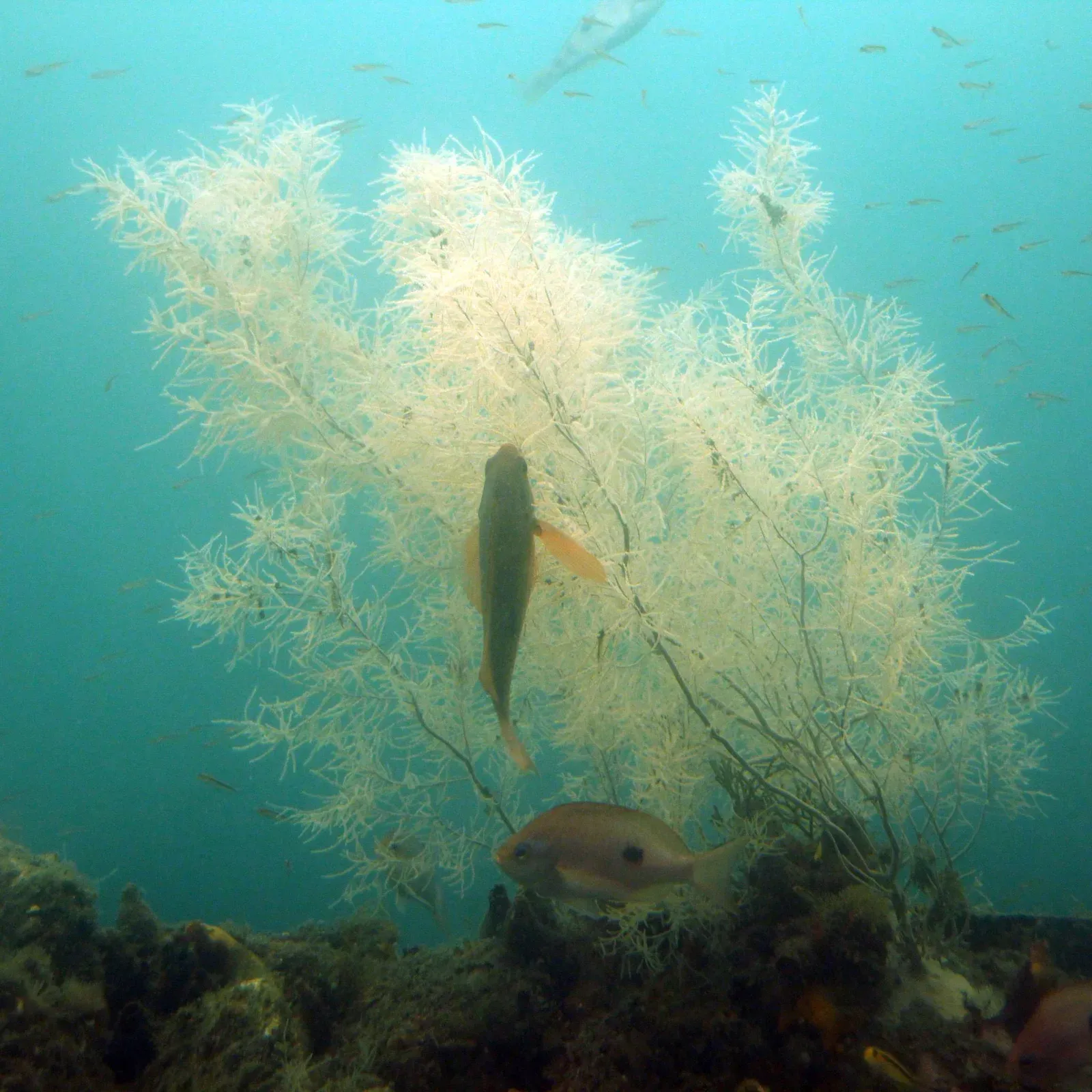
You can see black coral on a guided boat dive in Piopiotahi / Milford Sound. Look for white branches standing out from the rock. The living tissue and tiny polyps cover a dark skeleton, which gives black coral its name. Researchers collected colonies at 25–30 m (82–98 ft) inside the fiord, while an offshore survey recorded the same species at 150 m (492 ft). Rain helps explain how this coral can live so close to the surface, and salt helps explain where the shallow colonies stop.
Where can you see black coral in Milford Sound?
Start with the steep rock wall on the inner northern side of the fiord. It lies in Piopiotahi Marine Reserve, which follows the north shore from Milford Sound village to Dale Point at the Tasman Sea. The skipper chooses which walls to dive based on the day’s conditions. The marker on our Milford Sound site record locates the fiord as a whole. Browse the Fiordland area guide or open the dive map to see where Milford sits on the South Island’s southwest coast.
The 25–30 m observation comes from Sinbads Cove, elsewhere in the fiord. Researchers collected four colonies of Antipathella fiordensis there and used branches from them in a 16-hour transplant experiment at the underwater observatory in Harrison Cove, described in a 2006 paper. Later surveys conducted from 2007 to 2013 at three Milford sites found that the depth of the shallowest established colonies varied from wall to wall. Ask which sites the skipper is considering and how deep the guide usually goes to see coral at those sites. That question matters if you have a shallower certification limit or want more time to look at the wall.
Why does black coral grow this shallow?
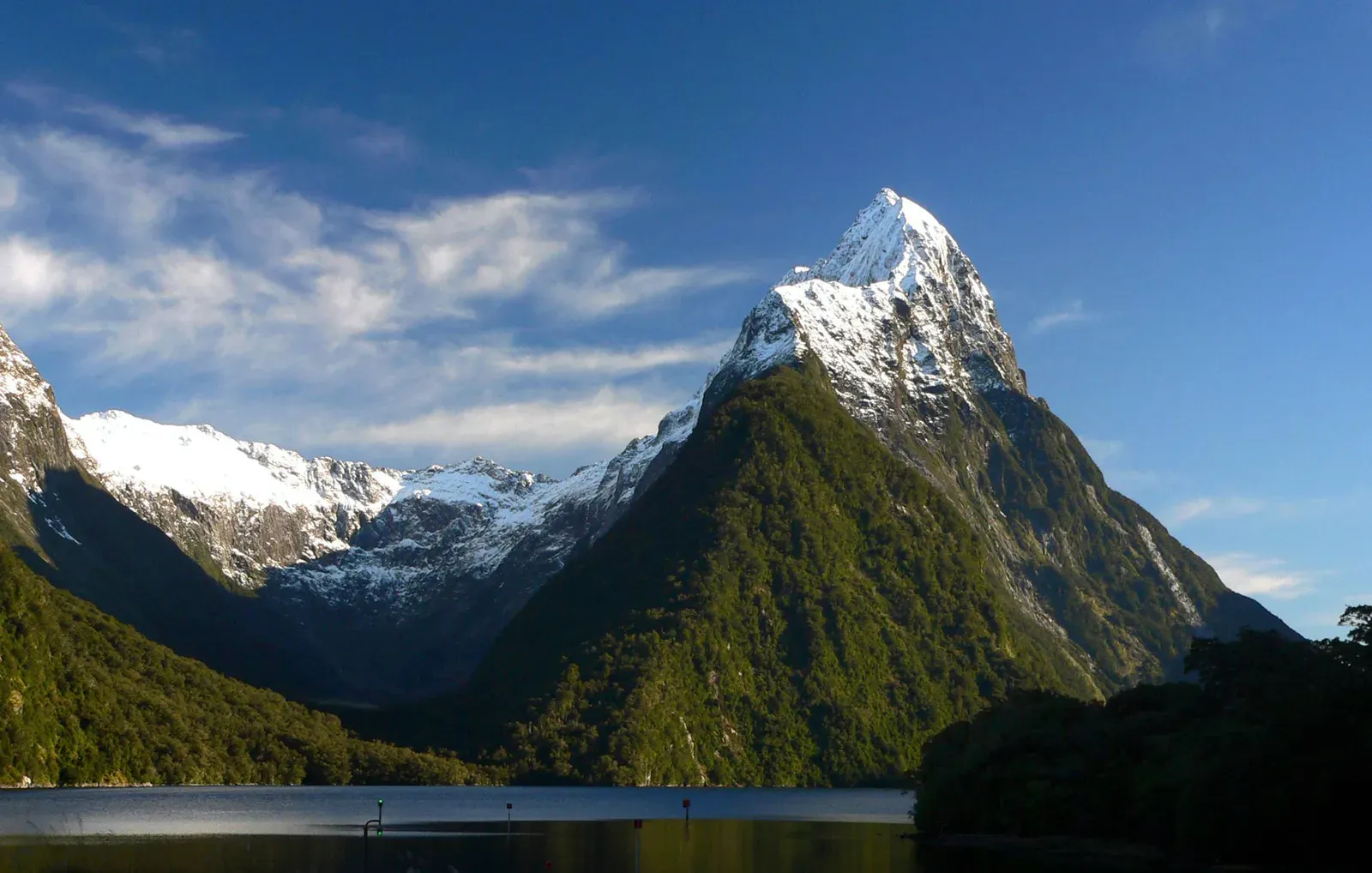
Rain runs down the forested slopes and carries tannins from the vegetation into the fiord. The runoff is less dense than seawater, so it spreads across the surface. Tannins stain this layer the colour of tea and reduce the daylight that reaches the salt water underneath. The steep sides of the fiord add shade. That leaves dim habitat along the underwater wall within reach of a scuba dive. Where salinity changes quickly between the layers, divers cross a halocline. The layered sea explains why that boundary can look blurred through a mask.
The dark surface layer also brings a limit of its own. In neighbouring Doubtful Sound, researchers found that the shallowest colonies averaged 4.4 m (14 ft) at saltier sites and 8.9 m (29 ft) farther up the fiord. Light levels did not explain that pattern, and the short transplant experiment at Milford showed that exposure to low salinity stressed the coral. The Doubtful Sound measurements describe the walls the researchers surveyed there. Milford has its own pattern of runoff and shallow colonies.
On 31 January 2025, a remotely operated vehicle climbed a transect on the glacial outwash fan off Milford Sound. The expedition recorded its first A. fiordensis on that upslope transect at 150 m. Put that observation beside Sinbads Cove and you get a sense of the habitat this one species can occupy around Milford, from a shaded wall inside the fiord to deep rock offshore.
What is a Milford Sound wall dive like?
You enter from a boat beside a rock face that continues below the waterline. The surface layer can be dark and the view can blur where it meets the sea beneath. Once through it, the water can look clearer while the rock face stays dim. A torch brings out the pale coral and the smaller animals fixed to the wall. Look between the colonies for encrusting tubeworms, sponges, soft corals, colonial sea squirts and anemones.
We rate the wall advanced and list a maximum depth of 40 m (131 ft) in the site record. Agree on your depth limit with the guide before entering and check your computer regularly on the wall, where the rock keeps falling away below you. If you’re deciding how the cold and a second dive will affect your kit choice, see our cold-water diving guide.
Piopiotahi is a no-take reserve. Fishing and collecting are prohibited. Leave shells and other natural material in place, and keep clear of the branches when you turn to look behind you. The diving care code asks divers to stay neutrally buoyant and secure trailing gear. A loose gauge or a fin tip can reach the colony before you do. The code calls for a skipper who can tend divers without anchoring, or a mooring where available, to protect the wall.
When should you book a Milford Sound dive?
We rate December to February prime for Fiordland diving conditions. Even in January and February, rain can change the plan. If the dive is the reason for the drive, leave a spare day in your itinerary so there is room to rebook if a departure moves.
From Te Anau, allow at least two hours of driving each way on State Highway 94, with extra time for stops or delays. Check live highway conditions before setting out. The guided two-dive day lists a 9 am departure from Deep Water Basin Boat Ramp and a return around 3:30 pm. Confirm when to arrive for fitting and briefing before working back to your Te Anau departure time. The charter lists a 7 mm wetsuit as standard and a drysuit option for divers already certified to use one.
