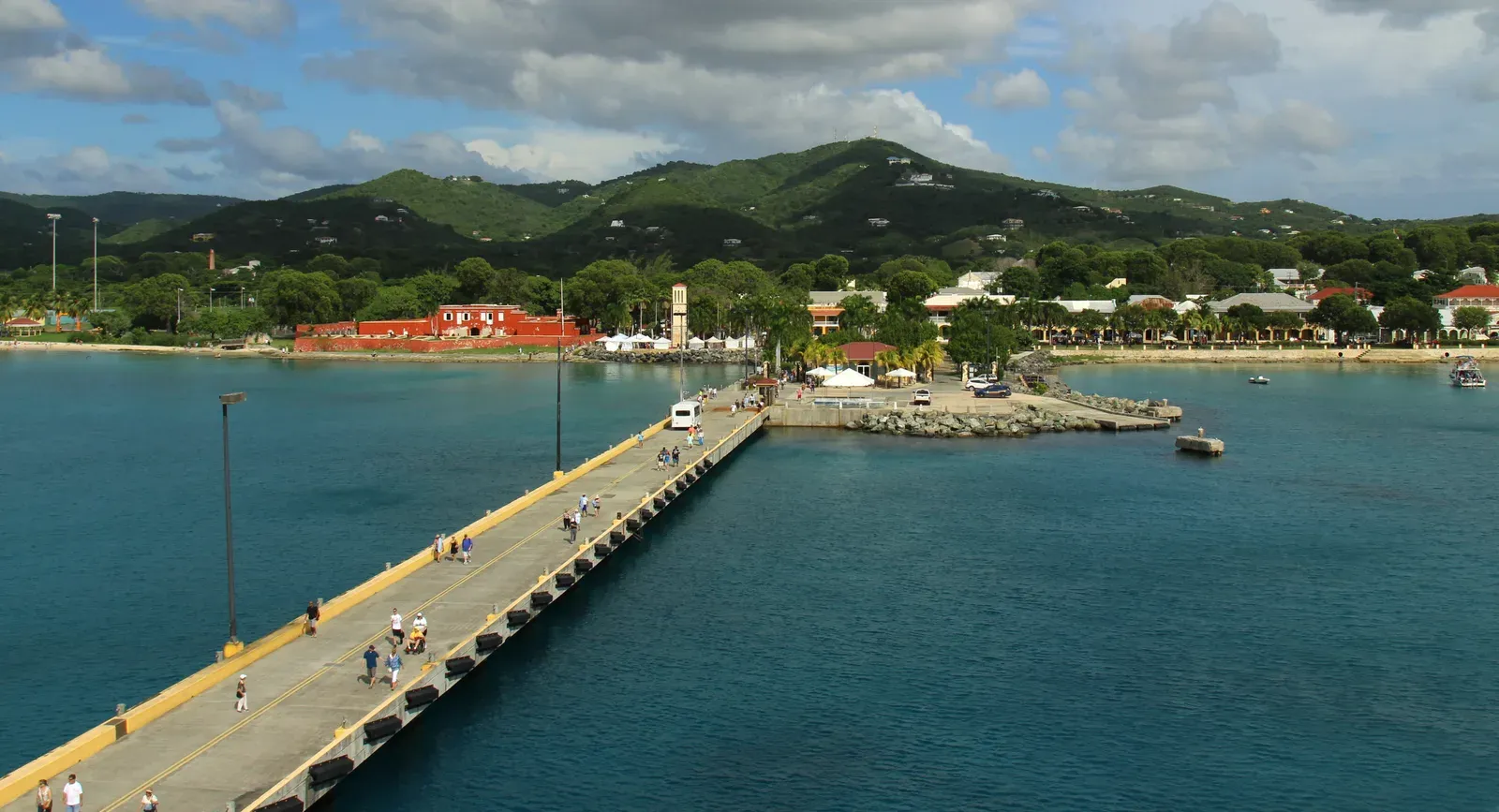
The shallow pilings at Frederiksted Pier are in about 8 m (25 ft) of water. At Cane Bay, 12 m (40 ft) is where the wall starts. Both dives begin from shore, but the conditions that decide between them are above water. A cruise call can take the pier out of the day’s plans even when the west end looks calm. Swell can make the Cane Bay entry and exit hard work even when the wall itself would suit your group.
| Site | Approach | Depth that matters | When to choose it |
|---|---|---|---|
| Frederiksted Pier | Shore beside the pier | About 8 m on the shallow route | The pier is open and your group wants a slow dive among the pilings. |
| Cane Bay Wall | Beach entry, then a swim to the buoy | About 12 m at the lip | The surf and swim suit everyone in the group, and you want reef and a drop-off. |
| Butler Bay Wrecks | West-end boat preferred. A long shore swim is possible in very calm water. | 5–24 m (15–80 ft) across the shallow wreck group | The west end is workable and the operator can choose a wreck within the group’s limits. |

Embed this diagram
<figure>
  <img src="https://reefwander.com/og/diagrams/st-croix-shore-map.svg" alt="Approximate dive-site locations in western St. Croix, with north at the top." loading="lazy">
  <figcaption>Diagram by Reefwander, licensed under CC BY 4.0.</figcaption>
</figure>
Open the interactive St. Croix dive map.
Can you dive Frederiksted Pier on a cruise day?
Pier diving is prohibited while a cruise ship is in port. The Coast Guard security zone follows the ship as it approaches and departs and also applies while it is moored. On the live cruise schedule, scroll to The Ann E. Abramson Marine Facility in Frederiksted. Open the schedule for the fiscal year that covers your trip and check both the arrival and departure columns for each ship listed that day. For January and February 2027, use the fiscal year 2027 schedule. Calls can change, and more than one ship can be listed for the same day.
If you want to dive on the same day as a call, ask a Frederiksted shop or the port when diving can resume and where you can legally enter and exit. Make the same check before booking the night dive, even if the scheduled departure is before dark. The published times describe ship movements. The shop can tell you whether the dive is running. The local pier site guide also flags a restriction when a military vessel is alongside, which is a separate check from the cruise calendar. If you’re booking a boat dive elsewhere, confirm its boarding point. Some west-end trips board at the pier even when diving under it is unavailable.
When access is confirmed, ask the shop which shore entry to use beside the pier. On the shallow route, sand runs between rows of encrusted pilings. Spend time looking along their sides and around their bases. Seahorses and frogfish are possible sightings around the pilings in about 7 m (23 ft) of water. A guided night dive gives you another chance to look closely at the same habitat with a light. Brief the turnaround before you get in. The far end reaches 27 m (90 ft), well beyond the depth of the shallow route.
What is the shore entry at Cane Bay Wall like?
The usual entry is the sandy area in front of the boat ramp at Cane Bay Beach. The white mooring buoy opposite the beach sign marks the descent in about 8 m (26 ft), roughly 90 m (100 yd) offshore. From there, sand chutes between coral gardens lead out to the lip at about 12 m. The buoy distance covers the surface leg to that marker. There is still an underwater swim to the drop-off.
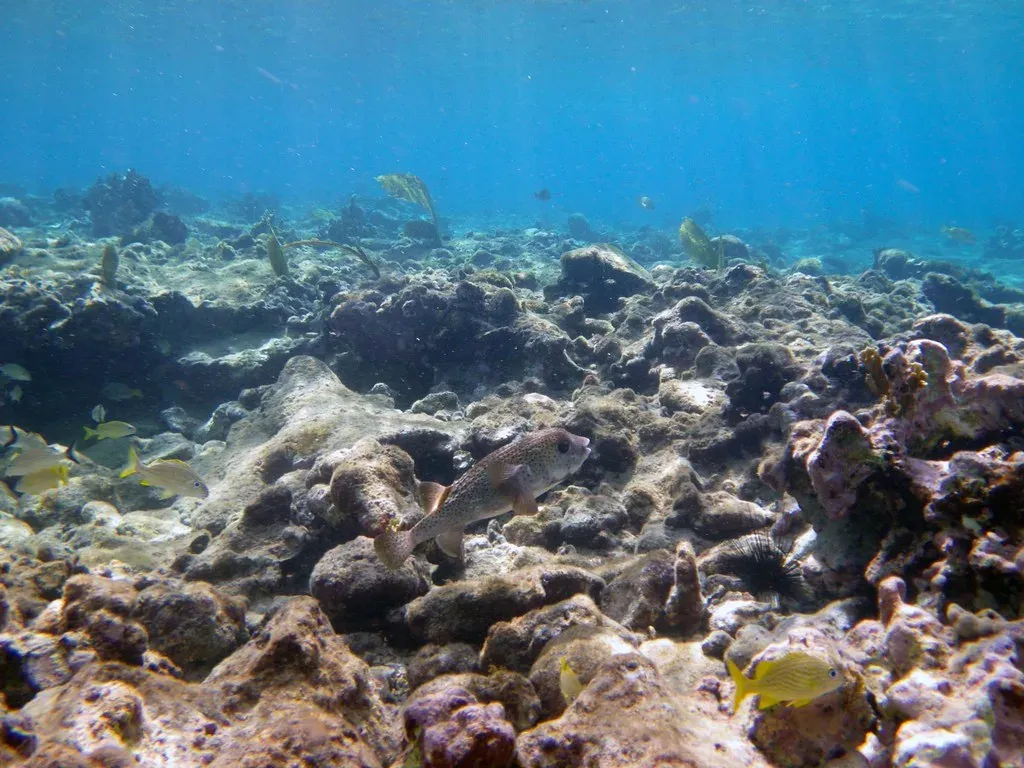
The sandy approach makes it easy to see where to start on a calm day. When swell reaches the beach, watch how the waves break at the ramp and how far the water surges across the shallows. Think about coming back through the same water in fins and a tank after the dive. If someone is already working hard at the surface or would struggle to get out in those waves, switch coasts. Check the St. Croix surf forecast and ask the dive shop across from Cane Bay Beach how the entry and exit are behaving that day.
Once you’re at the lip, the seabed drops far beyond recreational depths. Agree on the deepest point of the dive with your buddy before setting out, and keep the reef top in the plan if someone is new to walls. They can spend the dive over the coral gardens and along the edge, with the sand chutes as landmarks for the way back. The beach and the swim home still set the limits on a day when conditions are changing.
Can you reach the Butler Bay wrecks from shore?
You can on very calm days. The shallow wrecks site profile describes a strenuous 15–20 minute surface swim. Allow for the swim back in your decision, particularly if there is any current or the group has already dived that morning. We’d ask for a west-end boat if the point of the day is to see a specific wreck. It takes the long surface swim out of the dive and gives the operator a chance to match the site to the group.
The Northwind tug offers a shallow target. The top of its wheelhouse is about 5 m (15 ft) down and the tug sits in about 17 m (55 ft). The Suffolk Maid trawler lies deeper, at about 18–24 m (60–80 ft). Both belong to the shallow wreck group, and the deeper part of the Suffolk Maid lies beyond Open Water range. If you have divers with different depth limits, ask whether the boat can take you to the Northwind or a reef everyone can dive. Check the planned depth with the operator before booking.
Where should you dive when conditions change?
If a cruise call rules out the pier, check Cane Bay’s surf before driving north. Go there if the entry, exit and swim fit the whole group. If north-shore swell rules out the beach, check whether the pier is open and conditions on the west coast suit everyone. For a January or February trip, we’d keep the pier and wall days interchangeable until we’ve checked both coasts. A favourable month for St. Croix still leaves room for rough surf and changes to the port schedule.
When both shore dives are out, ask a shop about a west-end reef or a boat to Butler Bay. The operator may pick a different site according to the sea state, current and the group’s experience. If the boat is out too, keep the day free and check again the following morning. For more trips organised around beach and walk-in entries, see our guide to the best shore dives.
