San Sebastián & Getaria · Spain · Wreck · Reef
Tajo Gunboat
An 1895 gunboat skeleton at the mouth of Pasaia
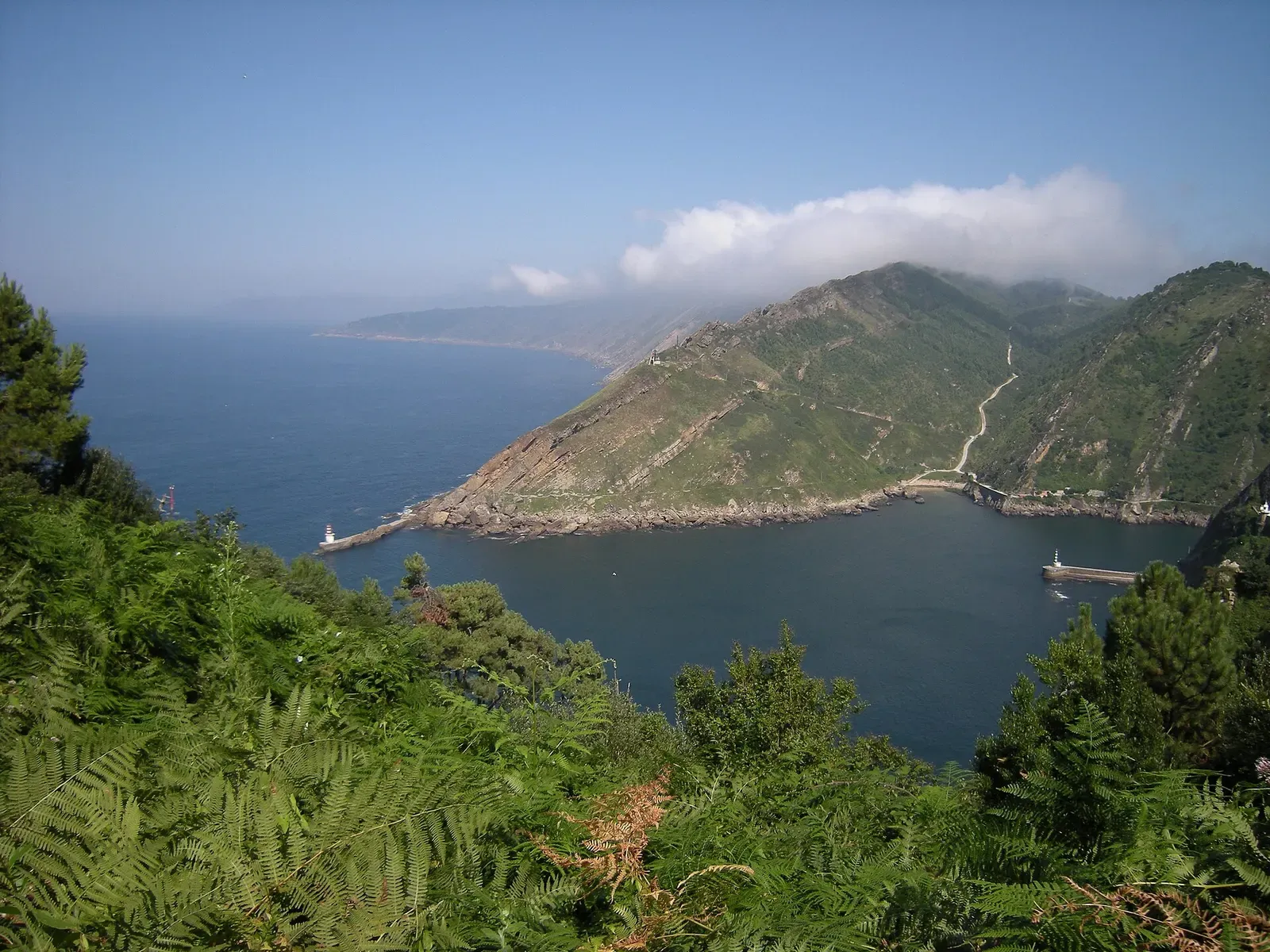
Photo: José Antonio Gil Martínez from Vigo, Spain · CC BY 2.0
The scattered remains of the Tajo, an iron gunboat of the Third Carlist War that ran onto the Sasiguchi rocks off the silver lighthouse in poor visibility on 8 June 1895. Its 24 m skeleton lies on a slab at 7–10 m, and its boiler sits in the channel at about 26 m, and the route passes the largest anchor of the inlet, from the XVIII century, and the sunken turret of the harbour entrance.
Also known as Cañonero Tajo, Tagus Gunboat.
Where it is and how deep
43.3357° N, 1.9312° WApproximate position — the dashed circle shows where the site lies; your operator's briefing has the mooring.
The dive
The boat anchors at 7–10 m, depending on the tide, right over the remains of the Tajo, and a close look shows the 24 m skeleton of the ship. The dive heads east across the slab, where pieces of the gunboat lie scattered, to the channel at about 26 m. There lie the remains of the boiler, moved from place to place by storms.
In the channel the route turns south around the end of the slab, where sole lie on the sand and spider crabs on the rock. Further south is the largest anchor of the inlet, from the XVIII century. From there divers swim north-west and up to 10–12 m to the sunken turret that once marked the outer entrance of the port channel, an area with many electric rays.
The return reverses the route east to the channel, around the slab and up again to the gunboat, heading west. Schools of fish, triggerfish and John Dory gather on the crest of the slab; conger eels, spider crabs, nudibranchs and cuttlefish live on the walls, and spider crabs and even lobsters shelter in the scrap metal and engine blocks.
The wreck
- Vessel
- Tajo
- Type
- Iron gunboat
- Length
- 24 m (79 ft)
- Sunk
- 1895
- Cause
- Ran onto the Sasiguchi rocks in poor visibility and could not be refloated
- Lies
- Scattered on a slab at 7–10 m, with the boiler in the channel at about 26 m
The Tajo was one of 10 gunboats the government built during the Third Carlist War (1872-1876). It was an iron ship with 2 cannons and a coal engine, and it patrolled the Cantabrian coast. After the war it served as a coast guard ship under the San Sebastián command. Early on the morning of 8 June 1895, returning in poor visibility, it ran onto the rocky Sasiguchi slab below the silver lighthouse at the mouth of Pasaia and sank without any possibility of being refloated.
Marine life and season
- Nudibranchs
- Octopus & cuttlefish
- Reef fish swarms
| Jan | Feb | Mar | Apr | May | Jun | Jul | Aug | Sep | Oct | Nov | Dec |
|---|---|---|---|---|---|---|---|---|---|---|---|
| Good | Good | Good | Good | Good | Prime | Prime | Prime | Prime | Good | Good | Good |
Season follows San Sebastián & Getaria: Getaria boats sail Tuesday to Sunday from June to September and only at weekends from October to May; August has the warmest water.
Questions divers ask
How deep is the Tajo gunboat wreck?+
The boat anchors over the wreck at 7–10 m depending on the tide, and the route east across the scattered remains reaches the boiler in the channel at about 26 m.
When did the Tajo gunboat sink?+
The Tajo ran onto the Sasiguchi rocks at the mouth of Pasaia in poor visibility on 8 June 1895 and could not be refloated.
Sources
- Buceo Donosti - Tajo Gunboat — Buceo Donosti
- Scubago - Tajo Gunboat — Scubago
Photo credits
- Green headland and harbour mouth of Pasaia seen from wooded Ulia slopes, with breakwater lighthouses and open sea beyond by José Antonio Gil Martínez from Vigo, Spain, CC BY 2.0, via Wikimedia Commons
More dive sites in San Sebastián & Getaria
Wall
A rock arch and lobster-filled caves on a deep north wall
Large gorgonians over a rocky south face full of crustaceans
Reef
Mosaic rays in a sheltered cove used for training
Reef
Old anchors and cannons at the sheltered mouth of Pasaia
Reef
A ravine between two slabs, from 12 m down to 22 m
Reef
A small cave holding an old wooden ship's cargo of iron
Reef
Merchant anchors among east-west slabs off Mount Ulia
Wall
A vertical wall from 20 m to 40 m, named for its lobsters
Similar dives elsewhere
A Cessna wing at nearly 30 m, colonised as a miniature reef
Four wrecks between 14 m and the 50 m floor of the ría

Nearly 152 metres of liner (500 feet), broken across the reef in under 20 m
.jpg)
A scattered cargo wreck on a reef running from 2 m to 35 m