San Sebastián & Getaria · Spain · Wall · Reef
Pikatxilla
Three wrecks and a sunfish cleaning station around one shoal
Photo: zibbi · CC BY-SA 3.0
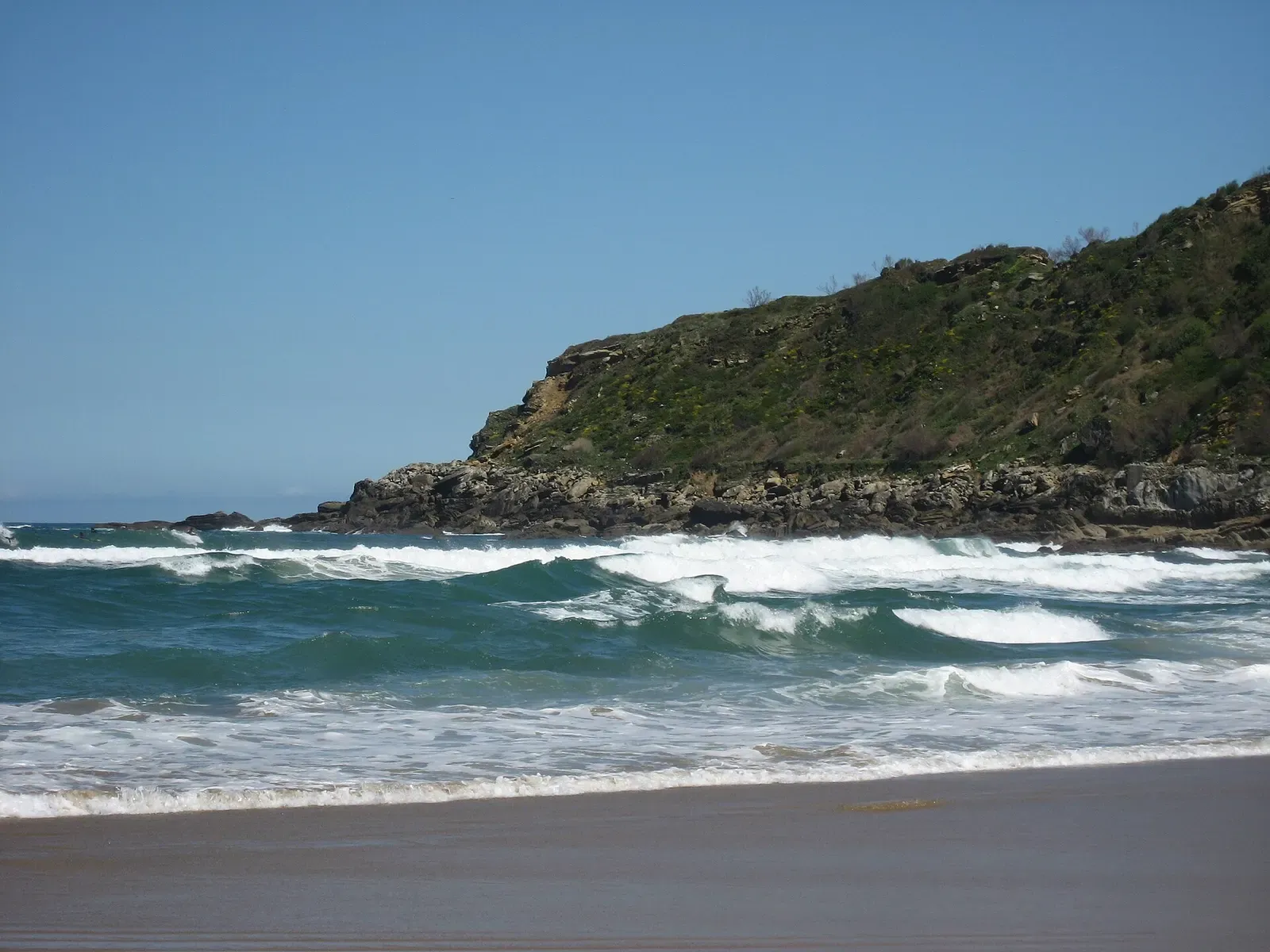
A huge shoal off the tip of Mompas, near Zurriola beach, whose ridge sits at 3–5 m and drops to 30–32 m on the north side. Its name translates as "keel cutter", and the remains of several wrecks lie around it, including a German Second World War steamship, an 18th-century barge and the fishing boat Rober. A multitude of nudibranchs live on the walls and ocean sunfish visit a cleaning station to the north.
Where it is and how deep
43.3391° N, 1.9673° WApproximate position — the dashed circle shows where the site lies; your operator's briefing has the mooring.
The dive
The boat anchors on the platform at the east end of the shoal, at 12–15 m, and divers always go down the anchor line because currents are frequent. The bajo is an east-west wall: the ridge sits at 3–5 m, the north side drops to 30–32 m and the south side to 25–26 m. The site is large enough for four different dives.
The classic route heads west along the north face with the wall on the left, in mid-water at about 15–18 m, to the remains of a German Second World War steamship whose history is unknown. Its boiler, engine block and sheets of plating show above or hide under the sand depending on the year; a conger eel and a lobster live in the boiler, and large pout patrol the area. Further north lies an 18th-century wooden barge about 16 m long, reduced to its frames and a cargo of iron strips.
A medium-level variant descends the south side to about 24 m and heads south-east to the Rober, a fishing boat that hit the wall on 18 January 1993; its engine block, tank, nets and masts hold conger eels. Another route drops the north face eastward to a passage-tunnel at about 25 m. When sunfish are seen jumping at the surface, divers cross the blue to three boulders at 28–30 m that serve as their cleaning station, then return east along the wall or the ridge.
Background
Pikatxilla has long been a black spot for shipping because its top lies very close to the surface, and many ships have struck it. The remains on it include a German steamship from the Second World War, an 18th-century merchant barge that carried iron strips from the forges for barrel making, and the txitxarro fishing boat Rober, which hit the wall at night on 18 January 1993 and sank in a few minutes. The most recent, the fishing boat Berriz Patxiku, hit the shoal in September 2017.
Marine life and season
- Nudibranchs
- Mola mola
- Octopus & cuttlefish
| Jan | Feb | Mar | Apr | May | Jun | Jul | Aug | Sep | Oct | Nov | Dec |
|---|---|---|---|---|---|---|---|---|---|---|---|
| Good | Good | Good | Good | Good | Prime | Prime | Prime | Prime | Good | Good | Good |
Season follows San Sebastián & Getaria: Getaria boats sail Tuesday to Sunday from June to September and only at weekends from October to May; August has the warmest water.
Know before you go
- Currents are frequent, so every descent and ascent is made on the anchor line.
- This is a deep dive: the north side reaches 30–32 m and bottom time needs particular care, so the wreck is approached in mid-water.
Dive videos
Salida de buceo a la Pikatxilla - Octubre 2011 · Buceo Donosti on YouTube
Questions divers ask
How deep is Pikatxilla?+
The ridge is at 3–5 m. The north side drops to 30–32 m and the south side to 25–26 m; the boat anchors on a platform at 12–15 m.
Can sunfish be seen at Pikatxilla?+
Yes. Ocean sunfish use three boulders at 28–30 m north of the anchorage as a cleaning station, and when they are seen jumping at the surface there is a chance to meet them at depth.
Sources
- Buceo Donosti - Pikatxilla — Buceo Donosti
- Scubago - Pikatxilla — Scubago
Photo credits
- Waves breaking on a sandy shore below a rocky, scrub-covered headland under a clear sky by zibbi, CC BY-SA 3.0, via Wikimedia Commons
More dive sites in San Sebastián & Getaria
Wall
A rock arch and lobster-filled caves on a deep north wall
Large gorgonians over a rocky south face full of crustaceans
Reef
Mosaic rays in a sheltered cove used for training
Reef
Old anchors and cannons at the sheltered mouth of Pasaia
Reef
A ravine between two slabs, from 12 m down to 22 m
Reef
A small cave holding an old wooden ship's cargo of iron
Reef
Merchant anchors among east-west slabs off Mount Ulia
Wall
A vertical wall from 20 m to 40 m, named for its lobsters
Similar dives elsewhere
Wall
Calçada do Gigante
Azores · Portugal
A wall of vertical rock prisms like an underwater causeway
Wall
Ilhéu do Garajau
Azores · Portugal
A reef wall that splits the islet into a sheltered side and an exposed one

A wall that reaches the surface, sloping to 25 m

A gorgonian field at 30 m, with one fan over 2 m across