
St. Eustatius · Caribbean Netherlands · Reef
Double Wreck
Ballast fused into the shape of a ship, and two anchors at 18 m
Area photo: SV Zanshin · CC BY-SA 3.0
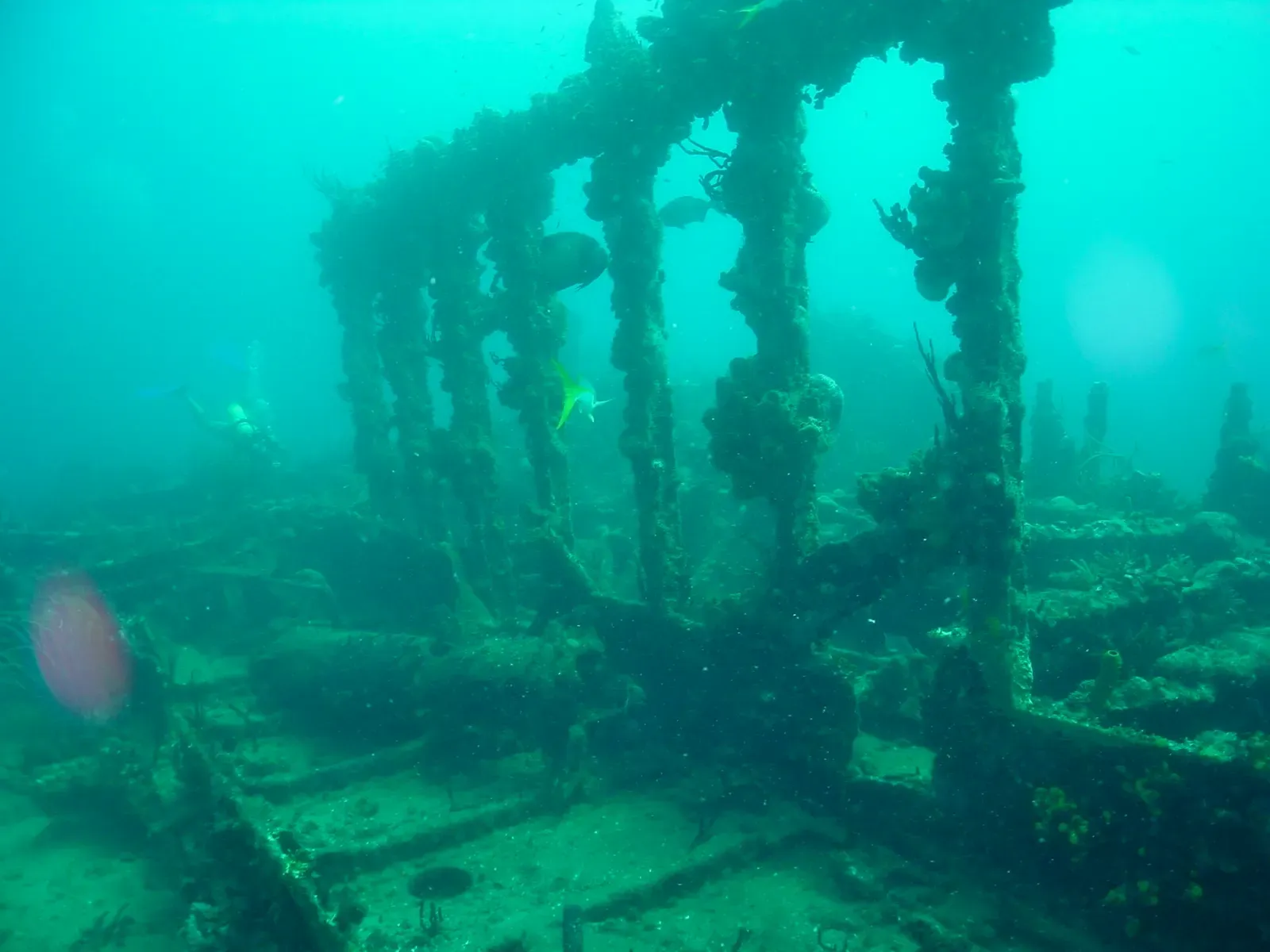
Despite the name there is no hull left here. Two ships went down on this ground close to three hundred years ago and what remains at 18 m is ballast stone fused into the outline of a ship, two large anchors, pottery shards and pieces of hand-blown bottle glass. The marine life that has taken over the rubble is why divers come back.
Where it is and how deep
17.4793° N, 62.9945° WPublished position for this site.
The dive
The mooring puts you on a site with a maximum depth of 18 m, so there is no hurry about any of it. Guides normally tour the whole site first - the ballast piles, the fused hull outline, the two large anchors that are the biggest things left - so you have the layout straight before you start looking closely at any one part of it.
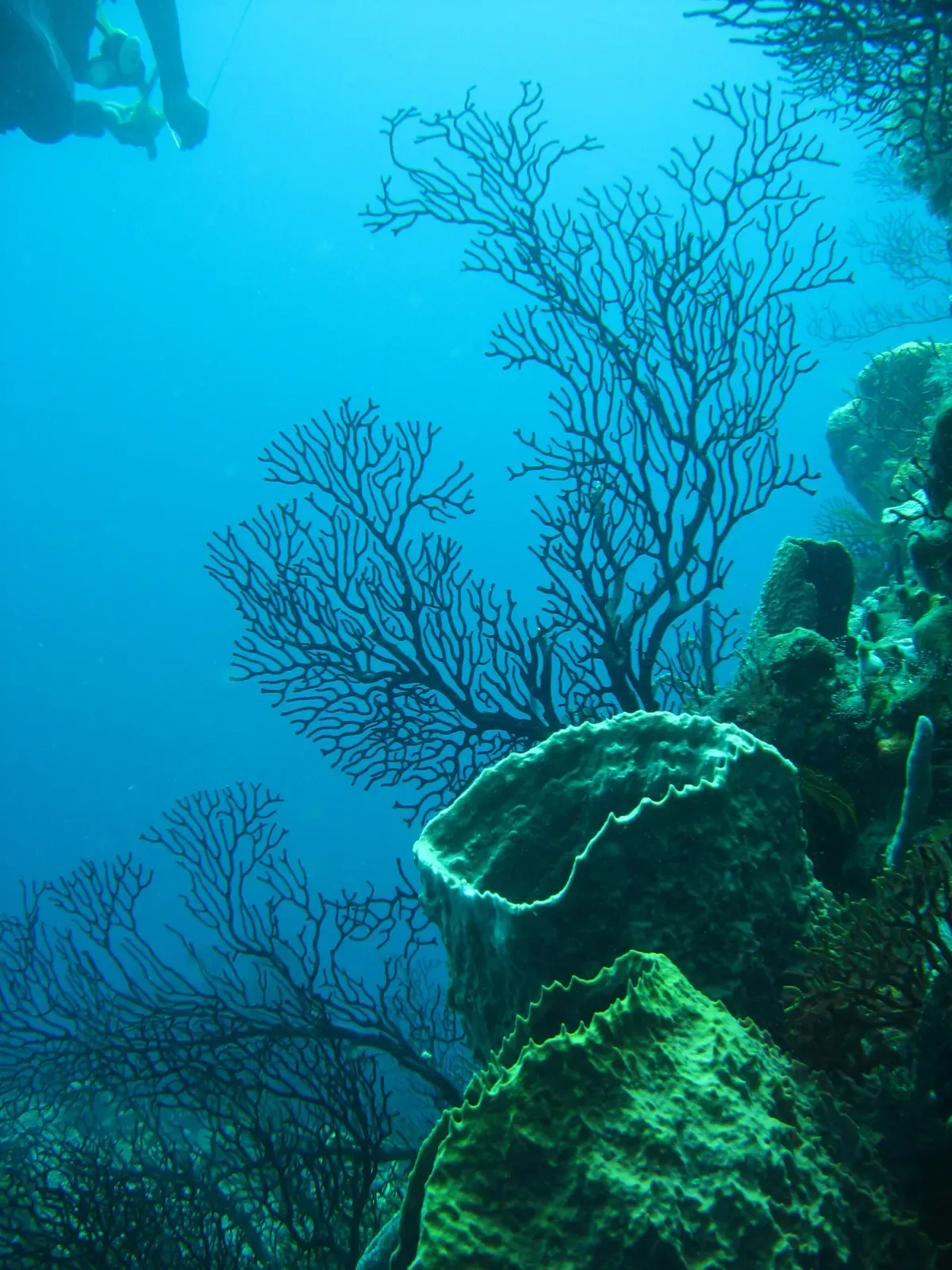
The rest of the dive is yours to spend section by section, and that is where the site pays out. Pottery shards and fragments of hand-blown bottles sit among the stones, and every inch of the rubble is worked by animals: cleaning stations running constantly, octopus wedged into the gaps, eels and squirrelfish under the ledges and a large school of French grunts hanging over the whole thing. It rewards a slow second half and a long surface interval spent working out what you saw.
Background
Two ships went down on this ground close to three hundred years ago. Their timber and ironwork are long gone; what survived is the ballast - a dozen or so stones fused together in the shape of a hull - along with two large anchors and the domestic debris of the trade, pottery shards and pieces of hand-blown bottle glass scattered through the stones.
Marine life and season
- Reef fish swarms
- Octopus & cuttlefish
| Jan | Feb | Mar | Apr | May | Jun | Jul | Aug | Sep | Oct | Nov | Dec |
|---|---|---|---|---|---|---|---|---|---|---|---|
| Prime | Prime | Prime | Prime | Good | Good | Good | Fair | Fair | Good | Good | Prime |
Season follows St. Eustatius: December to April is the drier stretch; August and September carry the hurricane peak, and diving may pause in September.
Dive videos
DIVE SITE: DOUBLE WRECK SINT EUSTATIUS · Scubaqua dive center Sint Eustatius on YouTube
Double Wreck Dive Site, Statia · Nichole Kerle on YouTube
Questions divers ask
How deep is Double Wreck?+
The maximum depth is 18 m, well inside Open Water limits, and the site is dived on a mooring in a protected stretch of coast where surface conditions are normally good. Long, slow bottom times are the point of the dive.
Is there actually a wreck to see at Double Wreck?+
Not in the usual sense. The hulls themselves are gone after roughly three centuries; what remains is a dozen or so ballast stones fused together in the outline of a ship, two large anchors, pottery shards and pieces of hand-blown bottle glass, all of it heavily colonised by marine life.
Sources
- Here are some more details on dive sites — Golden Rock Dive Center (archived)
- Double Wreck - Dive Site — PADI
- Dive Sites — Scubaqua
More dive sites in St. Eustatius
Reef
A coral-covered French anchor of the 1750s, hooked into the reef
Reef
Barracuda over a volcanic mini-wall, in groups of five to twenty
Reef
A small coral island with a vertical wall, to 19 m
Muck & macro
Seventeenth-century Dutch beads in the sand at 17 m
Wreck
A 100 m cable layer with a 40 m cable corridor through her hull
Wreck
A 52 m Taiwanese trawler, top at 15 m and seabed at 27 m
Wall
An almost vertical drop at the island's southern tip
Wall
Steep lava flows and narrow cracks dropping past 40 m
Similar dives elsewhere
From 1.5 m to 18 m over coral, boulders and sand
Overhangs and a gentle slope in 6 to 15 m off Cooper Island
Night dives for lobsters, crabs and octopus after sunset


Boulders down to sand at 23 m, elkhorn coral in the shallows