
St. Eustatius · Caribbean Netherlands · Wall
Grand Canyon
Steep lava flows and narrow cracks dropping past 40 m
Area photo: SV Zanshin · CC BY-SA 3.0
A deep wall on the submerged slopes of the volcano at the south end of the island, dived past 40 m. Steep lava flows drop away into narrow cracks, deep-sea fans cover the rock at depth, and pelagic fish work the blue water off the face. It sits inside the marine reserve and is run as an advanced dive.
Where it is and how deep
17.4590° N, 62.9752° WPublished position for this site.
The dive
This is the submerged flank of the volcano rather than a reef. Lava flows run down the slope steeply and break into narrow cracks, and the profile keeps going past 40 m, so the dive is planned around depth from the moment you leave the surface. Scubaqua lists it as an advanced site and PADI records it as lying inside a marine reserve.
The deep part is short by definition. Down on the face the rock carries deep-sea fan coverage, and the cracks between the flows are the structure worth following along rather than into. Pelagic fish pass off the wall in open water, so the outside is worth as much attention as the rock, and the dive finishes by working back up the slope with plenty of gas in reserve.
Marine life and season
The sources we used don't single out particular species here.
| Jan | Feb | Mar | Apr | May | Jun | Jul | Aug | Sep | Oct | Nov | Dec |
|---|---|---|---|---|---|---|---|---|---|---|---|
| Prime | Prime | Prime | Prime | Good | Good | Good | Fair | Fair | Good | Good | Prime |
Season follows St. Eustatius: December to April is the drier stretch; August and September carry the hurricane peak, and diving may pause in September.
Questions divers ask
How deep is Grand Canyon on Statia?+
Scubaqua lists the site at 40 m and beyond on the submerged volcano slope, which is why it is run as an advanced dive rather than a general reef stop.
Sources
- St. Eustatius Dive Sites — Scubaqua
- Grand Canyon - Dive Site — PADI
More dive sites in St. Eustatius
Reef
A coral-grown lava labyrinth in 10 to 17 m of water
Muck & macro
Seventeenth-century Dutch beads in the sand at 17 m
Reef
Coral-covered lava bombs standing out of white sand at 16 m
Wall
Fan-covered vertical walls and creole wrasse past 40 m
Wall
An almost vertical drop at the island's southern tip
Reef
A small coral island with a vertical wall, to 19 m
Reef
Ballast, cannon, anchors and yellow Dutch bricks at 19 m
Reef
Ballast fused into the shape of a ship, and two anchors at 18 m
Similar dives elsewhere

A coral wall to 42 m with turtles and sharks

Elkhorn and pillar coral on a bank above a deep reef drop
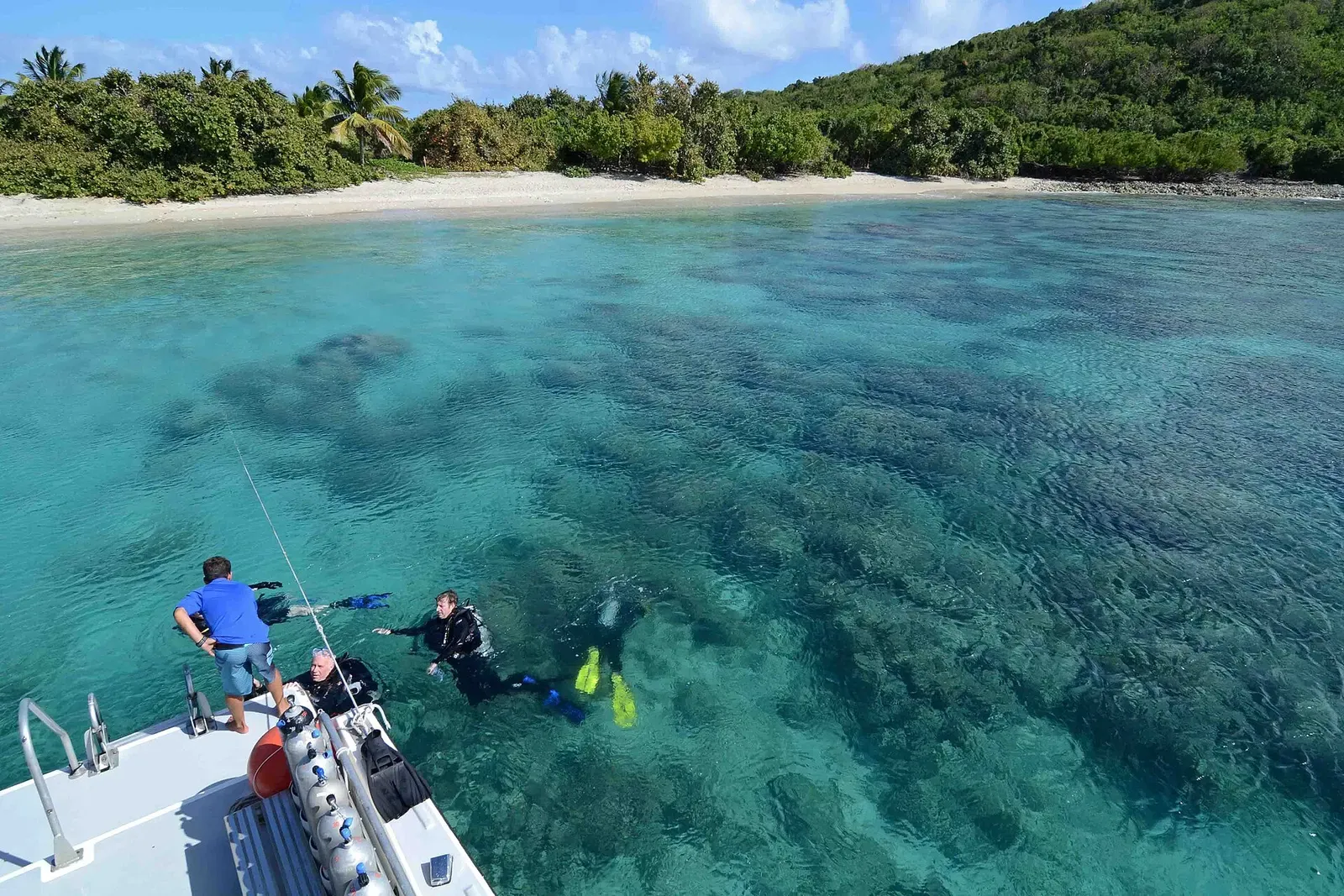
Culebra's deep exception: a coral wall to 37 m (120 ft)
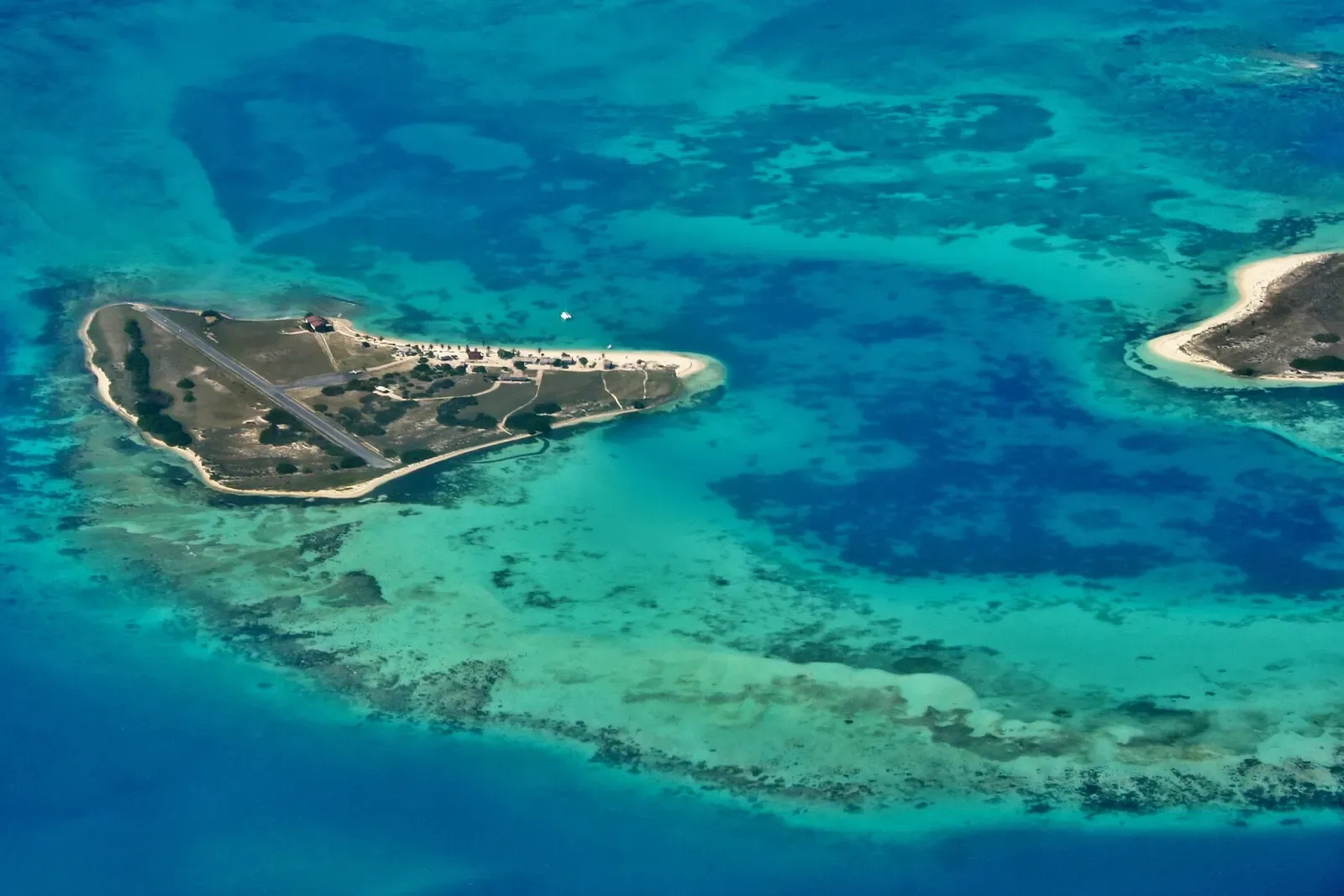

A vertical coral wall dropping to 43 m