
Big Rock is one of the busiest sites on Utila's south side, dived by certified divers and students alike. A large sandy patch runs from about 4.6 metres down to roughly 39 metres alongside a wall, and the sand is the draw: garden eels carpet it, and among them sits what is probably the largest seahorse on the island, out in the open between 18 and 24 metres.
Where it is and how deep
16.0704° N, 86.9452° WPublished position for this site.
The dive
The site is a wall dive with a large sandy patch beside it, and that patch is what most dives here are built around. It runs from about 4.6 metres all the way down to roughly 39 metres, so you can pick your depth: students work the shallow end, while divers after the seahorse drop into the 18 to 24 metre band and swim the sand slowly.
Down there the bottom is covered in garden eels, in numbers large enough to hide what you are looking for. Somewhere among them, sitting out in the open rather than tucked into a crack, is probably the largest seahorse on Utila. Hover, stay off the sand, and let the eels settle rather than driving them back into their burrows; it usually takes a slow pass or two before the seahorse resolves out of the background.
Come back up along the wall for the rest of the dive. Because this is a busy site with a genuinely shallow end, there is no need to hurry the ascent - the top of the sand at about 4.6 metres makes an easy place to finish, and the wall gives you something to look at through the safety stop while the rest of the group works its way up.
Marine life and season
- Macro critters
| Jan | Feb | Mar | Apr | May | Jun | Jul | Aug | Sep | Oct | Nov | Dec |
|---|---|---|---|---|---|---|---|---|---|---|---|
| Good | Good | Prime | Prime | Prime | Prime | Prime | Prime | Fair | Fair | Good | Good |
Season follows Utila: March–August offers the calmest, driest conditions and the best whale shark odds; October–January is rainier with reduced visibility.
Questions divers ask
Where is the seahorse at Big Rock?+
It sits out in the open on the sand between 18 and 24 metres, hidden by the sheer number of garden eels around it rather than by cover. Finding it usually takes a slow, low pass over that band rather than a search of the reef itself.
Sources
- Big Rock - Utila — Scubago
More dive sites in Utila
Wreck
A 2021 light-plane wreck flat on the sand at 24 m
Seamount
Utila's blue-water seamount, with whale sharks passing over
Wall
A drop-off dive over one of Utila's coral nurseries
Wall
Near-vertical face of tube sponges, sea fans and black coral
Coral garden
Bioluminescent glow after dark gave this reef its ghost name
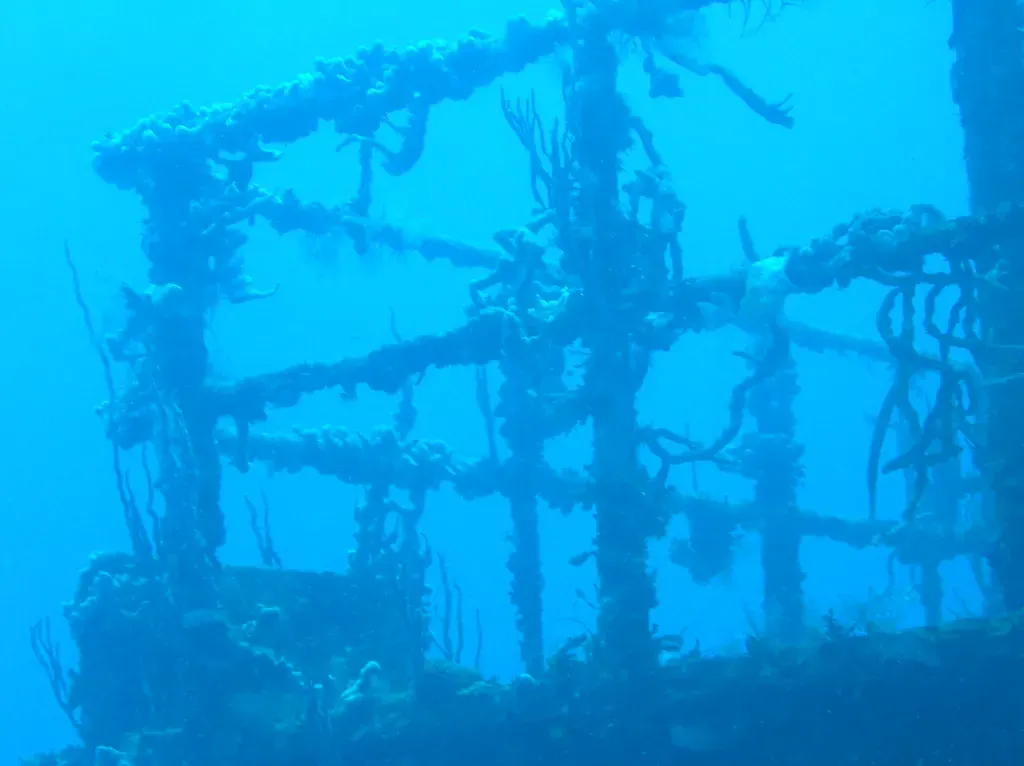
A 1998 artificial-reef wreck dived for its critters
Wall
Swim-throughs and overhangs on a wall to 21 metres
Sand slope
A sand break through the reef, beach to past 30 metres
Similar dives elsewhere

A sand chute from 15 m to a coral ledge at 30 m

Sand chutes to the wall, plus a small wreck on the sand
Wall top at 15 m with a lobster-covered sand flat at 21 m

Garden eels on the sand, then a wall that falls past 914 m (3,000 ft)