Half Moon Caye Wall runs off the south-east corner of Lighthouse Reef Atoll, where sand flats at about 15 metres give way to a face that drops past 914 metres (3,000 feet). Belize Audubon rates it one of the country's most desirable dive sites for the density and diversity of both corals and fish, and it sits inside Belize's oldest protected area.
Where it is and how deep
17.2047° N, 87.5364° WApproximate position — the dashed circle shows where the site lies; your operator's briefing has the mooring.
The dive
Boats tie to one of the permanent mooring buoys set over the main dive sites, so there is no anchoring and no hunting for a shot line. You drop onto sand flats at about 15 metres, where a large colony of garden eels stands out of the bottom and conches lie scattered across it. Behind the sand the reef builds into boulder and domed corals that come back up to within 6 metres of the surface, cut by tunnels that run through to the ocean side of the reef.
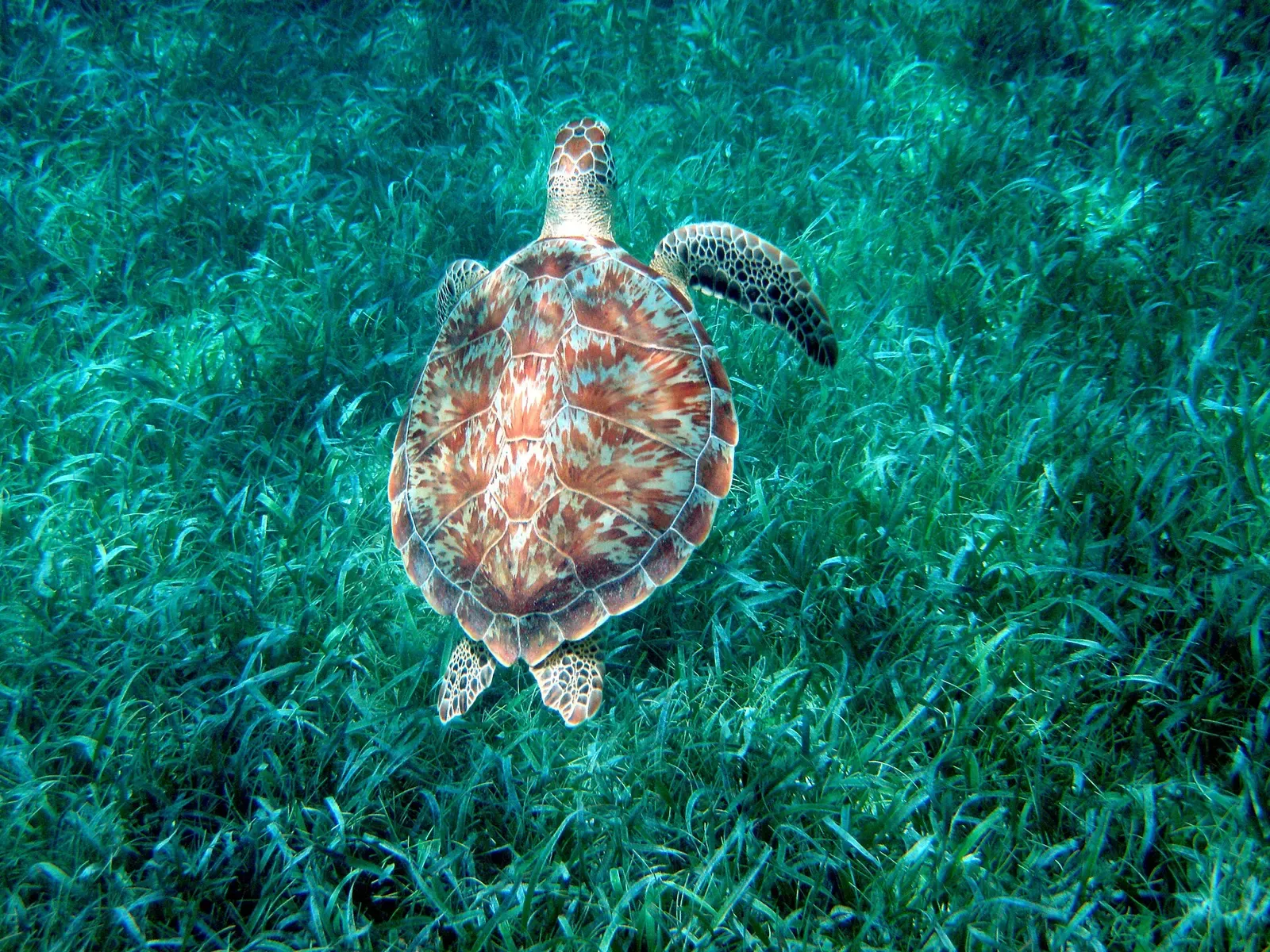
Those tunnels open onto the wall, which falls past 914 m (3,000 ft) into open water; from there the dive is a matter of choosing a depth and working along the face before turning back over the shallow coral. Snappers, yellowfin grouper and large black groupers hold along the edge, red banded coral shrimp and toadfish sit in the recesses, and green and hawksbill turtles and Caribbean reef sharks pass through. Belize Audubon rates the site among the country's most desirable for the density and diversity of both corals and fish.
Background
Half Moon Caye was the first nature reserve established in Belize under the National Park Systems Act, in 1981, and the caye and its surrounding waters have been managed as a natural monument since. In 1996 it was folded into the Belize Barrier Reef Reserve System, the UNESCO World Heritage Site that covers the country's barrier reef and atolls. Loggerhead, hawksbill and green turtles nest on the caye from May to November.
Marine life and season
- Sea turtles
- Reef sharks
- Groupers
- Macro critters
| Jan | Feb | Mar | Apr | May | Jun | Jul | Aug | Sep | Oct | Nov | Dec |
|---|---|---|---|---|---|---|---|---|---|---|---|
| Fair | Fair | Prime | Prime | Prime | Fair | Fair | Fair | Fair | Fair | Fair | Fair |
Season follows Belize Barrier Reef: March to May is the dry season, when visibility at Turneffe can pass 30 m (100 ft); rain and northerly winds take the shine off the other months.
Know before you go
- The wall runs to over 914 m (3,000 ft), far past any recreational limit, and there is no bottom in view to judge depth against — set a maximum before you drop and watch the gauge on the face.
Photos from Half Moon Caye Wall
dronepicr · CC BY 2.0
Loopy30 · CC BY-SA 4.0
Dive videos
In the Field: Scuba Diving Belize's Half Moon Caye Wall · Sport Diver magazine on YouTube
Questions divers ask
How deep is Half Moon Caye Wall?+
Divers drop onto sand flats at about 15 metres, and the corals behind them rise back to within 6 metres of the surface. The wall itself falls past 914 metres (3,000 feet), so the depth you run on the face is a matter of the plan you set — there is no bottom in sight to judge it against.
When do turtles nest at Half Moon Caye?+
Loggerhead, hawksbill and green turtles nest on Half Moon Caye between May and November. The caye is also the first nature reserve established in Belize, declared in 1981, and forms part of the UNESCO World Heritage Belize Barrier Reef Reserve System.
Sources
- Half Moon Caye Natural Monument — Wikipedia
- Half Moon Caye Natural Monument — Belize Audubon Society
- Lighthouse Reef dive sites — Dive The World
Photo credits
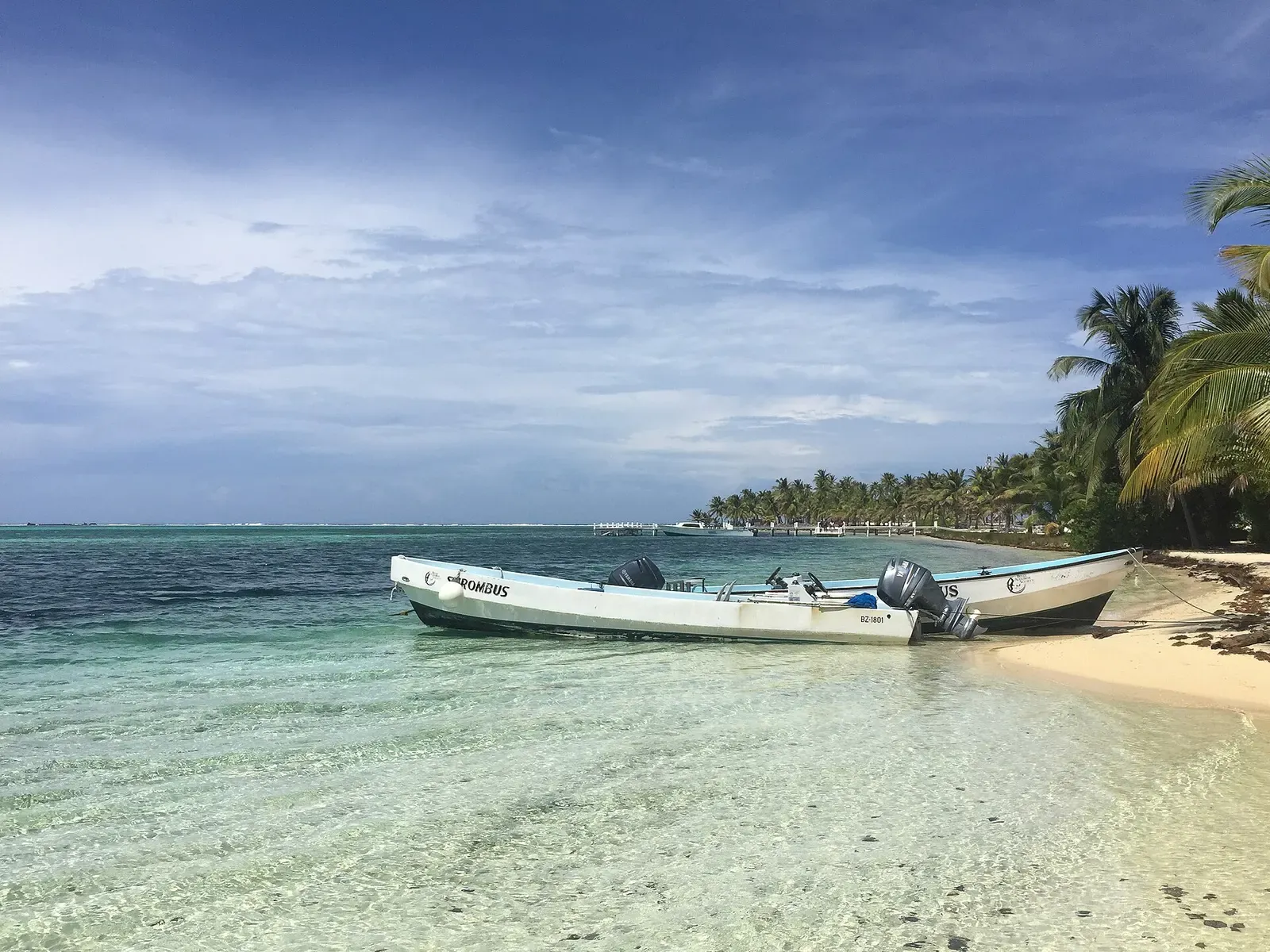
- Small boat anchored in shallow turquoise water off the sandy shore of Half Moon Caye. by dronepicr, CC BY 2.0, via Wikimedia Commons
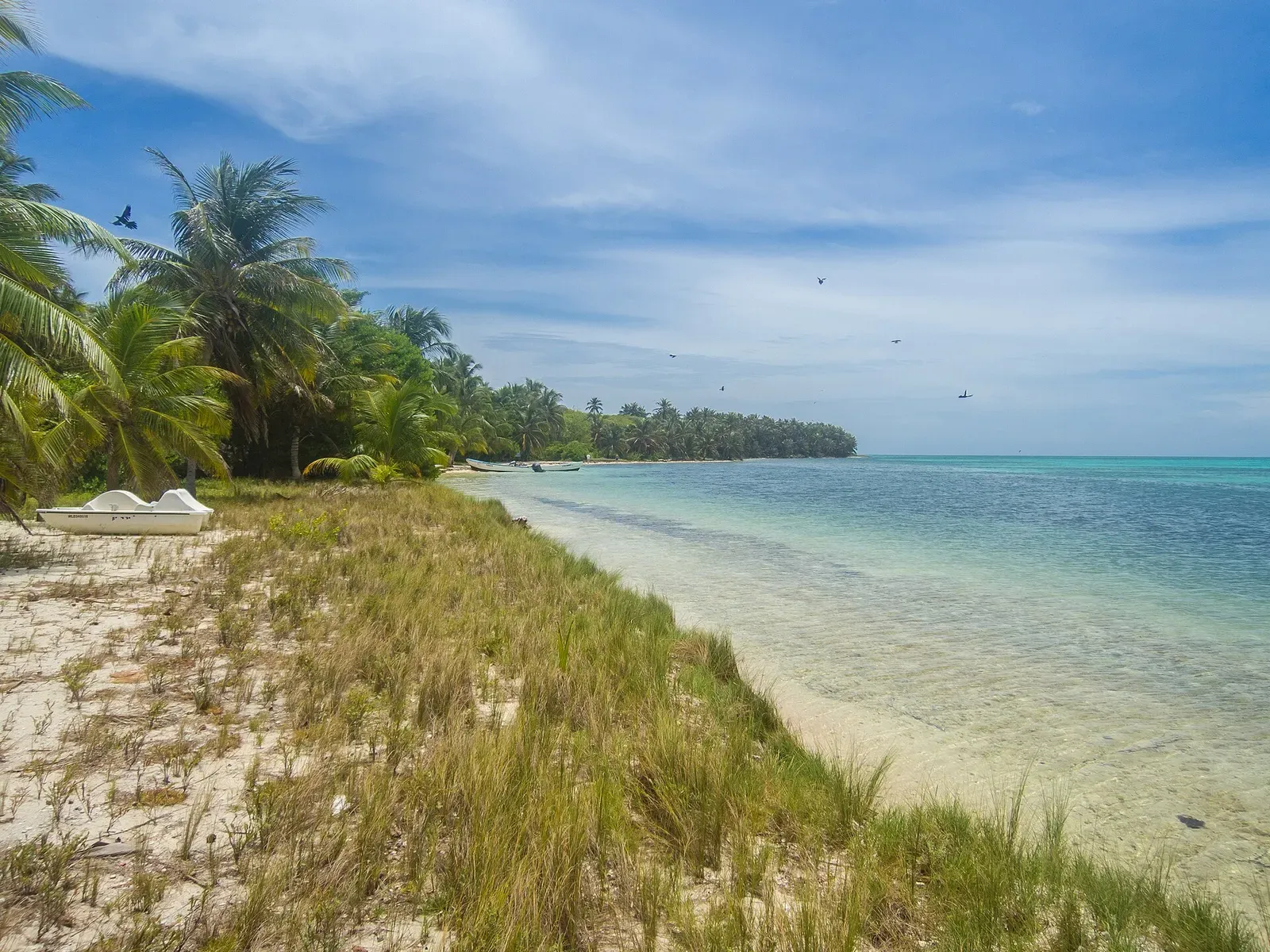
- Sandy beach spit curving along Half Moon Caye with pale reef flats beyond. by dronepicr, CC BY 2.0, via Wikimedia Commons
- Grooved brain coral head on the shallow reef flat near Half Moon Caye. by Loopy30, CC BY-SA 4.0, via Wikimedia Commons
In The Logbook
- The best wall dives in the worldWalls & drop-offs · 11 min read
More dive sites in Belize Barrier Reef
Reef
Gullies cut across a submerged spur-and-groove reef
Reef
One big coral bommie ringed by schooling bar jacks
Caribbean reef sharks and bull sharks patrolling a vertical wall
Wall
Eagle rays off a sponge-hung wall on Turneffe's east coast
Pelagic & blue water
Whale sharks feeding on snapper spawn between March and June
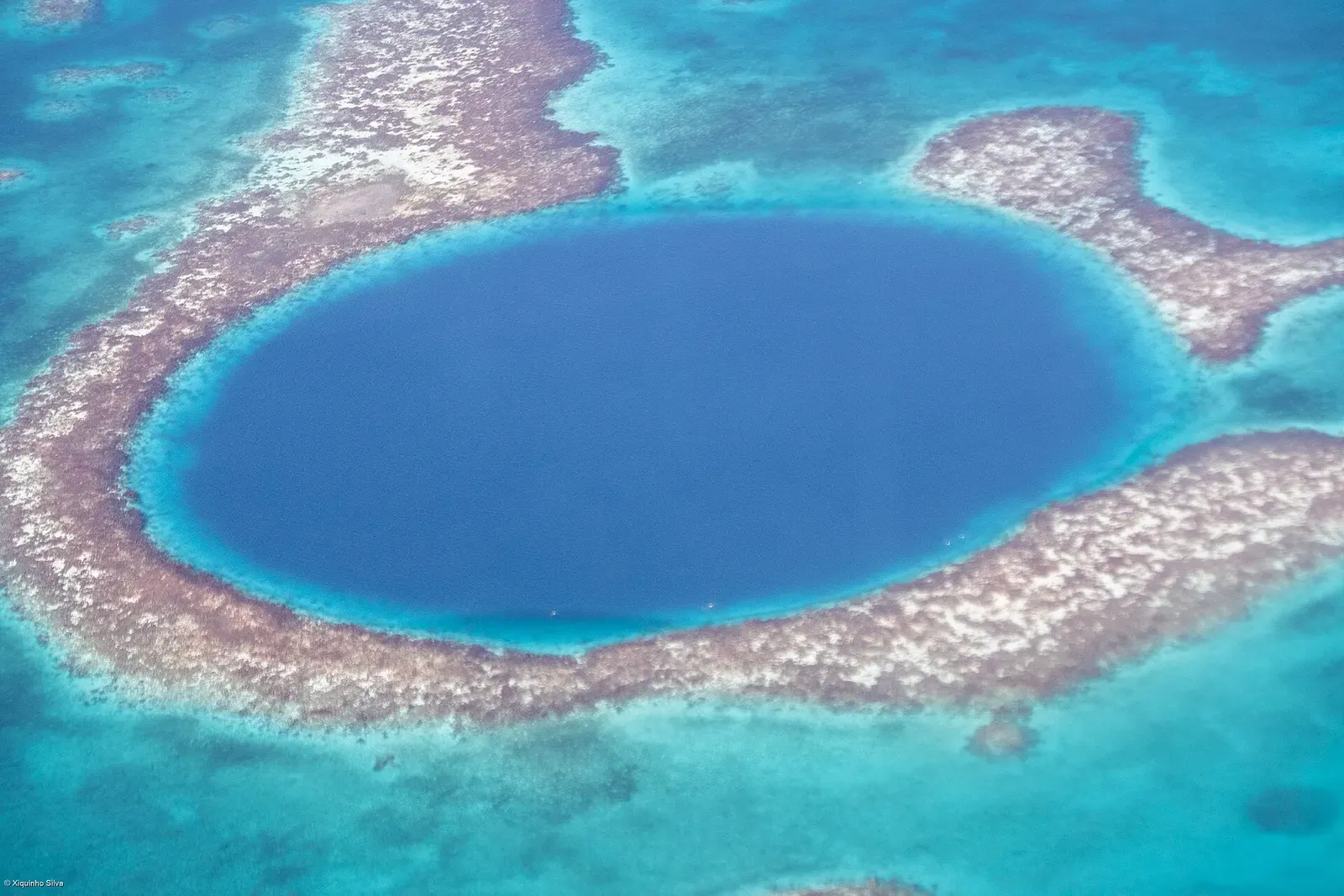
Ice-age stalactites hanging from 30 m inside a 124-metre shaft
A 9-metre reef cut, with nurse sharks and stingrays next door
Three big parrotfish species along the top of the wall
Similar dives elsewhere

Two facing walls a quarter mile apart, cut by a prehistoric river

Wall top at 15 m with a lobster-covered sand flat at 21 m

.jpg)
.jpg)

Sloping Victory Reef wall with swim-throughs out of the current
Nineteenth-century anchors lie along a wall that drops past 975 m