
Baa Atoll & Hanifaru Bay · Maldives · Drift · Wall · Reef
Maarikilu Caves
A drift from a 4 m bay onto a steep wall, mantas Jan–Apr
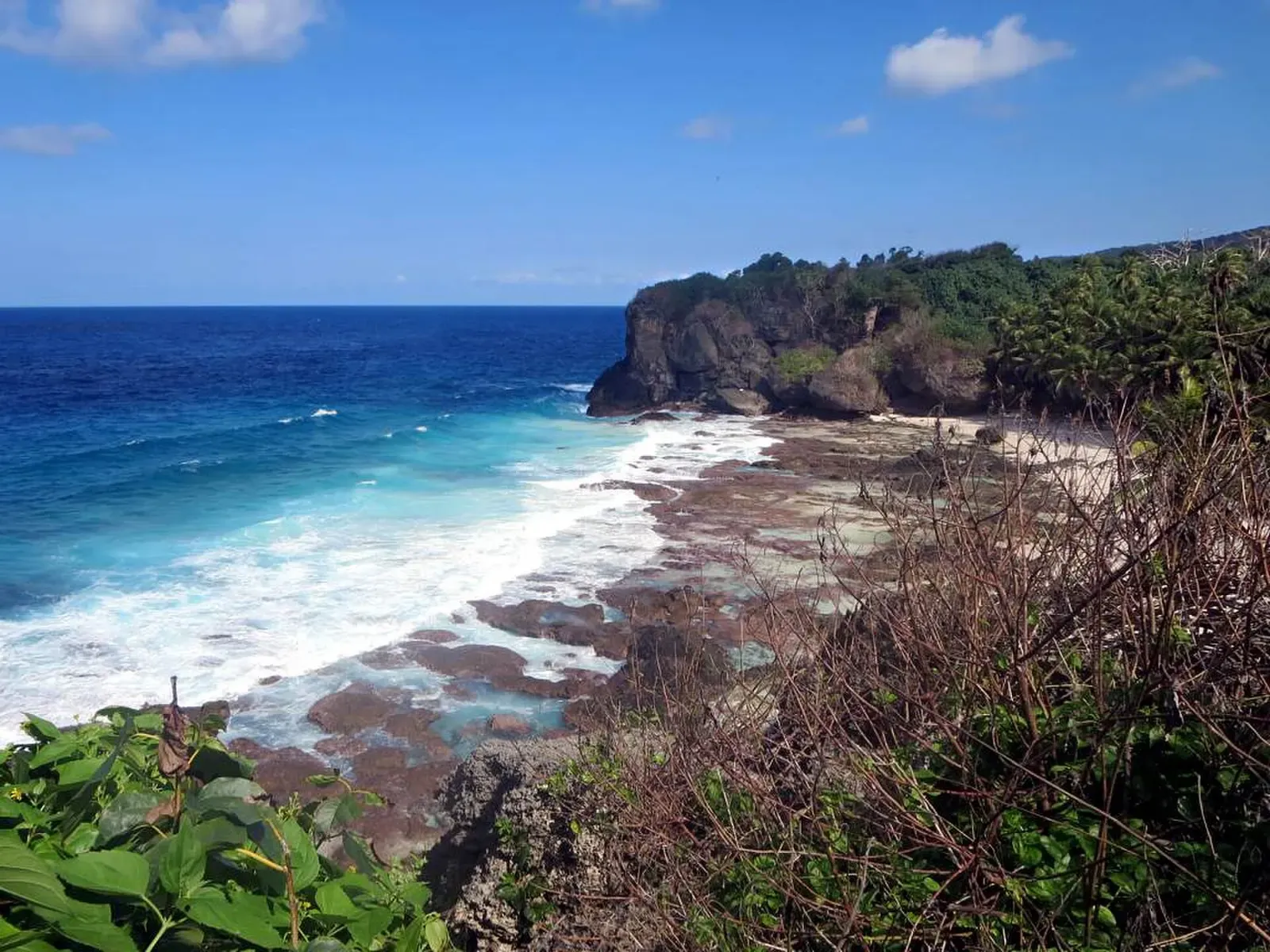
Area photo: Abllo · CC BY-SA 4.0
Maarikilu Caves is dived as a drift in two halves: first inside a small bay, where the bottom slopes from 4 m to 22 m and ends in a small drop-off, and then along a steep wall outside it. Reef mantas pass through between January and April, which puts the site outside the main Hanifaru manta window rather than inside it.
Where it is and how deep
5.3276° N, 72.9491° EPublished position for this site.
The dive
The dive begins in the shelter of a small bay, on ground that slopes from 4 m down to 22 m and finishes at a small drop-off. This is the calm half: the bay takes some of the edge off the flow, and the sloping bottom gives an easy reference to descend along and to navigate by. Groups cover this section first, while the drift is still gentle enough to stop and look at things.
Past the drop-off the site turns into a steep wall and the dive becomes a proper drift, reef on one side and open water on the other. That is where the mantas are seen, between January and April, moving past rather than holding station, so the wall is worked with an eye off the reef as much as on it.
Since the drift finishes well away from where it started, the ascent is done on a marker rather than at a fixed point, and the boat follows the bubbles. Keep the group together along the wall — in a drift the difference between one ascent and three is a matter of a few metres of separation.
Marine life and season
- Manta rays
| Jan | Feb | Mar | Apr | May | Jun | Jul | Aug | Sep | Oct | Nov | Dec |
|---|---|---|---|---|---|---|---|---|---|---|---|
| Fair | Fair | Fair | Good | Prime | Prime | Prime | Prime | Prime | Prime | Good | Fair |
Season follows Baa Atoll & Hanifaru Bay: The Hanifaru aggregation runs May–Nov on the south-west monsoon and peaks Aug–Oct; Dec–Apr is calmer and clearer but the mantas disperse.
Know before you go
- The second half is a drift along a steep wall that ends away from the entry point, so carry a surface marker and agree with the boat how the pick-up works before getting in.
Questions divers ask
When can you see mantas at Maarikilu Caves?+
Mantas pass the site between January and April, and they are a matter of luck rather than a fixture. That is a different window from the Hanifaru Bay aggregation later in the year.
How deep is Maarikilu Caves?+
The bay section slopes from 4 m to 22 m before a small drop-off, and the dive continues along the steep wall outside it as a drift.
Sources
- Maarikilu Caves — Scubago
More dive sites in Baa Atoll & Hanifaru Bay
Pinnacle
An offshore rock that begins at 19 m and drops to 35 m
A shore-entry slope from 3 m down, with 20–25 m visibility
Reef
Reef from 5 m down to a 35 m wall with overhangs
Blue hole
A vertical chimney through the reef with a cave exit
Pinnacle
Canyons and overhangs cut between 12 and 30 m
Pinnacle
Endemic sponge snail on a protected thila topping out at 7 m
Reef
Coral slopes and a vertical wall between 5 m and 30 m
Lagoon
The largest known manta feeding aggregation — snorkel only
Similar dives elsewhere
A shallow drift with swirling current and elusive hammerheads


Schools of grunts and porkfish inside tall sponge-covered reef heads
Drift
Grotte Juliette
Ifaty & Mangily · Madagascar
A drift through the South pass along a coral wall
Drift
Nanton Point
Antigua · Antigua and Barbuda
Caribbean reef sharks on most dives