Caribbean · Cuba
Bay of Pigs
A wall dived from the beach, and Cuba's deepest cenote across the road
Photo: Tisquesusa · CC BY 4.0
The Bay of Pigs is a shore-diving coast on the south side of Matanzas province, where the reef wall lies close enough to the beach that divers walk in from the road rather than take a boat. Twelve dive sites are counted in the bay, with dive centres at Playa Larga, Playa Girón and Caleta Buena, and the flooded sinkholes inland are dived as cenotes — among them Cueva de los Peces, at 72 m the deepest cenote in Cuba.
About diving in Bay of Pigs
The diving here is built around the road rather than a boat. The main attraction is the wall, and it lies close enough to shore that divers enter from the coast. Twelve sites are counted in the bay: Playa Larga sits at its head, Playa Girón is 35 km down the coast road, and Caleta Buena lies beyond that at the southern end, each of the three with a dive centre. Visibility is usually quoted at 20 to 40 m, although logged dives at Punta Perdiz run lower in midsummer.
The other half of the diving is inland of the road. The Zapata swamp sits on limestone, and the flooded sinkholes in it are dived as cenotes, with haloclines where the fresh surface layer meets the salt water beneath. Cueva de los Peces, 18 km south of Playa Larga, is the best known: a flooded tectonic fault 72 m deep, the deepest cenote in Cuba, with a restaurant and a dive centre on the spot, a submerged tunnel out to the sea, and a shallow reef across the road to dive afterwards.
Most of the Zapata peninsula belongs to the Gran Parque Natural Montemar, and the national park that covers the bay is a UNESCO Biosphere Reserve, visited more often for its birdlife than its reefs. The bay is a quiet place to dive, and the day is built around the road: park, kit up, walk in, come out, drive to the next entry. Facilities are basic — the beach at Cueva de los Peces is 20 to 30 m of stone rather than sand — and the shallow sites are shared with snorkellers.
Best time to dive Bay of Pigs
| Jan | Feb | Mar | Apr | May | Jun | Jul | Aug | Sep | Oct | Nov | Dec | |
|---|---|---|---|---|---|---|---|---|---|---|---|---|
| Season | Prime | Prime | Prime | Prime | Good | Good | Fair | Fair | Fair | Fair | Prime | Prime |
| Sea surface | 26°C79°F | 26°C79°F | 26°C79°F | 27°C81°F | 28°C82°F | 29°C84°F | 30°C86°F | 30°C86°F | 30°C86°F | 30°C86°F | 28°C82°F | 27°C81°F |
| Daytime high | 28°C82°F | 29°C84°F | 30°C86°F | 31°C88°F | 32°C90°F | 32°C90°F | 32°C90°F | 33°C91°F | 32°C90°F | 32°C90°F | 30°C86°F | 29°C84°F |
| Rain | 24 mm0.9 in | 24 mm0.9 in | 29 mm1.1 in | 41 mm1.6 in | 105 mm4.1 in | 185 mm7.3 in | 109 mm4.3 in | 140 mm5.5 in | 134 mm5.3 in | 104 mm4.1 in | 43 mm1.7 in | 36 mm1.4 in |
| Jan | Feb | Mar | Apr | May | Jun |
|---|---|---|---|---|---|
| Prime | Prime | Prime | Prime | Good | Good |
| Sea surface | |||||
| 26°C79°F | 26°C79°F | 26°C79°F | 27°C81°F | 28°C82°F | 29°C84°F |
| Daytime high | |||||
| 28°C82°F | 29°C84°F | 30°C86°F | 31°C88°F | 32°C90°F | 32°C90°F |
| Rain | |||||
| 24 mm0.9 in | 24 mm0.9 in | 29 mm1.1 in | 41 mm1.6 in | 105 mm4.1 in | 185 mm7.3 in |
| Jul | Aug | Sep | Oct | Nov | Dec |
|---|---|---|---|---|---|
| Fair | Fair | Fair | Fair | Prime | Prime |
| Sea surface | |||||
| 30°C86°F | 30°C86°F | 30°C86°F | 30°C86°F | 28°C82°F | 27°C81°F |
| Daytime high | |||||
| 32°C90°F | 33°C91°F | 32°C90°F | 32°C90°F | 30°C86°F | 29°C84°F |
| Rain | |||||
| 109 mm4.3 in | 140 mm5.5 in | 134 mm5.3 in | 104 mm4.1 in | 43 mm1.7 in | 36 mm1.4 in |
2011–2025 averages. Sea surface: NOAA Coral Reef Watch, measured at the surface, so deeper water can run colder. Daytime high and rain: NASA POWER.
Nov–Apr is Cuba's dry season and the settled half of the year; May–Oct is the rainy season and sits inside the Atlantic hurricane season, which runs June to November.
Best months: January, February, March, April, November, December
Bay of Pigs water temperature and weather by month
The sea surface runs from 26 °C (79 °F) in February to 30 °C (86 °F) in August. Most rain falls from May to October, peaking at about 190 mm (7.5 in) in June; it stays largely dry from November to April. Daytime highs reach 33 °C (91 °F) in August and drop to 28 °C (82 °F) in January. Below the surface the water can drop to about 22 °C (72 °F), so pack a 5 mm suit.
Dive types & marine life
Reef fish rather than big animals: barracuda, groupers and invasive lionfish along the coral walls and caverns, sponges in some 30 species, and spiny lobster and queen conch recorded on the eastern shore. Punta Perdiz is a place to look for the orange seahorse. Water is warm enough for a 3 mm suit year-round, with quoted averages of 22 °C in December and 29 °C in July.
- Cenote
- Wall
- Reef
- Cave & cavern
- Wreck
- Freshwater
- Barracuda
- Groupers
- Reef fish swarms
Best dive sites in Bay of Pigs
Artificial reef
Purpose-sunk 1994 wreck at about 30 m
Wall
Walk-in reef and wall on the Zapata coast
Cueva de los Peces
A flooded tectonic fault 72 m deep, the deepest cenote in Cuba, 18 km south of Playa Larga.
Caleta Buena
Dive-centre point at the southern end, with La Corona de Maceo, Los Cañones and El Cabezo alongside.
How to get to Bay of Pigs
Fly into Havana or Varadero and drive: the bay is about two hours from Havana, and the road in runs south through Jagüey Grande, 30 km inland of the coast. Playa Larga at the head of the bay and Playa Girón 35 km down the coast road are the two bases, casa-particular towns rather than resorts. Viazul buses run from Havana to both, but a car helps for reaching sites spread along the coast.
Photos from Bay of Pigs
Tisquesusa · CC BY 4.0
Gorupdebesanez · CC BY-SA 3.0
Photo credits
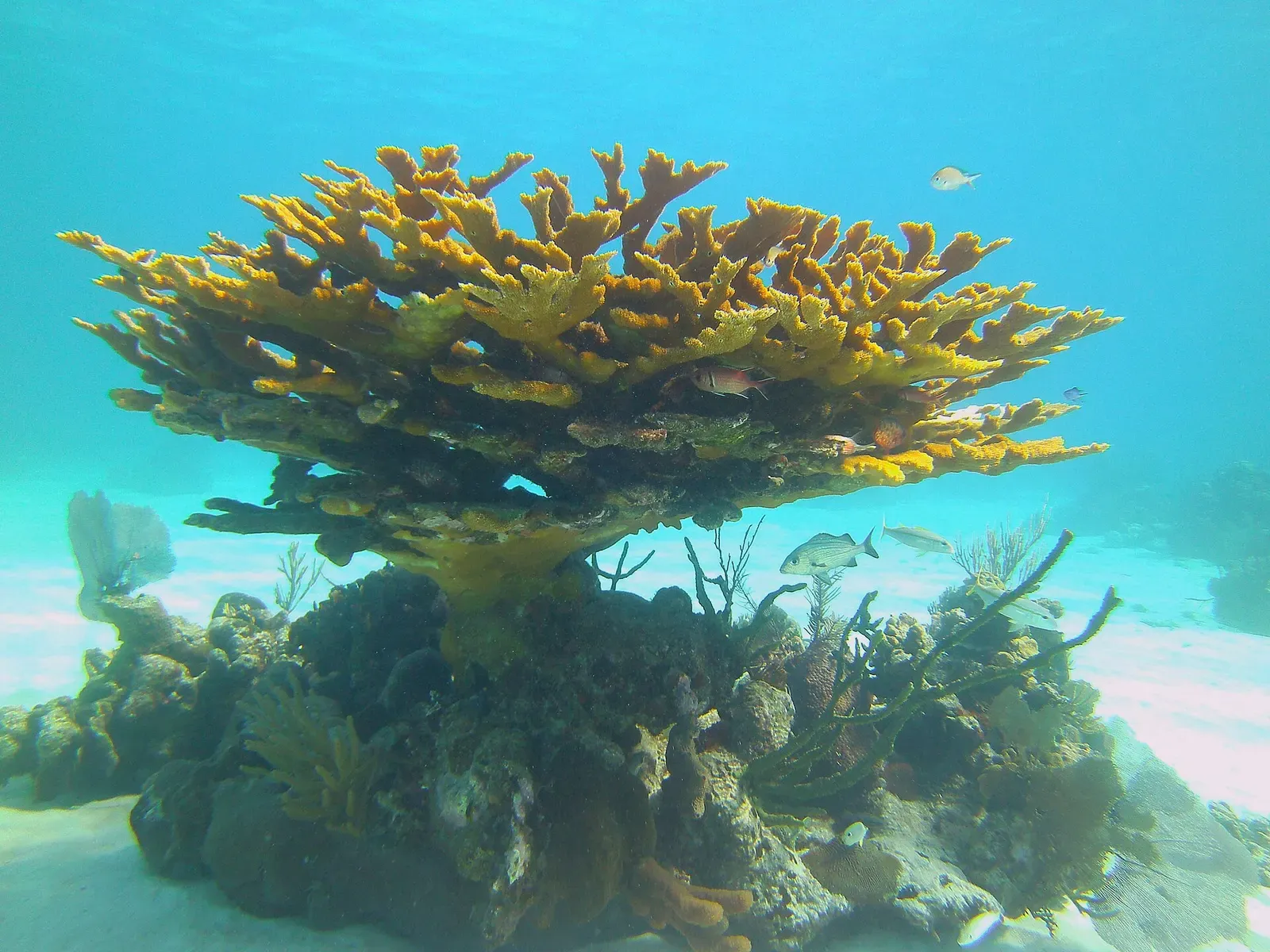
- Elkhorn coral table over a shallow reef in bright turquoise water by Tisquesusa, CC BY 4.0, via Wikimedia Commons
- Maze coral colonies covering the shallow reef floor by Tisquesusa, CC BY 4.0, via Wikimedia Commons
- Palms leaning over the sand at Playa Larga with the bay behind by Gorupdebesanez, CC BY-SA 3.0, via Wikimedia Commons
Embed
Run a dive centre, club or blog? Embed this map of 1 dive sites near Bay of Pigs on your own page.
Similar destinations
A 73 m freighter offshore and Taíno cave dives in the forest behind

A Soviet frigate lies broken in two between 15 and 30 m
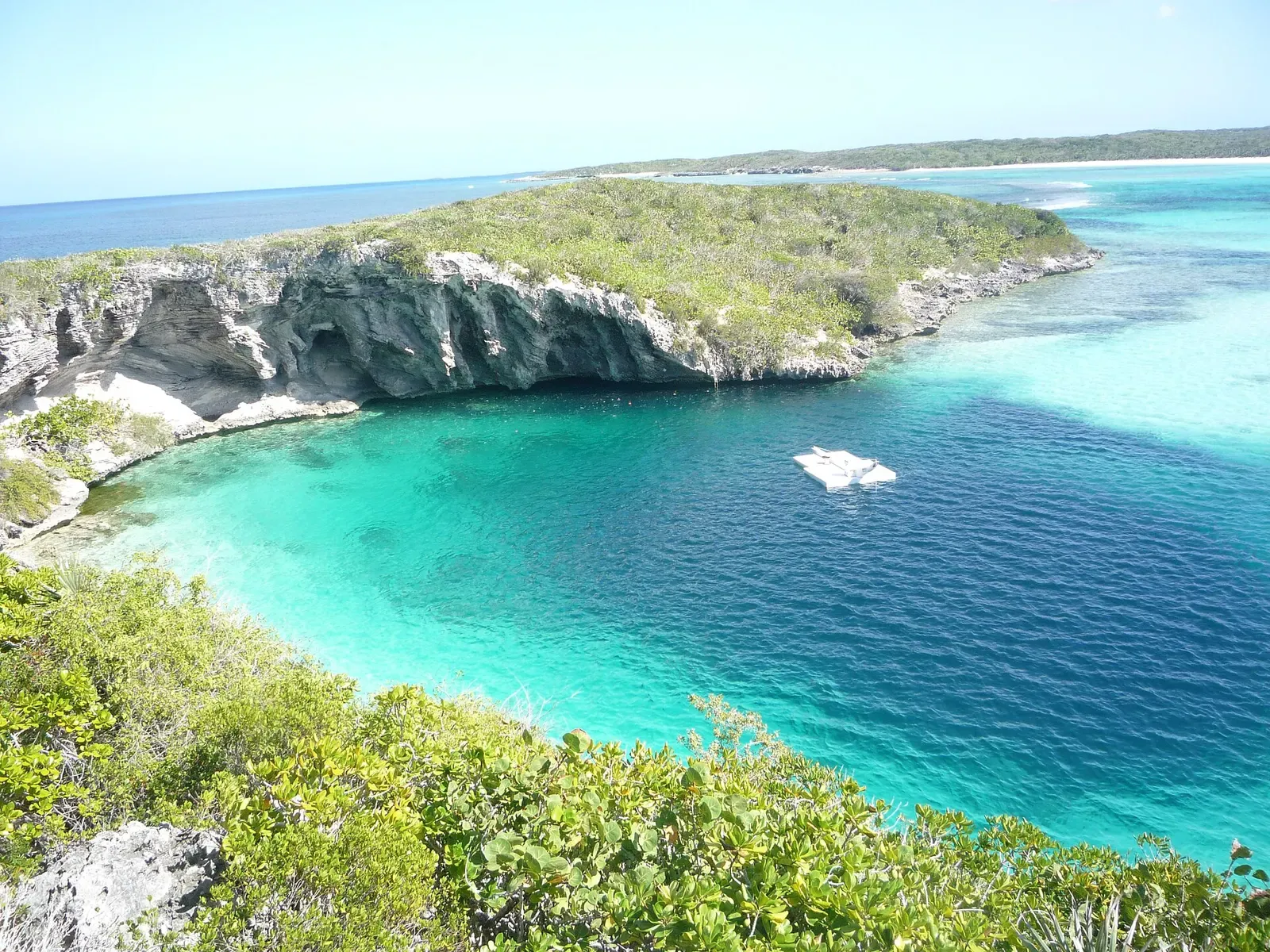


Dean's Blue Hole, the world's freediving capital and third-deepest blue hole
Caribbean
Andros
Bahamas
A 200 km barrier reef with a wall that drops into the Tongue of the Ocean