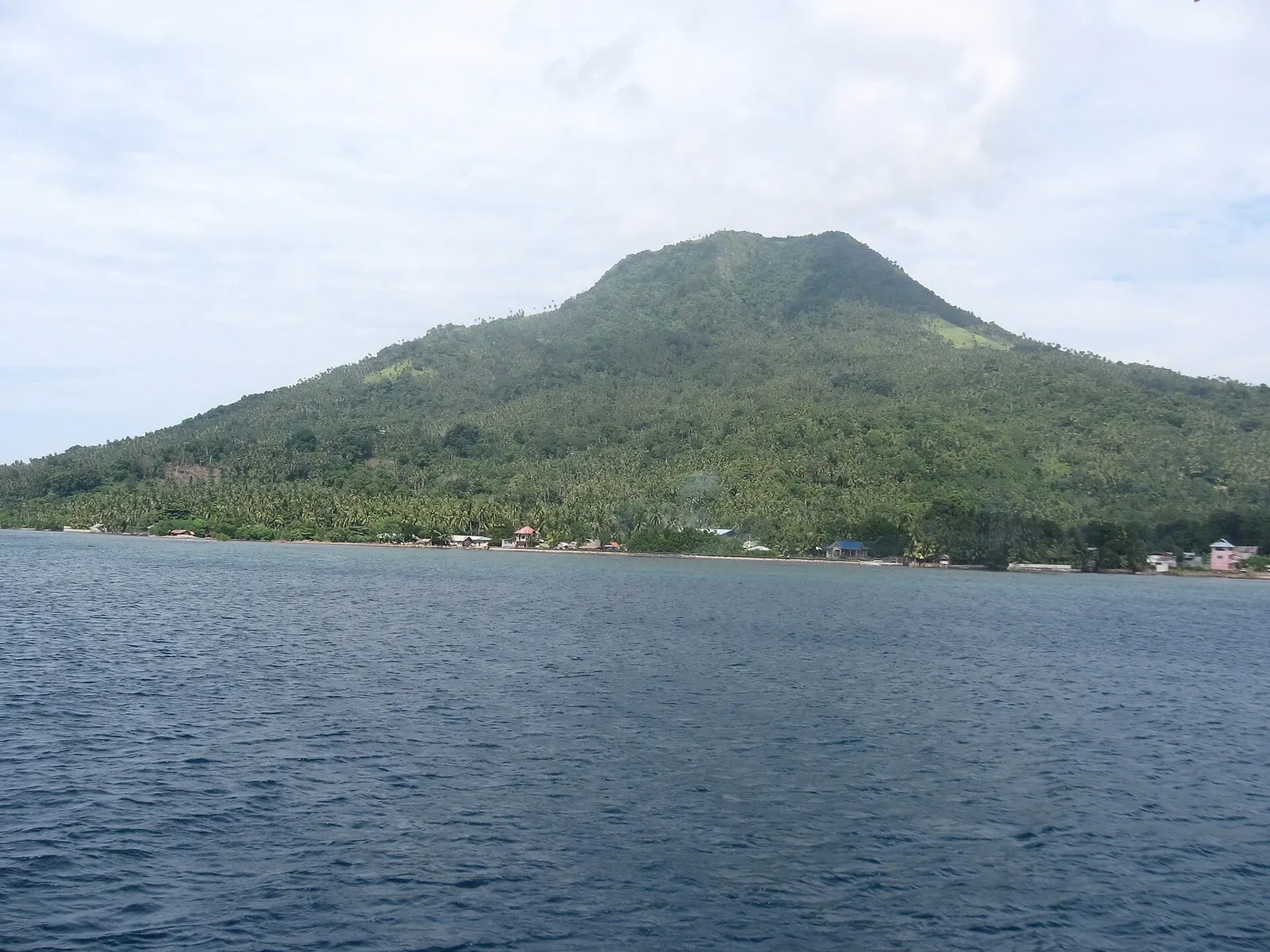
Camiguin · Philippines · Wall
Old Volcano
Volcanic cliff from 5 m and dropping past 60 m
Area photo: Kleomarlo · CC BY-SA 3.0
The face of an old volcanic cliff off the Catarman coast. The rock begins about 5 m below the surface and falls past 60 m, so divers pick a depth and work the wall rather than trying to reach a bottom. Coral-encrusted overhangs and boulders break up the face, and the shelter they give is where the moray eels, Spanish dancers and shrimp live.
Where it is and how deep
9.2181° N, 124.6346° EPublished position for this site.
The dive
You drop onto the top of the cliff at about 5 m, where the rock is still in bright light, and follow the edge until the face opens up beneath you. From there it is a wall dive: the volcanic rock plunges past 60 m, well beyond any recreational limit, so the plan is a chosen depth along the face rather than a descent to the bottom. Set a turn depth before you go in and hold to it, because the visual pull of a sheer cliff makes it easy to drift deeper than intended.
The interest is in the texture of the face. It is broken by coral-encrusted overhangs and boulders that shelter and feed the resident life — moray eels backed into the cracks, shrimp working the coral, and Spanish dancers out over the coral. Holding one depth band and looking into the holes returns far more than swimming the length of the wall does.
The shallow shoulder where the cliff starts, at around 5 m, is the natural end of the dive. Coming back up onto it puts rock and coral under your safety stop instead of open blue water, and it is a useful place to burn off the last of a tank after a deeper leg on the face. Divers who want the deep part of the wall should treat it as a deep dive and plan their gas for it rather than improvising on the way down.
Marine life and season
- Nudibranchs
- Macro critters
| Jan | Feb | Mar | Apr | May | Jun | Jul | Aug | Sep | Oct | Nov | Dec |
|---|---|---|---|---|---|---|---|---|---|---|---|
| Prime | Prime | Prime | Prime | Good | Good | Good | Good | Fair | Fair | Prime | Prime |
Season follows Camiguin: Nov–Apr is the dry, settled run; May–Oct rain is heavy but short and rarely stops diving, and the small typhoon risk falls in Sep–Oct.
Know before you go
- The face drops past 60 m with no bottom in sight, so it is easy to keep descending along it; agree a turn depth before entry and check it against your computer.
Sources
- Old Volcano - Scubago — Scubago
More dive sites in Camiguin
Sand slope
Shore-entry slope with a lettuce coral reef from 21 m
Current-swept offshore slope under soft coral, 5 to 25 m
Wall
Offshore shoal edge dropping past 60 m, cut with overhangs
Coral garden
Hard coral garden with a 20 m maximum and frequent sea snakes
Green turtles resident year-round on a 5-to-50 m drop-off
Reef
Soft-coral slope from 2 m to 30 m beside the volcano wall
Reef
Coral-covered tombs at 6 m under a white concrete cross
Reef
The island's Deep Diver training reef, 5 m to 40 m
Similar dives elsewhere

A hundred metres of coral wall from 5 m to 60
Giant gorgonian fans on a wall from 5 m to 60
Shallow muck over a coral wall that falls to 60 m
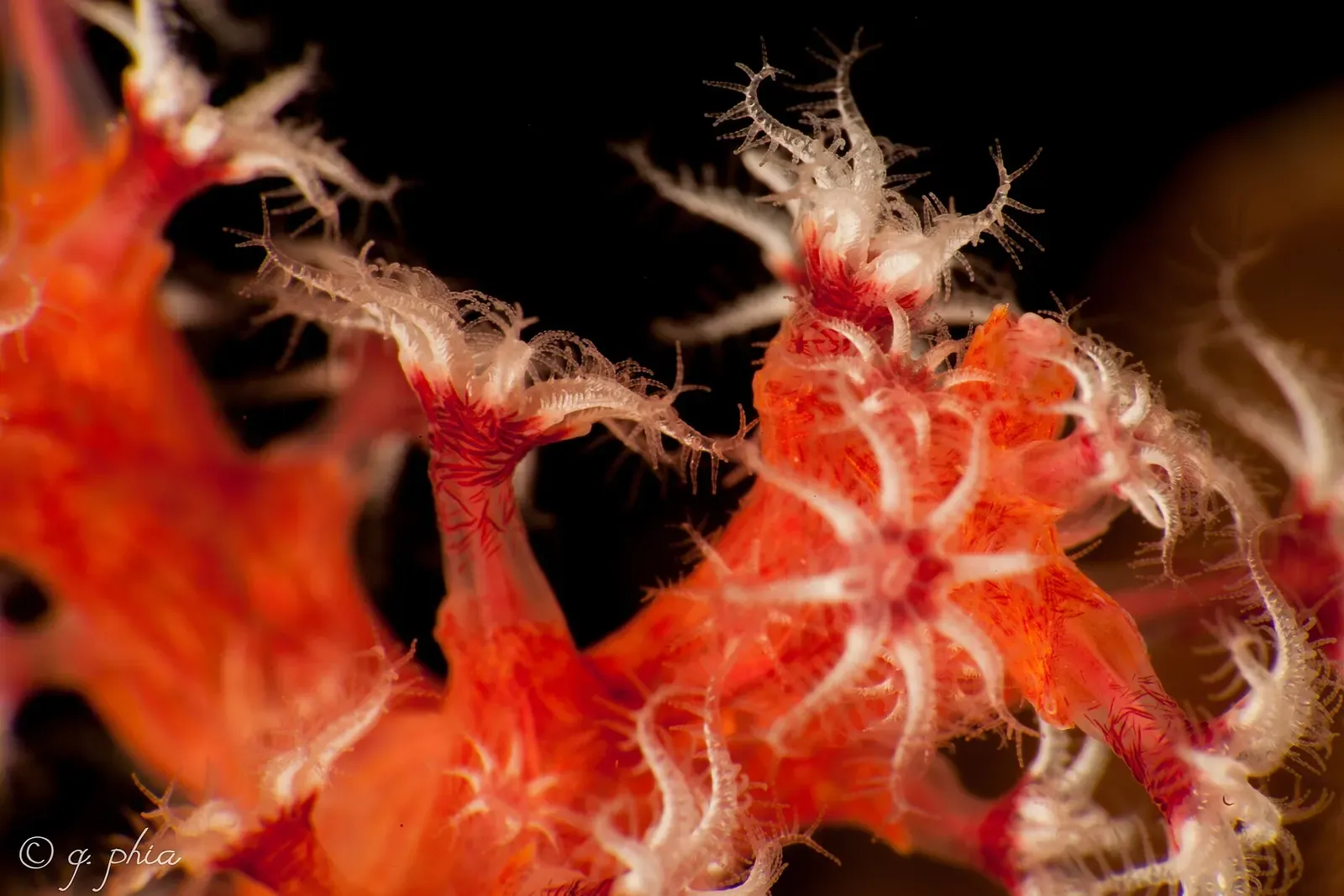

The Great Wall of Cornucopia, a sheer drop-off at the end of the slope