Capo Carbonara · Italy · Pinnacle · Reef
Variglioni
Serpent stars that turn from black to red under a torch
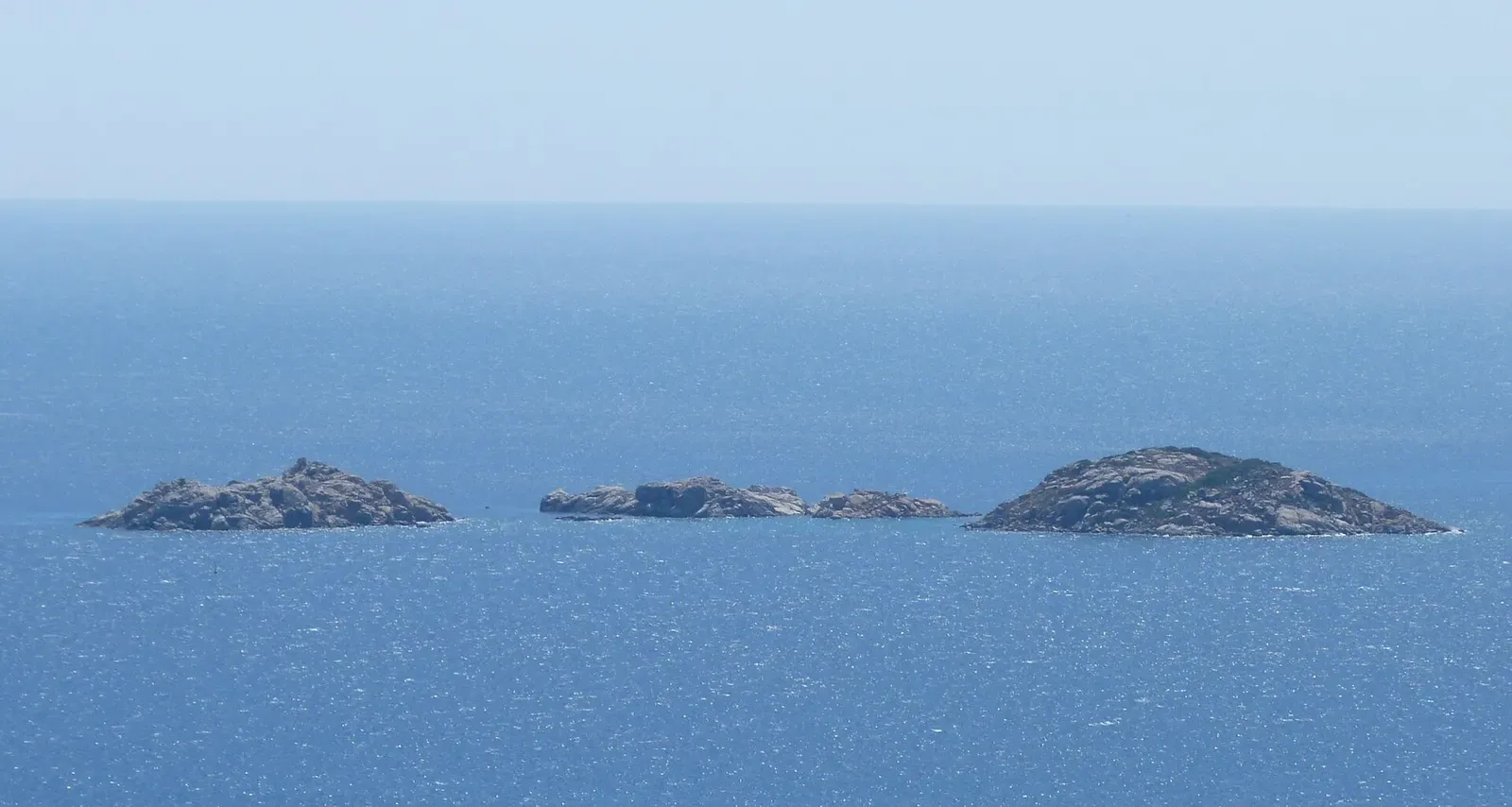
Photo: Wurfzoll · CC BY-SA 3.0
The marine park's dive point on the granite outcrops south-east of Isola dei Cavoli, where the standing blocks are pitted with tafoni and the ground below is cut through with cavities and fissures. The usual dive works around 25 m while the bottom alongside falls away past 40, and the wider cavities hold groupers that will let themselves be watched.
Also known as Variglioni dei Cavoli.
Where it is and how deep
39.0803° N, 9.5469° EPublished position for this site.
The dive
South-east of Isola dei Cavoli a scatter of granite rocks carries on below the surface with the same broken profile it has above. Big blocks are stacked on each other into cavities and deep fissures, the level changing continually, the standing blocks pitted with tafoni and other erosion forms. Numerous routes run through all this, from the surface down to a bottom that drops away quickly past 40 m.
A typical dive stays around 25 m and works the architecture rather than a single wall. Swarms of grey mullet, salema and barracuda slide fast between the big blocks. Groupers swim slowly among them and often take shelter in the wider cavities, where they will let themselves be watched for a while. Corvina keep to the shaded ground; dentex are more at home in the open, patrolling the bottom for prey.
Colour comes from the gorgonians — Eunicella and Paramuricea — and from whatever a torch finds. The long arms of the serpent star Ophidiaster ophidianus read as black until light reaches them and turns them the red that identifies the species, which is reason enough to carry a lamp on a daylight dive here.
Marine life and season
- Groupers
- Barracuda
- Reef fish swarms
- Macro critters
| Jan | Feb | Mar | Apr | May | Jun | Jul | Aug | Sep | Oct | Nov | Dec |
|---|---|---|---|---|---|---|---|---|---|---|---|
| Fair | Fair | Fair | Good | Good | Prime | Prime | Prime | Prime | Good | Fair | Fair |
Season follows Capo Carbonara: May–Oct is the settled season with the warmest water; the mistral and easterlies close the exposed seccas in winter.
Photos from Variglioni
Giorgio Galeotti · CC BY-SA 4.0
Dive videos
Diving Villasimius Isola dei Cavoli · Diego Palmas on YouTube
Questions divers ask
How deep is Variglioni?+
The dive generally runs around 25 m. The bottom beside the rocks drops away quickly past 40 m, so depth here is a choice rather than a given — routes run all the way from the surface down.
What will I see at Variglioni?+
Swarms of grey mullet, salema and barracuda between the blocks, large groupers in the cavities, corvina in the shade and dentex patrolling the bottom. Gorgonians add colour, and a torch turns the serpent stars from black to red.
Sources
- Variglioni dei Cavoli – Immersioni in AMP — Area Marina Protetta Capo Carbonara
- Immersioni in AMP – itinerari consigliati — Area Marina Protetta Capo Carbonara
Photo credits
- Low rocky Variglioni islets breaking the surface of open water off the Sardinian coast by Wurfzoll, CC BY-SA 3.0, via Wikimedia Commons
- Clear turquoise water with the Variglioni and Serpentara islets on the horizon by Giorgio Galeotti, CC BY-SA 4.0, via Wikimedia Commons
More dive sites in Capo Carbonara
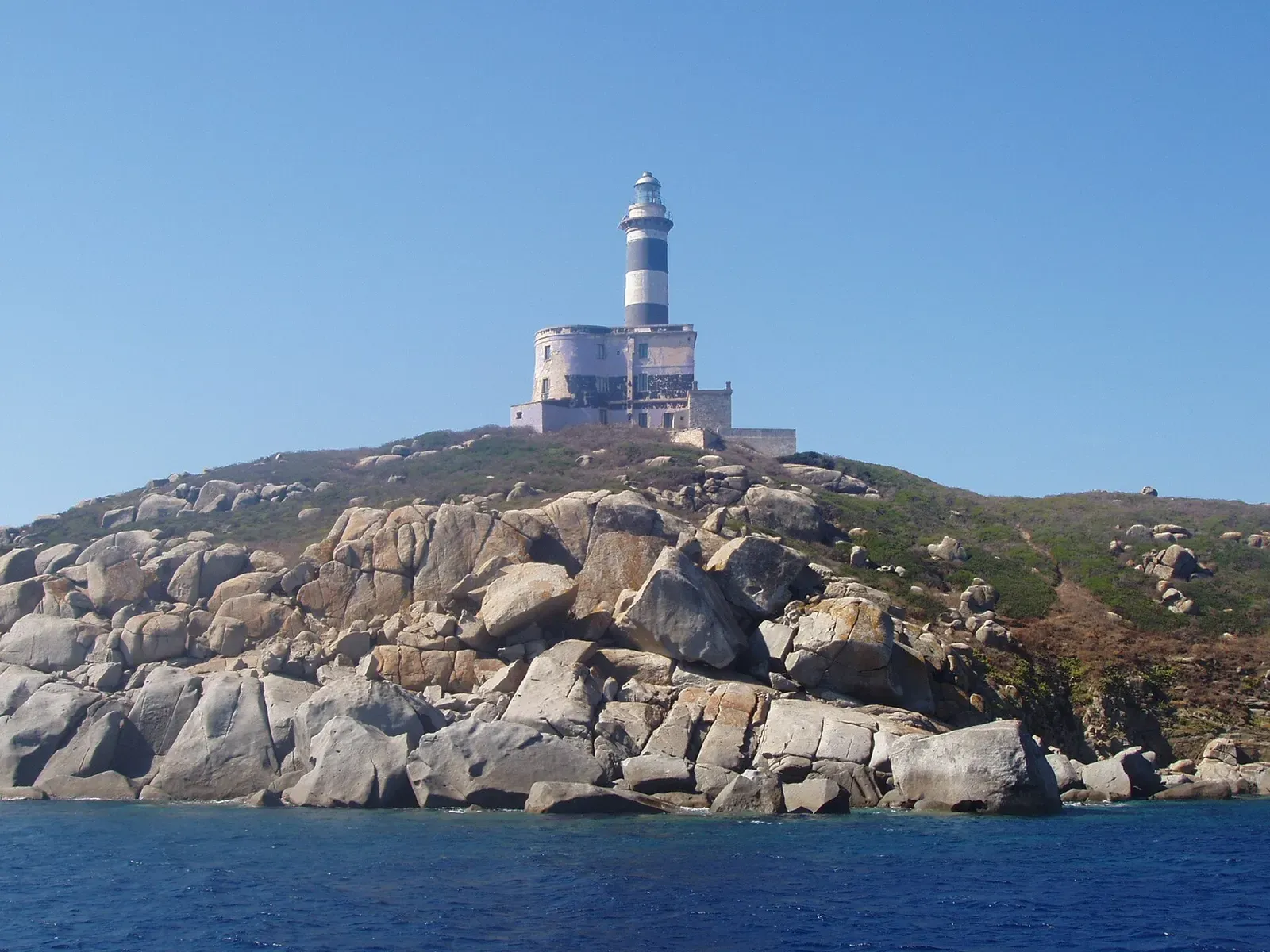
A lighthouse islet with granite ground on every side
Reef
Granite weathered into a ship's bow above a Posidonia meadow
Sea fans on the boulder at the foot of the wall
Reef
A named point off Isola dei Cavoli, granite rather than steel
Wreck
A 1943 torpedo casualty lying in trim at about 35 m
Entry-level rock west of Isola dei Cavoli
Reef
One circuit around an emergent boulder in 15 m
Pinnacle
A circuit of the boulders around an offshore beacon
Similar dives elsewhere

The sec du Pelu, renamed for the groupers that hold on it

A rock spine with a crest at 12 m and groupers along its length


Maze-like rock stacks full of red sea fans to 40 m
A steep gorge to 25 m holding the remains of an old anchorage