
Cap de Creus · Spain · Pinnacle · Wall · Reef
Els Farallons
Maze-like rock stacks full of red sea fans to 40 m
Area photo: Alan Mattingly · CC0
A system of maze-like, upright rock stacks off Cap de Creus, dived from a boat and rated advanced. The rock is full of red sea fans and descends to about 40 m, with published figures for the deepest ground reaching 45 m. Visibility is published at 12 to 24 m, and the exposed position that makes the seas choppy also draws tuna and sunfish past the stacks.
Also known as Punta dels Farallons, Punta d'Els Farallons, Farallons de Culip.
Where it is and how deep
42.3411° N, 3.2599° EPublished position for this site.
Site maps published elsewhere
The dive
This is a boat dive off the coast of Catalonia, and the drop-in is onto a system of maze-like, upright islets rather than a single wall. The rock is cut into channels you work through rather than swim along, and the profile is yours to set: the stacks descend to about 40 m, and published figures for the deepest ground go to 45 m. Depth builds quickly once you leave the shallow tops, so the dive is planned around a turn depth rather than by following the terrain down.
The faces are full of red sea fans, and the fish are the other half of the dive. Sargos and drums criss-cross the gaps between the stacks and banks of fish hold in the channels, while dusky groupers, schooling sea breams, barracuda and spiny lobsters use the same broken ground. Octopuses turn up in the nooks in the rock. Visibility is published at 12 to 24 m, which is what makes the scale of the stacks readable rather than guessed at.
The stacks sit out in the open, and the choppy seas that come with that position tend to draw tuna or sunfish, so part of the dive is worth spending looking off the rock rather than into it. Between the depth, the exposure and the job of keeping track of where you are inside a maze, this is a site that rewards a plan made on the boat and stuck to underwater.
Marine life and season
- Groupers
- Barracuda
- Octopus & cuttlefish
- Reef fish swarms
- Tuna
- Mola mola
- Macro critters
| Jan | Feb | Mar | Apr | May | Jun | Jul | Aug | Sep | Oct | Nov | Dec |
|---|---|---|---|---|---|---|---|---|---|---|---|
| Fair | Fair | Fair | Good | Good | Prime | Prime | Prime | Prime | Good | Fair | Fair |
Season follows Cap de Creus: Jun–Sep is warmest and calmest; the Tramuntana blows hardest in winter and spring and regularly cancels boats for days at a time.
Know before you go
- No current figures are published for the islets and they sit in open water where the seas turn choppy, so take a briefing on the day's conditions and agree a turn point before you drop in.
Questions divers ask
How deep is Els Farallons?+
The stacks descend to about 40 m, and published figures for the deepest ground reach 45 m. There is no shallow reef to fall back on once you are off the tops, so set a turn depth before you go in.
What is the visibility at Els Farallons?+
Scuba Diving magazine gives 40 to 80 feet, or 12 to 24 m. That is good for this coast and part of why the stacks are worth diving: you can see the shape of the formation rather than only the rock in front of you.
Sources
- Punta dels Farallons — Submarinisme Costa Brava
- Punta de Los Farallons Dive Site Guide — DiveNavigator
- Diving for Spanish Gold at Punta d'Els Farallons — Scuba Diving Magazine
- Punta dels Farallons — Scubago
In The Logbook
- Sunfish diving: where and when to see a molaBig animals · 11 min read
More dive sites in Cap de Creus
Reef
A giant anchor and its chain links lying at 21 m
Sand, coralligenous and rock between 12 and 30 m
Seamount
The park's only offshore seamount, 8 m to 60 m
Circle the reef from 18 to 32 m, with the Phedon's remains on it
Seamount
Seamount rock from 5 m to past 40 m, gorgonians throughout
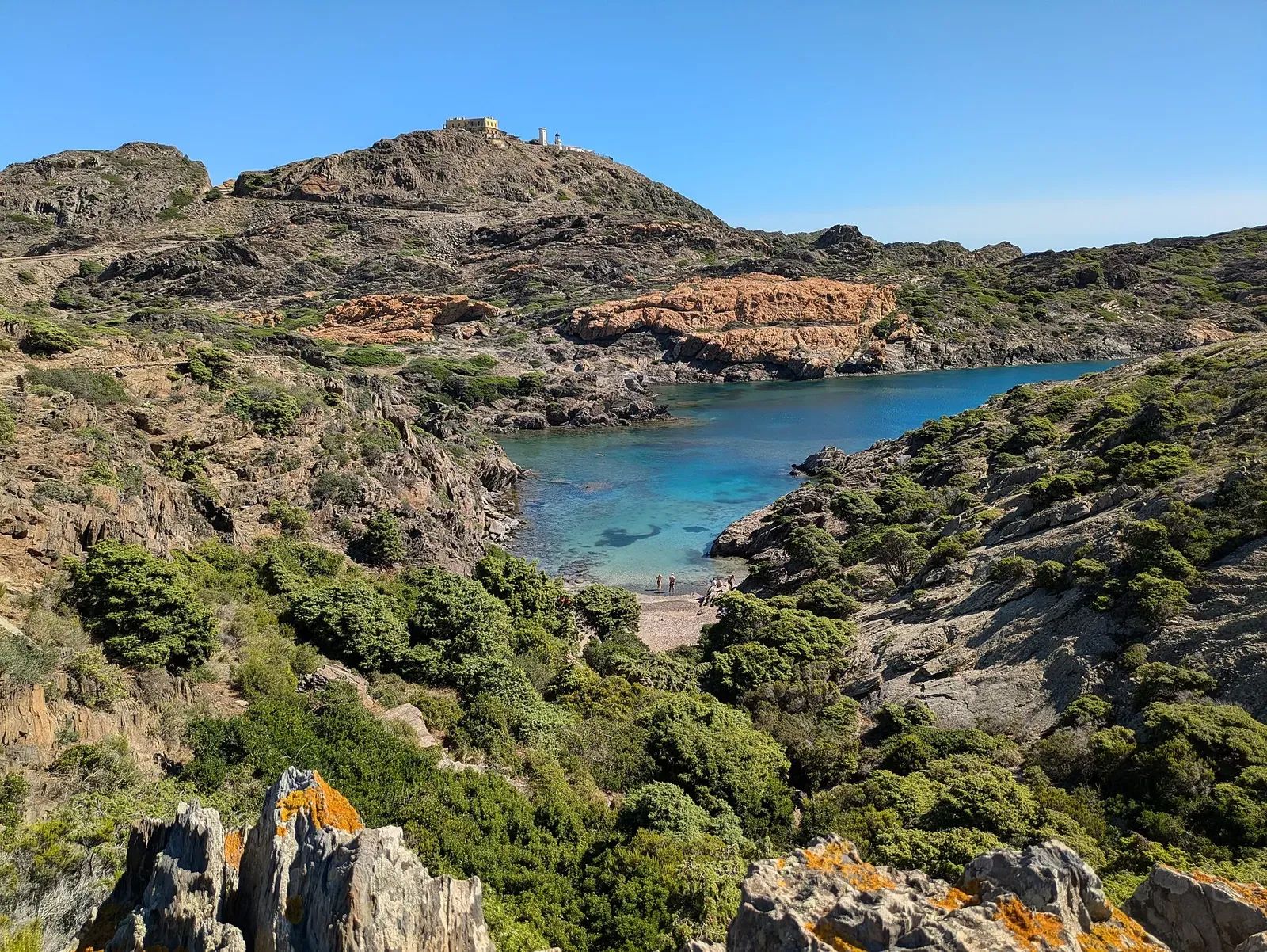
A marine-reserve cove under the Cap de Creus lighthouse
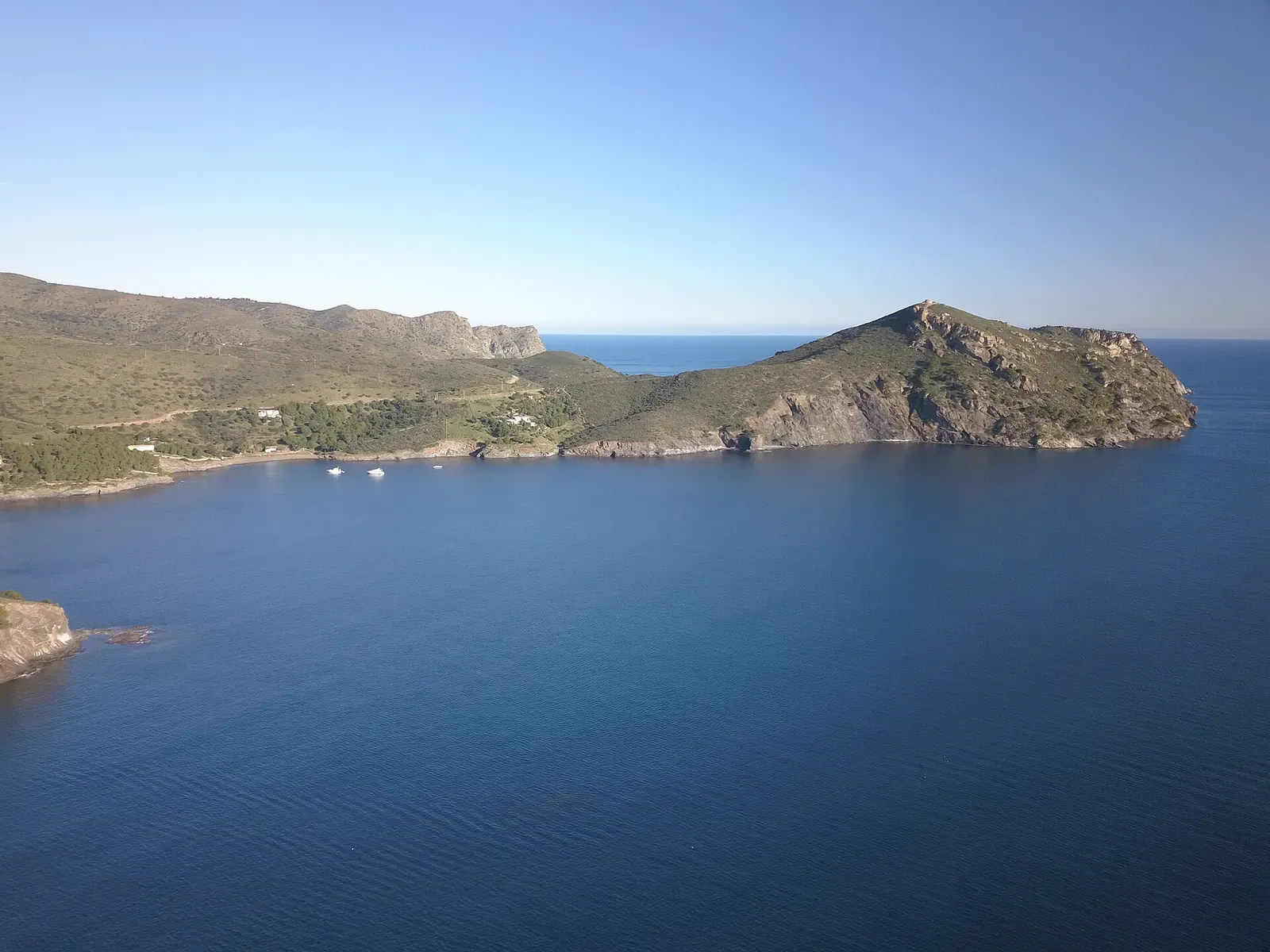
The park's best-known walls, and a cave with an air pocket
Reef
A 40 m canyon at the end of a 5 to 20 m drop-off
Similar dives elsewhere
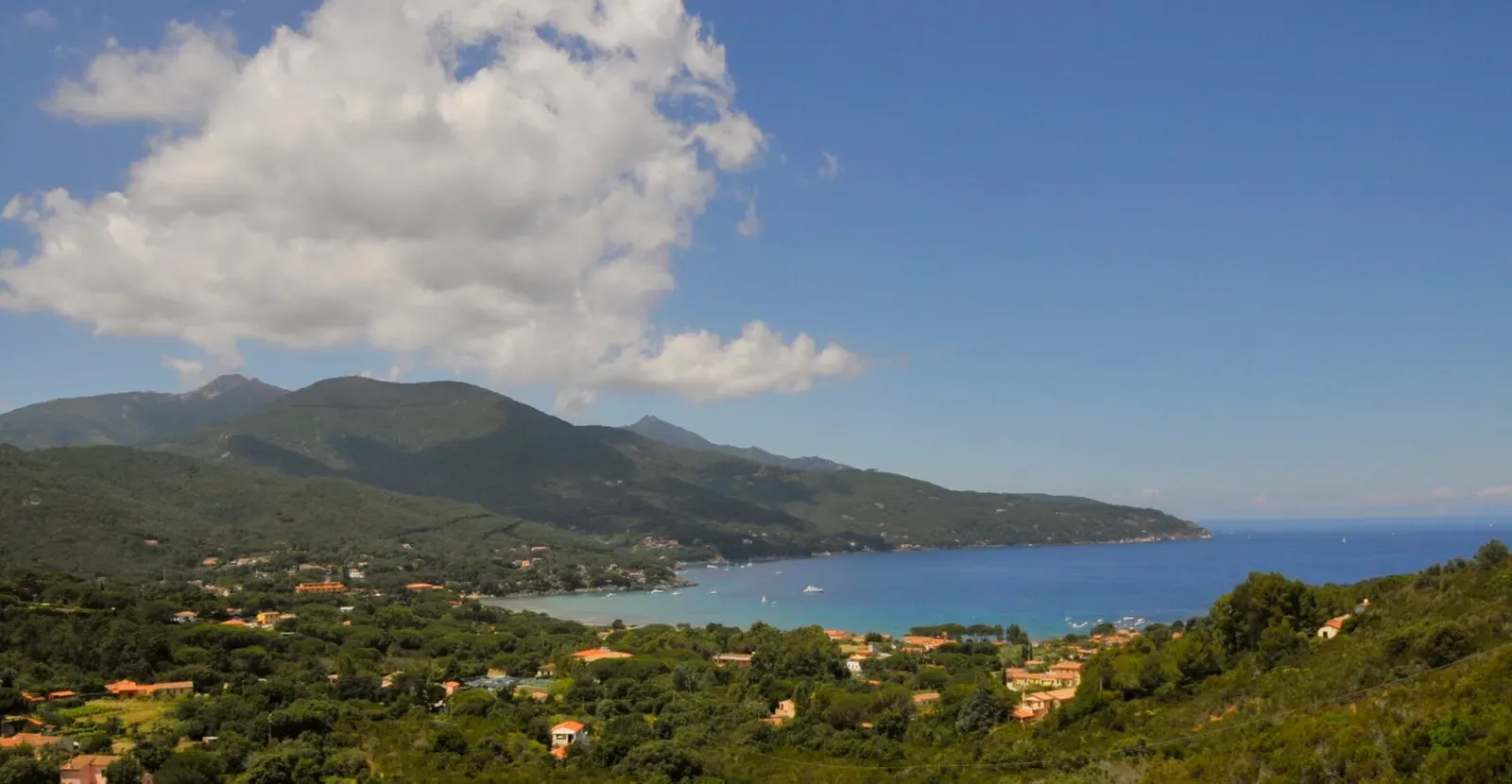
A shoal 100 m off Fonza beach: cap at 4 m, east wall straight to sand at 40 m
A chain of rock heads under the Estérel, 6 m to 40 m

Barracuda over a 2.5 m summit, gorgonians and a 2005 wreck below


Two rock plateaus at 3 m with 36 m of water around them